Kirjojen hintavertailu – 12 903 725 kirjaa ja 27 kauppaa

Kirjailija

Geoff Marietta

Kirjat ja teokset yhdessä paikassa: 6 kirjaa, julkaisuja vuosilta 2014–2020, suosituimpiin kuuluu Achieving Coherence in District Improvement. Vertaile teosten hintoja ja tarkista saatavuus suomalaisista kirjakaupoista.

6 kirjaa

Kirjojen julkaisuvuodet: 2014–2020.

Achieving Coherence in District Improvement

Achieving Coherence in District Improvement

Susan Moore Johnson; Geoff Marietta; Monica C. Higgins; Karen L. Mapp; Allen Grossman

Harvard Educational Publishing Group
2014
nidottu
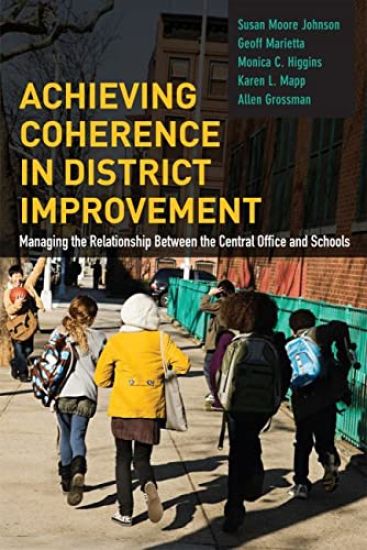
Achieving Coherence in District Improvement focuses on a problem of practice faced by educational leaders across the nation: how to effectively manage the relationship between the central office and schools. The book is based on a study of five large urban districts that have demonstrated improvement in student achievement. The authors—all members of Harvard University’s Public Education Leadership Project (PELP)—argue that there is no “one best way” to structure the central offi ce-school relationship. Instead, they say, what matters is whether district leaders eff ectively select and implement their strategy by achieving coherence among key elementsand actors—the district’s environment, resources, systems, structures, stakeholders, and culture. The authors examine the fi ve districts’ approaches in detail and point to a number of important findings. First, they emphasize that a clear, shared understanding of decision rights in key areas—academic programming, budgeting, and staffing—is essential to developing an eff ective central office-school relationship. Second, they stress the importance of building mutually supportive and trusting relationships between district leaders and principals. Third, they highlight the ways that culture and the external environment infl uence the relationship between the central office and schools. Each chapter also provides relevant “Lessons for Practice”—actionable takeaways—that educational leaders from any district can use to improve the central office-school relationship.
Achieving Coherence in District Improvement

Achieving Coherence in District Improvement

Susan Moore Johnson; Geoff Marietta; Monica C. Higgins; Karen L. Mapp; Allen Grossman

Harvard Educational Publishing Group
2014
sidottu
Achieving Coherence in District Improvement focuses on a problem of practice faced by educational leaders across the nation: how to effectively manage the relationship between the central office and schools. The book is based on a study of five large urban districts that have demonstrated improvement in student achievement. The authors—all members of Harvard University’s Public Education Leadership Project (PELP)—argue that there is no “one best way” to structure the central offi ce-school relationship. Instead, they say, what matters is whether district leaders eff ectively select and implement their strategy by achieving coherence among key elementsand actors—the district’s environment, resources, systems, structures, stakeholders, and culture. The authors examine the fi ve districts’ approaches in detail and point to a number of important findings. First, they emphasize that a clear, shared understanding of decision rights in key areas—academic programming, budgeting, and staffing—is essential to developing an eff ective central office-school relationship. Second, they stress the importance of building mutually supportive and trusting relationships between district leaders and principals. Third, they highlight the ways that culture and the external environment infl uence the relationship between the central office and schools. Each chapter also provides relevant “Lessons for Practice”—actionable takeaways—that educational leaders from any district can use to improve the central office-school relationship.
Rural Education in America

Rural Education in America

Geoff Marietta; Sky Marietta

Harvard Educational Publishing Group
2020
nidottu
Rural Education in America provides a comprehensive framework for understanding the diversity and complexity of rural communities in the United States and for helping rural educators implement and evaluate successful place-based programs tailored for students and their families. Written by educators who grew up in rural America and returned there to raise their children, the book illustrates how efficacy is determined by the degrees to which instruction, interventions, and programs address the needs and strengths of each unique rural community. Geoff and Sky Marietta weave research, compelling case studies, and personal experience to illustrate effective approaches along the P-16 pipeline. Emphasizing the value and vitality of these communities, the authors advocate for solutions that fit the sociocultural and historical reality of the community, rather than strategies that fundamentally support out-migration. They also provide tools that can be used to evaluate rural educational initiatives and implement place-based strategies that are aligned with the strengths of a particular community. Rural Education in America includes examples from a range of geographic locations, including Eastern Washington, Montana, Ohio, northern Minnesota, North Carolina, Mississippi, Kentucky, and the Navajo Nation. Core chapters focus on critical issues for advancing rural education including early literacy, STEM education, and college completion while highlighting successful programs and partnerships in these areas. This book presents a vision of what rural education can be and how it can attend to the well-being of the people, places, and regions that it serves.
Rural Education in America

Rural Education in America

Geoff Marietta; Sky Marietta

Harvard Educational Publishing Group
2020
sidottu
Rural Education in America provides a comprehensive framework for understanding the diversity and complexity of rural communities in the United States and for helping rural educators implement and evaluate successful place-based programs tailored for students and their families. Written by educators who grew up in rural America and returned there to raise their children, the book illustrates how efficacy is determined by the degrees to which instruction, interventions, and programs address the needs and strengths of each unique rural community. Geoff and Sky Marietta weave research, compelling case studies, and personal experience to illustrate effective approaches along the P-16 pipeline. Emphasizing the value and vitality of these communities, the authors advocate for solutions that fit the sociocultural and historical reality of the community, rather than strategies that fundamentally support out-migration. They also provide tools that can be used to evaluate rural educational initiatives and implement place-based strategies that are aligned with the strengths of a particular community. Rural Education in America includes examples from a range of geographic locations, including Eastern Washington, Montana, Ohio, northern Minnesota, North Carolina, Mississippi, Kentucky, and the Navajo Nation. Core chapters focus on critical issues for advancing rural education including early literacy, STEM education, and college completion while highlighting successful programs and partnerships in these areas. This book presents a vision of what rural education can be and how it can attend to the well-being of the people, places, and regions that it serves.
Improving Education Together

Improving Education Together

Geoff Marietta; Chad d’Entremont; Emily Murphy Kaur

Harvard Educational Publishing Group
2017
nidottu
Improving Education Together offers a step-by-step guide to Labor-Management-Community (LMC) collaboration, an intervention that has successfully improved student outcomes in a wide variety of school districts across the country. The authors illustrate how a culture of collaboration between labor, management, and community stakeholders can be built using readily available tools for needs assessment, root-cause analysis, team norms, brainstorming, consensus-building, and long-term planning. Improving Education Together offers detailed examples of how districts across the country—including Massachusetts, Maryland, and Illinois—have successfully implemented the LMC approach, along with resources and strategies employed and lessons learned from obstacles and setbacks encountered along the way. Timely, useful, and accessible, this guide will appeal to a broad audience of school leaders, board members, and community leaders eager to learn more about how to collectively lead and manage school district change that is sustainable and results in improved teaching and learning.
Improving Education Together

Improving Education Together

Geoff Marietta; Chad d’Entremont; Emily Murphy Kaur

Harvard Educational Publishing Group
2017
sidottu
Improving Education Together offers a step-by-step guide to Labor-Management-Community (LMC) collaboration, an intervention that has successfully improved student outcomes in a wide variety of school districts across the country. The authors illustrate how a culture of collaboration between labor, management, and community stakeholders can be built using readily available tools for needs assessment, root-cause analysis, team norms, brainstorming, consensus-building, and long-term planning. Improving Education Together offers detailed examples of how districts across the country—including Massachusetts, Maryland, and Illinois—have successfully implemented the LMC approach, along with resources and strategies employed and lessons learned from obstacles and setbacks encountered along the way. Timely, useful, and accessible, this guide will appeal to a broad audience of school leaders, board members, and community leaders eager to learn more about how to collectively lead and manage school district change that is sustainable and results in improved teaching and learning.