Kirjojen hintavertailu – 12 903 725 kirjaa ja 27 kauppaa

Kirjailija

Georg Polya

Kirjat ja teokset yhdessä paikassa: 5 kirjaa, julkaisuja vuosilta 1970–2011, suosituimpiin kuuluu Problems and Theorems in Analysis. Vertaile teosten hintoja ja tarkista saatavuus suomalaisista kirjakaupoista.

5 kirjaa

Kirjojen julkaisuvuodet: 1970–2011.

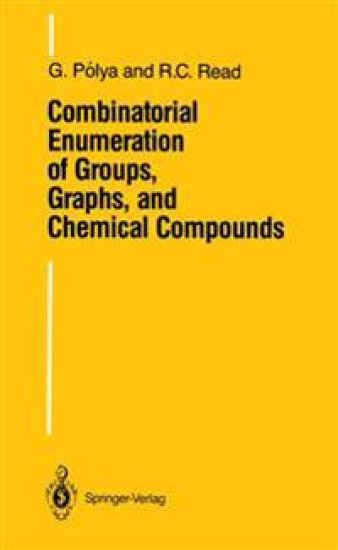
Combinatorial Enumeration of Groups, Graphs, and Chemical Compounds

Combinatorial Enumeration of Groups, Graphs, and Chemical Compounds

Georg Polya; R.C. Read

Springer-Verlag New York Inc.
2011
nidottu
In 1937 there appeared a paper that was to have a profound influence on the progress of combinatorial enumeration, both in its theoretical and applied aspects. Entitled Kombinatorische Anzahlbest- immungen jUr Gruppen, Graphen und chemische Verbindungen, it was published in Acta Mathematica, Vol. 68, pp. 145 to 254. Its author, George Polya, was already a mathematician of considerable stature, well-known for outstanding work in many branches of mathematics, particularly analysis. The paper in Question was unusual in that it depended almost entirely on a single theorem -- the "Hauptsatz" of Section 4 -- a theorem which gave a method for solving a general type of enumera- tion problem. On the face of it, this is not something that one would expect to run to over 100 pages. Yet the range of the applica- tions of the theorem and of its ramifications was enormous, as Polya clearly showed. In the various sections of his paper he explored many applications to the enumeration of graphs, principally trees, and of chemical isomers, using his theorem to present a comprehen- sive and unified treatment of problems which had previously been solved, if at all, only by ad hoc methods. In the final section he investigated the asymptotic properties of these enumerational results, bringing to bear his formidable insight as an analyst.

Problems and Theorems in Analysis

Problems and Theorems in Analysis

Georg Polya; Gabor Szegö

Springer-Verlag New York Inc.
1976
nidottu
The present English edition is not a mere translation of the German original. Many new problems have been added and there are also other changes, mostly minor. Yet all the alterations amount to less than ten percent of the text. We intended to keep intact the general plan and the original flavor of the work. Thus we have not introduced any essentially new subject matter, although the mathematical fashion has greatly changed since 1924. We have restricted ourselves to supplementing the topics originally chosen. Some of our problems first published in this work have given rise to extensive research. To include all such developments would have changed the character of the work, and even an incomplete account, which would be unsatisfactory in itself, would have cost too much labor and taken up too much space. We have to thank many readers who, since the publication of this work almost fifty years ago, communicated to us various remarks on it, some of which have been incorporated into this edition. We have not listed their names; we have forgotten the origin of some contributions, and an incomplete list would have been even less desirable than no list. The first volume has been translated by Mrs. Dorothee Aeppli, the second volume by Professor Claude Billigheimer. We wish to express our warmest thanks to both for the unselfish devotion and scrupulous conscientiousness with which they attacked their far from easy task.
Aufgaben und Lehrsätze aus der Analysis

Aufgaben und Lehrsätze aus der Analysis

Georg Polya; Gabor Szegö

Springer-Verlag Berlin and Heidelberg GmbH Co. K
1970
nidottu
VI mehr Zeit, Sorgfalt und minutiose Arbeit verwendet, als es dem Un- beteiligten im ersten Moment notwendig erscheinen konnte. Die Vermittlung von Wissensstoff kommt fUr uns erst in zweiter Linie in Frage. Vor allem mochten wir die richtige Einstellung des Lesers, eine gewisse Disziplin seines Denkens fordern, worauf es doch beim Studium der Mathematik wohl noch in hOherem MaBe ankommt als in anderen Wissenschaften. Irgendwelche "regulae cogitandi", die die zweckmaBigste Disziplin des Denkens genau vorschreiben konnten, sind uns nicht bekannt. Waren solche Regeln auch moglich, sehr nutzlich waren sie nicht. Man muB die richtigen Denkregeln nicht etwa auswendig wissen, sondern in Fleisch und Blut, in instinktmaBiger Bereitschaft haben. Daher ist zur Schulung des Denkens nur die Ubung des Denkens wirklich nutzlich. Die selbstandige Losung' spannender Aufgaben wird den Leser mehr fordern als die folgenden Aphorismen, die jedoch am Anfang auch nicht schaden konnen. Man suche alles zu verstehen; einzelne Tatsachen durch Aneinander- reihung verwandter Tatsachen, Neuerkanntes durch Anlehnung an das Altbekannte, Ungewohntes durch Analogie mit dem GeHiufigen, Spezielles durch Verallgemeinerung, Allgemeines durch geeignete Spezialisierung, ver ckelte Tatbestande durch Zerlegen in einzelne Teile, Einzelheiten durch Aufstieg zu einer umfassenden Gesamtansicht.