Kirjojen hintavertailu – 12 903 725 kirjaa ja 27 kauppaa

Kirjailija

Georg Simmel

Kirjat ja teokset yhdessä paikassa: 161 kirjaa, julkaisuja vuosilta 1914–2026, suosituimpiin kuuluu Georg Simmel. Vertaile teosten hintoja ja tarkista saatavuus suomalaisista kirjakaupoista.

161 kirjaa

Kirjojen julkaisuvuodet: 1914–2026.

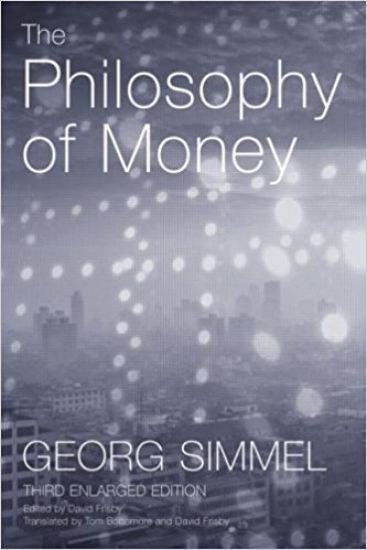
The Philosophy of Money

The Philosophy of Money

Georg Simmel

Routledge
2011
nidottu

Halvin toimitettuna 33,30 €

With a new foreword by Charles Lemert'Its greatness...lies in ceaseless and varied use of the money form to unearth and conceptually reveal incommensurabilities of all kinds, in social reality fully as much as in thought itself.' - Fredric JamesonIn The Philosophy of Money, Georg Simmel puts money on the couch. He provides us with a classic analysis of the social, psychological and philosophical aspects of the money economy, full of brilliant insights into the forms that social relationships take. He analyzes the relationships of money to exchange, human personality, the position of women, and individual freedom. Simmel also offers us prophetic insights into the consequences of the modern money economy and the division of labour, in particular the processes of alienation and reification in work and urban life. An immense and profound piece of work it demands to be read today and for years to come as a stunning account of the meaning, use and culture of money. Georg Simmel (1858-1918) was born in Berlin, the youngest of seven children. He studied philosophy and history at the University of Berlin and was one of the first generation of great German sociologists that included Max Weber.
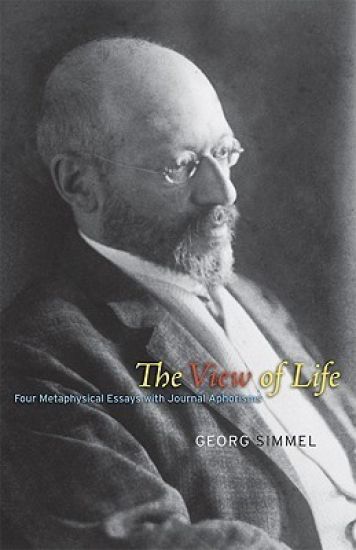
The View of Life

The View of Life

Georg Simmel

University of Chicago Press
2011
sidottu
Published in 1918, "The View of Life" is Georg Simmel's final work. Famously deemed 'the brightest man in Europe by George Santayana, Simmel addressed a variety of topics across his essayistic writings, which have influenced scholars in aesthetics, ethics, epistemology, and sociology. Nevertheless, a set of core issues emerged over the course of his career, most centrally the genesis, structure, and transcendence of social and cultural forms and the nature and genesis of authentic individuality. Composed in the years before his death, "The View of Life" was, according to Simmel, his 'testament', a capstone work of profound metaphysical inquiry intended to formulate his conception of life in its entirety. Now Anglophone readers can at last read in full the work that shaped the argument of Heidegger's "Being and Time" and whose extraordinary impact on European intellectual life between the wars has been extolled by Jurgen Habermas. Presented alongside these seminal essays are aphoristic fragments from Simmel's last journal, providing a beguiling look into the mind of one of the twentieth century's greatest thinkers.
Philosophie des Geldes

Philosophie des Geldes

Georg Simmel

Anaconda Verlag
2009
sidottu
Mit seiner ? Philosophie des Geldes? hat der Soziologe Georg Simmel am Beginn des 20. Jahrhunderts eine der scharfsinnigsten Untersuchungen der modernen Gesellschaft vorgelegt. Seine streitbare Diagnose: Geld ist als Tauschmittel unersetzbar, doch die negativen Folgen der Geldwirtschaft sind beträchtlich, soziale Vereinzelung und kulturelle Entfremdung sind das Resultat. Simmels weitsichtige Analysen setzten Maßstäbe in der Philosophie und Soziologie der folgenden Jahrzehnte und machten ihn zu einem der wichtigsten Denker der Moderne.
Individualismus der modernen Zeit

Individualismus der modernen Zeit

Georg Simmel

SUHRKAMP VERLAG
2008
pokkari
Die vorliegende Auswahl der kleineren soziologischen Abhandlungen Simmels soll zum einen die Bandbreite der von Simmel angesprochenen Themen widerspiegeln und zum anderen seine verschiedenen theoretischen Zugänge - Simmel spricht in diesem Zusammenhang von "Soziologien" - aufzeigen: Die "Allgemeine Soziologie", die sich mit Fragen der Gesellschaft und besonders mit den prinzipiellen Relationen zwischen den einzelnen und den aus ihnen gebildeten sozialen Aggregaten beschäftigt; die "Reine oder Formale Soziologie", die die Formen analysiert, mit denen die Individuen, um die Inhalte (Triebe und Zwecke) umzusetzen, in Wechselwirkung mit anderen treten müssen - und dadurch Gesellschaft konstituieren; und schließlich die "Philosophische Soziologie", die einerseits die Erkenntnistheorie beinhaltet, andererseits durch Hypothese und Spekulation den unvermeidlich fragmentarischen Charakter jeder Empirie zu einem geschlossenen Gesamtbild zu ergänzen versucht.
The Philosophy of Money

The Philosophy of Money

Georg Simmel

Routledge
2004
nidottu
'I have lost interest ... in all that I have written prior to The Philosophy of Money. This one is really my book, the others appear to me colourless and seem as if they could have been written by anyone else.' - Georg Simmel to Heinrich Rickert (1904)In The Philosophy of Money, Simmel provides us with a remarkably wide-ranging discussion of the social, psychological and philosophical aspects of the money economy, full of brilliant insights into the forms that social relationships take. He analyzes the relationships of money to exchange, the human personality, the position of women, individual freedom and many other areas of human existence. Later he provides us with an account of the consequences of the modern money economy and the division of labour, which examines the processes of alienation and reification in work, urban life and elsewhere. Perhaps, more than any of his other sociological works, The Philosophy of Money gives us an example of his comprehensive analysis of the interrelationships between the most diverse and seemingly connected social phenomena. This revised edition of the translation by Tom Bottomore and David Frisby, includes a new Preface by David Frisby.
The Philosophy of Money

The Philosophy of Money

Georg Simmel

Routledge
2004
sidottu
'I have lost interest ...in all that I have written prior to The Philosophy of Money . This one is really my book, the others appear to me colourless and seem as if they could have been written by anyone else.' - Georg Simmel to Heinrich Rickert (1904) In The Philosophy of Money , Simmel provides us with a remarkably wide-ranging discussion of the social, psychological and philosophical aspects of the money economy, full of brilliant insights into the forms that social relationships take. He analyzes the relationships of money to exchange, the human personality, the position of women, individual freedom and many other areas of human existence. Later he provides us with an account of the consequences of the modern money economy and the division of labour, which examines the processes of alienation and reification in work, urban life and elsewhere. Perhaps, more than any of his other sociological works, The Philosophy of Money gives us an example of his comprehensive analysis of the interrelationships between the most diverse and seemingly connected social phenomena. This revised edition of the translation by Tom Bottomore and David Frisby, includes a new Preface by Davi
Schopenhauer and Nietzsche

Schopenhauer and Nietzsche

Georg Simmel

University of Illinois Press
1991
nidottu

Halvin toimitettuna 31,00 €

Anticipating contemporary deconstructive readings of philosophical texts, Georg Simmel pits the two German masters of philosophy of life against each other in a play of opposition and supplementation. This first English translation of Simmel's work includes an extensive introduction, providing the reader with ready access to the text by mapping its discursive strategies.
Kamp!

Kamp!

Georg Simmel

Argos/Palmkrons Förlag
1970
nidottu
"Slentrianmässigt är vi benägna att säga att konflikten innebär söndring . . . Simmels stora upptäkt . . . är nu den, att (åtminstone vissa) konflikten betyder precis motsatsen till det ovanstående. Om jag förstått honom rätt, så menar Simmel att konflikter kan förena två parter snarare än att skilja dem åt. En konflikt kan öka förståelsen mellan två parter snarare än att minska den... Frånvaron av motsättningar, meningsskiljaktigheter, aggressioner kan istället vara sociala sjukdomstecken. Ett samhälle, vari det inte tycks råda några inre konflikter, kan befinna sig i ett upplösningstillstånd . . . " (Docent Johan Asplund i "Om undran inför samhället". Argos 1970) Om dessa och liknande problem handlar KAMP av en av sociologiens klassiker. Nu för första gången på svenska.