Kirjojen hintavertailu – 12 903 733 kirjaa ja 27 kauppaa

Kirjailija

George C. Edwards

Kirjat ja teokset yhdessä paikassa: 6 kirjaa, julkaisuja vuosilta 1983–2024, suosituimpiin kuuluu Columns to Characters. Vertaile teosten hintoja ja tarkista saatavuus suomalaisista kirjakaupoista.

Nimi esiintyy myös muodoissa: George C Edwards

6 kirjaa

Kirjojen julkaisuvuodet: 1983–2024.

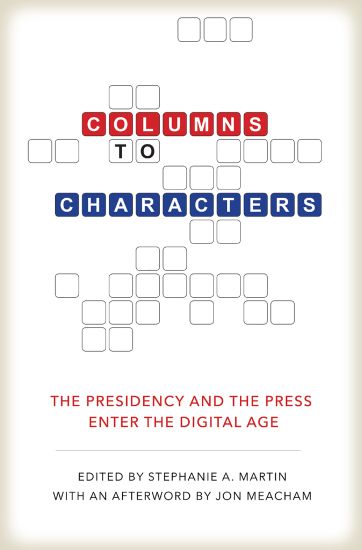
Columns to Characters

Columns to Characters

Peter Baker; Martha Joynt Kumar; Rita Kirk; David Demarest; Roderick P Hart; Thomas M. DeFrank; Stephen A Smith; Tony Pedersen; Robert W Mong; George C Edwards; Jennifer R. Mercieca; Stacia Deshishku; Jon Meacham

Texas A M University Press
2017
sidottu
The relationship between the presidency and the press has transformed—seemingly overnight—from one where reports and columns were filed, edited, and deliberated for hours before publication into a brave new world where texts, tweets, and sound bites race from composition to release within a matter of seconds. This change, which has ultimately made political journalism both more open and more difficult, brings about many questions, but perhaps the two most important are these: Are the hard questions still being asked? Are they still being answered? In Columns to Characters, Stephanie A. Martin and top scholars and journalists offer a fresh perspective on how the evolution of technology affects the way presidents interact with the public. From Bill Clinton’s saxophone playing on the Arsenio Hall Show to Barack Obama’s skillful use of YouTube, Twitter, and Reddit as the first “social media president,” political communication appears to reflect the increasing fragmentation of the American public. The accessible essays here explore these implications in a variety of real-world circumstances: the “narcotizing” numbness of information overload and voter apathy; the concerns over privacy, security, and civil liberties; new methods of running political campaigns and mobilizing support for programs; and a future “post-rhetorical presidency” in which the press is all but irrelevant. Each section of the book concludes with a “reality check,” a short reflection by a working journalist (or, in one case, a former White House insider) on the presidential beat.
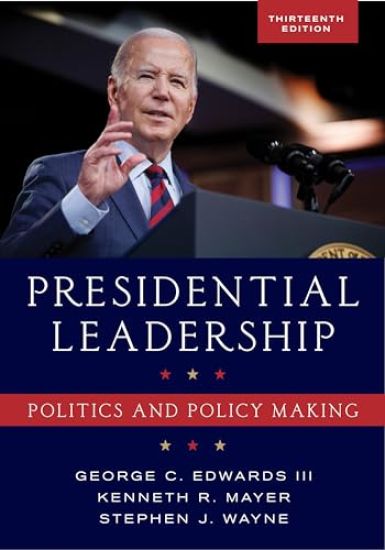
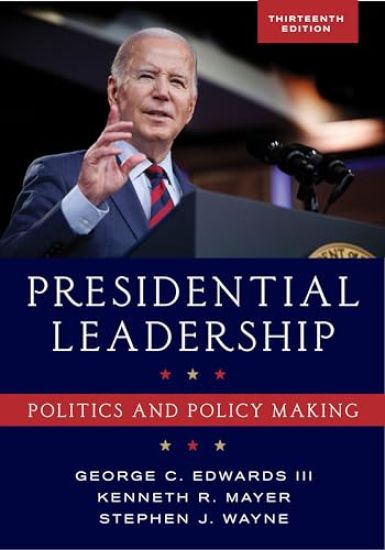
Presidential Leadership

Presidential Leadership

George C. Edwards; Kenneth R. Mayer; Stephen J. Wayne

ROWMAN LITTLEFIELD
2024
sidottu
Long established as a leading introduction to the American presidency, Presidential Leadership, Thirteenth Edition, provides students with a comprehensive survey that addresses the capacity of chief executives to fulfill their tasks, exercise their powers, and utilize their organizational structures to affect the output of government. The authors examine all aspects of the presidency in rich detail, including the president’s powers, presidential history, and the institution of the presidency.
Presidential Leadership

Presidential Leadership

George C. Edwards; Kenneth R. Mayer; Stephen J. Wayne

ROWMAN LITTLEFIELD
2024
nidottu
Long established as a leading introduction to the American presidency, Presidential Leadership, Thirteenth Edition, provides students with a comprehensive survey that addresses the capacity of chief executives to fulfill their tasks, exercise their powers, and utilize their organizational structures to affect the output of government. The authors examine all aspects of the presidency in rich detail, including the president’s powers, presidential history, and the institution of the presidency.
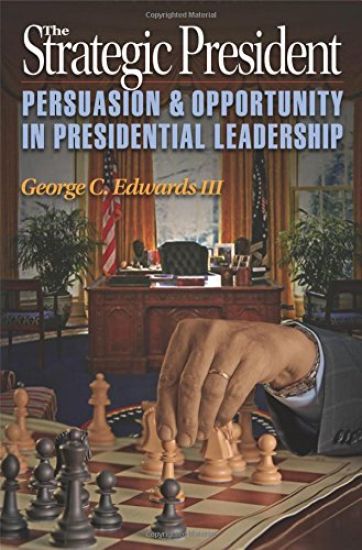
The Strategic President

The Strategic President

George C. Edwards

Princeton University Press
2012
pokkari
How do presidents lead? If presidential power is the power to persuade, why is there a lack of evidence of presidential persuasion? George Edwards, one of the leading scholars of the American presidency, skillfully uses this contradiction as a springboard to examine--and ultimately challenge--the dominant paradigm of presidential leadership. The Strategic President contends that presidents cannot create opportunities for change by persuading others to support their policies. Instead, successful presidents facilitate change by recognizing opportunities and fashioning strategies and tactics to exploit them. Edwards considers three extraordinary presidents--Abraham Lincoln, Franklin D. Roosevelt, and Ronald Reagan--and shows that despite their considerable rhetorical skills, the public was unresponsive to their appeals for support. To achieve change, these leaders capitalized on existing public opinion. Edwards then explores the prospects for other presidents to do the same to advance their policies. Turning to Congress, he focuses first on the productive legislative periods of FDR, Lyndon Johnson, and Reagan, and finds that these presidents recognized especially favorable conditions for passing their agendas and effectively exploited these circumstances while they lasted. Edwards looks at presidents governing in less auspicious circumstances, and reveals that whatever successes these presidents enjoyed also resulted from the interplay of conditions and the presidents' skills at understanding and exploiting them. The Strategic President revises the common assumptions of presidential scholarship and presents significant lessons for presidents' basic strategies of governance.
At the Margins

At the Margins

George C. Edwards

Yale University Press
1990
pokkari
In this book George Edwards seeks a deeper understanding of the relationship between the president and Congress, exploring how and under what conditions presidents lead Congress, what we can reasonably expect of them, and how we should evaluate their performance. He makes a persuasive case for his thesis that presidential leadership of Congress is typically at the margins, not the core, of policymaking. Edwards focuses on three important resources for presidential leadership: party, public opinion, and legislative skills. For each source of influence he analyzes the president's strategic position, the theoretical potential of the resource as an instrument of leadership. He then examines presidents' attempts to employ each resource to obtain support in Congress, showing that they are rarely able to expand their resource base or manipulate their resources reliably. Integrating quantitative analysis with documentary and historical research, Edwards argues that the effective leader is not the dominant chief executive of political folklore who restructures the contours of the political landscape to pave the way for change but is rather a facilitator who works at the margins of coalition building to exploit opportunities presented by a favorable configuration of political forces in his environment. Presidents are not by themselves going to bring about major changes in public policy, says Edwards, and we must adjust accordingly our expectations of their leadership. The implications of his book are broad, and his findings are an important corrective for those who personalize politics and attribute more influence to a single person or strategy than is usually merited.