Kirjojen hintavertailu – 12 903 735 kirjaa ja 27 kauppaa

Kirjailija

George Christakos

Kirjat ja teokset yhdessä paikassa: 13 kirjaa, julkaisuja vuosilta 1998–2026, suosituimpiin kuuluu Quantitative Analysis and Modeling of Earth and Environmental Data. Vertaile teosten hintoja ja tarkista saatavuus suomalaisista kirjakaupoista.

13 kirjaa

Kirjojen julkaisuvuodet: 1998–2026.

Quantitative Analysis and Modeling of Earth and Environmental Data

Quantitative Analysis and Modeling of Earth and Environmental Data

Jiaping Wu; Junyu He; George Christakos

Elsevier Science Publishing Co Inc
2021
nidottu
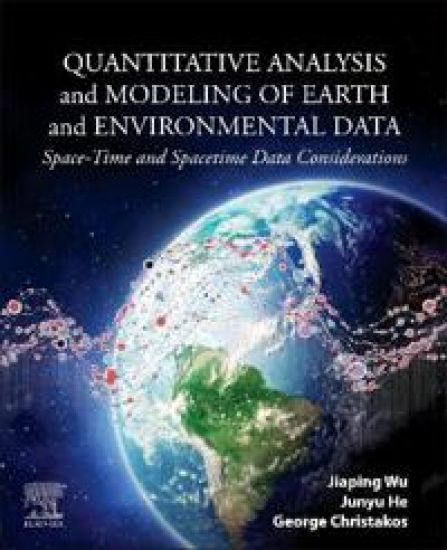
Quantitative Analysis and Modeling of Earth and Environmental Data: Space-Time and Spacetime Data Considerations introduces the notion of chronotopologic data analysis that offers a systematic, quantitative analysis of multi-sourced data and provides information about the spatial distribution and temporal dynamics of natural attributes (physical, biological, health, social). It includes models and techniques for handling data that may vary by space and/or time, and aims to improve understanding of the physical laws of change underlying the available numerical datasets, while taking into consideration the in-situ uncertainties and relevant measurement errors (conceptual, technical, computational). It considers the synthesis of scientific theory-based methods (stochastic modeling, modern geostatistics) and data-driven techniques (machine learning, artificial neural networks) so that their individual strengths are combined by acting symbiotically and complementing each other. The notions and methods presented in Quantitative Analysis and Modeling of Earth and Environmental Data: Space-Time and Spacetime Data Considerations cover a wide range of data in various forms and sources, including hard measurements, soft observations, secondary information and auxiliary variables (ground-level measurements, satellite observations, scientific instruments and records, protocols and surveys, empirical models and charts). Including real-world practical applications as well as practice exercises, this book is a comprehensive step-by-step tutorial of theory-based and data-driven techniques that will help students and researchers master data analysis and modeling in earth and environmental sciences (including environmental health and human exposure applications).

Science-Based Spatiotemporal Statistics

Science-Based Spatiotemporal Statistics

Hwa-Lung Yu; George Christakos

Apple Academic Press Inc.
2026
sidottu
This book provides an introduction to the theoretical development and practical methodology of the so-called science-based spatiotemporal statistics. The book capitalizes on the significance of integrating different knowledge sources (physical, ecological, health, and social) into formal spatiotemporal statistics and provides an array of practical procedures for incorporating these sources into composite space-time analysis, modeling, and estimation/prediction.
Spatiotemporal Random Fields

Spatiotemporal Random Fields

George Christakos

Elsevier Science Publishing Co Inc
2017
sidottu
Spatiotemporal Random Fields: Theory and Applications, Second Edition, provides readers with a new and updated edition of the text that explores the application of spatiotemporal random field models to problems in ocean, earth, and atmospheric sciences, spatiotemporal statistics, and geostatistics, among others. The new edition features considerable detail of spatiotemporal random field theory, including ordinary and generalized models, as well as space-time homostationary, isostationary and hetrogeneous approaches. Presenting new theoretical and applied results, with particular emphasis on space-time determination and interpretation, spatiotemporal analysis and modeling, random field geometry, random functionals, probability law, and covariance construction techniques, this book highlights the key role of space-time metrics, the physical interpretation of stochastic differential equations, higher-order space-time variability functions, the validity of major theoretical assumptions in real-world practice (covariance positive-definiteness, metric-adequacy etc.), and the emergence of interdisciplinary phenomena in conditions of multi-sourced real-world uncertainty.
Integrative Problem-Solving in a Time of Decadence
Presents a unique study of Integrative Problem-Solving (IPS). The consideration of 'Decadence' is essential in the scientific study of environmental and other problems and their rigorous solution, because the broad context within which the problems emerge can affect their solution. Stochastic reasoning underlines the conceptual and methodological framework of IPS, and its formulation has a mathematical life of its own that accounts for the multidisciplinarity of real world problems, the multisourced uncertainties characterizing their solution, and the different thinking modes of the people involved. Only by interpolating between the full range of disciplines (including stochastic mathematics, physical science, neuropsychology, philosophy, and sociology) and the associated thinking modes can scientists arrive at a satisfactory account of problem-solving, and be able to distinguish between a technically complete problem-solution, and a solution that has social impact.
Stochastic Medical Reasoning And Environmental Health Exposure

Stochastic Medical Reasoning And Environmental Health Exposure

George Christakos; Jinfeng Wang; Jiaping Wu

Imperial College Press
2014
sidottu
The validity of certain critical reasoning steps carried out during or on the sidelines of the environmental science, public health survey, medical experiment, population risk assessment, or disease space-time mapping under conditions of in situ uncertainty and space-time heterogeneity, is often not given sufficient attention and may even be out of the investigator's line of thought. For example, the technical complexity of an environmental exposure experiment may overshadow the logical assumptions made when moving from one phase of the experiment to the next, or the study of population risk assessment may focus on analytical and computational matters, whereas methodological and cultural factors are neglected. This book helps health investigators structure their thinking so that they avoid logical mistakes and argument pitfalls, and also gain new insights about reality, improve their awareness of the environment and context within which one's thinking takes place.
Temporal GIS

Temporal GIS

George Christakos; Patrick Bogaert; Marc Serre

Springer-Verlag Berlin and Heidelberg GmbH Co. K
2013
nidottu
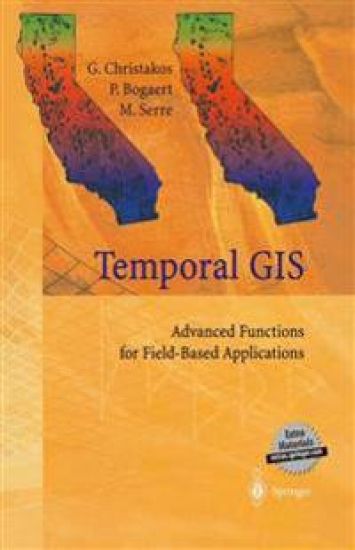
Trustonlymovement. Life happens at the level of events not of words. Trust movement. A. Adler As its title suggests,the main goal of this book is the development of advanced fu- tions for field-based Temporal Geographical Information Systems (TGIS). These fields may describe a variety of natural, epidemiological, economical, and social phen- ena distributed across space and time. Within such a framework,the book makes an attempt to establish links between, (a) the currently conceived TGIS techniques, and (b) the Bayesian maximum entropy (BME) techniques of Modern Spatiotemporal G- statistics. This link could be vital for offering significant improvements in the advanced functions of TGIS analysis and modelling, as well as generating useful information in a variety of real-world decision making and planning situations. To achieve the above goals, the eight Chapters of the book are organized around four main themes: Concepts, mathematical tools, computer programs, and applications. In fact, the focus is mainly on the step-by-step implementation of the compu- tional BME approach and the extensive use of illustrative examples and real-world applications. Indeed,because of the applied character of the present book,no detailed theoretical explanations or mathematical derivations are included. Instead,the reader is referred to the earlier book by Christakos (Modern Spatiotemporal Geostatistics, Oxford Univ. Press,New York, N. Y., 2000) for a comprehensive presentation of these BME aspects. With this in mind, the chapter-by-chapter organization of the book is described next.
Modern Spatiotemporal Geostatistics

Modern Spatiotemporal Geostatistics

George Christakos

Dover Publications Inc.
2012
pokkari
This scholarly introductory treatment explores the fundamentals of modern geostatistics, viewing them as the product of the advancement of the epistemic status of stochastic data analysis. The focus on the Bayesian maximum entropy approach for studying spatiotemporal distributions of natural variables offers a deeper understanding of geostatistics in models of scientific mapping. 2000 edition.
Integrative Problem-Solving in a Time of Decadence
Presents a unique study of Integrative Problem-Solving (IPS). The consideration of 'Decadence' is essential in the scientific study of environmental and other problems and their rigorous solution, because the broad context within which the problems emerge can affect their solution. Stochastic reasoning underlines the conceptual and methodological framework of IPS, and its formulation has a mathematical life of its own that accounts for the multidisciplinarity of real world problems, the multisourced uncertainties characterizing their solution, and the different thinking modes of the people involved. Only by interpolating between the full range of disciplines (including stochastic mathematics, physical science, neuropsychology, philosophy, and sociology) and the associated thinking modes can scientists arrive at a satisfactory account of problem-solving, and be able to distinguish between a technically complete problem-solution, and a solution that has social impact.
Spatiotemporal Environmental Health Modelling: A Tractatus Stochasticus

Spatiotemporal Environmental Health Modelling: A Tractatus Stochasticus

George Christakos; Dionissios Hristopulos

Springer-Verlag New York Inc.
2010
nidottu
Spatiotemporal Environmental Health Modelling: A Tractatus Stochasticus provides a holistic, conceptual and quantitative framework for Environmental Health Modelling in space-time. The holistic framework integrates two aspects of Environmental Health Science that have been previously treated separately: the environmental aspect, which involves the natural processes that bring about human exposure to harmful substances; and the health aspect, which focuses on the interactions of these substances with the human body. Some of the fundamental issues addressed in this work include variability, scale, uncertainty, and space-time connectivity. These topics are important in the characterization of natural systems and health processes. Spatiotemporal Environmental Health Modelling: A Tractatus Stochasticus explains why modern stochastics is the appropriate mechanical vehicle for addressing such issues in a rigorous way. In particular, modern stochastics incorporates concepts and methods from probability, classical statistics, geostatistics, statistical mechanics and field theory. The authors present a synthetic view of environmental health that embraces all of the various components and focuses on their mutual interactions. Spatiotemporal Environmental Health Modeling: A Tractatus Stochasticus includes new material on Bayesian maximum entropy estimation techniques and space-time random field estimation methods. The authors show why these methods have clear advantages over the classical geostatistical estimation procedures and how they can be used to provide accurate space-time maps of environmental health processes. Also included are expositions of diagrammatic perturbation and renormalization group analysis, which have not been previously discussed within the context of Environmental Health. Finally, the authors present stochastic indicators that can be used for large-scale characterization of contamination and investigations of health effects at the microscopic level. This book will be a useful reference to both researchers and practitioners of Environmental Health Sciences. It will appeal specifically to environmental engineers, geographers, geostatisticians, earth scientists, toxicologists, epidemiologists, pharmacologists, applied mathematicians, physicists and biologists.
Interdisciplinary Public Health Reasoning and Epidemic Modelling: The Case of Black Death

Interdisciplinary Public Health Reasoning and Epidemic Modelling: The Case of Black Death

George Christakos; Ricardo A. Olea; Marc L. Serre; Hwa-Lung Yu; Lin-Lin Wang

Springer-Verlag Berlin and Heidelberg GmbH Co. K
2010
nidottu
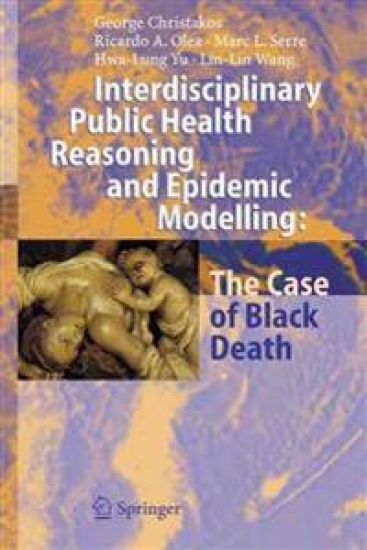
If you want to achieve something, if you want to write a book, paint a picture, be sure the center of your existence is somewhere else and that it’s solidly grounded; only then will you be able to keep your cool and laugh at the attacks that are bound to come. ” P. Feyerabend This is a book about interdisciplinary public health reasoning and epidemic m- th elling, in general, and the study of the infamous 14 century AD Black Death d- aster, in particular. We focus on the intellectual context in which epidemic mod- ling takes place, in a way that accounts for the present-day interdisciplinary and multicultural trends in scientific inquiry. Like most scientific fields, public health research defines itself based on knowledge, which raises serious epistemic and cognitive issues. Therefore, we maintain that for public health modellers to fu- tion in an often complex environment, they should be aware of the divergent c- ceptions of knowledge and the technological changes that these imply, the mul- ple sources of information commonly available and their reliability, the different styles of thinking adopted by the disciplines involved, and the importance of - veloping sound interdisciplinary knowledge integration skills.
Interdisciplinary Public Health Reasoning and Epidemic Modelling: The Case of Black Death

Interdisciplinary Public Health Reasoning and Epidemic Modelling: The Case of Black Death

George Christakos; Ricardo A. Olea; Marc L. Serre; Hwa-Lung Yu; Lin-Lin Wang

Springer-Verlag Berlin and Heidelberg GmbH Co. K
2005
sidottu
If you want to achieve something, if you want to write a book, paint a picture, be sure the center of your existence is somewhere else and that it’s solidly grounded; only then will you be able to keep your cool and laugh at the attacks that are bound to come. ” P. Feyerabend This is a book about interdisciplinary public health reasoning and epidemic m- th elling, in general, and the study of the infamous 14 century AD Black Death d- aster, in particular. We focus on the intellectual context in which epidemic mod- ling takes place, in a way that accounts for the present-day interdisciplinary and multicultural trends in scientific inquiry. Like most scientific fields, public health research defines itself based on knowledge, which raises serious epistemic and cognitive issues. Therefore, we maintain that for public health modellers to fu- tion in an often complex environment, they should be aware of the divergent c- ceptions of knowledge and the technological changes that these imply, the mul- ple sources of information commonly available and their reliability, the different styles of thinking adopted by the disciplines involved, and the importance of - veloping sound interdisciplinary knowledge integration skills.
Temporal GIS

Temporal GIS

George Christakos; Patrick Bogaert; Marc Serre

Springer-Verlag Berlin and Heidelberg GmbH Co. K
2002
sidottu
Trustonlymovement. Life happens at the level of events not of words. Trust movement. A. Adler As its title suggests,the main goal of this book is the development of advanced fu- tions for field-based Temporal Geographical Information Systems (TGIS). These fields may describe a variety of natural, epidemiological, economical, and social phen- ena distributed across space and time. Within such a framework,the book makes an attempt to establish links between, (a) the currently conceived TGIS techniques, and (b) the Bayesian maximum entropy (BME) techniques of Modern Spatiotemporal G- statistics. This link could be vital for offering significant improvements in the advanced functions of TGIS analysis and modelling, as well as generating useful information in a variety of real-world decision making and planning situations. To achieve the above goals, the eight Chapters of the book are organized around four main themes: Concepts, mathematical tools, computer programs, and applications. In fact, the focus is mainly on the step-by-step implementation of the compu- tional BME approach and the extensive use of illustrative examples and real-world applications. Indeed,because of the applied character of the present book,no detailed theoretical explanations or mathematical derivations are included. Instead,the reader is referred to the earlier book by Christakos (Modern Spatiotemporal Geostatistics, Oxford Univ. Press,New York, N. Y., 2000) for a comprehensive presentation of these BME aspects. With this in mind, the chapter-by-chapter organization of the book is described next.
Spatiotemporal Environmental Health Modelling: A Tractatus Stochasticus

Spatiotemporal Environmental Health Modelling: A Tractatus Stochasticus

George Christakos; Dionissios Hristopulos

Springer
1998
sidottu
Spatiotemporal Environmental Health Modelling: A Tractatus Stochasticus provides a holistic, conceptual and quantitative framework for Environmental Health Modelling in space-time. The holistic framework integrates two aspects of Environmental Health Science that have been previously treated separately: the environmental aspect, which involves the natural processes that bring about human exposure to harmful substances; and the health aspect, which focuses on the interactions of these substances with the human body. Some of the fundamental issues addressed in this work include variability, scale, uncertainty, and space-time connectivity. These topics are important in the characterization of natural systems and health processes. Spatiotemporal Environmental Health Modelling: A Tractatus Stochasticus explains why modern stochastics is the appropriate mechanical vehicle for addressing such issues in a rigorous way. In particular, modern stochastics incorporates concepts and methods from probability, classical statistics, geostatistics, statistical mechanics and field theory. The authors present a synthetic view of environmental health that embraces all of the various components and focuses on their mutual interactions. Spatiotemporal Environmental Health Modeling: A Tractatus Stochasticus includes new material on Bayesian maximum entropy estimation techniques and space-time random field estimation methods. The authors show why these methods have clear advantages over the classical geostatistical estimation procedures and how they can be used to provide accurate space-time maps of environmental health processes. Also included are expositions of diagrammatic perturbation and renormalization group analysis, which have not been previously discussed within the context of Environmental Health. Finally, the authors present stochastic indicators that can be used for large-scale characterization of contamination and investigations of health effects at the microscopic level. This book will be a useful reference to both researchers and practitioners of Environmental Health Sciences. It will appeal specifically to environmental engineers, geographers, geostatisticians, earth scientists, toxicologists, epidemiologists, pharmacologists, applied mathematicians, physicists and biologists.