

Kirjailija
George Eliot
Kirjat ja teokset yhdessä paikassa: 1 112 kirjaa, julkaisuja vuosilta 1863–2026, suosituimpiin kuuluu Förfärande kvinnor : gotisk skräck från Brontë till Gilman i urval och översättning av KG Johansson. Vertaile teosten hintoja ja tarkista saatavuus suomalaisista kirjakaupoista.
1 112 kirjaa
Kirjojen julkaisuvuodet: 1863–2026.






Felix Holt, the Radical (1866) is a social novel written by George Eliot about political disputes in a small English town at the time of the First Reform Act of 1832. In January 1868, Eliot penned an article entitled "Address to Working Men, by Felix Holt". This came on the heels of the Second Reform Act of 1867 which expanded the right to vote beyond the landed classes and was written in the character of, and signed by, Felix Holt. Set during the time of the Reform Act of 1832, the story centers on an election contested by Harold Transome, a local landowner, in the "Radical cause" ("Radical" because Transome's version of "radicalism" isn't radical at all, but rather an application of the term to his politically stagnate lifestyle), contrary to his family's Tory traditions. Contrasting with the opportunism of Transome is the sincere, but opinionated, Radical Felix Holt. A subplot concerns the stepdaughter of a Dissenting minister who is the true heir to the Transome estate, but who is unaware of the fact. She becomes the object of the affections of both Harold Transome and Felix Holt.

Felix Holt, the Radical (1866) is a social novel written by George Eliot about political disputes in a small English town at the time of the First Reform Act of 1832. In January 1868, Eliot penned an article entitled "Address to Working Men, by Felix Holt". This came on the heels of the Second Reform Act of 1867 which expanded the right to vote beyond the landed classes and was written in the character of, and signed by, Felix Holt. Set during the time of the Reform Act of 1832, the story centers on an election contested by Harold Transome, a local landowner, in the "Radical cause" ("Radical" because Transome's version of "radicalism" isn't radical at all, but rather an application of the term to his politically stagnate lifestyle), contrary to his family's Tory traditions. Contrasting with the opportunism of Transome is the sincere, but opinionated, Radical Felix Holt. A subplot concerns the stepdaughter of a Dissenting minister who is the true heir to the Transome estate, but who is unaware of the fact. She becomes the object of the affections of both Harold Transome and Felix Holt.

George Eliot: Die M hle am Floss The Mill on the Floss. Erstdruck: William Blackwood and Sons, Edinburgh and London, 1860. Hier in der deutschen bersetzung von Julius Frese, Verlag von Franz Duncker, Berlin, 1861. Neuausgabe. Herausgegeben von Karl-Maria Guth. Berlin 2019. Der Text dieser Ausgabe wurde behutsam an die neue deutsche Rechtschreibung angepasst. Umschlaggestaltung von Thomas Schultz-Overhage. Gesetzt aus der Minion Pro, 11 pt.

George Eliot: Die M hle am Floss The Mill on the Floss. Erstdruck: William Blackwood and Sons, Edinburgh and London, 1860. Hier in der deutschen bersetzung von Julius Frese, Verlag von Franz Duncker, Berlin, 1861. Neuausgabe. Herausgegeben von Karl-Maria Guth. Berlin 2019. Der Text dieser Ausgabe wurde behutsam an die neue deutsche Rechtschreibung angepasst. Umschlaggestaltung von Thomas Schultz-Overhage. Gesetzt aus der Minion Pro, 11 pt.

George Eliot: Die M hle am Floss Lesefreundlicher Gro druck in 16-pt-Schrift Gro format, 210 x 297 mm Berliner Ausgabe, 2019 Durchgesehener Neusatz bearbeitet und eingerichtet von Theodor Borken The Mill on the Floss. Erstdruck: William Blackwood and Sons, Edinburgh and London, 1860. Hier in der deutschen bersetzung von Julius Frese, Verlag von Franz Duncker, Berlin, 1861. Der Text dieser Ausgabe wurde behutsam an die neue deutsche Rechtschreibung angepasst. Umschlaggestaltung von Thomas Schultz-Overhage. Gesetzt aus der Minion Pro, 16 pt. Henricus Edition Deutsche Klassik UG (haftungsbeschr nkt)

George Eliot: Die M hle am Floss Lesefreundlicher Gro druck in 16-pt-Schrift Gro format, 210 x 297 mm Berliner Ausgabe, 2019 Durchgesehener Neusatz bearbeitet und eingerichtet von Theodor Borken The Mill on the Floss. Erstdruck: William Blackwood and Sons, Edinburgh and London, 1860. Hier in der deutschen bersetzung von Julius Frese, Verlag von Franz Duncker, Berlin, 1861. Der Text dieser Ausgabe wurde behutsam an die neue deutsche Rechtschreibung angepasst. Umschlaggestaltung von Thomas Schultz-Overhage. Gesetzt aus der Minion Pro, 16 pt. Henricus Edition Deutsche Klassik UG (haftungsbeschr nkt)

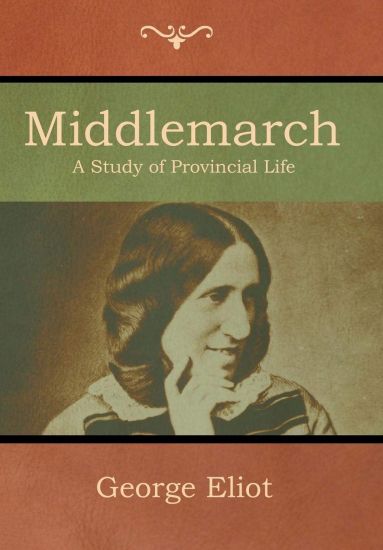
Mary Ann Evans (22 November 1819 - 22 December 1880; alternatively Mary Anne or Marian), known by her pen name George Eliot, was an English novelist, poet, journalist, translator, and one of the leading writers of the Victorian era. She wrote seven novels, including Adam Bede (1859), The Mill on the Floss (1860), Silas Marner (1861), Romola (1862-63), Middlemarch (1871-72), and Daniel Deronda (1876), most of which are set in provincial England and known for their realism and psychological insight. Although female authors were published under their own names during her lifetime, she wanted to escape the stereotype of women's writing being limited to lighthearted romances. She also wanted to have her fiction judged separately from her already extensive and widely known work as an editor and critic. Another factor in her use of a pen name may have been a desire to shield her private life from public scrutiny, thus avoiding the scandal that would have arisen because of her relationship with the married George Henry Lewes. Eliot's Middlemarch has been described by the novelists Martin Amis and Julian Barnes as the greatest novel in the English language. Middlemarch, A Study of Provincial Life is a novel by the English author George Eliot (Mary Anne Evans), first published in eight instalments (volumes) in 1871-1872. The novel is set in the fictitious Midlands town of Middlemarch during 1829-1832, and follows several distinct, intersecting stories with a large cast of characters. Issues include the status of women, the nature of marriage, idealism, self-interest, religion, hypocrisy, political reform, and education. Despite comic elements, Middlemarch is a work of realism encompassing historical events: the 1832 Reform Act, the beginnings of the railways, and the death of King George IV and succession of his brother, the Duke of Clarence (King William IV). It incorporates contemporary medicine and examines the reactionary views of a settled community facing unwelcome change. Eliot began writing the two pieces that would form Middlemarch in the years 1869-1870 and completed the novel in 1871. Although initial reviews were mixed, it is now seen widely as her best work and one of the great novels of the English language. (wikipedia.org)



With precise plotting underpinned by a wise understanding of human nature, George Eliot’s most autobiographical novel gives a wonderful evocation of rural life and the complicated relationship between siblings. Part of the Macmillan Collector’s Library; a series of stunning, clothbound, pocket sized classics with gold foiled edges and ribbon markers. These beautiful books make perfect gifts or a treat for any book lover. This edition of The Mill on the Floss features an introduction by Professor Kathryn Hughes. Maggie Tulliver and her brother Tom enjoy a rural childhood on the banks of the river Floss. But the approach of adulthood creates tension: intelligent and fiery Maggie tests the boundaries of nineteenth-century society in her search for love, while Tom embraces convention and accepts his father’s desire for him to become a businessman. Increasingly self-righteous, Tom disapproves of his sister’s suitors and when he discovers that she took a fateful boat trip with Stephen Guest, her cousin’s fiancé, he turns his back on her. Maggie is ostracized by her beloved brother and her own community, and only through tragic events are the siblings reunited . . .