Kirjojen hintavertailu – 12 859 828 kirjaa ja 27 kauppaa

Kirjailija

George Gissing

Kirjat ja teokset yhdessä paikassa: 680 kirjaa, julkaisuja vuosilta 1971–2026, suosituimpiin kuuluu Kävelyn ylistys ja muita kirjoituksia kävelystä. Vertaile teosten hintoja ja tarkista saatavuus suomalaisista kirjakaupoista.

680 kirjaa

Kirjojen julkaisuvuodet: 1971–2026.

George Gissing - The Odd Women: "No, no; women, old or young, should never have to think about money"
George Robert Gissing was born on November 22nd, 1857 in Wakefield, Yorkshire. He was educated at Back Lane School in Wakefield. Gissing loved school. He was enthusiastic with a thirst for learning and always diligent. By the age of ten he was reading Dickens, a lifelong hero. In 1872 Gissing won a scholarship to Owens College. Whilst there Gissing worked hard but remained solitary. Unfortunately, he had run short of funds and stole from his fellow students. He was arrested, prosecuted, found guilty, expelled and sentenced to a month's hard labour in 1876. On release he decided to start over. In September 1876 he travelled to the United States. Here he wrote short stories for the Chicago Tribune and other newspapers. On his return home he was ready for novels. Gissing self-published his first novel but it failed to sell. His second was acquired but never published. His writing career was static. Something had to change. And it did. By 1884 The Unclassed was published. Now everything he wrote was published. Both Isabel Clarendon and Demos appeared in 1886. He mined the lives of the working class as diligently as any capitalist. In 1889 Gissing used the proceeds from the sale of The Nether World to go to Italy. This trip formed the basis for his 1890 work The Emancipated. Gissing's works began to command higher payments. New Grub Street (1891) brought a fee of 250. Short stories followed and in 1895, three novellas were published; Eve's Ransom, The Paying Guest and Sleeping Fires. Gissing was careful to keep up with the changing attitudes of his audience. Unfortunately, he was also diagnosed as suffering from emphysema. The last years of his life were spent as a semi-invalid in France but he continued to write. 1899; The Crown of Life. Our Friend the Charlatan appeared in 1901, followed two years later by The Private Papers of Henry Ryecroft. George Robert Gissing died aged 46 on December 28th, 1903 after catching a chill on a winter walk.

The Emancipated

The Emancipated

George Gissing

Createspace Independent Publishing Platform
2018
nidottu
Miriam Baske, a young widow, leaves behind the gray stone chapels and flinty hearts of Lancashire for the sun and artistic splendor of Italy -- where she meets a host of her countrymen doing the Grand Tour.
George Gissing - Workers in the Dawn - Volume II (of III): "Flippancy, the most hopeless form of intellectual vice"
George Robert Gissing was born on November 22nd, 1857 in Wakefield, Yorkshire. He was educated at Back Lane School in Wakefield. Gissing loved school. He was enthusiastic with a thirst for learning and always diligent. By the age of ten he was reading Dickens, a lifelong hero. In 1872 Gissing won a scholarship to Owens College. Whilst there Gissing worked hard but remained solitary. Unfortunately, he had run short of funds and stole from his fellow students. He was arrested, prosecuted, found guilty, expelled and sentenced to a month's hard labour in 1876. On release he decided to start over. In September 1876 he travelled to the United States. Here he wrote short stories for the Chicago Tribune and other newspapers. On his return home he was ready for novels. Gissing self-published his first novel but it failed to sell. His second was acquired but never published. His writing career was static. Something had to change. And it did. By 1884 The Unclassed was published. Now everything he wrote was published. Both Isabel Clarendon and Demos appeared in 1886. He mined the lives of the working class as diligently as any capitalist. In 1889 Gissing used the proceeds from the sale of The Nether World to go to Italy. This trip formed the basis for his 1890 work The Emancipated. Gissing's works began to command higher payments. New Grub Street (1891) brought a fee of 250. Short stories followed and in 1895, three novellas were published; Eve's Ransom, The Paying Guest and Sleeping Fires. Gissing was careful to keep up with the changing attitudes of his audience. Unfortunately, he was also diagnosed as suffering from emphysema. The last years of his life were spent as a semi-invalid in France but he continued to write. 1899; The Crown of Life. Our Friend the Charlatan appeared in 1901, followed two years later by The Private Papers of Henry Ryecroft. George Robert Gissing died aged 46 on December 28th, 1903 after catching a chill on a winter walk.

George Gissing - By the Ionian Sea: "It is because nations tend towards stupidity and baseness that mankind moves so slowly"
George Robert Gissing was born on November 22nd, 1857 in Wakefield, Yorkshire. He was educated at Back Lane School in Wakefield. Gissing loved school. He was enthusiastic with a thirst for learning and always diligent. By the age of ten he was reading Dickens, a lifelong hero. In 1872 Gissing won a scholarship to Owens College. Whilst there Gissing worked hard but remained solitary. Unfortunately, he had run short of funds and stole from his fellow students. He was arrested, prosecuted, found guilty, expelled and sentenced to a month's hard labour in 1876. On release he decided to start over. In September 1876 he travelled to the United States. Here he wrote short stories for the Chicago Tribune and other newspapers. On his return home he was ready for novels. Gissing self-published his first novel but it failed to sell. His second was acquired but never published. His writing career was static. Something had to change. And it did. By 1884 The Unclassed was published. Now everything he wrote was published. Both Isabel Clarendon and Demos appeared in 1886. He mined the lives of the working class as diligently as any capitalist. In 1889 Gissing used the proceeds from the sale of The Nether World to go to Italy. This trip formed the basis for his 1890 work The Emancipated. Gissing's works began to command higher payments. New Grub Street (1891) brought a fee of 250. Short stories followed and in 1895, three novellas were published; Eve's Ransom, The Paying Guest and Sleeping Fires. Gissing was careful to keep up with the changing attitudes of his audience. Unfortunately, he was also diagnosed as suffering from emphysema. The last years of his life were spent as a semi-invalid in France but he continued to write. 1899; The Crown of Life. Our Friend the Charlatan appeared in 1901, followed two years later by The Private Papers of Henry Ryecroft. George Robert Gissing died aged 46 on December 28th, 1903 after catching a chill on a winter walk.
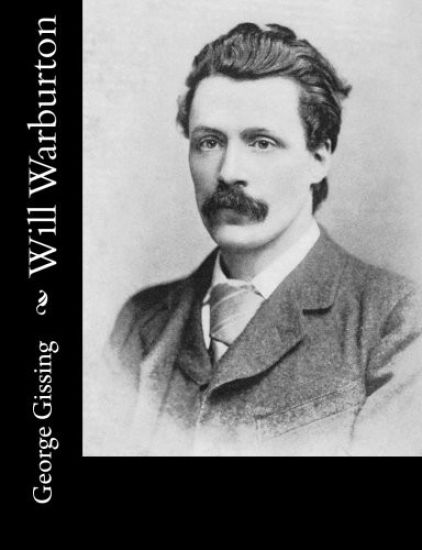
Will Warburton

Will Warburton

George Gissing

Createspace Independent Publishing Platform
2018
nidottu
In the later years of his career, popular Victorian-era writer George Gissing turned his attention to the social ills and challenges of the time. His last published novel, Will Warburton, is a prime example of social realism. The story following the travails of the title character, whose fortune is depleted through a series of shady business deals and who is subsequently forced to go into business as a shopkeeper.
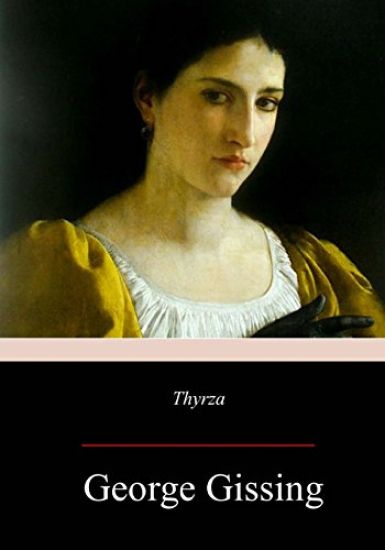
Thyrza

Thyrza

George Gissing

Createspace Independent Publishing Platform
2017
nidottu
Excerpt from Thyrza: A Tale Annabel, who had been sunk in thought, looked up with a smile. She was about to say something, but her cousin replied rapidly. About the Publisher Forgotten Books publishes hundreds of thousands of rare and classic books. Find more at www.forgottenbooks.com This book is a reproduction of an important historical work. Forgotten Books uses state-of-the-art technology to digitally reconstruct the work, preserving the original format whilst repairing imperfections present in the aged copy. In rare cases, an imperfection in the original, such as a blemish or missing page, may be replicated in our edition. We do, however, repair the vast majority of imperfections successfully; any imperfections that remain are intentionally left to preserve the state of such historical works.
The Unclassed

The Unclassed

George Gissing

Createspace Independent Publishing Platform
2017
nidottu
The Unclassed is a novel by the English author George Gissing. It was written during 1883 but revised, at the publisher's insistence, in February 1884 and shortly before publication. It tells the story of a young, educated man, Osmond Waymark, who survives by teaching. He answers a magazine advertisement, placed by Julian Casti - a half-Italian who had felt himself to be rejected by society - for companionship and the two strike up a serious and deep friendship... George Robert Gissing (22 November 1857 - 28 December 1903) was an English novelist who published 23 novels between 1880 and 1903. Gissing also worked as a teacher and tutor throughout his life. He published his first novel, Workers in the Dawn, in 1880. His best known novels, which are published in modern editions, include The Nether World (1889), New Grub Street (1891), and The Odd Women (1893). Early life: Gissing was born on 22 November 1857 in Wakefield, Yorkshire, the eldest of five children of Thomas Waller Gissing, who ran a chemist's shop, and Margaret nee Bedford. His siblings were: William, who died aged twenty; Algernon, who became a writer; Margaret; and Ellen. His childhood home in Thompson's Yard, Wakefield, is maintained by The Gissing Trust. Gissing was educated at Back Lane School in Wakefield, where he was a diligent and enthusiastic student. His serious interest in books began at the age of ten when he read The Old Curiosity Shop by Charles Dickens and subsequently, encouraged by his father and inspired by the family library, his literary interest grew. Juvenilia written at this time was published in 1995 in The Poetry of George Gissing. He was also skilled at drawing. Gissing's father died when he was 12 years old, and he and his brothers were sent to Lindow Grove School at Alderley Edge in Cheshire, where he was a solitary student who studied hard. In 1872, after an exceptional performance in the Oxford Local Examinations, Gissing won a scholarship to Owens College, forerunner of the University of Manchester. There he remained solitary, continued his intense studies, and won many prizes, including the Poem Prize in 1873 and the Shakespeare scholarship in 1875. Gissing's academic career ended in disgrace when he fell in love with a young woman Marianne Helen Harrison, known as Nell. She is often described as a prostitute, but there is no evidence for this. It is reported that he gave her money in an attempt to keep her off the streets, but, again, there is no evidence. What is known, is that when he ran short of money he stole from his fellow students. The college hired a detective to investigate the thefts, and Gissing was prosecuted, found guilty, expelled and sentenced to a month's hard labour in Belle Vue Gaol, Manchester in 1876. In September 1876, with support from sympathisers, he travelled to the United States, where he spent time in Boston and Waltham, Massachusetts writing and teaching classics. When his money ran out he moved to Chicago, where he earned a precarious living writing short stories for newspapers, including the Chicago Tribune. He lived in poverty until he met a travelling salesman in need of an assistant and Gissing demonstrated his products. These experiences partially inspired his 1891 novel, New Grub Street. In September 1877, Gissing left America and returned to England.
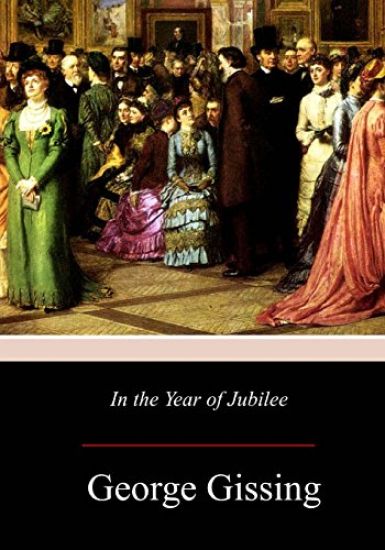
In the Year of Jubilee

In the Year of Jubilee

George Gissing

Createspace Independent Publishing Platform
2017
nidottu
The story of the romantic and sexual initiation of a suburban heroine, Nancy Lord which Gissing wrote after his return from Exeter. He took lodgings with his second wife at 76 Burton Road, Brixton where South London provided new literary inspiration. He went for long walks through nearby Camberwell, soaking up impressions of the way of life he saw emerging there.
Human Odds and Ends

Human Odds and Ends

George Gissing

Hansebooks
2017
pokkari
Human Odds and Ends - Stories and Sketches is an unchanged, high-quality reprint of the original edition of 1898. Hansebooks is editor of the literature on different topic areas such as research and science, travel and expeditions, cooking and nutrition, medicine, and other genres. As a publisher we focus on the preservation of historical literature. Many works of historical writers and scientists are available today as antiques only. Hansebooks newly publishes these books and contributes to the preservation of literature which has become rare and historical knowledge for the future.
Will Warburton

Will Warburton

George Gissing

Createspace Independent Publishing Platform
2017
nidottu
This collection of literature attempts to compile many of the classic works that have stood the test of time and offer them at a reduced, affordable price, in an attractive volume so that everyone can enjoy them.
Denzil Quarrier

Denzil Quarrier

George Gissing

Createspace Independent Publishing Platform
2017
nidottu
This collection of literature attempts to compile many of the classic works that have stood the test of time and offer them at a reduced, affordable price, in an attractive volume so that everyone can enjoy them.
The Whirlpool

The Whirlpool

George Gissing

Createspace Independent Publishing Platform
2017
nidottu
The Whirlpool is a novel by English author George Gissing, first published in 1897. George Robert Gissing 22 November 1857 - 28 December 1903) was an English novelist who published 23 novels between 1880 and 1903. Gissing also worked as a teacher and tutor throughout his life. He published his first novel, Workers in the Dawn, in 1880. His best known novels, which are published in modern editions, include The Nether World (1889), New Grub Street (1891), and The Odd Women (1893). Gissing was born on 22 November 1857 in Wakefield, Yorkshire, the eldest of five children of Thomas Waller Gissing, who ran a chemist's shop, and Margaret nee Bedford. His siblings were: William, who died aged twenty; Algernon, who became a writer; Margaret; and Ellen. His childhood home in Thompson's Yard, Wakefield, is maintained by The Gissing Trust.
A Life's Morning

A Life's Morning

George Gissing

Createspace Independent Publishing Platform
2017
nidottu
This work has been selected by scholars as being culturally important and is part of the knowledge base of civilization as we know it. This work is in the public domain in the United States of America, and possibly other nations. Within the United States, you may freely copy and distribute this work, as no entity (individual or corporate) has a copyright on the body of the work. Scholars believe, and we concur, that this work is important enough to be preserved, reproduced, and made generally available to the public. To ensure a quality reading experience, this work has been proofread and republished using a format that seamlessly blends the original graphical elements with text in an easy-to-read typeface. We appreciate your support of the preservation process, and thank you for being an important part of keeping this knowledge alive and relevant.
The crown of life. By: George Gissing. / NOVEL /

The crown of life. By: George Gissing. / NOVEL /

George Gissing

Createspace Independent Publishing Platform
2017
nidottu
George Robert Gissing 22 November 1857 - 28 December 1903) was an English novelist who published 23 novels between 1880 and 1903. Gissing also worked as a teacher and tutor throughout his life. He published his first novel, Workers in the Dawn, in 1880. His best known novels, which are published in modern editions, include The Nether World (1889), New Grub Street (1891), and The Odd Women (1893). Gissing was born on 22 November 1857 in Wakefield, Yorkshire, the eldest of five children of Thomas Waller Gissing, who ran a chemist's shop, and Margaret n e Bedford. His siblings were: William, who died aged twenty; Algernon, who became a writer; Margaret; and Ellen. His childhood home in Thompson's Yard, Wakefield, is maintained by The Gissing Trust.