
Kirjailija
George Gordon Byron
Kirjat ja teokset yhdessä paikassa: 476 kirjaa, julkaisuja vuosilta 1864–2026, suosituimpiin kuuluu Manfred. Vertaile teosten hintoja ja tarkista saatavuus suomalaisista kirjakaupoista.
476 kirjaa
Kirjojen julkaisuvuodet: 1864–2026.
Childe Harold's Pilgrimage: A Narrative Poem
George Gordon Byron
Createspace Independent Publishing Platform
2016
nidottu

Childe Harold's Pilgrimage
George Gordon Byron
Createspace Independent Publishing Platform
2016
nidottu
Childe Harold's Pilgrimage is a lengthy narrative poem in four parts written by Lord Byron. It was published between 1812 and 1818 and is dedicated to "Ianthe". The poem describes the travels and reflections of a world-weary young man who, disillusioned with a life of pleasure and revelry, looks for distraction in foreign lands. In a wider sense, it is an expression of the melancholy and disillusionment felt by a generation weary of the wars of the post-Revolutionary and Napoleonic eras. The title comes from the term childe, a medieval title for a young man who was a candidate for knighthood.

Manfred: A dramatic poem is a poem written in 1816-1817 by Lord Byron. It contains supernatural elements, in keeping with the popularity of the ghost story in England at the time. It is a typical example of a Romantic closet drama. Manfred is a Faustian noble living in the Bernese Alps. Internally tortured by some mysterious guilt, which has to do with the death of his most beloved, Astarte, he uses his mastery of language and spell-casting to summon seven spirits, from whom he seeks forgetfulness. The spirits, who rule the various components of the corporeal world, are unable to control past events and thus cannot grant Manfred's plea. For some time, fate prevents him from escaping his guilt through suicide. Byron wrote this "metaphysical drama", as he called it, after his marriage to Annabella Millbanke failed because of a scandal due to charges of sexual improprieties and an incestuous affair between Byron and his half-sister, Augusta Leigh. Attacked by the press and ostracised by London society, Byron fled England for Switzerland in 1816 and never returned. At the time, he was living at the Villa Diodati in Switzerland. Because Manfred was written immediately after this, and because it regards a main character tortured by his own sense of guilt for an unmentionable offence, some critics consider it to be autobiographical, or even confessional. 2] The unnamed but forbidden nature of Manfred's relationship to Astarte is believed to represent Byron's relationship with his half-sister Augusta. Most of Manfred was written on a tour through the Bernese Alps in September 1816. The third act was rewritten in February 1817 since Byron was not happy with its first version.

"Giaour" is an offensive Turkish word for infidel or non-believer, and is similar to the Arabic word "kafir". The story is subtitled "A Fragment of a Turkish Tale", and is Byron's only fragmentary narrative poem. Lord Byron designed the story with three narrators giving their individual point of view about the series of events. Byron was inspired to write the poem during his Grand Tour during 1810 and 1811, which he undertook with his friend John Cam Hobhouse. While in Athens, he became aware of the Turkish custom of throwing a woman found guilty of adultery into the sea wrapped in a sack. "Giaour" (Turkish: G vur) is an offensive Turkish word for infidel or non-believer, and is similar to the Arabic word "kafir". The story is subtitled "A Fragment of a Turkish Tale", and is Byron's only fragmentary narrative poem. Byron designed the story with three narrators giving their individual point of view about the series of events. The main story is of Leila, a member of her master Hassan's harem, who loves the giaour and is killed by being drowned in the sea by Hassan. In revenge, the giaour kills him and then enters a monastery due to his remorse. The design of the story allows for contrast between Christian and Muslim perceptions of love, death and the afterlife. The poem was written after Byron had become famous overnight after the publication of the first two cantos of Childe Harold's Pilgrimage and reflects his disenchantment with fame. It also reflects the gloom, remorse and lust of two illicit love affairs, one with his half-sister Augusta Leigh and the other with Lady Frances Webster. The earliest version of the poem was written between September 1812 and March 1813, and a version of 700 lines published in June 1813. Several more editions were published before the end of 1813, each longer than the last. The last edition contains 1300 lines, almost twice as many as the version first published. The Giaour proved to be very popular with several editions published in the first year. By 1815, 14 editions had been published when it was included in his first collected edition. Its runaway success led Byron to publish three more "Turkish tales" in the next couple of years: "The Bride of Abydos" in 1813, "The Corsair" in 1814 and "Lara". Each of these poems proved to be very popular, with "The Corsair" selling 10,000 copies in its first day of publication. These tales led to the public perception of the Byronic hero. The Giaour illustrates the idea of Orientalism with its characters. Some critics consider Leila as a personification of Greece, for the sake of which there was a war between the Ottoman Empire and Russia.
"Giaour" is an offensive Turkish word for infidel or non-believer, and is similar to the Arabic word "kafir". The story is subtitled "A Fragment of a Turkish Tale", and is Byron's only fragmentary narrative poem. Lord Byron designed the story with three narrators giving their individual point of view about the series of events. Byron was inspired to write the poem during his Grand Tour during 1810 and 1811, which he undertook with his friend John Cam Hobhouse. While in Athens, he became aware of the Turkish custom of throwing a woman found guilty of adultery into the sea wrapped in a sack. "Giaour" (Turkish: G vur) is an offensive Turkish word for infidel or non-believer, and is similar to the Arabic word "kafir". The story is subtitled "A Fragment of a Turkish Tale", and is Byron's only fragmentary narrative poem. Byron designed the story with three narrators giving their individual point of view about the series of events. The main story is of Leila, a member of her master Hassan's harem, who loves the giaour and is killed by being drowned in the sea by Hassan. In revenge, the giaour kills him and then enters a monastery due to his remorse. The design of the story allows for contrast between Christian and Muslim perceptions of love, death and the afterlife. The poem was written after Byron had become famous overnight after the publication of the first two cantos of Childe Harold's Pilgrimage and reflects his disenchantment with fame. It also reflects the gloom, remorse and lust of two illicit love affairs, one with his half-sister Augusta Leigh and the other with Lady Frances Webster. The earliest version of the poem was written between September 1812 and March 1813, and a version of 700 lines published in June 1813. Several more editions were published before the end of 1813, each longer than the last. The last edition contains 1300 lines, almost twice as many as the version first published. The Giaour proved to be very popular with several editions published in the first year. By 1815, 14 editions had been published when it was included in his first collected edition. Its runaway success led Byron to publish three more "Turkish tales" in the next couple of years: "The Bride of Abydos" in 1813, "The Corsair" in 1814 and "Lara". Each of these poems proved to be very popular, with "The Corsair" selling 10,000 copies in its first day of publication. These tales led to the public perception of the Byronic hero. The Giaour illustrates the idea of Orientalism with its characters. Some critics consider Leila as a personification of Greece, for the sake of which there was a war between the Ottoman Empire and Russia.
The Prisoner of Chillon (annotated)
George Gordon Byron
Createspace Independent Publishing Platform
2016
nidottu
The Prisoner of Chillon is a 392-line narrative poem by Lord Byron. Written in 1816, it chronicles the imprisonment of a Genevois monk, Fran ois Bonivard, from 1532 to 1536. On 22 June 1816, Lord Byron and his contemporary and friend Percy Bysshe Shelley were sailing on Lake Geneva (referred to as "Lac Leman", the French name, throughout the poem) and stopped to visit the Ch teau de Chillon. 1] After touring the castle (and walking through the dungeon in which Bonivard was imprisoned), Byron was inspired by Bonivard's story and composed The Sonnet of Chillon. Because of torrential rainfall, Byron and his companion rested at a hotel in Ouchy following their tour. In late June or early July (several early drafts and copies present conflicting dates), Byron composed the longer fable. 1] The work was probably completed by 2 July 1816. The Prisoner of Chillon was first published as The Prisoner of Chillon and Other Poems by John Murray on 5 December 1816. The work's themes and images follow those of a typical poem by Lord Byron: the protagonist is an isolated figure, and brings a strong will to bear against great sufferings. He seeks solace in the beauty of nature (especially in sections ten and thirteen), and is a martyr of sorts to the cause of liberty. Like much of Byron's work, it came about as a reaction to his own experiences as a traveller, making use of historical and geographical knowledge Byron gained in continental Europe. Byron titled his work The Prisoner of Chillon: a fable; stylistically, it is a romantic verse-tale. The poem describes the trials of a lone survivor of a family who has been martyred. The character's father was burnt at the stake, and out of six brothers, two fell at the battlefield while one was burnt to death. The remaining three were sent to the castle of Chillon as prisoners, out of which two more died due to pining away. In time only the narrator lived.
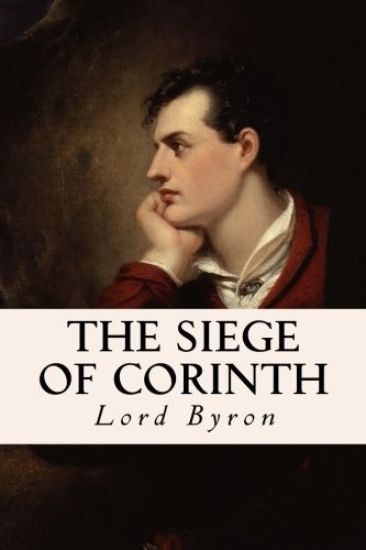
The Siege of Corinth is a rhymed, tragic narrative poem by Lord Byron. Published in 1816, it was inspired by the Ottoman massacre of the Venetian garrison holding the Acrocorinth - an incident in the Ottoman conquest of Morea during the Ottoman-Venetian Wars. Byron recounts the final, desperate resistance of the Venetians on the day the Ottoman army stormed Acrocorinth: revealing the closing scenes of the conflict through the eyes of Alp (a Venetian renegade fighting for the Ottomans) and Francesca (the beautiful maiden daughter of the governor of the Venetian garrison: Minotti). Alp - whose impassioned suit for Francesca's hand had been previously refused by Minotti - had later fled the Venetian Empire after being falsely denounced by anonymous accusers via the infamous "Lion's Mouth" at the Doge's palace (see insert). Enlisting under the Turkish flag, he repudiates both his nationality and his religion, as well as his old name 'Lanciotto', only to be challenged by Francesca herself the night before the final assault to repent his apostasy, to forgive his accusers, and to save the Venetian garrison from certain slaughter. Alp's ensuing moral dilemma: viz. to forgive those who unjustly accused him and save the lives of his enemies; or to prosecute his revenge on Venice using all the Turkish forces under his command - forms the climax of the unfolding drama as the battle between the Ottomans and the Venetians presses to its conclusion.
The Siege of Corinth (annotated)
George Gordon Byron
Createspace Independent Publishing Platform
2016
nidottu
The Siege of Corinth is a rhymed, tragic narrative poem by Lord Byron. Published in 1816, it was inspired by the Ottoman massacre of the Venetian garrison holding the Acrocorinth - an incident in the Ottoman conquest of Morea during the Ottoman-Venetian Wars. Byron recounts the final, desperate resistance of the Venetians on the day the Ottoman army stormed Acrocorinth: revealing the closing scenes of the conflict through the eyes of Alp (a Venetian renegade fighting for the Ottomans) and Francesca (the beautiful maiden daughter of the governor of the Venetian garrison: Minotti). Alp - whose impassioned suit for Francesca's hand had been previously refused by Minotti - had later fled the Venetian Empire after being falsely denounced by anonymous accusers via the infamous "Lion's Mouth" at the Doge's palace (see insert). Enlisting under the Turkish flag, he repudiates both his nationality and his religion, as well as his old name 'Lanciotto', only to be challenged by Francesca herself the night before the final assault to repent his apostasy, to forgive his accusers, and to save the Venetian garrison from certain slaughter. Alp's ensuing moral dilemma: viz. to forgive those who unjustly accused him and save the lives of his enemies; or to prosecute his revenge on Venice using all the Turkish forces under his command - forms the climax of the unfolding drama as the battle between the Ottomans and the Venetians presses to its conclusion.
A Selection from the Works of Lord Byron
George Gordon Byron
Createspace Independent Publishing Platform
2016
nidottu
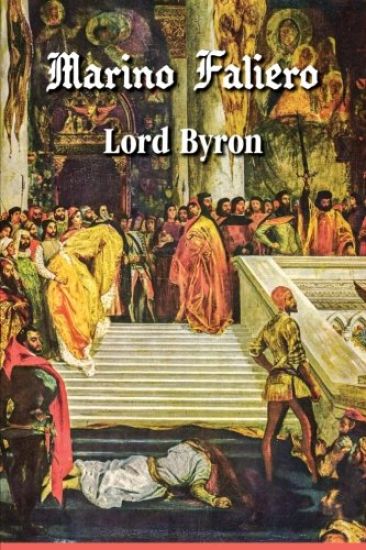
Marino Faliero es una tragedia escrita por Lord Byron. Faliero era miembro destacado la aristocracia veneciana en el siglo XIV. Al morir el dux en medio de una guerra contra la Rep blica de G nova, Faliero fue elegido como sucesor. Pese a tener ya cerca de setenta a os, Faliero convenci a varios arist cratas y comerciantes de unirse a su conspiraci n para un golpe de estado que expulsara del poder a las dem s familias aristocr ticas. Fue delatado y decapitado en las escalinatas del Palacio Ducal de Venecia y su cuerpo mutilado en p blico como escarmiento.

Childe Harold's Pilgrimage
George Gordon Byron
Createspace Independent Publishing Platform
2015
nidottu
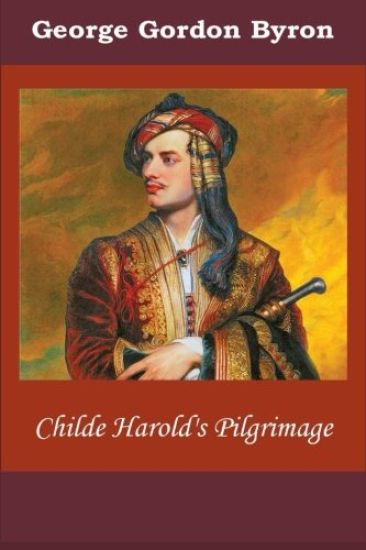
Childe Harold's Pilgrimage
George Gordon Byron
Createspace Independent Publishing Platform
2015
nidottu
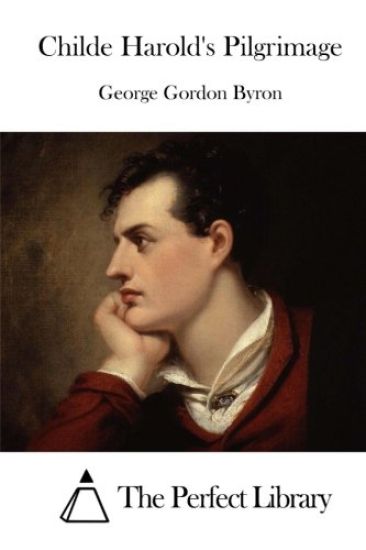
Childe Harold's Pilgrimage
George Gordon Byron
Createspace Independent Publishing Platform
2015
nidottu


The Works of Lord Byron - Volume I
George Gordon Byron
Createspace Independent Publishing Platform
2015
nidottu