Kirjailija
George Hart
Kirjat ja teokset yhdessä paikassa: 24 kirjaa, julkaisuja vuosilta 1990–2026, suosituimpiin kuuluu The Violin. Vertaile teosten hintoja ja tarkista saatavuus suomalaisista kirjakaupoista.
24 kirjaa
Kirjojen julkaisuvuodet: 1990–2026.
"The Violin: Its Famous Makers and Their Imitators" by George Hart offers a fascinating exploration into the world of violins and the artisans behind these exquisite stringed instruments. Delve into the rich history of violin making, examining the lives and techniques of renowned violin makers throughout history. This meticulously researched work illuminates the artistry and craftsmanship involved in creating some of the most celebrated musical instruments ever made. From detailed accounts of famous violin makers to discussions of their lasting influence and imitators, Hart provides an invaluable resource for anyone interested in musical instruments, particularly the violin. Discover the secrets behind these cherished stringed instruments and gain a deeper appreciation for the artistry and dedication of the individuals who shaped the world of violins. A classic study, this book is a must-have for musicians, collectors, and anyone captivated by the enduring legacy of the violin. This work has been selected by scholars as being culturally important, and is part of the knowledge base of civilization as we know it. This work is in the public domain in the United States of America, and possibly other nations. Within the United States, you may freely copy and distribute this work, as no entity (individual or corporate) has a copyright on the body of the work. Scholars believe, and we concur, that this work is important enough to be preserved, reproduced, and made generally available to the public. We appreciate your support of the preservation process, and thank you for being an important part of keeping this knowledge alive and relevant.
"The Violin: Its Famous Makers and Their Imitators" by George Hart offers a fascinating exploration into the world of violins and the artisans behind these exquisite stringed instruments. Delve into the rich history of violin making, examining the lives and techniques of renowned violin makers throughout history. This meticulously researched work illuminates the artistry and craftsmanship involved in creating some of the most celebrated musical instruments ever made. From detailed accounts of famous violin makers to discussions of their lasting influence and imitators, Hart provides an invaluable resource for anyone interested in musical instruments, particularly the violin. Discover the secrets behind these cherished stringed instruments and gain a deeper appreciation for the artistry and dedication of the individuals who shaped the world of violins. A classic study, this book is a must-have for musicians, collectors, and anyone captivated by the enduring legacy of the violin. This work has been selected by scholars as being culturally important, and is part of the knowledge base of civilization as we know it. This work is in the public domain in the United States of America, and possibly other nations. Within the United States, you may freely copy and distribute this work, as no entity (individual or corporate) has a copyright on the body of the work. Scholars believe, and we concur, that this work is important enough to be preserved, reproduced, and made generally available to the public. We appreciate your support of the preservation process, and thank you for being an important part of keeping this knowledge alive and relevant.
Private Letters of Edward Gibbon (1753-1794) Volume 1 (Edition1)
George Hart
Alpha Editions
2024
nidottu
The Violin; Its Famous Makers and Their Imitators, is a classical book and has been considered important throughout the human history. So that this book is never forgotten we at Alpha Editions have made efforts in its preservation by republishing this again in a modern format book for present and future generations. This whole book has been reformatted, retyped and designed. These books are not made of scanned copies of their original work and hence the text is clear and readable.

Larry Eigner (1927–1996) wrote thousands of poems in his lifetime, despite profound physical limitations caused by cerebral palsy. Using only the thumb and index finger of his right hand, Eigner generated a torrent of urgent and rich language, participating in vital correspondences as well as publishing widely in literary magazines and poetry journals. While Eigner wrote before the emergence of ecopoetics, his poetry reflected a serious engagement with scientific writing and media, including Rachel Carson’s seminal Silent Spring. Eigner was writing about environmental disasters and climate change long before such concerns took on a moral incumbency. Similarly, Eigner was ahead of his time in his exploration of disability. The field of disability studies has expanded rapidly in the new millennium. Eigner was not an overtly biographical poet, at least as far as his physical limitations were concerned, but his poetry spoke volumes on the idea of embodiment in all its forms. Finding the Weight of Things: Larry Eigner’s Ecrippoetics is the first full-length study of Eigner’s poetry, covering his entire career from the beginning of his mature work in the 1950s to his last poems of the 1990s. George Hart charts where Eigner’s two central interests intersect, and how their interaction fueled his work as a poet-critic—one whose work has much to tell us about the ecology and embodiment of our futures. Hart sees Eigner’s overlapping concerns for disability, ecology, and poetic form as inextricable, and coins the phrase ecrippoetics here to describe Eigner’s prescient vision.
An Appraisal of Early Reproduction After Cutting in Northern Appalachian Hardwood Stands; no.162
George R. Trimble; George Hart
Hassell Street Press
2021
nidottu
This work has been selected by scholars as being culturally important and is part of the knowledge base of civilization as we know it. This work is in the public domain in the United States of America, and possibly other nations. Within the United States, you may freely copy and distribute this work, as no entity (individual or corporate) has a copyright on the body of the work. Scholars believe, and we concur, that this work is important enough to be preserved, reproduced, and made generally available to the public. To ensure a quality reading experience, this work has been proofread and republished using a format that seamlessly blends the original graphical elements with text in an easy-to-read typeface. We appreciate your support of the preservation process, and thank you for being an important part of keeping this knowledge alive and relevant.
Reproduction of the original: The Violin by George Hart
Reproduction of the original: The Violin by George Hart
This book has been considered by academicians and scholars of great significance and value to literature. This forms a part of the knowledge base for future generations. We have represented this book in the same form as it was first published. Hence any marks seen are left intentionally to preserve its true nature.




The Violin and Its Music is an unchanged, high-quality reprint of the original edition of 1881. Hansebooks is editor of the literature on different topic areas such as research and science, travel and expeditions, cooking and nutrition, medicine, and other genres. As a publisher we focus on the preservation of historical literature. Many works of historical writers and scientists are available today as antiques only. Hansebooks newly publishes these books and contributes to the preservation of literature which has become rare and historical knowledge for the future.

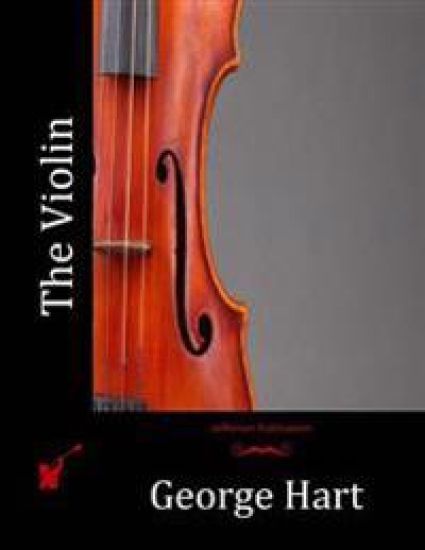
The Violin Its Famous Makers and Their Imitators
George Hart
Createspace Independent Publishing Platform
2016
nidottu
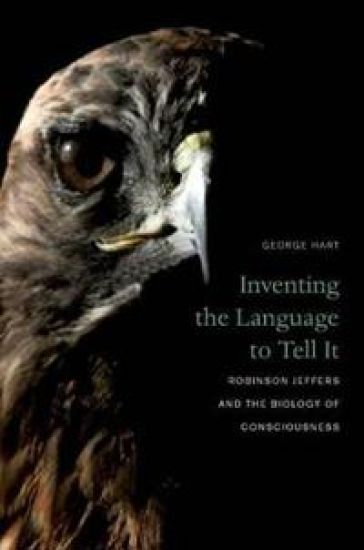
From 1920 until his death in 1962, consciousness and its effect on the natural world was Robinson Jeffers's obsession. Understanding and explaining the biological basis of mind is one of the towering challenges of modern science to this day, and Jeffers's poetic experiment is an important contribution to American literary history—no other twentieth-century poet attempted such a thorough engagement with a crucial scientific problem. Jeffers invented a sacramental poetics that accommodates a modern scientific account of consciousness, thereby integrating an essentially religious sensibility with science in order to discover the sacramentality of natural process and reveal a divine cosmos. There is no other study of Jeffers or sacramental nature poetry like this one. It proposes that Jeffers's sacramentalism emerged out of his scientifically informed understanding of material nature. Drawing on ecocriticism, religious studies, and neuroscience, Inventing the Language to Tell It shows how Jeffers produced the most compelling sacramental nature poetry of the twentieth century.