Kirjojen hintavertailu – 12 903 732 kirjaa ja 27 kauppaa

Kirjailija

George Hoberg

Kirjat ja teokset yhdessä paikassa: 7 kirjaa, julkaisuja vuosilta 1992–2021, suosituimpiin kuuluu Policies for Sustainably Managing Canada's Forests. Vertaile teosten hintoja ja tarkista saatavuus suomalaisista kirjakaupoista.

7 kirjaa

Kirjojen julkaisuvuodet: 1992–2021.

Policies for Sustainably Managing Canada's Forests

Policies for Sustainably Managing Canada's Forests

Martin K. Luckert; David Haley; George Hoberg

University of British Columbia Press
2012
pokkari
With more than three quarters of Canada's forests under provincial control, provincial forest policies are crucial for encouraging the sustainable management of the nation's forests. Forest tenures, which allow private companies to manage public forest resources, are the key policy tool that provinces use to balance the requirements of sustainable management with the economic concerns of the forest industry. By offering an up-to-date comparative examination of contemporary provincial forestry policies, this book provides forest managers, policy-makers, scholars, and students with the information and concepts to critically examine Canada's complex forest tenure systems. The authors look at tenure, stumpage fees, and other forest practices to assess how well different provincial schemes achieve the goals of sustainable forest management. They identify a number of essential policy attributes that could be used to guide tenure reform, consider potential barriers that could prevent meaningful change, and offer much-needed practical guidance on overcoming these obstacles.
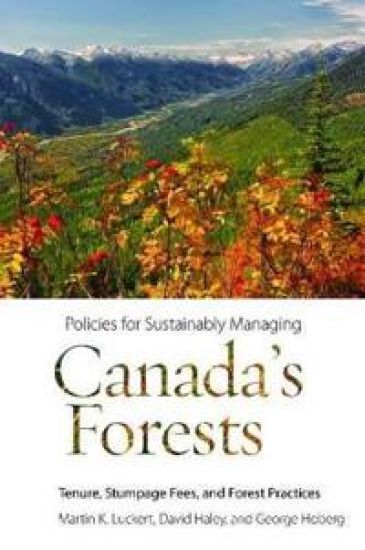
Policies for Sustainably Managing Canada's Forests

Policies for Sustainably Managing Canada's Forests

Martin K. Luckert; David Haley; George Hoberg

University of British Columbia Press
2011
sidottu
With more than three quarters of Canada's forests under provincial control, provincial forest policies are crucial for encouraging the sustainable management of the nation's forests. Forest tenures, which allow private companies to manage public forest resources, are the key policy tool that provinces use to balance the requirements of sustainable management with the economic concerns of the forest industry. By offering an up-to-date comparative examination of contemporary provincial forestry policies, this book provides forest managers, policy-makers, scholars, and students with the information and concepts to critically examine Canada's complex forest tenure systems. The authors look at tenure, stumpage fees, and other forest practices to assess how well different provincial schemes achieve the goals of sustainable forest management. They identify a number of essential policy attributes that could be used to guide tenure reform, consider potential barriers that could prevent meaningful change, and offer much-needed practical guidance on overcoming these obstacles.
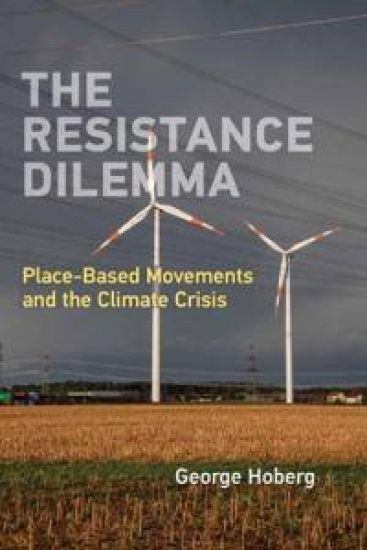
The Resistance Dilemma

The Resistance Dilemma

George Hoberg

MIT Press
2021
nidottu
How organized resistance to new fossil fuel infrastructure became a political force, and how this might affect the transition to renewable energy. Organized resistance to new fossil fuel infrastructure, particularly conflicts over pipelines, has become a formidable political force in North America. In this book, George Hoberg examines whether such place-based environmental movements are effective ways of promoting climate action, if they might feed resistance to the development of renewable energy infrastructures, and what other, more innovative processes of decision making would encourage the acceptance of clean energy systems. Focusing on a series of conflicts over new oil sands pipelines, Hoberg investigates activists' strategy of blocking fossil fuel infrastructure, often in alliance with Indigenous groups, and examines the political and environmental outcomes of these actions. After discussing the oil sands policy regime and the relevant political institutions in Canada and the United States, Hoberg analyzes in detail four anti-pipeline campaigns, examining the controversies over the Keystone XL, the most well-known of these movements and the first one to use infrastructure resistance as a core strategy; the Northern Gateway pipeline; the Trans Mountain pipeline; and the Energy East pipeline. He then considers the "resistance dilemma" the potential of place-based activism to threaten the much-needed transition to renewable energy. He examines several episodes of resistance to clean energy infrastructure in eastern Canada and the United States. Finally, Hoberg describes some innovative processes of energy decision making, including Strategic Environment Assessment, and Cumulative Impact Assessment, looking at cases in British Columbia and Lower Athabasca.
Degrees of Freedom

Degrees of Freedom

Keith G. Banting; George Hoberg

McGill-Queen's University Press
1997
nidottu
The book's primary aim is to determine whether Canada and the United States have become more similar as their economies have become more integrated and their societies more diverse. The authors conclude that, although powerful economic and social pressures clearly constrain national governments and lead to convergence in some areas, distinctive cultural and political processes preserve room for distinctive national responses to important problems of the late twentieth century. Authors include Keith Banting, Paul Boothe (University of Alberta), Marsha Chandler (University of Toronto), George Hoberg, Robert Howse (University of Toronto), Christopher Manfredi (McGill University), George Perlin (Queen's University), Douglas Purvis (Queen's University), Richard Simeon, and Elaine Willis (consultant, Toronto).
Risk, Science, and Politics

Risk, Science, and Politics

Kathryn Harrison; George Hoberg

McGill-Queen's University Press
1994
sidottu
Paying particular attention to how politicians and bureaucrats in the two countries deal with the scientific uncertainty that pervades environmental decision making, Harrison and Hoberg analyse case studies of seven controversial substances suspected of causing cancer in humans: the pesticides Alar and alachlor, urea-formaldehyde foam insulation, radon gas, dioxin, saccharin, and asbestos. They weigh the strengths and weaknesses of each country's approach according to five criteria: stringency and timeliness of the regulatory decision, balancing of risks and benefits by decision makers, opportunities for public participation, and the interpretation of science in regulatory decision making. The Canadian approach is exemplified by closed decision making, case-by-case review that relies heavily on expert judgement, and limited public debate about the scientific basis of regulatory decisions. In contrast, regulatory science in the United States is characterized by publication of lengthy rationales for regulatory decisions, reliance on standardized procedures for risk assessment, and controversy surrounding the interpretation of scientific evidence.
Risk, Science, and Politics

Risk, Science, and Politics

Kathryn Harrison; George Hoberg

McGill-Queen's University Press
1994
nidottu
Paying particular attention to how politicians and bureaucrats in the two countries deal with the scientific uncertainty that pervades environmental decision making, Harrison and Hoberg analyse case studies of seven controversial substances suspected of causing cancer in humans: the pesticides Alar and alachlor, urea-formaldehyde foam insulation, radon gas, dioxin, saccharin, and asbestos. They weigh the strengths and weaknesses of each country's approach according to five criteria: stringency and timeliness of the regulatory decision, balancing of risks and benefits by decision makers, opportunities for public participation, and the interpretation of science in regulatory decision making. The Canadian approach is exemplified by closed decision making, case-by-case review that relies heavily on expert judgement, and limited public debate about the scientific basis of regulatory decisions. In contrast, regulatory science in the United States is characterized by publication of lengthy rationales for regulatory decisions, reliance on standardized procedures for risk assessment, and controversy surrounding the interpretation of scientific evidence.
Pluralism By Design

Pluralism By Design

George Hoberg

Praeger Publishers Inc
1992
sidottu
Vast changes in U. S. environmental policy from the New Deal through the Reagan administration have occurred that shed light on the nature of the American regulatory state. This book focuses on the sweeping transformation of regulatory policymaking that took place around 1970. The rise of social regulation and the advent of public interest movement during the 1960s and 1970s led to a significant change in policy outcomes, as the influence of governmental actors and political activists increased at the expense of business. By homing in on two specific areas, pesticide regulation and air pollution control, this study attempts to describe and explain these changes. This book is distinguished by its explanation of the transformation to the new system, its understanding of the way the new regulatory arrangements affect policy outcomes, and, most important, its explicit consideration of recent controversies in empirical political theory. The results provide an assessment of both the strengths and the weaknesses of the new institutionalism as a theoretical approach to studying domestic public policy in the United States. The regime framework developed here is designed to emphasize the multiplicity of forces behind public policy. This volume will be of interest to students of the American policy process, environmental policy and regulation, and theories of the American state, in academia, government, and the environmental policy community.