Kirjojen hintavertailu – 12 903 725 kirjaa ja 27 kauppaa

Kirjailija

George John Romanes

Kirjat ja teokset yhdessä paikassa: 157 kirjaa, julkaisuja vuosilta 2004–2026, suosituimpiin kuuluu Mental Evolution in Man. Vertaile teosten hintoja ja tarkista saatavuus suomalaisista kirjakaupoista.

157 kirjaa

Kirjojen julkaisuvuodet: 2004–2026.

Darwin, and after Darwin

Darwin, and after Darwin

George John Romanes

Cambridge University Press
2011
pokkari
George John Romanes (1848–94), evolutionary biologist, was one of the most zealous supporters of Darwin's theory of evolution by natural selection in the nineteenth century. He met Darwin in 1874 and became a firm friend and follower, applying Darwinian theory to his work on animal intelligence and mental evolution. Romanes was elected to the Royal Society in 1879 at the age of 31, having produced his own influential research on the evolution of the nervous system. This three-volume study of Darwin's work and its implications was first developed as a series of lectures given in Edinburgh and London between 1886 and 1890. Controversially, Romanes deviates from Darwin's assertion of the significance of geographical isolation, contending that physiological differences among the same species were central to evolutionary change. First published in 1892, Volume 1 focuses on the Darwinian theory itself. This second edition appeared in 1893.
Darwin, and after Darwin

Darwin, and after Darwin

George John Romanes

Cambridge University Press
2011
pokkari
George John Romanes (1848–94), evolutionary biologist, was one of the most zealous supporters of Darwin's theory of evolution by natural selection in the nineteenth century. He met Darwin in 1874 and became a firm friend and follower, applying Darwinian theory to his work on animal intelligence and mental evolution. Romanes was elected to the Royal Society in 1879 at the age of 31, having produced his own influential research on the evolution of the nervous system. This three-volume study of Darwin's work and its implications was first developed as a series of lectures given in Edinburgh and London between 1886 and 1890. Controversially, Romanes deviates from Darwin's assertion of the significance of geographical isolation, contending that physiological differences among the same species were central to evolutionary change. Published posthumously in 1897, Volume 3 considers the 'post-Darwinian question' of isolation, incorporating Romanes' own theories on physiological selection.

Darwin, and after Darwin

Darwin, and after Darwin

George John Romanes

Cambridge University Press
2011
pokkari
George John Romanes (1848–94), evolutionary biologist, was one of the most zealous supporters of Darwin's theory of evolution by natural selection in the nineteenth century. He met Darwin in 1874 and became a firm friend and follower, applying Darwinian theory to his work on animal intelligence and mental evolution. Romanes was elected to the Royal Society in 1879 at the age of 31, having produced his own influential research on the evolution of the nervous system. This three-volume study of Darwin's work and its implications was first developed as a series of lectures given in Edinburgh and London between 1886 and 1890. Controversially, Romanes deviates from Darwin's assertion of the significance of geographical isolation, contending that physiological differences among the same species were central to evolutionary change. Published posthumously in 1895, Volume 2 focuses on the 'post-Darwinian questions' of heredity and utility in organisms.
The Life and Letters of George John Romanes

The Life and Letters of George John Romanes

George John Romanes

Cambridge University Press
2011
pokkari
George John Romanes (1848–94) was an influential evolutionary biologist whose work focused on the evolution of mental faculties. Although criticised for his anecdotal method, he is credited as being one of the pioneers of comparative psychology for his work on animal intelligence, and he also contributed to the development of the theory of natural selection. Romanes and Charles Darwin (1809–82) were close friends, and Darwin gave Romanes his notes on psychology for use in his studies. First published in 1896, this biography was written by his wife Ethel (1856–1927), also an author on religious topics. This reissue is of the second printing (also 1896): including correspondence between Darwin and Romanes, it is a rich source of information on both men and the development of their work. This book is also fascinating for its account of Romanes' mental conflict between his Christian faith and belief in evolution.
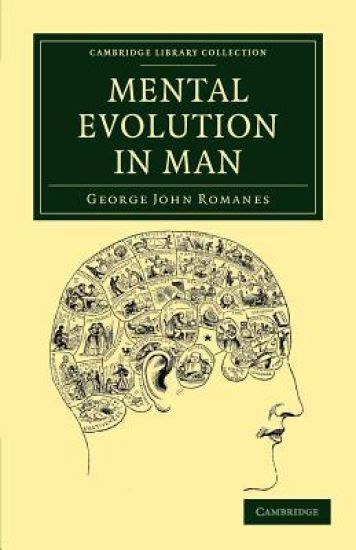
Mental Evolution in Man

Mental Evolution in Man

George John Romanes

Cambridge University Press
2011
pokkari
George John Romanes (1848–94) was considered by The Times to be 'the biological investigator upon whom in England the mantle of Mr. Darwin has most conspicuously descended'. Incorporating some of Darwin's unpublished notes, this book explores the question of whether human intelligence evolved. In a stance still often considered controversial at the time of its first printing in 1888, the first half establishes a link between humans and animals, and introduces some of the most important issues of nineteenth-century evolutionary psychology: the impact of relative brain sizes of humans and primates, the origin of self-consciousness and the possible reasons behind the apparent mental stasis of what Romanes terms 'savage man'. Following the argument that one of the main factors to be considered is language, the second half focuses on philology. Romanes' earlier work, Mental Evolution in Animals (1883), is also reissued in this series.