Kirjojen hintavertailu – 12 859 827 kirjaa ja 27 kauppaa

Kirjailija

George Kennan

Kirjat ja teokset yhdessä paikassa: 59 kirjaa, julkaisuja vuosilta 1891–2026, suosituimpiin kuuluu E. H. Harriman. Vertaile teosten hintoja ja tarkista saatavuus suomalaisista kirjakaupoista.

59 kirjaa

Kirjojen julkaisuvuodet: 1891–2026.

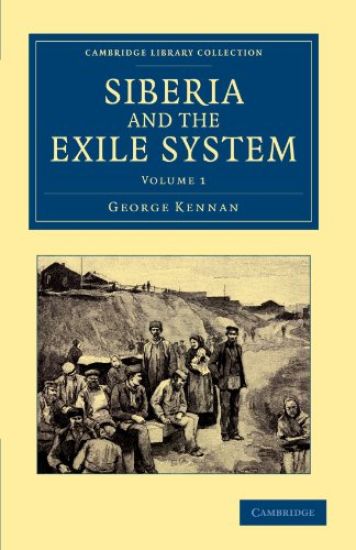
Siberia and the Exile System

Siberia and the Exile System

George Kennan

Cambridge University Press
2012
pokkari

Halvin toimitettuna 54,70 €

The American journalist George Kennan (1854–1924) spent many years travelling in and writing about Russia. After the assassination of Tsar Alexander II in 1881, Kennan wanted to go to Siberia to examine the penal system and the punishment of political exiles. In this unflinching account, published in two volumes in 1891, Kennan gives vivid descriptions, accompanied by extensive illustrations of the prisons and labour camps and the harsh lives of the people forced to live there. This journey also led to a personal transformation for Kennan himself - he started out as a supporter of the tsarist government but when he returned to the United States, he had become an advocate of political revolution in Russia. In Volume 1, he inspects the overcrowded holding prison of Tyumen, where everyone banished to Siberia was forced to stay before redeployment, and he later speaks to some political exiles.
Campaigning in Cuba.

Campaigning in Cuba.

George Kennan

British Library, Historical Print Editions
2011
pokkari
Title: Campaigning in Cuba. Publisher: British Library, Historical Print EditionsThe British Library is the national library of the United Kingdom. It is one of the world's largest research libraries holding over 150 million items in all known languages and formats: books, journals, newspapers, sound recordings, patents, maps, stamps, prints and much more. Its collections include around 14 million books, along with substantial additional collections of manuscripts and historical items dating back as far as 300 BC. The HISTORY OF CENTRAL & SOUTH AMERICA collection includes books from the British Library digitised by Microsoft. Titles in this collection provide cultural, statistical, commercial, chronological and geo-economic histories of Central and South America. This series also includes texts, reports, letters, and illustrated and interpretive histories of indigenous peoples, and the natural and built environments that have fascinated historians for centuries. Along with written records, the collection features transcribed oral histories and traditions spanning the range of cultures and civilisations in the southern hemisphere. ++++The below data was compiled from various identification fields in the bibliographic record of this title. This data is provided as an additional tool in helping to insure edition identification: ++++ British Library Kennan, George; 1899. v, 269 p.; 8 . 9771.de.14.
Vagabond Life

Vagabond Life

George Kennan

University of Washington Press
2002
sidottu
George Kennan (1845-1924) was a pioneering explorer, writer, and lecturer on Russia in the nineteenth century, the author of classic works such as Tent Life in Siberia and Siberia and the Exile System, and great-uncle of George Frost Kennan, the noted historian and diplomat of the Cold War. In 1870, Kennan became the first American to explore the highlands of Dagestan, a remote Muslim region of herders, silversmiths, carpet-weavers, and other craftsmen southeast of Chechnya, only a decade after Russia violently absorbed the region into its empire. He kept detailed journals of his adventures, which today form a small part of his voluminous archive in the Library of Congress. Frith Maier has combined the diaries with selected letters and Kennan's published articles on the Caucasus to create a vivid narrative of his six-month odyssey. The journals have been organized into three parts. The first covers Kennan's journey to the Caucasus, a significant feat in itself. The second chronicles his expedition across the main Caucasus Ridge with the Georgian nobleman Prince Jorjadze. In the final part, Kennan circles back through the lands of Chechnya to slip once again into the Dagestan highlands. Kennan's remarkable curiosity and perception come through in this lively and accessible narrative, as does his humor at the challenges of his travels. In her introduction, Maier discusses Kennan's illustrious career and his reliability as an observer, while providing background on the Caucasus to help clarify Kennan's descriptions of daily life, religion, etiquette, customary law, and local government. In an Afterword, she retraces Kennan's steps to find descendants of Prince Jorjadze and describes her work in coproducing, with filmmaker Christopher Allingham, a documentary inspired by Kennan's Caucasus journey.
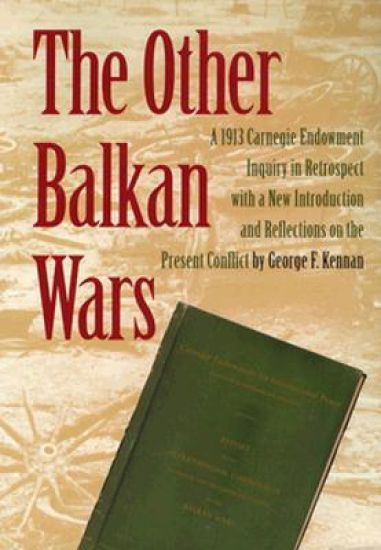
The Other Balkan Wars

The Other Balkan Wars

George Kennan

Carnegie Endowment for International Peace
1992
nidottu
The importance of [the 1913] report for the world lies primarily in the light it casts on the excruciating situation prevailing today. . . to reveal to people of this age how much of today's problem has deep roots and how much does not. It will be easier to think of solutions when such realities are kept in mind.""? George F. Kennan (in the Introduction)
Siberia and the Exile System

Siberia and the Exile System

George Kennan

Pantianos Classics
1891
pokkari
George Kennan was an American journalist and adventurer, who traveled to Siberia in the late 1800s to investigate how Russian criminals and dissidents were punished with exile to remote lands. By the time Kennan traversed the Siberian countryside, villages and towns, Russia's exile system had existed for several decades. His researches demonstrate how common the use of exile as punishment was in Russia; some were exiled due to serious crimes, while others were sent to Siberia for petty offences, or for expressing political opinions. Various intellectuals and creatively talented persons such as the author Dostoyevsky and the philosopher Pyotr Kropotkin spent time in Siberian exile. The remote country of Siberia is depicted as both beautiful and merciless; many convicts suffered immensely in dreadful conditions, struggling with hunger and cold. The climate was frequently harsh and residences commonly squalid or even ramshackle. Despite the often dire circumstances, a culture arose among the exiles; many - especially the politically inclined - were educated and cultured, and would hold impromptu debates upon various subjects. Kennan also examines the native populations such as the Cossacks in great detail, alongside settlements such as Omsk, Tomsk and Pavlodar.