
Kirjailija
George Loewenstein
Kirjat ja teokset yhdessä paikassa: 7 kirjaa, julkaisuja vuosilta 2007–2026, suosituimpiin kuuluu The Opposite of Happiness: How Bad Feelings Make and Break Us. Vertaile teosten hintoja ja tarkista saatavuus suomalaisista kirjakaupoista.
7 kirjaa
Kirjojen julkaisuvuodet: 2007–2026.
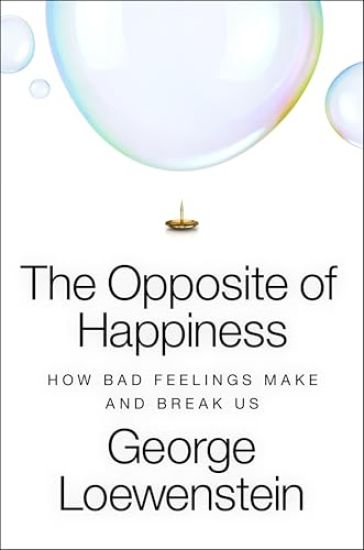
The Opposite of Happiness: How Bad Feelings Make and Break Us
George Loewenstein
Harper
2026
sidottu

Intertemporal choice is merely the adult decision to defer some immediate benefit for greater benefit at a later date. This study includes papers on this cross-over topic that links economics to psychology.
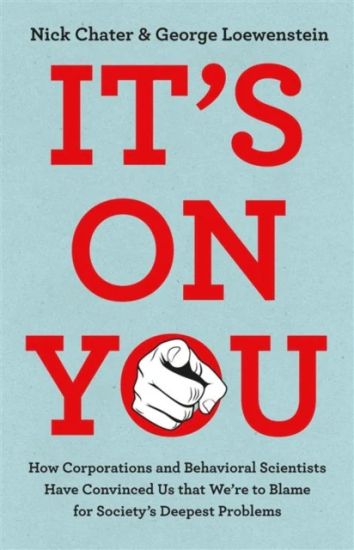
It's On You
Nick Chater; George Loewenstein
Ebury Publishing
2026
sidottu
Halvin toimitettuna 26,00 €
‘A stirring call to action’ – TIM HARFORD ‘A masterclass’ – DARON ACEMOGLU 'An excellent book' – NASSIM NICHOLAS TALEB Two decades ago, behavioral economics burst from academia to the halls of power, on both sides of the Atlantic, with the promise that correcting individual biases could help transform society. The hope was that governments could deploy a new approach to addressing society’s deepest challenges, from inadequate retirement planning to climate change—gently, but cleverly, nudging people to make choices for their own good and the good of the planet. It was all very convenient, and false. As behavioral scientists Nick Chater and George Loewenstein show in It’s On You, nudges rarely work, and divert us from policies that do. For example, being nudged to switch to green energy doesn’t cut carbon, and it distracts from the real challenge of building a low-carbon economy. It’s on You shows how the rich and powerful have repeatedly used a clever sleight of hand: blaming individuals for social problems, with behavioral economics an unwitting accomplice, while lobbying against the systemic changes that could actually help. As two original proponents of the nudge principle, Nick and George now argue that rather than trying to “fix” the victims of bad policies, real progress requires rewriting the social and economic rulebook for the common good.
It's on You: How Corporations and Behavioral Scientists Have Convinced Us That We're to Blame for Society's Deepest Problems
Nick Chater; George Loewenstein
Basic Venture
2026
sidottu
Halvin toimitettuna 30,80 €
Two leading behavioral scientists argue we should reject "nudge" policies and stop blaming personal failure for society's failures Two decades ago, behavioral economics burst from academia to the halls of power, claiming that correcting individual irrationalities could transform society. The claim, championed by the Obama administration, was that almost any severe societal problem--from retirement planning to climate change--could be healed with the right behavioral bandage. All we had to do was nudge. It was all very convenient, and false. As behavioral scientists Nick Chater and George Loewenstein show in It's on You, nudge policies rarely work, and divert us from policies that do. For example, nudge-inspired "opt-out" 401(k) programs turn out not to boost saving, and distract from the real source of the retirement crisis: the systematic destruction of pensions. It's on You shows how across a wide range of issues--from pensions to obesity to climate change--the rich and powerful have pulled off a sleight of hand: blaming individuals for social problems while lobbying to shape the rules in their own favor, with behavioral economics an unwitting accomplice. If we want to solve those problems, we must rewrite the rules for the common good, rather than try to "fix" the victims of bad policies.
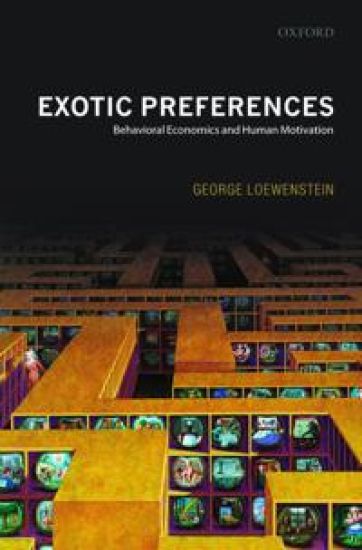
George Loewenstein is one of the pioneers of the rapidly growing field of behavioral economics. For over twenty years he has been working at the intersection of economics and psychology and is one of the few people of whom it can be said that their work is equally respected and well known within both disciplines. This book brings together a selection of his papers focusing on what he calls "exotic preferences"-- the disparate motives that drive human behavior. In addition to covering the history and methodology of behavioral economics, they also touch on a wide range of fascinating topics such as the motives that drive extreme athletes, our propensity to want to get unpleasant experiences out of the way so we can focus on the more pleasant, and the psychology of curiosity. There are also papers on social preferences, discussing the importance of perceptions of fairness in interpersonal interactions, intertemporal choice-- the tradeoffs between costs and benefits occurring at different points in time-- and the impact of emotion on economic decision making. An original introduction outlines Loewenstein's general approach to research, and there are short introductions to each paper outlining briefly when, how and why they came to be written, providing a fascinating and vivid insight into the process of intellectual creativity.
George Loewenstein is one of the pioneers of the rapidly growing field of behavioral economics. For over twenty years he has been working at the intersection of economics and psychology and is one of the few people of whom it can be said that their work is equally respected and well known within both disciplines. This book brings together a selection of his papers focusing on what he calls "exotic preferences"-- the disparate motives that drive human behavior. In addition to covering the history and methodology of behavioral economics, they also touch on a wide range of fascinating topics such as the motives that drive extreme athletes, our propensity to want to get unpleasant experiences out of the way so we can focus on the more pleasant, and the psychology of curiosity. There are also papers on social preferences, discussing the importance of perceptions of fairness in interpersonal interactions, intertemporal choice-- the tradeoffs between costs and benefits occurring at different points in time-- and the impact of emotion on economic decision making. An original introduction outlines Loewenstein's general approach to research, and there are short introductions to each paper outlining briefly when, how and why they came to be written, providing a fascinating and vivid insight into the process of intellectual creativity.