Kirjojen hintavertailu – 12 859 818 kirjaa ja 27 kauppaa

Kirjailija

George Lucas

Kirjat ja teokset yhdessä paikassa: 37 kirjaa, julkaisuja vuosilta 1999–2025, suosituimpiin kuuluu Star Wars: Movie Collection - Episode 3: Die Rache der Sith. Vertaile teosten hintoja ja tarkista saatavuus suomalaisista kirjakaupoista.

37 kirjaa

Kirjojen julkaisuvuodet: 1999–2025.

A New Hope: Star Wars: Episode IV

A New Hope: Star Wars: Episode IV

George Lucas

Random House Worlds
2025
nidottu

Halvin toimitettuna 19,70 €

The classic adventure that started the Star Wars saga. Luke Skywalker lived and worked on his uncle's farm on the remote planet of Tatooine--and he was bored beyond belief. He yearned for adventures out among the stars, adventures that would take him beyond the farthest galaxies to distant and alien worlds. But Luke gets more than he bargained for when he intercepts a cryptic message from a beautiful princess held captive by a dark and powerful warlord. Luke doesn't know who she is, but he knows he has to save her--and soon, because time is running out. Armed only with courage and with the lightsaber that had been his father's, Luke is catapulted into the middle of the most savage space war ever--and headed straight for a desperate encounter on the enemy battle station known as the Death Star. . . .
Directing at Disney

Directing at Disney

Don Peri; George Lucas

HYPERION
2024
sidottu
This untold history collection chronicles the progression of the animation director role during the 1920s through the 1970s. For students of filmmaking and management, this book serves as go-to resource for a complex and sometimes technical role that demanded precision. For all Disney fans, these personal portraits of Walt's closest creative leaders offer a fuller picture behind the stories, characters, and magical realms in Disney's beloved and respected animated films. When the very first animated films appeared, there were no directors. With no actors, sets, costumes, or sound, what appeared onscreen was simply decided and drawn by an animator. Since early films were usually made by only one or two artists, there was little need for planning. Organization was loose. When Walt Disney started animating on shorts and advertising projects in Kansas City, Missouri, he followed that process, along with fellow artist and friend Ub Iwerks. Walt found that his strength was in story and character. He began writing outlines, describing what would appear scene by scene. Soon the text was accompanied by a sketch previsualizing the layout, giving all animators working on a film a clear vision of how their parts fit into the whole. Ultimately, Walt shepherded stories from their inception through every revision and gag. He approved every camera angle. He dictated what happened in every shot, sometimes every frame, obsessing over every detail. While not credited as such onscreen, Walt was the first Disney director. As the Disney studio grew, Walt organically evolved the role of director, reflecting the amount of trust he had in those he worked with, his interest in a specific project, and what other projects he had on his plate. Walt expected his directors to follow his instructions--and to improve the work at every turn. Directing at Disney: The Original Directors of Walt's Animated Films offers the little-known history behind Walt's foundational directors, such as Wilfred Jackson, Clyde Geronimi, and Dave Hand. These talents directed some of the most beloved films in existence--Snow White and Seven Dwarfs, Pinocchio, Peter Pan, One Hundred and One Dalmatians--yet virtually no one has heard of them . . . until now.

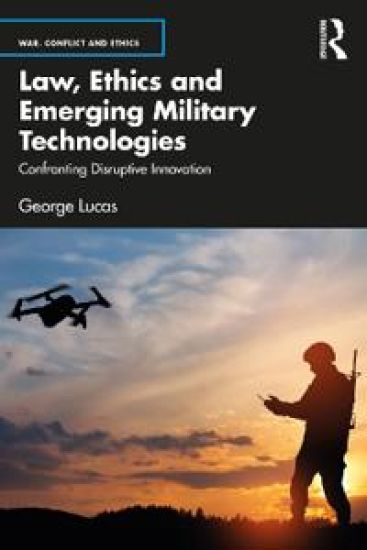
Law, Ethics and Emerging Military Technologies

Law, Ethics and Emerging Military Technologies

George Lucas

TAYLOR FRANCIS LTD
2022
nidottu
This book addresses issues of legal and moral governance arising in the development, deployment, and eventual uses of emerging technologies in military operations. Proverbial wisdom has it that law and morality always lag behind technological innovation. Hence, the book aims to identify, enumerate, and constructively address the problems of adequate governance for the development, deployment, and eventual uses of military technologies that have been newly introduced into military operations or which will be available in the near future. Proposals for modifications in governance, the book argues, closely track the anxieties of many critics of these technologies to the extent that they will proliferate, prove destructive in unanticipated ways, and partially or wholly escape regulation under current treaties and regulatory regimes. In addition to such concerns in domestic and especially in international law, the book addresses ethical norms in the professions involved in the design and eventual use of specific technologies, principally involving the professional norms of practice in engineering and the military (as well as biomedical and health care practice), which impose moral obligations on their members to avoid reckless endangerment or criminal negligence in the course of their activities. Thus, in addition to exploring the application of existing legal regimes and moral norms, the book examines how these professions might develop or improve the voluntary constraints on forms of malfeasance that are enshrined in their histories and codes of best practices. This book should prove of great interest to students of ethics, military studies, philosophy of war and peace, law, and international relations.
Law, Ethics and Emerging Military Technologies

Law, Ethics and Emerging Military Technologies

George Lucas

TAYLOR FRANCIS LTD
2022
sidottu
This book addresses issues of legal and moral governance arising in the development, deployment, and eventual uses of emerging technologies in military operations. Proverbial wisdom has it that law and morality always lag behind technological innovation. Hence, the book aims to identify, enumerate, and constructively address the problems of adequate governance for the development, deployment, and eventual uses of military technologies that have been newly introduced into military operations or which will be available in the near future. Proposals for modifications in governance, the book argues, closely track the anxieties of many critics of these technologies to the extent that they will proliferate, prove destructive in unanticipated ways, and partially or wholly escape regulation under current treaties and regulatory regimes. In addition to such concerns in domestic and especially in international law, the book addresses ethical norms in the professions involved in the design and eventual use of specific technologies, principally involving the professional norms of practice in engineering and the military (as well as biomedical and health care practice), which impose moral obligations on their members to avoid reckless endangerment or criminal negligence in the course of their activities. Thus, in addition to exploring the application of existing legal regimes and moral norms, the book examines how these professions might develop or improve the voluntary constraints on forms of malfeasance that are enshrined in their histories and codes of best practices. This book should prove of great interest to students of ethics, military studies, philosophy of war and peace, law, and international relations.
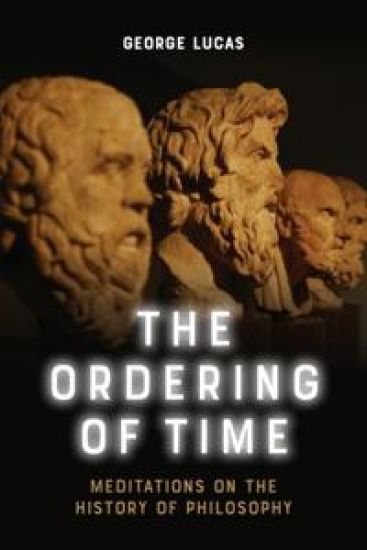
The Ordering of Time

The Ordering of Time

George Lucas

EDINBURGH UNIVERSITY PRESS
2022
nidottu
What exactly is this the history of and how is that history to be understood in relationship to philosophy itself? Can philosophy's history, on any of a number of diverse descriptions, ever be said in its own right to constitute a unique and genuine source of philosophical wisdom or insight? George Lucas sweeps aside the constraints of traditional methodological and cultural boundaries to reflect broadly on a variety of answers to these questions, as posed by many of the major philosophical figures of the past century. Inviting a re-consideration of the work of scholars as diverse as Alasdair MacIntyre, Leo Strauss, Jacques Derrida, Michel Foucault, Richard Rorty, Hans-Georg Gadamer, Bertrand Russell, Arthur Danto, Martha Nussbaum, Paul Ricoeur, Charles Taylor, Keith Lehrer and Jerome Schneewind, Lucas ranges widely over the history of philosophy itself in search of original, probing answers to these profound and perennial issues.
Walter Tandy Murch

Walter Tandy Murch

George Lucas; Walter Scott Murch

Rizzoli International Publications
2021
sidottu
Walter Tandy Murch (1907 1967) is best known for his enigmatic, dreamlike still life paintings of everyday objects and mechanical devices in a style that falls between Magic Realist, Surrealist, and Realist. This volume offers the most comprehensive collection of his work, including his striking commercial work for magazines and his paintings from the extensive collection of George Lucas. Lucas calls himself a fanboy of Murch s art paintings and drawings he describes as simultaneously functional and dreamy, simple and complicated; they are quiet yet grab your attention. The tension of these opposing reactions draws viewers into Murch s still lifes, which caught the attention of famed art dealer Betty Parsons, who also represented artists such as Jackson Pollock, Mark Rothko, Ellsworth Kelly, and Agnes Martin. Murch showed his work at Parsons s gallery for nearly thirty years. With illuminating essays and extensive plates sections displaying Murch s works, this celebration of an exceptionally talented and visionary artist is long overdue.
The Ordering of Time

The Ordering of Time

George Lucas

Edinburgh University Press
2020
sidottu
What is the history of philosophy? What exactly is this the history of and how is that history to be understood in relationship to philosophy itself? Can philosophy's history, on any of a number of diverse descriptions, ever be said in its own right to constitute a unique and genuine source of philosophical wisdom or insight? George Lucas sweeps aside the constraints of traditional methodological and cultural boundaries to reflect broadly on a variety of answers to these questions, as posed by many of the major philosophical figures of the past century. Inviting a re-consideration of the work of scholars as diverse as Alasdair MacIntyre, Leo Strauss, Jacques Derrida, Michel Foucault, Richard Rorty, Hans-Georg Gadamer, Bertrand Russell, Arthur Danto, Martha Nussbaum, Paul Ricoeur, Charles Taylor, Keith Lehrer and Jerome Schneewind, Lucas ranges widely over the history of philosophy itself in search of original, probing answers to these profound and perennial issues.
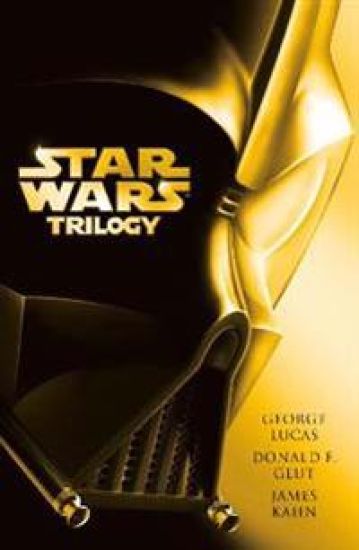
Star Wars: Original Trilogy

Star Wars: Original Trilogy

George Lucas

Cornerstone
2017
pokkari

Halvin toimitettuna 20,30 €

Together, the three original Star Wars movies A New Hope, The Empire Strikes Back, and Return of the Jedi told one epic: a heroic tale of innocence lost and wisdom gained, of downfall and redemption, of the never-ending fight between the forces of good and evil.
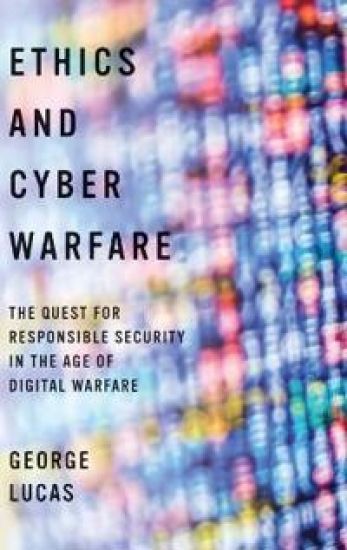
Ethics and Cyber Warfare

Ethics and Cyber Warfare

George Lucas

Oxford University Press Inc
2017
sidottu
In this work, an internationally-respected authority in military ethics describes a wholly new kind of cyber conflict that has utterly confounded the predictions of earlier experts in information warfare. Comparing this "state-sponsored hacktivism" to the transformative impact of "irregular warfare" in conventional armed conflict, Lucas offers a critique of legal approaches to governance, and outlines a new approach to ethics and "just war" reasoning (grounded in the political philosophies of Alasdair MacIntyre, John Rawls, and Jürgen Habermas) that provides both a framework for understanding these newly-emerging norms of practice for cyber conflict, and the basis for a professional "code of ethics" for the new generation of "cyber warriors."
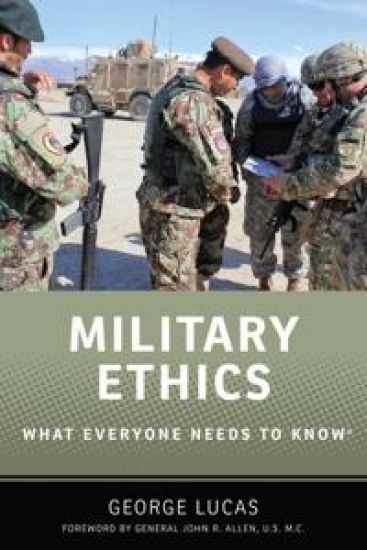
Military Ethics

Military Ethics

George Lucas

Oxford University Press Inc
2016
sidottu
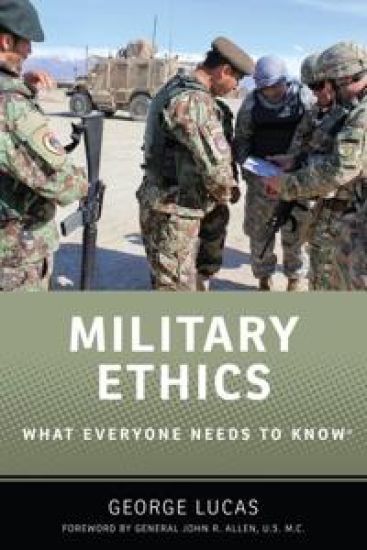
What significance does "ethics" have for the men and women serving in the military forces of nations around the world? What core values and moral principles collectively guide the members of this "military profession?" This book explains these essential moral foundations, along with "just war theory," international relations, and international law. The ethical foundations that define the "Profession of Arms" have developed over millennia from the shared moral values, unique role responsibilities, and occasional reflection by individual members the profession on their own practices - eventually coming to serve as the basis for the "Law of Armed Conflict" itself. This book focuses upon the ordinary men and women around the world who wear a military uniform and are committed to the defense of their countries and their fellow citizens. It is about what they do, how they do it, what they think about it, how they behave when carrying out their activities, and how they are expected to behave, both on and off the battlefield (whether in, or out of, uniform) - and what everyone (and not just military personnel themselves) needs to know about this. The book also examines how military personnel are treated and regarded by those whom they have sworn to defend and protect, as well as how they treat and regard one another within their respective services and organizational settings. Finally, the book discusses the transformations in military professionalism occasioned by new developments in armed conflict, ranging counterinsurgency warfare and humanitarian military intervention, to cyber conflict, military robotics, and private military contracting. From China to Russia, author George Lucas effectively sheds light on today's military ethics in existence throughout the world. What Everyone Needs to Know® is a registered trademark of Oxford University Press.
Military Ethics

Military Ethics

George Lucas

Oxford University Press Inc
2016
nidottu
What significance does "ethics" have for the men and women serving in the military forces of nations around the world? What core values and moral principles collectively guide the members of this "military profession?" This book explains these essential moral foundations, along with "just war theory," international relations, and international law. The ethical foundations that define the "Profession of Arms" have developed over millennia from the shared moral values, unique role responsibilities, and occasional reflection by individual members the profession on their own practices - eventually coming to serve as the basis for the "Law of Armed Conflict" itself. This book focuses upon the ordinary men and women around the world who wear a military uniform and are committed to the defense of their countries and their fellow citizens. It is about what they do, how they do it, what they think about it, how they behave when carrying out their activities, and how they are expected to behave, both on and off the battlefield (whether in, or out of, uniform) - and what everyone (and not just military personnel themselves) needs to know about this. The book also examines how military personnel are treated and regarded by those whom they have sworn to defend and protect, as well as how they treat and regard one another within their respective services and organizational settings. Finally, the book discusses the transformations in military professionalism occasioned by new developments in armed conflict, ranging counterinsurgency warfare and humanitarian military intervention, to cyber conflict, military robotics, and private military contracting. From China to Russia, author George Lucas effectively sheds light on today's military ethics in existence throughout the world. What Everyone Needs to Know® is a registered trademark of Oxford University Press.