Kirjojen hintavertailu – 12 903 725 kirjaa ja 27 kauppaa
Kirjailija
George Meredith
Kirjat ja teokset yhdessä paikassa: 1 119 kirjaa, julkaisuja vuosilta 1978–2026, suosituimpiin kuuluu Sandra Belloni. Vertaile teosten hintoja ja tarkista saatavuus suomalaisista kirjakaupoista.
Ballads and Poems of Tragic Life is an unchanged, high-quality reprint of the original edition of 1894. Hansebooks is editor of the literature on different topic areas such as research and science, travel and expeditions, cooking and nutrition, medicine, and other genres. As a publisher we focus on the preservation of historical literature. Many works of historical writers and scientists are available today as antiques only. Hansebooks newly publishes these books and contributes to the preservation of literature which has become rare and historical knowledge for the future.
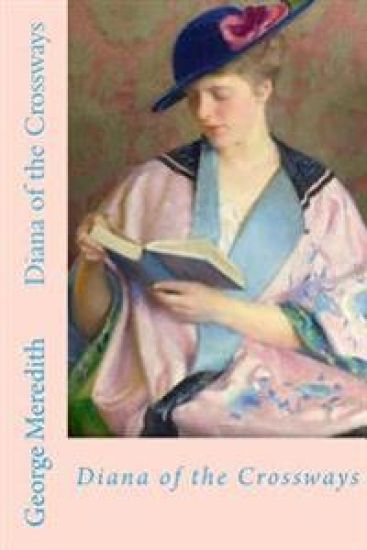
Diana of the Crossways is a novel by George Meredith which was published in 1885. It is an account of an intelligent and forceful woman trapped in a miserable marriage and was prompted by Meredith's friendship with society beauty and author Caroline Norton. The heroine Diana Warwick says: "we women are the verbs passive of the alliance, we have to learn, and if we take to activity, with the best intentions, we conjugate a frightful disturbance. We are to run on lines, like the steam-trains, or we come to no station, dash to fragments. I have the misfortune to know I was born an active. I take my chance." Her efforts to advance her husband, through cultivating a friendship with Cabinet Minister Lord Dannisburgh, leads to scandal and alienation from her husband, Augustus Warwick. Her intention to live "independently" through writing, are initially successful, but her involvement in politics brings her to grief, both personal and public. Diana, beautiful, charming and intelligent but hotheaded, becomes embroiled in a political as well as a social scandal (the politics are based on the troubled history of Robert Peel's administration, and the 1845 Corn Laws in particular)..... George Meredith, OM (12 February 1828 - 18 May 1909) was an English novelist and poet of the Victorian era. He was nominated for the Nobel Prize in Literature seven times. LIFE: Meredith was born in Portsmouth, England, a son and grandson of naval outfitters. His mother died when he was five. At the age of 14 he was sent to a Moravian School in Neuwied, Germany, where he remained for two years. He read law and was articled as a solicitor, but abandoned that profession for journalism and poetry. He collaborated with Edward Gryffydh Peacock, son of Thomas Love Peacock in publishing a privately circulated literary magazine, the Monthly Observer. He married Edward Peacock's widowed sister Mary Ellen Nicolls in 1849 when he was twenty-one years old and she was twenty-eight. Meredith collected his early writings, first published in periodicals, in an 1851 volume, Poems. In 1856 he posed as the model for The Death of Chatterton, a notable painting by the English Pre-Raphaelite painter Henry Wallis (1830-1916). His wife ran off with Wallis in 1858; she died three years later. The collection of "sonnets" entitled Modern Love (1862) emerged from this experience as did The Ordeal of Richard Feverel, his first "major novel". Meredith married Marie Vulliamy in 1864 and settled in Surrey. He continued writing novels and poetry, often inspired by nature. He had a keen understanding of comedy and his Essay on Comedy (1877) remains a reference work in the history of comic theory. In The Egoist, published in 1879, he applies some of his theories of comedy in one of his most enduring novels. Some of his writings, including The Egoist, also highlight the subjugation of women during the Victorian period. During most of his career, he had difficulty achieving popular success. His first successful novel was Diana of the Crossways published in 1885. Meredith supplemented his often uncertain writer's income with a job as a publisher's reader. His advice to Chapman and Hall made him influential in the world of letters. His friends in the literary world included, at different times, William and Dante Gabriel Rossetti, Algernon Charles Swinburne, Cotter Morison, Leslie Stephen, Robert Louis Stevenson, George Gissing and J. M. Barrie. His contemporary Sir Arthur Conan Doyle paid him homage in the short-story The Boscombe Valley Mystery, when Sherlock Holmes says to Dr. Watson during the discussion of the case, "And now let us talk about George Meredith, if you please, and we shall leave all minor matters until to-morrow." Oscar Wilde, in his dialogue The Decay of Lying, implies that Meredith, along with Balzac, is his favourite novelist, saying "Ah, Meredith Who can define him? His style is chaos illumined by flashes of lightning"....
The Ordeal of Richard Feverel: A History of Father and Son (1859) is the earliest full-length novel by George Meredith; its subject is the inability of systems of education to control human passions. It is one of a select group of standard texts that have been included in all four of Everyman's Library (1935), the New American Library of World Literature (1961), Oxford World's Classics (1984), and Penguin Classics (1998). With its rigorous psychological analysis and criticism of contemporary attitudes to sexuality, it has been seen by some critics as the first modern novel in English literature. Synopsis: Sir Austin Feverel's wife deserts him to run away with a poet, leaving her husband to bring up their boy Richard. Believing schools to be corrupt, Sir Austin, a scientific humanist, educates the boy at home with a plan of his own devising known as "the System". This involves strict authoritarian supervision of every aspect of the boy's life, and in particular the prevention of any meeting between Richard and girls of his own age. Richard nevertheless meets and falls in love with Lucy Desborough, the niece of a neighboring farmer. Sir Austin finds out and, disapproving of her humble birth, forbids them to meet again, but they secretly marry. Sir Austin now tries to retrieve the situation by sending Richard to London. Here, however, Sir Austin's friend Lord Mountfalcon successfully sets a courtesan to seduce Richard, hoping that this will leave Lucy open to seduction by himself. Ashamed of his own conduct, Richard flees abroad where he at length hears that Lucy has given birth to a baby and has been reconciled to Sir Austin. He returns to England and, hearing about Lord Mountfalcon's villainy, challenges him to a duel. But this goes badly: Richard is seriously wounded. Lucy is so overcome by this turn of events that she loses her mind and dies. In 1856 George Meredith's wife Mary began an affair with the artist Henry Wallis. In the following year, pregnant by Wallis, she ran away to join him, leaving her son Arthur behind. Meredith undertook to bring the child up. The parallels with the opening chapters of the novel are obvious, though Sir Austin is certainly not intended as a self-portrait. 2] Meredith was equivocal in his attitude to Sir Austin's favourite educational theories, which, it has been shown, derived largely from the medical writer William Acton's Prostitution, Considered in Its Moral, Social & Sanitary Aspects (1857) and The Functions and Disorders of the Reproductive Organs (1857), from Herbert Spencer's essay "Moral Education" (Quarterly Review, April 1858), and from Jean-Jacques Rousseau's novel mile.... George Meredith, OM (12 February 1828 - 18 May 1909) was an English novelist and poet of the Victorian era. He was nominated for the Nobel Prize in Literature seven times. LIFE: Meredith was born in Portsmouth, England, a son and grandson of naval outfitters. His mother died when he was five. At the age of 14 he was sent to a Moravian School in Neuwied, Germany, where he remained for two years. He read law and was articled as a solicitor, but abandoned that profession for journalism and poetry. He collaborated with Edward Gryffydh Peacock, son of Thomas Love Peacock in publishing a privately circulated literary magazine, the Monthly Observer. He married Edward Peacock's widowed sister Mary Ellen Nicolls in 1849 when he was twenty-one years old and she was twenty-eight. Meredith collected his early writings, first published in periodicals, in an 1851 volume, Poems. In 1856 he posed as the model for The Death of Chatterton, a notable painting by the English Pre-Raphaelite painter Henry Wallis (1830-1916). His wife ran off with Wallis in 1858; she died three years later. The collection of "sonnets" entitled Modern Love (1862) emerged from this experience as did The Ordeal of Richard Feverel, his first "major novel"....
The tale of Chloe, The house on the beach, Farina, The case of General Ople and Lady Camper . George Meredith, OM (12 February 1828 - 18 May 1909) was an English novelist and poet of the Victorian era. He was nominated for the Nobel Prize in Literature seven times. LIFE: Meredith was born in Portsmouth, England, a son and grandson of naval outfitters. His mother died when he was five. At the age of 14 he was sent to a Moravian School in Neuwied, Germany, where he remained for two years. He read law and was articled as a solicitor, but abandoned that profession for journalism and poetry. He collaborated with Edward Gryffydh Peacock, son of Thomas Love Peacock in publishing a privately circulated literary magazine, the Monthly Observer. He married Edward Peacock's widowed sister Mary Ellen Nicolls in 1849 when he was twenty-one years old and she was twenty-eight. Meredith collected his early writings, first published in periodicals, in an 1851 volume, Poems. In 1856 he posed as the model for The Death of Chatterton, a notable painting by the English Pre-Raphaelite painter Henry Wallis (1830-1916). His wife ran off with Wallis in 1858; she died three years later. The collection of "sonnets" entitled Modern Love (1862) emerged from this experience as did The Ordeal of Richard Feverel, his first "major novel". Meredith married Marie Vulliamy in 1864 and settled in Surrey. He continued writing novels and poetry, often inspired by nature. He had a keen understanding of comedy and his Essay on Comedy (1877) remains a reference work in the history of comic theory. In The Egoist, published in 1879, he applies some of his theories of comedy in one of his most enduring novels. Some of his writings, including The Egoist, also highlight the subjugation of women during the Victorian period. During most of his career, he had difficulty achieving popular success. His first successful novel was Diana of the Crossways published in 1885. Meredith supplemented his often uncertain writer's income with a job as a publisher's reader. His advice to Chapman and Hall made him influential in the world of letters. His friends in the literary world included, at different times, William and Dante Gabriel Rossetti, Algernon Charles Swinburne, Cotter Morison, Leslie Stephen, Robert Louis Stevenson, George Gissing and J. M. Barrie. His contemporary Sir Arthur Conan Doyle paid him homage in the short-story The Boscombe Valley Mystery, when Sherlock Holmes says to Dr. Watson during the discussion of the case, "And now let us talk about George Meredith, if you please, and we shall leave all minor matters until to-morrow." Oscar Wilde, in his dialogue The Decay of Lying, implies that Meredith, along with Balzac, is his favourite novelist, saying "Ah, Meredith Who can define him? His style is chaos illumined by flashes of lightning". In 1868 Meredith was introduced to Thomas Hardy by Frederic Chapman of Chapman & Hall the publishers. Hardy had submitted his first novel, The Poor Man and the Lady. Meredith advised Hardy not to publish his book as it would be attacked by reviewers and destroy his hopes of becoming a novelist. Meredith felt the book was too bitter a satire on the rich and counselled Hardy to put it aside and write another 'with a purely artistic purpose' and more of a plot. Meredith spoke from experience; his first big novel, The Ordeal of Richard Feverel, was judged so shocking that Mudie's circulating library had cancelled an order of 300 copies. Hardy continued in his attempts to publish the novel: however it remained unpublished, though he clearly took Meredith's advice seriously. Before his death, Meredith was honoured from many quarters: he succeeded Lord Tennyson as president of the Society of Authors; in 1905 he was appointed to the Order of Merit by King Edward VII. In 1909, he died at his home in Box Hill, Surrey. He is buried in the cemetery at Dorking, Surrey.
The novel is a humorous oriental romance and allegory written in the style of the Arabian Nights. Like its model, it includes a number of stories within the story, along with poetic asides. Originally published in 1908. Contents include: The Thwackings - The Story of Bhanavar the Beautiful - The Betrothal - Punishment of Shahpesh, The Persian, on Khipil, The Builder - The Genie Karaz - The Well of Paravid - The Horse Garraveen - The Talking Hawk - Goorelka of Golb - The Lily of the Enchanted Sea - Story of Noorna Bin Noorka, The Genie Karaz, and the Princess of Oolb - The Wiles of Rabesqurat - The Palace of Aklis - The Sons of Aklis - The Sword of Aklis - Koorookh - The Veiled Figure - The Bosom of Noorna - The Revival - The Plot - The Dish of Pomegranate Grain - The Burning of the Identical - The Flashes of the Blade............... George Meredith, OM (12 February 1828 - 18 May 1909) was an English novelist and poet of the Victorian era. He was nominated for the Nobel Prize in Literature seven times. LIFE: Meredith was born in Portsmouth, England, a son and grandson of naval outfitters. His mother died when he was five. At the age of 14 he was sent to a Moravian School in Neuwied, Germany, where he remained for two years. He read law and was articled as a solicitor, but abandoned that profession for journalism and poetry. He collaborated with Edward Gryffydh Peacock, son of Thomas Love Peacock in publishing a privately circulated literary magazine, the Monthly Observer. He married Edward Peacock's widowed sister Mary Ellen Nicolls in 1849 when he was twenty-one years old and she was twenty-eight. Meredith collected his early writings, first published in periodicals, in an 1851 volume, Poems. In 1856 he posed as the model for The Death of Chatterton, a notable painting by the English Pre-Raphaelite painter Henry Wallis (1830-1916). His wife ran off with Wallis in 1858; she died three years later. The collection of "sonnets" entitled Modern Love (1862) emerged from this experience as did The Ordeal of Richard Feverel, his first "major novel". Meredith married Marie Vulliamy in 1864 and settled in Surrey. He continued writing novels and poetry, often inspired by nature. He had a keen understanding of comedy and his Essay on Comedy (1877) remains a reference work in the history of comic theory. In The Egoist, published in 1879, he applies some of his theories of comedy in one of his most enduring novels. Some of his writings, including The Egoist, also highlight the subjugation of women during the Victorian period. During most of his career, he had difficulty achieving popular success. His first successful novel was Diana of the Crossways published in 1885. Meredith supplemented his often uncertain writer's income with a job as a publisher's reader. His advice to Chapman and Hall made him influential in the world of letters. His friends in the literary world included, at different times, William and Dante Gabriel Rossetti, Algernon Charles Swinburne, Cotter Morison, Leslie Stephen, Robert Louis Stevenson, George Gissing and J. M. Barrie. His contemporary Sir Arthur Conan Doyle paid him homage in the short-story The Boscombe Valley Mystery, when Sherlock Holmes says to Dr. Watson during the discussion of the case, "And now let us talk about George Meredith, if you please, and we shall leave all minor matters until to-morrow." Oscar Wilde, in his dialogue The Decay of Lying, implies that Meredith, along with Balzac, is his favourite novelist, saying "Ah, Meredith Who can define him? His style is chaos illumined by flashes of lightning".....
Evan Harrington is an 1861 novel by George Meredith, a glowing comedy of Victorian presumptions.. George Meredith, OM (12 February 1828 - 18 May 1909) was an English novelist and poet of the Victorian era. He was nominated for the Nobel Prize in Literature seven times. LIFE: Meredith was born in Portsmouth, England, a son and grandson of naval outfitters. His mother died when he was five. At the age of 14 he was sent to a Moravian School in Neuwied, Germany, where he remained for two years. He read law and was articled as a solicitor, but abandoned that profession for journalism and poetry. He collaborated with Edward Gryffydh Peacock, son of Thomas Love Peacock in publishing a privately circulated literary magazine, the Monthly Observer. He married Edward Peacock's widowed sister Mary Ellen Nicolls in 1849 when he was twenty-one years old and she was twenty-eight. Meredith collected his early writings, first published in periodicals, in an 1851 volume, Poems. In 1856 he posed as the model for The Death of Chatterton, a notable painting by the English Pre-Raphaelite painter Henry Wallis (1830-1916). His wife ran off with Wallis in 1858; she died three years later. The collection of "sonnets" entitled Modern Love (1862) emerged from this experience as did The Ordeal of Richard Feverel, his first "major novel". Meredith married Marie Vulliamy in 1864 and settled in Surrey. He continued writing novels and poetry, often inspired by nature. He had a keen understanding of comedy and his Essay on Comedy (1877) remains a reference work in the history of comic theory. In The Egoist, published in 1879, he applies some of his theories of comedy in one of his most enduring novels. Some of his writings, including The Egoist, also highlight the subjugation of women during the Victorian period. During most of his career, he had difficulty achieving popular success. His first successful novel was Diana of the Crossways published in 1885. Meredith supplemented his often uncertain writer's income with a job as a publisher's reader. His advice to Chapman and Hall made him influential in the world of letters. His friends in the literary world included, at different times, William and Dante Gabriel Rossetti, Algernon Charles Swinburne, Cotter Morison, Leslie Stephen, Robert Louis Stevenson, George Gissing and J. M. Barrie. His contemporary Sir Arthur Conan Doyle paid him homage in the short-story The Boscombe Valley Mystery, when Sherlock Holmes says to Dr. Watson during the discussion of the case, "And now let us talk about George Meredith, if you please, and we shall leave all minor matters until to-morrow." Oscar Wilde, in his dialogue The Decay of Lying, implies that Meredith, along with Balzac, is his favourite novelist, saying "Ah, Meredith Who can define him? His style is chaos illumined by flashes of lightning".............
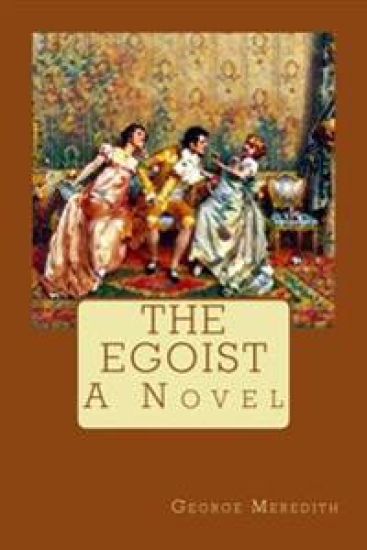
The Egoist is a tragicomical novel by George Meredith published in 1879. The novel recounts the story of self-absorbed Sir Willoughby Patterne and his attempts at marriage; jilted by his first bride-to-be, he vacillates between the sentimental Laetitia Dale and the strong-willed Clara Middleton. More importantly, the novel follows Clara's attempts to escape from her engagement to Sir Willoughby, who desires women to serve as a mirror for him and consequently cannot understand why she would not want to marry him. Thus, The Egoist dramatizes the difficulty contingent upon being a woman in Victorian society, when women's bodies and minds are trafficked between fathers and husbands to cement male bonds. Critical response: In an afterword by Angus Wilson, The Egoist was called "the turning point in George Meredith's career." Wilson saw Meredith as "the first great art novelist"; his afterword interprets the book as an adaptation of a stage comedy, an achievement he arrogates to few English authors, who, he suggests, present only "farce or satire." He compliments Meredith most when he is detached from his characters, as "it is then that our laughter is most thoughtful." Wilson is most taken by "the absolute truth of much of the dialogue," such as how "the way Sir Willoughby continues to speak through the answers of other characters, returning to notice their replies only when his own vein of thought is exhausted" is a "wonderful observation of human speech." In his essay "Books Which Have Influenced Me," Robert Louis Stevenson reports the following story: "A young friend of Mr. Meredith's (as I have the story) came to him in agony. 'This is too bad of you, ' he cried. 'Willoughby is me ' 'No, my dear fellow, ' said the author; 'he is all of us.'"E. M. Forster discussed the book in his lecture series Aspects of the Novel, using it as an example of a "highly organized" plot. Much of his discussion, however, focuses on Meredith and his popularity as an author. More materially, Forster compliments Meredith on not revealing Laetitia Dale's changed feelings for Willoughby until she rejects him in their midnight meeting; " i]t would have spoiled his high comedy if we had been kept in touch throughout ... in fact it would be boorish. ... Meredith with his unerring good sense here lets the plot triumph" rather than explaining Dale's character more fully. Forster further compares Meredith with Thomas Hardy, complimenting Hardy on his pastoral sensibilities and Meredith on his powerful plots, " knowing] what his] novel s] could stand." George Meredith, OM (12 February 1828 - 18 May 1909) was an English novelist and poet of the Victorian era. He was nominated for the Nobel Prize in Literature seven times. LIFE: Meredith was born in Portsmouth, England, a son and grandson of naval outfitters. His mother died when he was five. At the age of 14 he was sent to a Moravian School in Neuwied, Germany, where he remained for two years. He read law and was articled as a solicitor, but abandoned that profession for journalism and poetry. He collaborated with Edward Gryffydh Peacock, son of Thomas Love Peacock in publishing a privately circulated literary magazine, the Monthly Observer. He married Edward Peacock's widowed sister Mary Ellen Nicolls in 1849 when he was twenty-one years old and she was twenty-eight. Meredith collected his early writings, first published in periodicals, in an 1851 volume, Poems. In 1856 he posed as the model for The Death of Chatterton, a notable painting by the English Pre-Raphaelite painter Henry Wallis (1830-1916). His wife ran off with Wallis in 1858; she died three years later. The collection of "sonnets" entitled Modern Love (1862) emerged from this experience as did The Ordeal of Richard Feverel, his first "major novel"....
George Meredith, OM (12 February 1828 - 18 May 1909) was an English novelist and poet of the Victorian era. He was nominated for the Nobel Prize in Literature seven times. LIFE: Meredith was born in Portsmouth, England, a son and grandson of naval outfitters. His mother died when he was five. At the age of 14 he was sent to a Moravian School in Neuwied, Germany, where he remained for two years. He read law and was articled as a solicitor, but abandoned that profession for journalism and poetry. He collaborated with Edward Gryffydh Peacock, son of Thomas Love Peacock in publishing a privately circulated literary magazine, the Monthly Observer. He married Edward Peacock's widowed sister Mary Ellen Nicolls in 1849 when he was twenty-one years old and she was twenty-eight. Meredith collected his early writings, first published in periodicals, in an 1851 volume, Poems. In 1856 he posed as the model for The Death of Chatterton, a notable painting by the English Pre-Raphaelite painter Henry Wallis (1830-1916). His wife ran off with Wallis in 1858; she died three years later. The collection of "sonnets" entitled Modern Love (1862) emerged from this experience as did The Ordeal of Richard Feverel, his first "major novel". Meredith married Marie Vulliamy in 1864 and settled in Surrey. He continued writing novels and poetry, often inspired by nature. He had a keen understanding of comedy and his Essay on Comedy (1877) remains a reference work in the history of comic theory. In The Egoist, published in 1879, he applies some of his theories of comedy in one of his most enduring novels. Some of his writings, including The Egoist, also highlight the subjugation of women during the Victorian period. During most of his career, he had difficulty achieving popular success. His first successful novel was Diana of the Crossways published in 1885. Meredith supplemented his often uncertain writer's income with a job as a publisher's reader. His advice to Chapman and Hall made him influential in the world of letters. His friends in the literary world included, at different times, William and Dante Gabriel Rossetti, Algernon Charles Swinburne, Cotter Morison, Leslie Stephen, Robert Louis Stevenson, George Gissing and J. M. Barrie. His contemporary Sir Arthur Conan Doyle paid him homage in the short-story The Boscombe Valley Mystery, when Sherlock Holmes says to Dr. Watson during the discussion of the case, "And now let us talk about George Meredith, if you please, and we shall leave all minor matters until to-morrow." Oscar Wilde, in his dialogue The Decay of Lying, implies that Meredith, along with Balzac, is his favourite novelist, saying "Ah, Meredith Who can define him? His style is chaos illumined by flashes of lightning". In 1868 Meredith was introduced to Thomas Hardy by Frederic Chapman of Chapman & Hall the publishers. Hardy had submitted his first novel, The Poor Man and the Lady. Meredith advised Hardy not to publish his book as it would be attacked by reviewers and destroy his hopes of becoming a novelist. Meredith felt the book was too bitter a satire on the rich and counselled Hardy to put it aside and write another 'with a purely artistic purpose' and more of a plot. Meredith spoke from experience; his first big novel, The Ordeal of Richard Feverel, was judged so shocking that Mudie's circulating library had cancelled an order of 300 copies. Hardy continued in his attempts to publish the novel: however it remained unpublished, though he clearly took Meredith's advice seriously. Before his death, Meredith was honoured from many quarters: he succeeded Lord Tennyson as president of the Society of Authors; in 1905 he was appointed to the Order of Merit by King Edward VII. In 1909, he died at his home in Box Hill, Surrey. He is buried in the cemetery at Dorking, Surrey.
George Meredith was both a novelist and poet. Born in Portsmouth, England, his work is used as a classic example of Victorian literature. George Meredith, OM (12 February 1828 - 18 May 1909) was an English novelist and poet of the Victorian era. He was nominated for the Nobel Prize in Literature seven times. LIFE: Meredith was born in Portsmouth, England, a son and grandson of naval outfitters. His mother died when he was five. At the age of 14 he was sent to a Moravian School in Neuwied, Germany, where he remained for two years. He read law and was articled as a solicitor, but abandoned that profession for journalism and poetry. He collaborated with Edward Gryffydh Peacock, son of Thomas Love Peacock in publishing a privately circulated literary magazine, the Monthly Observer. He married Edward Peacock's widowed sister Mary Ellen Nicolls in 1849 when he was twenty-one years old and she was twenty-eight. Meredith collected his early writings, first published in periodicals, in an 1851 volume, Poems. In 1856 he posed as the model for The Death of Chatterton, a notable painting by the English Pre-Raphaelite painter Henry Wallis (1830-1916). His wife ran off with Wallis in 1858; she died three years later. The collection of "sonnets" entitled Modern Love (1862) emerged from this experience as did The Ordeal of Richard Feverel, his first "major novel". Meredith married Marie Vulliamy in 1864 and settled in Surrey. He continued writing novels and poetry, often inspired by nature. He had a keen understanding of comedy and his Essay on Comedy (1877) remains a reference work in the history of comic theory. In The Egoist, published in 1879, he applies some of his theories of comedy in one of his most enduring novels. Some of his writings, including The Egoist, also highlight the subjugation of women during the Victorian period. During most of his career, he had difficulty achieving popular success. His first successful novel was Diana of the Crossways published in 1885. Meredith supplemented his often uncertain writer's income with a job as a publisher's reader. His advice to Chapman and Hall made him influential in the world of letters. His friends in the literary world included, at different times, William and Dante Gabriel Rossetti, Algernon Charles Swinburne, Cotter Morison, Leslie Stephen, Robert Louis Stevenson, George Gissing and J. M. Barrie. His contemporary Sir Arthur Conan Doyle paid him homage in the short-story The Boscombe Valley Mystery, when Sherlock Holmes says to Dr. Watson during the discussion of the case, "And now let us talk about George Meredith, if you please, and we shall leave all minor matters until to-morrow." Oscar Wilde, in his dialogue The Decay of Lying, implies that Meredith, along with Balzac, is his favourite novelist, saying "Ah, Meredith Who can define him? His style is chaos illumined by flashes of lightning". In 1868 Meredith was introduced to Thomas Hardy by Frederic Chapman of Chapman & Hall the publishers. Hardy had submitted his first novel, The Poor Man and the Lady. Meredith advised Hardy not to publish his book as it would be attacked by reviewers and destroy his hopes of becoming a novelist. Meredith felt the book was too bitter a satire on the rich and counselled Hardy to put it aside and write another 'with a purely artistic purpose' and more of a plot. Meredith spoke from experience; his first big novel, The Ordeal of Richard Feverel, was judged so shocking that Mudie's circulating library had cancelled an order of 300 copies. Hardy continued in his attempts to publish the novel: however it remained unpublished, though he clearly took Meredith's advice seriously. Before his death, Meredith was honoured from many quarters: he succeeded Lord Tennyson as president of the Society of Authors; in 1905 he was appointed to the Order of Merit by King Edward VII. In 1909, he died at his home in Box Hill, Surrey. He is buried in the cemetery at Dorking, Surrey...........
Evan Harrington - A Novel is an unchanged, high-quality reprint of the original edition of 1898. Hansebooks is editor of the literature on different topic areas such as research and science, travel and expeditions, cooking and nutrition, medicine, and other genres. As a publisher we focus on the preservation of historical literature. Many works of historical writers and scientists are available today as antiques only. Hansebooks newly publishes these books and contributes to the preservation of literature which has become rare and historical knowledge for the future.
The Egoist is an unchanged, high-quality reprint of the original edition of 1893. Hansebooks is editor of the literature on different topic areas such as research and science, travel and expeditions, cooking and nutrition, medicine, and other genres. As a publisher we focus on the preservation of historical literature. Many works of historical writers and scientists are available today as antiques only. Hansebooks newly publishes these books and contributes to the preservation of literature which has become rare and historical knowledge for the future.