
Kirjailija
George Orwell
Kirjat ja teokset yhdessä paikassa: 1 213 kirjaa, julkaisuja vuosilta 1905–2026, suosituimpiin kuuluu Vuonna 1984. Vertaile teosten hintoja ja tarkista saatavuus suomalaisista kirjakaupoista.
1 213 kirjaa
Kirjojen julkaisuvuodet: 1905–2026.
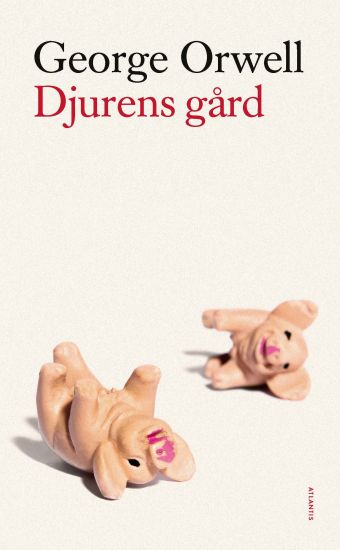
I den starkt genomskådande och satiriska berättelsen om Djurens gård kulminerar George Orwells besvikelse över kommunismen. Djuren på Herrgården har fått nog av människornas övergrepp. De gör uppror och grundar en ny filosofi som de kallar animalismen. De sjunger sin egen kampsång, O, Englands djur, och arbetar och trivs med sin nya tillvaro. Men smygande, nästan omärkligt, förändras deras förhållanden. En av de ledande grisarna, Napoleon, utbildar alltmer en sann diktators egenskaper.

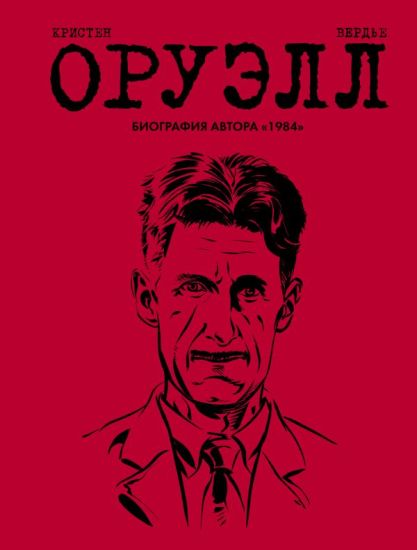
Vypusknik Itona, pisatel i ekstsentrik. Zhurnalist i otshelnik, opolchenets i buntovschik. Sozdatel novojaza i velichajshij providets. Pessimist v politike, no optimist po zhizni. Mozhno lish gadat, kakimi stali by ego raboty, ne nazovis on odnazhdy Dzhordzhem Oruellom. V forme graficheskogo romana Per Kristen i Sebastjan Verde issledujut politicheskie vzgljady i literaturnye pristrastija odnogo iz samykh jarkikh pisatelej proshlogo veka, avtora vsemirno izvestnykh knig "1984" i "Skotnyj dvor". Perevodchik: Borovikova Ljudmila IvanovnaKhudozhnik: Verde Sebastjan
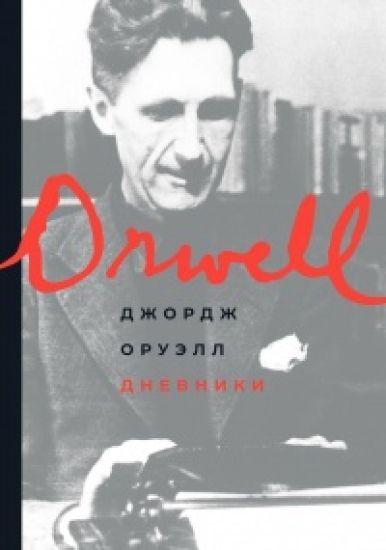
Vpervye publikuemye na russkom jazyke dnevniki Dzhordzha Oruella raskryvajut pered nami neizvestnuju, skrytuju ot glaz chitatelej ego velikikh proizvedenij istoriju obyknovennoj zhizni neobyknovennogo cheloveka. Odinnadtsat sokhranivshikhsja dnevnikov, napisannykh im v period s 1931 po 1939 god, opisyvajut ego junosheskie skitanija sredi shakhterov i stranstvujuschikh rabochikh, podem totalitarizma i uzhasnuju dramu Vtoroj mirovoj vojny. On zapisyval vse - svoi mysli, nabroski stikhov, nabljudenija za pogodoj, vyrezki iz gazet s retseptami i sovetami sadovodu. Eti ezhednevnye zapisi sokhranili bestsennye "semena" sobytij i razmyshlenij, iz kotorykh vposledstvii vyrosli ego literaturnye shedevry. V nikh takzhe otrazilis i tragicheskie momenty ego lichnoj zhizni, takie kak smert pervoj zheny i ego sobstvennoe ugasanie v muchitelnoj borbe s tuberkulezom. Stilisticheski bezuprechnye, dnevniki Oruella vpitali v sebja vsju polnotu ego zhizni i mysli na protjazhenii mnogikh let, javljajas opytom avtobiografii, kotoruju on tak nikogda i ne napishet.
Djurfarmen av George Orwell är en satirisk roman som skildrar händelserna som ledde fram till den ryska revolutionen och de tidiga åren av Sovjetunionen, genom historien om en grupp bondgårdsdjur som störtar sin mänskliga ägare och driver gården själva.

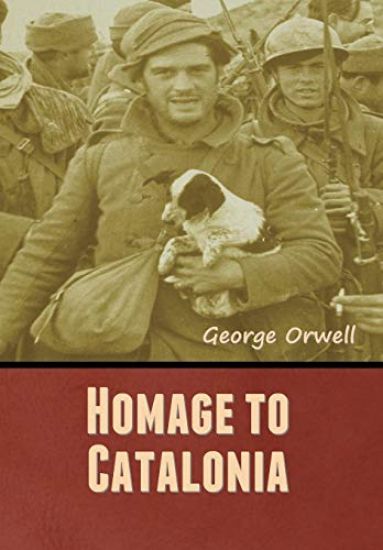
"A crucially important book." - The Guardian "One of Orwell's very best books and perhaps the best book that exists on the Spanish Civil War." - The New YorkerHomage to Catalonia is George Orwell's brutally honest account of his experience as a militiaman during the Spanish Civil War. In the last days of 1936, Spain was five months into a bitter civil war, in which volunteers from many countries were helping the elected government of the Spanish Republic battle a military coup led by General Francisco Franco and backed by Hitler and Mussolini. Some foreigners flocking to Spain had come for another reason: the northeast part of the country, particularly Catalonia, was in the midst of the most far-reaching social revolution ever seen in Western Europe. Workers had taken over factories and peasants the large estates; waiters were running restaurants and trolley drivers the transport systems. Municipal garbage trucks carried anarchist slogans. Hundreds of idealistic visitors wanted to take part in a revolution that came not, as in Stalin's Russia, from the top down, but from the bottom up. In 1936, George Orwell, intending to report on the Spanish Civil War as a journalist, quickly found himself embroiled as a participant - as a member of the Partido Obrero de Unificaci n Marxista (POUM), or the Workers' Party of Marxist Unification - an independent leftist group with its own militia at the front. Fighting against the Fascists, Orwell described in painfully vivid and occasionally comic detail life in the trenches. As the politics became tangled, Orwell was pulled into a heartbreaking conflict between his own personal ideals and the complicated realities of political power struggles. Orwell's experience was a great influence on his political development and his subsequent work, leading him to become a dystopian writer. "Every line of serious work that I have written since 1936 has been written, directly or indirectly, against totalitarianism and for democratic Socialism as I understand it". - George Orwell"A crucially important book. Without Homage to Catalonia] there would have been no Animal Farm and no Nineteen Eighty-Four - works of fiction that, like the reality that preceded them, focus on the terrifying consequences of authoritarianism for the individual mind." - The Guardian"A wise book, one that once read will never be forgotten." - Chicago Sunday Tribune"No one except George Orwell ... made the violence and self-dramatization of Spain so burning and terrible." - New York Times About the authorGeorge Orwell's publications include Down and Out in Paris and London (1933), Burmese Days (1934), Keep the Aspidistra Flying (1936), The Road to Wigan Pier (1937) and Coming Up for Air (1939); his unique political allegory Animal Farm was published in 1945, and it was this novel, together with the dystopia of Nineteen Eighty-Four (1949), which brought him world-wide fame.
Including Animal Farm'Orwell is the most influential political writer of the twentieth century' New York Review of BooksThroughout his life George Orwell aimed, in his words, to make 'political writing into an art'. This collection brings together the best of his matchless political essays and journalism with his timeless satire on totalitarianism, Animal Farm. It includes articles on subjects from the corruption of language to the oppressive British Empire; his masterly wartime Socialist polemic, 'The Lion and the Unicorn'; a wry review of Mein Kampf; a defence of Nineteen Eighty-Four; and extracts from his controversial list of 'Crypto-Communists'. Together these works demonstrate Orwell's commitment to telling the truth, however unpalatable, and doing so with artistry and humanity. Edited by Peter Davison with an Introduction by Timothy Garton Ash
Including The Road to Wigan Pier'No one wrote better about the English character than Orwell' New York Review of BooksMuch of George Orwell's best writing, brought together in this collection, is concerned with his complex, often contradictory attitude to England. In the brilliantly perceptive The English People, he lists the national characteristics as 'suspicion of foreigners, sentimentality about animals, hypocrisy, exaggerated class distinctions and an obsession with sport'. The Road to Wigan Pier, his blistering account of poverty in the north of England, and many of his essays, attack what he called 'the most class-ridden country under the sun', while other writings here ruminate on the merits of cricket, gardening, roast dinners, pubs, tea and seaside postcards. Edited by Peter Davison with an Introduction by Ben Pimlott
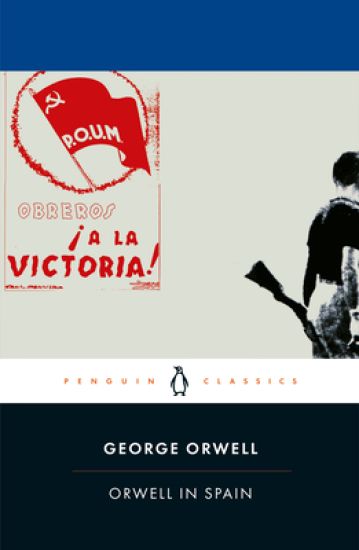
Including Homage to Catalonia'Spain not only defined Orwell as an individual, it also gave him his first glimpse of totalitarianism' D. J. Taylor, GuardianGeorge Orwell's experience of the Spanish Civil War had a transformative effect on his life and work. This volume brings together his complete writings on the war, including Homage to Catalonia, his searing memoir of fighting in the conflict and the bitter betrayal that followed. The powerful journalism, essays, letters and pamphlets also collected here show his resolution to tell the truth about what happened amid a 'crop of lies' from both the Communist Party and the British press, while in 'Looking Back on the Spanish War' he remembers the heroism and decency of the ordinary people he encountered. Edited by Peter Davison with an Introduction by Christopher Hitchens
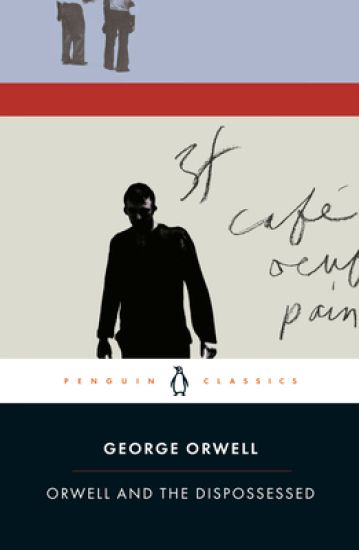
Including Down and Out in Paris and London'Orwell was the great moral force of his age' SpectatorThe powerful writings collected together in this volume chronicle George Orwell's first-hand experiences of life among the underclass of the 'two nations' of rich and poor. Down and Out in Paris and London is the young Orwell's memoir of his time as a struggling, often penniless writer, living among the destitute and dispossessed, in which he exposes what 'going to the dogs' is really like. There are also articles and letters on sleeping rough in Trafalgar Square, being arrested for drunkenness, on the poverty Orwell witnessed in Morocco and India, and his shocking essay, 'How the Poor Die'. Edited by Peter Davison with an Introduction by Peter Clarke
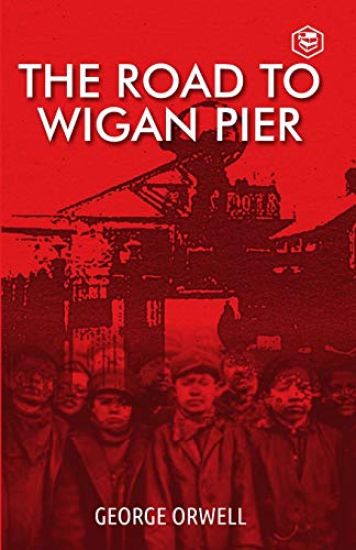
It is only when you meet someone of a different culture from yourself that you begin to realize what your own beliefs really are. The Road to Wigan Pier is George Orwell's 1937 study of poverty and working-class life in northern England. It is the book which established Orwell as among Britain's foremost political and social commentators. It is, moreover, essential for any reader who wishes to gain a deeper understanding of Orwell's life, work and legacy. This non-fiction work set the tone for Orwell's subsequent career, by focusing on class relations within Britain and political solutions to social problems. The Road to Wigan Pier has remained widely read since his death, running to several editions, and providing a point of comparison for later social and political commentaries

London, 1936. Gordon Comstock has declared war on the money god; and Gordon is losing the war. Nearly 30 and "rather moth-eaten already," a poet whose one small book of verse has fallen "flatter than any pancake," Gordon has given up a "good" job and gone to work in a bookshop at half his former salary. Always broke, but too proud to accept charity, he rarely sees his few friends and cannot get the virginal Rosemary to bed because (or so he believes), "If you have no money ... women won't love you." On the windowsill of Gordon's shabby rooming-house room is a sickly but unkillable aspidistra--a plant he abhors as the banner of the sort of "mingy, lower-middle-class decency" he is fleeing in his downward flight. In Keep the Aspidistra Flying, George Orwell has created a darkly compassionate satire to which anyone who has ever been oppressed by the lack of brass, or by the need to make it, will all too easily relate. He etches the ugly insanity of what Gordon calls "the money-world" in unflinching detail, but the satire has a second edge, too, and Gordon himself is scarcely heroic. In the course of his misadventures, we become grindingly aware that his radical solution to the problem of the money-world is no solution at all--that in his desperate reaction against a monstrous system, he has become something of a monster himself. Orwell keeps both of his edges sharp to the very end--a "happy" ending that poses tough questions about just how happy it really is. That the book itself is not sour, but constantly fresh and frequently funny, is the result of Orwell's steady, unsentimental attention to the telling detail; his dry, quiet humor; his fascination with both the follies and the excellences of his characters; and his courageous refusal to embrace the comforts of any easy answer.
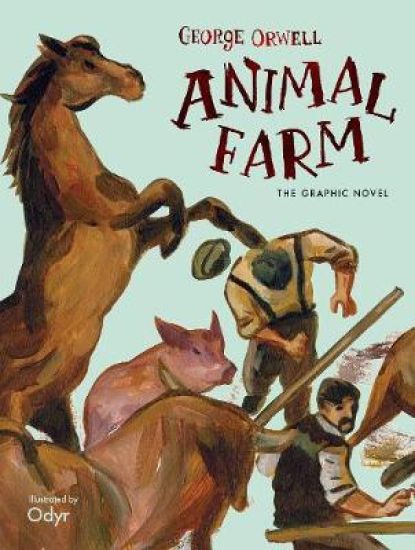
A beautiful graphic adaptation of George Orwell's timeless and timely allegorical novel. "All animals are equal, but some animals are more equal than others." In 1945, George Orwell, called "the conscience of his generation," created an enduring, devastating story of new tyranny replacing old, and power corrupting even the noblest of causes. Today it is all too clear that Orwell's masterpiece is still fiercely relevant wherever cults of personality thrive, truths are twisted by those in power, and freedom is under attack. In this fully authorized edition, the artist Odyr translates the world and message of Animal Farm into a gorgeously imagined graphic novel. Old Major, Napoleon, Squealer, Snowball, Boxer, and all the creatures of Animal Farm come to life in this newly envisaged classic. From his individual brushstrokes to the freedom of his page design, Odyr's adaptation seamlessly moves between satire and fable and will appeal to all ages, just as Orwell intended.