Kirjailija
George Orwell
Kirjat ja teokset yhdessä paikassa: 1 213 kirjaa, julkaisuja vuosilta 1905–2026, suosituimpiin kuuluu Vuonna 1984. Vertaile teosten hintoja ja tarkista saatavuus suomalaisista kirjakaupoista.
1 213 kirjaa
Kirjojen julkaisuvuodet: 1905–2026.
Volume 14 of The Complete Works of George OrwellOrwell wrote to his anarchist friend, George Woodcock in December 1942 arguing that 'by working inside an institution like the BBC one can perhaps deodorise it to some extent', and he concluded, 'I consider I have kept our little corner of it fairly clean'. In addition to the magazine programme, 'Voice', Orwell continued to develop what would now be called an 'open university': broadcasts by distinguished speakers on texts set for Bombay and Calcutta university degrees. He enlisted such speakers as E. M. Forster, T. S. Eliot and Joseph Needham and the broadcasts were backed up by publications printed in India for university students. Classical and Indian music programmes were broadcast; there was regular film criticism and an innovative practical theatre series, 'Let's Act it Ourselves'. Some of Orwell's scripts, such as that for his 'Imaginary Interview with Jonathan Swift', pose difficult textual problems and these are fully examined and annotated. The script of Eileen Blair's broadcast for the series, 'In Your Kitchen' has been included. Orwell still found time to write a number of reviews, contribute to Partisan Review, and write essays on Hardy, Henry Miller, and Yeats.
George Orwell's paean to the end of an idyllic era in British history, Coming Up for Air is a poignant account of one man's attempt to recapture childhood innocence as war looms on the horizon. George Bowling, forty-five, mortgaged, married with children, is an insurance salesman with an expanding waistline, a new set of false teeth - and a desperate desire to escape his dreary life. He fears modern times - since, in 1939, the Second World War is imminent - foreseeing food queues, soldiers, secret police and tyranny. So he decides to escape to the world of his childhood, to the village he remembers as a rural haven of peace and tranquillity. But his return journey to Lower Binfield may bring only a more complete disillusionment ...'Very funny, as well as invigoratingly realistic ... Nineteen Eighty-Four is here in embryo. So is Animal Farm ... not many novels carry the seeds of two classics as well as being richly readable themselves'John Carey, Sunday Times
Gordon Comstock loathes dull, middle-class respectability and worship of money. He gives up a 'good job' in advertising to work part-time in a bookshop, giving him more time to write. But he slides instead into a self-induced poverty that destroys his creativity and his spirit. Only Rosemary, ever-faithful Rosemary, has the strength to challenge his commitment to his chosen way of life. Through the character of Gordon Comstock, Orwell reveals his own disaffection with the society he once himself renounced. Enlivened with vivid autobiographical detail, George Orwell's Keep the Aspidistra Flying is a tragically witty account of the struggle to escape from a materialistic existence, with an introduction by Peter Davison in Penguin Modern Classics.
Intimidated by her father, the rector of Knype Hill, Dorothy performs her submissive roles of dutiful daughter and bullied housekeeper. Her thoughts are taken up with the costumes she is making for the church school play, by the hopelessness of preaching to the poor and by debts she cannot pay in 1930s Depression England. Suddenly her routine shatters and Dorothy finds herself down and out in London. She is wearing silk stockings, has money in her pocket and cannot remember her name. Orwell leads us through a landscape of unemployment, poverty and hunger, where Dorothy's faith is challenged by a social reality that changes her life.
Volume 12 of The Complete Works of George OrwellFor the twenty-month period of this volume, there are reproduced 123 book, 38 theatre, and 43 film reviews. Inside the Whale, Orwell's first collection of essays, and The Lion and the Unicorn: Socialism and the English Genius are reprinted here. Later in that year he gave a series of broadcasts on literary criticism, the texts of which are reproduced. Throughout this period Orwell kept a wartime diary; its entries are here printed chronologically with his reviews, essays, and letters and it is here that Orwell makes the first reference to his wish to live on a Hebridean island. It was in 1941 that Orwell began his series of 'London Letters' for Partisan Review. The volume also includes Orwell's lecture notes for instructing members of his Home Guard platoon.
Animal Farm
George Orwell; Andrew Bennett
Pearson Education Limited
2000
sidottu
Halvin toimitettuna 29,00 €
George Orwell's "fairy tale with a sting" provokes startling comparisons with the political world in which we live. This edition is part of a series of pre- and post-1914 works chosen especially for 14-18 year olds. The series features fiction, anthologies, poetry, plays and non-fiction.
The articles collected in George Orwell's Essays illuminate the life and work of one of the most individual writers of this century - a man who elevated political writing to an art. This outstanding collection brings together Orwell's longer, major essays and a fine selection of shorter pieces that includes 'My Country Right or Left', 'Decline of the English Murder', 'Shooting an Elephant' and 'A Hanging'. With great originality and wit Orwell unfolds his views on subjects ranging from a revaluation of Charles Dickens to the nature of Socialism, from a comic yet profound discussion of naughty seaside postcards to a spirited defence of English cooking. Displaying an almost unrivalled mastery of English plain prose, Orwell's essays created a unique literary manner from the process of thinking aloud and continue to challenge, move and entertain. This Penguin Modern Classics edition includes an introduction by Bernard Crick.
'Every line of serious work that I have written since 1936 has been written, directly or indirectly, against totalitarianism and for democratic Socialism as I understand it'. Thus wrote Orwell following his experiences as a militiaman in the Spanish Civil War, chronicled in Homage to Catalonia. Here he brings to bear all the force of his humanity, passion and clarity, describing with bitter intensity the bright hopes and cynical betrayals of that chaotic episode: the revolutionary euphoria of Barcelona, the courage of ordinary Spanish men and women he fought alongside, the terror and confusion of the front, his near-fatal bullet wound and the vicious treachery of his supposed allies. A firsthand account of the brutal conditions of the Spanish Civil War, George Orwell's Homage to Catalonia includes an introduction by Julian Symons in Penguin Modern Classics.
Hidden away in the Record Department of the sprawling Ministry of Truth, Winston Smith skilfully rewrites the past to suit the needs of the Party. Yet he inwardly rebels against the totalitarian world he lives in, which demands absolute obedience and controls him through the all-seeing telescreens and the watchful eye of Big Brother, symbolic head of the Party. In his longing for truth and liberty, Smith begins a secret love affair with a fellow-worker Julia, but soon discovers the true price of freedom is betrayal.
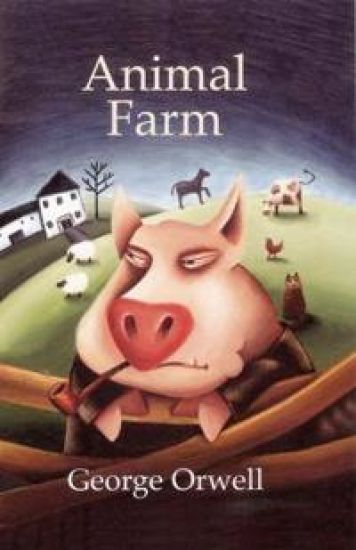
When the downtrodden animals of Manor Farm overthrow their master Mr Jones and take over the farm themselves, they imagine it is the beginning of a life of freedom and equality. But gradually a cunning, ruthless elite among them, masterminded by the pigs Napoleon and Snowball, starts to take control.
Having got rid of their human master, the animals in this political fable look forward to a life of freedom and plenty. But as a clever, ruthless elite takes control, the other animals find themselves hopelessly ensnared in the same old way.
Volume 14 of The Complete Works of George OrwellOrwell wrote to his anarchist friend, George Woodcock in December 1942 arguing that 'by working inside an institution like the BBC one can perhaps deodorise it to some extent', and he concluded, 'I consider I have kept our little corner of it fairly clean'. In addition to the magazine programme, 'Voice', Orwell continued to develop what would now be called an 'open university': broadcasts by distinguished speakers on texts set for Bombay and Calcutta university degrees. He enlisted such speakers as E. M. Forster, T. S Eliot and Joseph Needham and the broadcasts were backed up by publications printed in India for university students. Classical and Indian music programmes were broadcast; there was regular film critism and an innovative practical theatre series, 'Let's Act it Ourselves'. Some of Orwell's scripts, such as that for his 'Imaginary Interview with Jonathan Swift', pose difficult textual problems and these are fully examined and annotated. The script of Eileen Blair's broadcast for the series, 'In Your Kitchen' has been included. Orwell still found time to write a number of reviews, contribute to Partisan Review, and write essays on Hardy, Henry Miller, and Yeats.
Originally published in a censored form, this novel is now presented in a form closer to that first written, though not all passages can be restored. Dorothy's plight can be read with clearer understanding of what Orwell intended.
Diese Sonderausgabe bringt ein Vorwort von Ulrich Wickert; Farm der Tiere in der neuen Übersetzung von Michael Walter; Orwells Essay 'Die Pressefreiheit', sein Vorwort zur ukrainischen Ausgabe vom März 1947 und Briefe aus den Jahren 44/45, u.a. an den Verleger Victor Gollancz; Ein Kapitel aus Michael Sheldens großer Orwell-Biographie; die Illustrationen von F. K. Waechter
NOW AVAILABLE: The 75th Anniversary Edition with a new introduction by T a Obreht George Orwell's timeless and timely allegorical novel--a scathing satire of a downtrodden society's blind march towards totalitarianism. "All animals are equal, but some animals are more equal than others." A farm is taken over by its overworked, mistreated animals. With flaming idealism and stirring slogans, they set out to create a paradise of progress, justice, and equality. Thus the stage is set for one of the most telling satiric fables ever penned--a razor-edged fairy tale for grown-ups that records the evolution from revolution against tyranny to a totalitarianism just as terrible. When Animal Farm was first published, Stalinist Russia was seen as its target. Today it is devastatingly clear that wherever and whenever freedom is attacked, under whatever banner, the cutting clarity and savage comedy of George Orwell's masterpiece have a meaning and message still ferociously fresh.
Viewed as too libelous to print in England until 1968, the title essay in this collection reveals the abuse Orwell experienced as a child at an expensive and snobbish boarding school and offers insights into his lifelong concern for the oppressed. "Why I Write" describes Orwell's sense of political purpose, and the classic essay "Politics and the English Language" insists on clarity and precision in communication in order to avoid the Newspeak later described in 1984. Other essays focus on Gandhi (he "disinfected the political air"), Dickens ("no novelist has shown the same power of entering into the child's point of view"), Kipling ("a jingo imperialist"), Henry Miller (who told Orwell that involvement in the Spanish war was an act of an idiot), and England ("a family with the wrong members in control").
A biting satire on dictatorship written during the Second World War and published in 1945, ANIMAL FARM is perhaps the most celebrated twentieth-century English satire after the same writer's NINETEEN EIGHTY-FOUR. One of the very few writers to be compared in power, artistry and moral authority with Jonathan Swift, the purity of Orwell's spare prose and the logic of his dark comedy emphasize the stark message of man's inhumanity to man and beast's to beast