Kirjojen hintavertailu – 12 859 819 kirjaa ja 27 kauppaa

Kirjailija

George Packer

Kirjat ja teokset yhdessä paikassa: 25 kirjaa, julkaisuja vuosilta 1998–2025, suosituimpiin kuuluu Central Square. Vertaile teosten hintoja ja tarkista saatavuus suomalaisista kirjakaupoista.

25 kirjaa

Kirjojen julkaisuvuodet: 1998–2025.

The Emergency

The Emergency

George Packer

Farrar, Straus and Giroux
2025
sidottu

Halvin toimitettuna 27,60 €

George Packer's gripping fable of imperial collapse illuminates the crises of our times. George Packer's bestselling nonfiction work exploring American life has won many prizes, including the National Book Award. With The Emergency, he turns to fiction, bringing us a visionary novel that goes to the nerve center of what it means to live in a time of fracture and upheaval. An empire has collapsed from boredom and loss of faith in itself. In the Emergency that follows, youth rebellions of urban Burghers and rural Yeomen embrace radical new ideas of humanity. Doctor Hugo Rustin, chief surgeon at the Imperial College Hospital, is increasingly estranged from his city and his family--from his wife, Annabelle, who finds fulfillment in their changed community; and especially from his teenage daughter, Selva, who has turned against her father's values. When an incident at the hospital leads to Rustin's disgrace, he seeks redemption in a quixotic and dangerous journey into the countryside, with Selva as his companion, just as the conflict between Burghers and Yeomen is reaching a crisis. The Emergency is a novel of ideas and a taut page-turner. It asks what we owe each other across divided generations and classes--what common human bonds remain when a society falls apart. In creating a vividly imagined world, Packer takes us deep into the heart of our troubled moment.

Last Best Hope

Last Best Hope

George Packer

Vintage Publishing
2022
pokkari
Acclaimed National Book Award-winning author George Packer diagnoses America's descent into a failed state, and envisions a path toward overcoming injustices, paralyses, and divides How, in a few decades, did the United States transform from a broadly prosperous middle-class country, with relatively healthy institutions and competent leaders, to a nation defined by discredited elites, hollowed-out institutions, and blatant inequalities-feared and pitied by our friends, mocked and sabotaged by our adversaries, first in the world in Covid cases and deaths, and led in recent years by an incompetent authoritarian bigot? Last Best Hope is a bracing account of our current crisis and of how a new era of civic revitalization may bring it to an end. Combining reportage with historical narrative, autobiography, and political analysis, Packer depicts and assesses the four inadequate narratives that dominate American public life: Libertarian America, which imagines a nation of individuals responsible for their own fate, and serves the interests of corporations and the wealthy; Cosmopolitan America, the ideology of Silicon Valley and the professional elite,which celebrates globalization and leaves many American communities behind; Diverse America, which defines citizens as members of large identity groups that have inflicted or suffered oppression; and White America, a shallow nationalism that fears the contamination of non-whites and treachery of coastal elites, and poses the greatest threat to democracy in our lifetime. At a time when many fear that the American experiment in self-government may collapse, or, in Abraham Lincoln's words, "die by suicide", Packer shows that none of these narratives can sustain American democracy. To point a better way forward, he looks back at previous eras of crisis to discover the resources for invigorating self-government. Combining trenchant social analysis with a vibrant and stinging essayistic voice and a deep knowledge of America's past and present, Last Best Hope is an essential contribution to the literature of national self-examination the times demand.
Last Best Hope: America in Crisis and Renewal
One of The New York Times's 100 notable books of 2021 " George Packer's] account of America's decline into destructive tribalism is always illuminating and often dazzling." --William Galston, The Washington PostAcclaimed National Book Award-winning author George Packer diagnoses America's descent into a failed state, and envisions a path toward overcoming our injustices, paralyses, and divides In the year 2020, Americans suffered one rude blow after another to their health, livelihoods, and collective self-esteem. A ruthless pandemic, an inept and malign government response, polarizing protests, and an election marred by conspiracy theories left many citizens in despair about their country and its democratic experiment. With pitiless precision, the year exposed the nation's underlying conditions--discredited elites, weakened institutions, blatant inequalities--and how difficult they are to remedy. In Last Best Hope, George Packer traces the shocks back to their sources. He explores the four narratives that now dominate American life: Free America, which imagines a nation of separate individuals and serves the interests of corporations and the wealthy; Smart America, the world view of Silicon Valley and the professional elite; Real America, the white Christian nationalism of the heartland; and Just America, which sees citizens as members of identity groups that inflict or suffer oppression. In lively and biting prose, Packer shows that none of these narratives can sustain a democracy. To point a more hopeful way forward, he looks for a common American identity and finds it in the passion for equality--the "hidden code"--that Americans of diverse persuasions have held for centuries. Today, we are challenged again to fight for equality and renew what Alexis de Tocqueville called "the art" of self-government. In its strong voice and trenchant analysis, Last Best Hope is an essential contribution to the literature of national renewal.
Last Best Hope

Last Best Hope

George Packer

Jonathan Cape
2021
sidottu

Halvin toimitettuna 26,90 €

Drawing on the best of American history - what once made it great - without being trapped in the past, Last Best Hope dares America to step into a new and better era.
Last Best Hope: America in Crisis and Renewal

Last Best Hope: America in Crisis and Renewal

George Packer

Farrar, Straus and Giroux
2021
sidottu
One of The New York Times's 100 notable books of 2021 " George Packer's] account of America's decline into destructive tribalism is always illuminating and often dazzling." --William Galston, The Washington PostAcclaimed National Book Award-winning author George Packer diagnoses America's descent into a failed state, and envisions a path toward overcoming our injustices, paralyses, and divides In the year 2020, Americans suffered one rude blow after another to their health, livelihoods, and collective self-esteem. A ruthless pandemic, an inept and malign government response, polarizing protests, and an election marred by conspiracy theories left many citizens in despair about their country and its democratic experiment. With pitiless precision, the year exposed the nation's underlying conditions--discredited elites, weakened institutions, blatant inequalities--and how difficult they are to remedy. In Last Best Hope, George Packer traces the shocks back to their sources. He explores the four narratives that now dominate American life: Free America, which imagines a nation of separate individuals and serves the interests of corporations and the wealthy; Smart America, the world view of Silicon Valley and the professional elite; Real America, the white Christian nationalism of the heartland; and Just America, which sees citizens as members of identity groups that inflict or suffer oppression. In lively and biting prose, Packer shows that none of these narratives can sustain a democracy. To point a more hopeful way forward, he looks for a common American identity and finds it in the passion for equality--the "hidden code"--that Americans of diverse persuasions have held for centuries. Today, we are challenged again to fight for equality and renew what Alexis de Tocqueville called "the art" of self-government. In its strong voice and trenchant analysis, Last Best Hope is an essential contribution to the literature of national renewal.
Facing Unpleasant Facts

Facing Unpleasant Facts

George Orwell; George Packer

Houghton Mifflin
2021
nidottu
George Orwell was first and foremost an essayist, producing throughout his life an extraordinary array of short nonfiction that reflected--and illuminated--the fraught times in which he lived. "As soon as he began to write something," comments George Packer in his foreword, "it was as natural for Orwell to propose, generalize, qualify, argue, judge--in short, to think--as it was for Yeats to versify or Dickens to invent." Facing Unpleasant Facts charts Orwell's development as a master of the narrative-essay form and unites such classics as "Shooting an Elephant" with lesser-known journalism and passages from his wartime diary. Whether detailing the horrors of Orwell's boyhood in an English boarding school or bringing to life the sights, sounds, and smells of the Spanish Civil War, these essays weave together the personal and the political in an unmistakable style that is at once plainspoken and brilliantly complex.
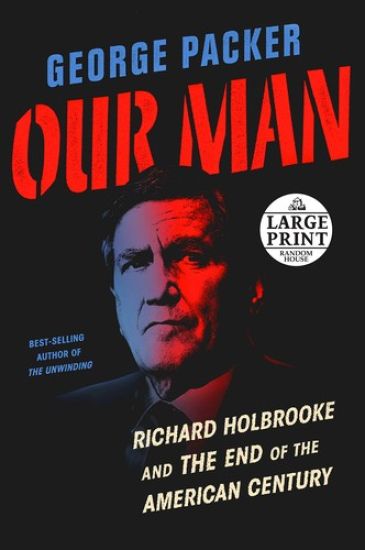
Our Man: Richard Holbrooke and the End of the American Century
*Finalist for the Pulitzer Prize for Biography**Winner of the Los Angeles Times Prize for Biography**Winner of the 2019 Hitchens Prize*"Portrays Holbrooke in all of his endearing and exasperating self-willed glory... Both a sweeping diplomatic history and a Shakespearean tragicomedy... If you could read one book to comprehend American's foreign policy and its quixotic forays into quicksands over the past 50 years, this would be it."--Walter Isaacson, The New York Times Book Review "By the end of the second page, maybe the third, you will be hooked... There never was a diplomat-activist quite like Holbrooke], and there seldom has been a book quite like this -- sweeping and sentimental, beguiling and brutal, catty and critical, much like the man himself."--David M. Shribman, The Boston Globe Richard Holbrooke was brilliant, utterly self-absorbed, and possessed of almost inhuman energy and appetites. Admired and detested, he was the force behind the Dayton Accords that ended the Balkan wars, America's greatest diplomatic achievement in the post-Cold War era. His power lay in an utter belief in himself and his idea of a muscular, generous foreign policy. From his days as a young adviser in Vietnam to his last efforts to end the war in Afghanistan, Holbrooke embodied the postwar American impulse to take the lead on the global stage. But his sharp elbows and tireless self-promotion ensured that he never rose to the highest levels in government that he so desperately coveted. His story is thus the story of America during its era of supremacy: its strength, drive, and sense of possibility, as well as its penchant for overreach and heedless self-confidence. In Our Man, drawn from Holbrooke's diaries and papers, we are given a nonfiction narrative that is both intimate and epic in its revelatory portrait of this extraordinary and deeply flawed man and the elite spheres of society and government he inhabited.
Our Man

Our Man

George Packer

Vintage Books
2020
pokkari
From one of America's greatest non-fiction writers, an epic saga of the rise and fall of American power, from Vietnam to Afghanistan, told through the life of one man. Richard Holbrooke was one of the most legendary and complicated figures in recent American history.
Unwinding

Unwinding

George Packer

Vintage Publishing
2019
pokkari

Halvin toimitettuna 20,30 €

*WINNER OF THE NATIONAL BOOK AWARD FOR NON-FICTION*â?? A Great American Novel in the guise of a Great Nonfiction Epic, The Unwinding asksâ?¦do we truly like the world we have made for ourselves?â?? The TimesAmerica is in crisis.
The Unwinding

The Unwinding

George Packer

Faber Faber
2014
pokkari
America is in crisis. In the space of a generation, it has become more than ever a country of winners and losers, as industries have failed, institutions have disappeared and the country's focus has shifted to idolise celebrity and wealth. George Packer narrates the story of America over the past three decades, bringing to the task his empathy with people facing difficult challenges, his sharp eye for detail and a gift for weaving together engaging narratives. The Unwinding moves deftly back and forth through the lives of its people, including Dean Price, the son of tobacco farmers who becomes an evangelist for a new economy in the rural South; Tammy Thomas, a factory worker in the industrial Midwest attempting to survive the collapse of her city; Jeff Connaughton, a political careerist in Washington; and Peter Thiel, a Silicon Valley billionaire. Their stories are interspersed with biographical sketches of the era's leading public figures, from Oprah Winfrey to Steve Jobs, to create a rich, wise and very human portrait of the USA in these hard times. The Unwinding portrays a superpower coming apart at the seams, its elites and institutions no longer working, leaving ordinary people to improvise their own schemes for salvation. George Packer is also the author of The Assassin's Gate, which was named one of the ten best books of 2005 by the New York Times and won the Helen Bernstein Book Award. 'A tour de force . . . A fascinating journey through an America that has largely remained hidden from view. There are echoes of Don DeLillo's Underworld in the scope of Packer's vision and his deft eye for language and detail.' Sunday Business Post
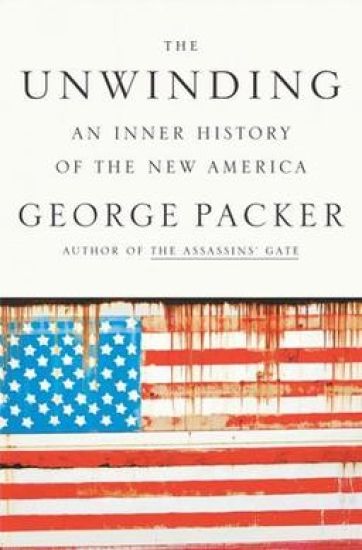
The Unwinding: An Inner History of the New America

The Unwinding: An Inner History of the New America

George Packer

Farrar, Straus and Giroux
2014
nidottu
NATIONAL BOOK AWARD WINNER A NEW YORK TIMES BESTSELLER A NEW YORK TIMES NOTABLE BOOKAN NPR BEST BOOKSelected by New York Times' critic Dwight Garner as a Favorite BookA Washington Post Best Political BookA New Republic Best BookA riveting examination of a nation in crisis, from one of the finest political journalists of our generation. American democracy is beset by a sense of crisis. Seismic shifts during a single generation have created a country of winners and losers, allowing unprecedented freedom while rending the social contract, driving the political system to the verge of breakdown, and setting citizens adrift to find new paths forward. In The Unwinding, George Packer, author of The Assassins' Gate: America in Iraq, tells the story of the United States over the past three decades in an utterly original way, with his characteristically sharp eye for detail and gift for weaving together complex narratives. The Unwinding journeys through the lives of several Americans, including Dean Price, the son of tobacco farmers, who becomes an evangelist for a new economy in the rural South; Tammy Thomas, a factory worker in the Rust Belt trying to survive the collapse of her city; Jeff Connaughton, a Washington insider oscillating between political idealism and the lure of organized money; and Peter Thiel, a Silicon Valley billionaire who questions the Internet's significance and arrives at a radical vision of the future. Packer interweaves these intimate stories with biographical sketches of the era's leading public figures, from Newt Gingrich to Jay-Z, and collages made from newspaper headlines, advertising slogans, and song lyrics that capture the flow of events and their undercurrents. The Unwinding portrays a superpower in danger of coming apart at the seams, its elites no longer elite, its institutions no longer working, its ordinary people left to improvise their own schemes for success and salvation. Packer's novelistic and kaleidoscopic history of the new America is his most ambitious work to date.
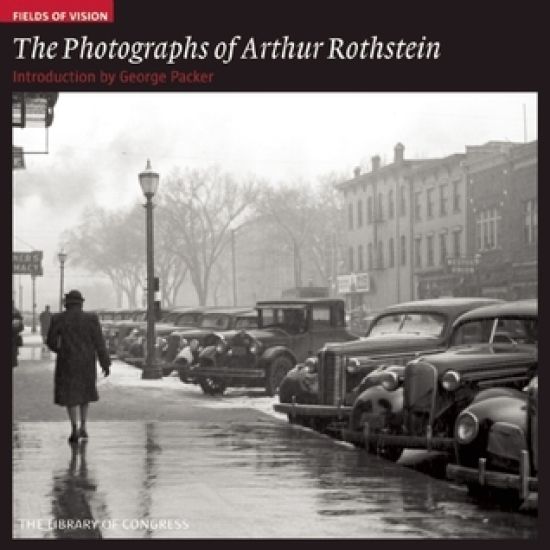
Photographs of Arthur Rothstein: the Library of Congress
Following on from the publication of the first six titles featuring The Library of Congress' internationally renowned collection of Farm Security Administration (FSA) and Office of War Information (OWI) photographs, the 'Fields of Vision' series continues with images showcasing the work of Arthur Rothstein, Gordon Parks and Carl Mydans. Providing a unique view of American life during the Great Depression and Second World War, each 'Fields of Vision' volume includes an introduction to the life of the photographer by a leading author or journalist, and 50 evocative images selected from their work. Transporting the viewer to American homes, farms and streets in the 1930s and 1940s, they also offer a glimpse of a new narrative and intimate style that was later to blossom on the pages of LOOK and LIFE magazines. For many Americans of the pre-television age, the diversity and complexity of their country was defined by the lenses of these men and women. Arthur Rothstein was born in New York in 1915. In the early 1930s he attended Columbia University, where he studied with Roy Stryker, who later hired him at the FSA. During his five years as an FSA photographer, Rothstein produced a gripping visual record of the country's poor that included Virginia farmers, the Dust Bowl, cattle ranchers in Montana, and a tenant community in Gee's Bend, Alabama. After World War II he joined LOOK magazine, serving as director of photography until the magazine ceased production in 1971. He died in 1985.
Interesting Times: Writings from a Turbulent Decade

Interesting Times: Writings from a Turbulent Decade

George Packer

Farrar, Straus and Giroux
2010
nidottu
The 2013 National Book Award Winner A New York Times BestsellerThroughout his career as a journalist, George Packer has always been attuned to the voices and stories of individuals caught up in the big ideas and events of contemporary history. Interesting Times unites brilliant investigative pieces such as "Betrayed," about Iraqi interpreters, with personal essays and detailed narratives of travels through war zones and failed states. Spanning a decade that includes the September 11, 2001 attacks and the election of Barack Obama, Packer brings insight and passion to his accounts of the war on terror, Iraq, political writers, and the 2008 election. Across these varied subjects a few key themes recur: the temptations and dangers of idealism; the moral complexities of war and politics; the American capacity for self-blinding and self-renewal. Whether exploring American policies in the wake of September 11, tracking a used T-shirt from New York to Uganda, or describing the ambivalent response in Appalachia to Obama, these essays hold a mirror up to our own troubled times and showcase Packer's unmistakable perspective, which is at once both wide-angled and humane.
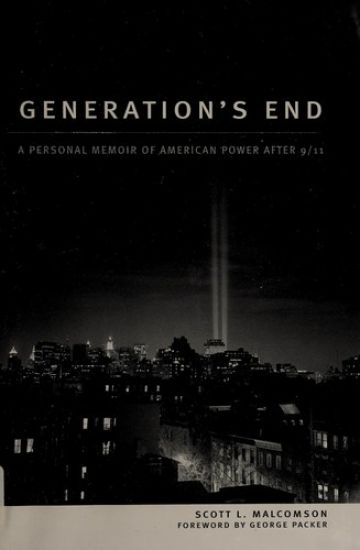
Generation's End

Generation's End

Scott L. Malcomson; George Packer

Potomac Books Inc
2010
sidottu
As we approach the tenth anniversary of the 9/11 attacks, we have a chance to see more clearly how they were a turning point in America's relationship with the world. America became more assertive abroad; its authority and legitimacy as the only superpower became more widely opposed; and the limitations of the U. S.-dominated post–World War II international structures became more evident with each passing year. The first half of Generation's End examines the aftermath of the 9/11 terrorist attacks through the invasion of Iraq in 2003. As the foreign affairs Op-Ed editor for the New York Times during this period, Scott L. Malcomson witnessed the newspaper's struggles to deal with the threats to its city and to American security. He captures the confusion and bravery of those times with disarming honesty while also providing insight into the shaping of American (and Times) policy. The latter half takes Malcomson to Geneva, where in early 2003 he became senior adviser to the new UN High Commissioner for Human Rights, Sergio Vieira de Mello. When Vieira de Mello was selected as the UN's special representative for Iraq, Malcomson counseled him closely, writing strategy memos, speeches, and Op-Eds (including politically sensitive material revealed here for the first time). The killing of Vieira de Mello by al Qaeda in Baghdad, movingly evoked here by Malcomson, brings a measure of closure to a very brief but critical two years that, as George Packer notes in his foreword, "contain all the decisions that would set in motion the larger era." In an epilogue, Malcomson positions the Obama administration in the context of this formative period.
Betrayed

Betrayed

George Packer

Samuel French, Inc
2009
pokkari
Drama / 5m, 6f Millions of Iraqis, spanning the country's religious and ethnic spectrum, welcomed the overthrow of Saddam Hussein. But the mostly young men and women who embraced America's project so enthusiastically that they were prepared to risk their lives for it by aiding the U. S. forces constitute a small minority. On a cold, wet night in January 2007, George Packer met two such Iraqi men in the lobby of the Palestine Hotel, in central Baghdad to hear their story and those of other Iraqis working as translators and additional key personnel for the U. S. military and occupation authorities. They assumed that their perspective would be valuable to foreigners who knew little or nothing of Iraq. But instead of respect and gratitude, those who chose to help bridge the gap between the occupiers and the occupied were met with suspicion and hostility. They have been killed by insurgents and militias, ignored by U. S. officials, fired from their jobs without reason or recourse, and prevented from fleeing to the States for safety. Based on Packer's account in The New Yorker, Betrayed is a riveting and morally complex drama that explores in the Iraqis' own words the ways in which we have already abandoned them. It will have its world premiere in January 2008, off-Broadway at the Culture Project. "...the clarity of the writing, the urgency of the story being told ...give the play a sharp dramatic impact and a plain-spoken beauty. Painful human experience is presented here as just that. Nothing else is necessary to awaken sympathy, despair and awareness of a grave moral failure on the part of the American government." - New York Times
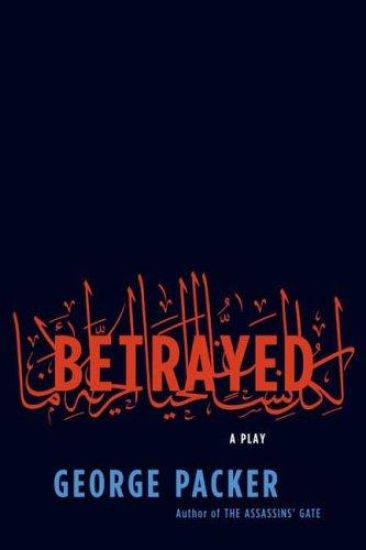
Betrayed

Betrayed

George Packer

Farrar, Straus and Giroux
2008
nidottu
Based on George Packer's account in The New Yorker, Betrayed is a riveting and morally complex drama that explores in the Iraqis' own words the ways in which we have already abandoned them. Millions of Iraqis, spanning the country's religious and ethnic spectrum, welcomed the overthrow of Saddam Hussein. But the mostly young men and women who embraced America's project so enthusiastically that they were prepared to risk their lives for it by aiding the U. S. forces constitute a small minority. On a cold, wet night in January 2007, George Packer met two such Iraqi men in the lobby of the Palestine Hotel, in central Baghdad to hear their story and those of other Iraqis working as translators and additional key personnel for the U. S. military and occupation authorities. They assumed that their perspective would be valuable to foreigners who knew little or nothing of Iraq. But instead of respect and gratitude, those who chose to help bridge the gap between the occupiers and the occupied were met with suspicion and hostility. They have been killed by insurgents and militias, ignored by U. S. officials, fired from their jobs without reason or recourse, and prevented from fleeing to the States for safety. Betrayed had its world premiere in January 2008, off-Broadway at the Culture Project.
The Assassins' Gate

The Assassins' Gate

George Packer

Faber Faber
2007
pokkari
The Assassins' Gate recounts how the United States set about changing the history of the Middle East and became ensnared in a guerrilla war in Iraq. The consequences of that policy are shown in the author's vivid reporting on the ground in Iraq, where he made several tours on assignment for The New Yorker. We see up close the struggles of individual American soldiers and civilians and Iraqis from all backgrounds. Here is the full range of ideas and emotions stirred up by America's most controversial foreign-policy venture since Vietnam.