Kirjojen hintavertailu – 12 859 818 kirjaa ja 27 kauppaa

Kirjailija

George Pattison

Kirjat ja teokset yhdessä paikassa: 52 kirjaa, julkaisuja vuosilta 1992–2026, suosituimpiin kuuluu The Mystical Sources of Existentialist Thought. Vertaile teosten hintoja ja tarkista saatavuus suomalaisista kirjakaupoista.

52 kirjaa

Kirjojen julkaisuvuodet: 1992–2026.

Paul Tillich's Philosophical Theology

Paul Tillich's Philosophical Theology

George Pattison

Palgrave Pivot
2014
sidottu
Paul Tillich's Philosophical Theology takes up the challenge as to whether his thought remains relevant fifty years after his death. In opposition to those who believe that his writings have little to say to us today, this book argues that his thought is largely exemplary of open theological engagement with the contemporary intellectual situation.
Kierkegaard's Upbuilding Discourses

Kierkegaard's Upbuilding Discourses

George Pattison

Routledge
2013
nidottu
George Pattison provides a bold and innovative reassessment of Kierkegaard's neglected Eighteen Upbuilding Discourses and reading of his work as a whole. The first full length assessment of the discourses in English, this volume will be essential reading for philosophers and theologians, and anyone interested in Kierkegaard and the history of philosophy.
Heidegger on Death

Heidegger on Death

George Pattison

Ashgate Publishing Limited
2013
nidottu
This book examines the question of death in the light of Heidegger's paradigmatic discussion in Being and Time. Although Heidegger's own treatment deliberately refrains from engaging theological perspectives, George Pattison suggests that these not only serve to bring out problematic elements in his own approach but also point to the larger human or anthropological issues in play. Pattison reveals where and how Heidegger and theology part ways but also how Heidegger can helpfully challenge theology to rethink one of its own fundamental questions: human beings' relation to their death and the meaning of death in their religious lives.
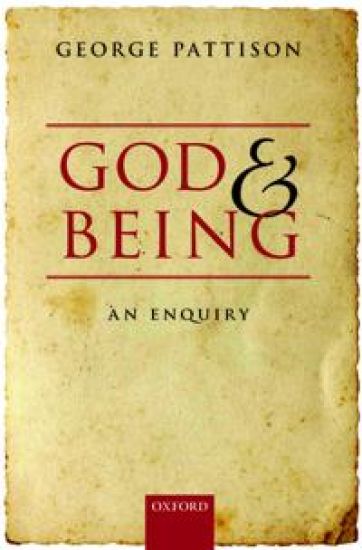
God and Being

God and Being

George Pattison

Oxford University Press
2013
nidottu
Western theology has long regarded 'Being' as a category pre-eminently applicable to God, the supreme Being who is also the source of all existence. This idea was challenged in the later philosophy of Martin Heidegger and identified with the position he called 'ontotheology'. Heidegger's critique was repeated and radicalized in so-called postmodern thought, to the point that many theologians and philosophers of religion now want to talk instead of God as 'beyond Being' or 'without Being'. Against this background, God and Being attempts to look again at why the ideas of God and Being got associated in the first place and to investigate whether the critique of ontotheology really does require us to abandon this link. After exploring how this apparently abstract idea has informed Christian views of salvation and of the relationship between God and world, George Pattison examines how such categories as time, space, language, human relationships and embodiment affect our understanding of God and Being. Pattison concludes that whilst Heidegger's critique has considerable force, it remains legitimate to speak of God as Being under certain restricted conditions. The most important of these is that God is better conceived in terms of purely possible Being rather than (as in classic Christian theology) 'actual' Being. This leaves open possibilities of dialogue with, e.g., non-theistic religious traditions and with science that are foreclosed by traditional conceptions. Ultimately, however, all basic religious ideas must issue from and be seen to serve the requirements of embodied love.
Heidegger on Death

Heidegger on Death

George Pattison

Ashgate Publishing Limited
2013
sidottu
This book examines the question of death in the light of Heidegger's paradigmatic discussion in Being and Time. Although Heidegger's own treatment deliberately refrains from engaging theological perspectives, George Pattison suggests that these not only serve to bring out problematic elements in his own approach but also point to the larger human or anthropological issues in play. Pattison reveals where and how Heidegger and theology part ways but also how Heidegger can helpfully challenge theology to rethink one of its own fundamental questions: human beings' relation to their death and the meaning of death in their religious lives.
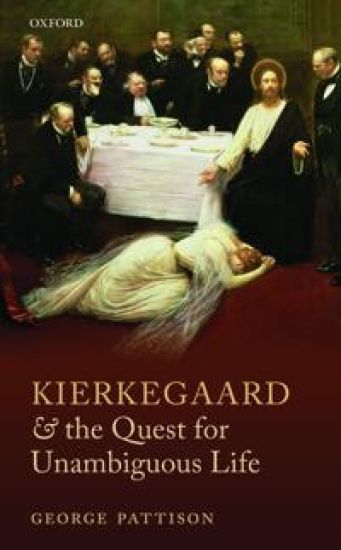
Kierkegaard and the Quest for Unambiguous Life

Kierkegaard and the Quest for Unambiguous Life

George Pattison

Oxford University Press
2013
sidottu
This book looks at Kierkegaard with a fresh perspective shaped by the history of ideas, framed by the terms romanticism and modernism. 'Modernism' here refers to the kind of intellectual and literary modernism associated with Georg Brandes, and such later nineteenth and early twentieth century figures as J. P. Jacobsen, Nietzsche, Dostoevsky, Ibsen (all often associated with Kierkegaard in early secondary literature), and the young Georg Lukacs. This movement, currently attracting increasing scholarly attention, fed into such varied currents of twentieth century thought as Bolshevism (as in Lukacs himself), fascism, and the early existentialism of, e.g., Shestov and the radical culture journal The Brenner (in which Kierkegaard featured regularly, and whose readers included Martin Heidegger). Each of these movements has, arguably, its own 'Romantic' aspect and Kierkegaard thus emerges as a figure who holds together or in whom are reflected both the aspirations and contradictions of early romanticism and its later nineteenth and twentieth century inheritors. Kierkegaard's specific 'staging' of his authorship in the contemporary life of Copenhagen, then undergoing a rapid transformation from being the backward capital of an absolutist monarchy to a modern, cosmopolitan city, provides a further focus for the volume. In this situation the early Romantic experience of nature as providing a source of healing and an experience of unambiguous life is transposed into a more complex and, ultimately, catastrophic register. In articulating these tensions, Kierkegaard's authorship provided a mirror to his age but also anticipated and influenced later generations who wrestled with their own versions of this situation.

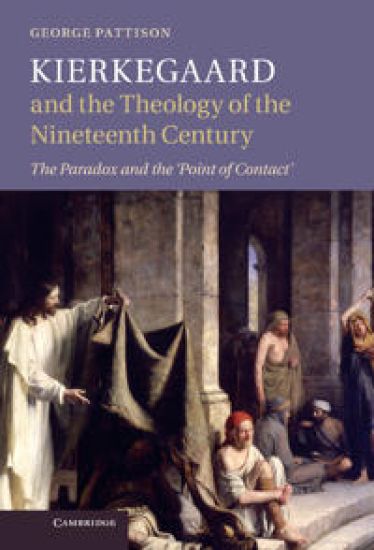
Kierkegaard and the Theology of the Nineteenth Century

Kierkegaard and the Theology of the Nineteenth Century

George Pattison

Cambridge University Press
2012
sidottu
This study shows how Kierkegaard's mature theological writings reflect his engagement with the wide range of theological positions which he encountered as a student, including German and Danish Romanticism, Hegelianism and the writings of Fichte and Schleiermacher. George Pattison draws on both major and lesser-known works to show the complexity and nuances of Kierkegaard's theological position, which remained closer to Schleiermacher's affirmation of religion as a 'feeling of absolute dependence' than to the Barthian denial of any 'point of contact', with which he is often associated. Pattison also explores ways in which Kierkegaard's theological thought can be related to thinkers such as Heidegger and John Henry Newman, and its continuing relevance to present-day debates about secular faith. His volume will be of great interest to scholars and students of philosophy and theology.
God and Being

God and Being

George Pattison

Oxford University Press
2011
sidottu
Western theology has long regarded 'Being' as a category pre-eminently applicable to God, the supreme Being who is also the source of all existence. This idea was challenged in the later philosophy of Martin Heidegger and identified with the position he called 'ontotheology'. Heidegger's critique was repeated and radicalized in so-called postmodern thought, to the point that many theologians and philosophers of religion now want to talk instead of God as 'beyond Being' or 'without Being'. Against this background, God and Being attempts to look again at why the ideas of God and Being got associated in the first place and to investigate whether the critique of ontotheology really does require us to abandon this link. After exploring how this apparently abstract idea has informed Christian views of salvation and of the relationship between God and world, George Pattison examines how such categories as time, space, language, human relationships and embodiment affect our understanding of God and Being. Pattison concludes that whilst Heidegger's critique has considerable force, it remains legitimate to speak of God as Being under certain restricted conditions. The most important of these is that God is better conceived in terms of purely possible Being rather than (as in classic Christian theology) 'actual' Being. This leaves open possibilities of dialogue with, e.g., non-theistic religious traditions and with science that are foreclosed by traditional conceptions. Ultimately, however, all basic religious ideas must issue from and be seen to serve the requirements of embodied love.
Spiritual Writings

Spiritual Writings

Soren Kierkegaard; George Pattison

Harper Perennial Modern Classics
2010
nidottu

Halvin toimitettuna 24,00 €

In "Spiritual Writings", renowned Oxford theologian George Pattison presents previously neglected Christian writings that will forever alter our understanding of the great philosopher Soren Kierkegaard. In fact, Pattison argues that the Kierkegaard known to the history of modern ideas is, in an important sense, not Kierkegaard at all. In philosophy and literature Kierkegaard is perceived as epitomizing existential angst, whilst in theology he is seen as expounding a radical form of Christianity based on a paradoxical and absurd faith that demands hatred of the world and the rejection of all forms of communal religion. However, both pictures rely on highly debatable interpretations of a relatively small selection of texts; there is much more to Kierkegaard than the image of the 'melancholy Dane' or the iconoclastic critic of established Christendom might suggest. Alongside the pseudonymous works for which he is best known - and which do indeed deal with such concepts as melancholy, anxiety, 'fear and trembling', paradox, the absurd, and despair - Kierkegaard also wrote many religious works, usually in the form of addresses, which he called 'upbuilding discourses' (which might, in English, be called 'devotional talks'). Taken as a whole, these writings offer something very different from the popular view. As "Spiritual Writings" shows, they embody a spirituality grounded in a firm sense of human life as a good gift of God. Kierkegaard calls on us to love God and, in loving God, to love life-quite concretely - and to love our own lives, even when they have become wretched or despairing.
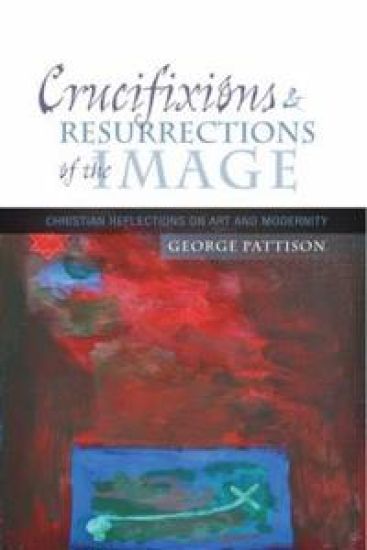
Crucifixions and Resurrections of the Image
George Pattison offers theological reflections on a range of works of art and films which have attracted wide discussion such as Anthony Gormley's 'Angel of the North'. Pattison takes seriously the modernist movement in art and constitutes an argument for its continuing relevance. The book centres on artists active in the mid- to late twentieth century, whose work reflects both the cultural and social crises of that era - Beuys, Rothko, Kiefer, Natkin and film directors such as Bergman and Tarkovksy. The studies are contextualized in broader reflections on modern art that suggest 'the death of God' as a motif that links theology and modern art itself. This enables a Christian theological engagement with works that often appear alien or even hostile to Christian faith. George Pattison takes the secular seriously in its own right, arguing that both secular art and theological reflection are often different but related responses to a common existential situation.
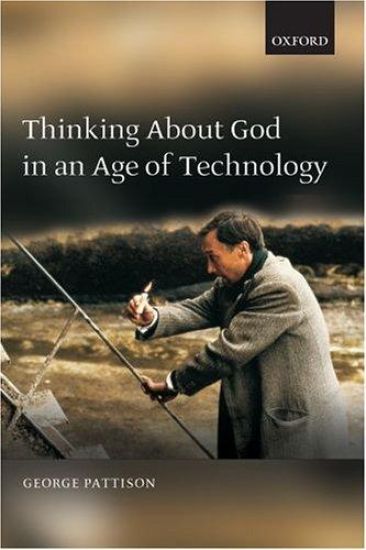
Thinking about God in an Age of Technology

Thinking about God in an Age of Technology

George Pattison

Oxford University Press
2007
nidottu
Taking up the critique of theology found in the work of Heidegger, George Pattison argues for a model of thinking about God that would not be liable to the charge of `enframing' that Heidegger sees as characteristic of technological thinking. He constructs his case in relation to particular issues in bioethics, the place of theology in the university, the arts, and the contemporary experience of living in the city.
Thinking about God in an Age of Technology

Thinking about God in an Age of Technology

George Pattison

Oxford University Press
2005
sidottu
Taking up the critique of theology found in the work of Heidegger, George Pattison argues for a model of thinking about God that would not be liable to the charge of `enframing' that Heidegger sees as characteristic of technological thinking. He constructs his case in relation to particular issues in bioethics, the place of theology in the university, the arts, and the contemporary experience of living in the city.
The Philosophy of Kierkegaard

The Philosophy of Kierkegaard

George Pattison

Acumen Publishing Ltd
2005
nidottu
Although the ideas of Soren Kierkegaard played a pivotal role in the shaping of mainstream German philosophy and the history of French existentialism, the question of how philosophers should read Kierkegaard is a difficult one to settle. His intransigent religiosity has led some philosophers to view him as essentially a religious thinker of a singularly anti-philosophical attitude who should be left to the theologians. In this major new survey of Kierkegaard's thought, George Pattison addresses this question head on and shows that although it would be difficult to claim a "philosophy of Kierkegaard" as one could a philosophy of Kant, or of Hegel, there are nevertheless significant points of common interest between Kierkegaard's central thinking and the questions that concern philosophers today. The challenge of self-knowledge in an age of moral and intellectual uncertainty that lies at the heart of Kierkegaard's writings remains as important today as it did in the culture of post-Enlightenment modernity.
The Philosophy of Kierkegaard

The Philosophy of Kierkegaard

George Pattison

Acumen Publishing Ltd
2005
sidottu
Although the ideas of Soren Kierkegaard played a pivotal role in the shaping of mainstream German philosophy and the history of French existentialism, the question of how philosophers should read Kierkegaard is a difficult one to settle. His intransigent religiosity has led some philosophers to view him as essentially a religious thinker of a singularly anti-philosophical attitude who should be left to the theologians. In this major new survey of Kierkegaard's thought, George Pattison addresses this question head on and shows that although it would be difficult to claim a "philosophy of Kierkegaard" as one could a philosophy of Kant, or of Hegel, there are nevertheless significant points of common interest between Kierkegaard's central thinking and the questions that concern philosophers today. The challenge of self-knowledge in an age of moral and intellectual uncertainty that lies at the heart of Kierkegaard's writings remains as important today as it did in the culture of post-Enlightenment modernity.
Short Course in Christian Doctrine

Short Course in Christian Doctrine

George Pattison

SCM Press
2005
nidottu
This publication sets out to offer an introduction to Christian doctrine, emphasizing that 'doctrine' refers primarily to a dynamic teaching process, rather than to a set of propositions about belief. The chief model for this process is the divine life itself, both in its inner Trinitarian movement and in its sacramental and historical self-expression in creation, incarnation and tradition. Drawing on Protestant, Catholic and Orthodox sources, as well as being in dialogue with such modern philosophers as Habermas and Heidegger, this Short Course also involves extensive discussions of homiletics, spirituality, the relationship between Christianity and culture, and perspectives for Christian approaches to ethical and political challeneges.