Kirjojen hintavertailu – 12 859 827 kirjaa ja 27 kauppaa

Kirjailija

George Quasha

Kirjat ja teokset yhdessä paikassa: 14 kirjaa, julkaisuja vuosilta 1997–2022, suosituimpiin kuuluu Gary Hill: Hand Heard/Liminal Object. Vertaile teosten hintoja ja tarkista saatavuus suomalaisista kirjakaupoista.

14 kirjaa

Kirjojen julkaisuvuodet: 1997–2022.

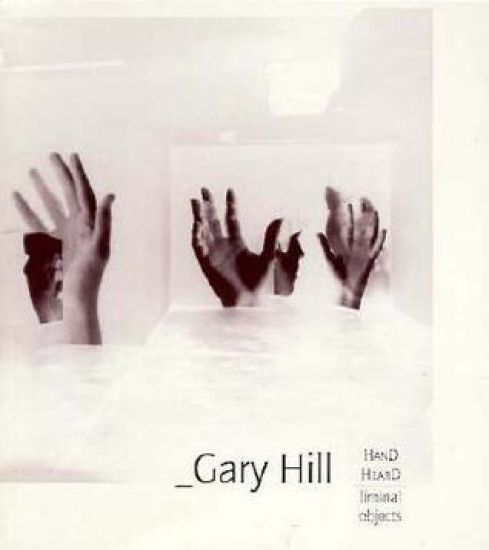
Gary Hill: Hand Heard/Liminal Object

Gary Hill: Hand Heard/Liminal Object

George Quasha; Charles Stein

Art Data
1997
nidottu
This essay, discussing a two-part installation at Galerie des Archives in Paris by the internationally celebrated artist, Gary Hill, explores the enigmatic nature of the work of art as an object and of objects in general, as such issues pertain to Hill's work and these installations in particular. The text is by two well-known poet/artists who have a long history of association and collaboration with Gary Hill. This book is handsomely illustrated with photographs of the installation and other relevant works by Hill and is presented in a bilingual, French-English edition. Excerpts from the text: There are works of art that require initiation. This does not mean that they require explanation, special consensus, or any other prescriptive bearing. It does mean that one must discover an appropriate mode of entry which is more than informational. This can involve radical reorientation, as in the case of HanD HearD, which directly (but non-coercively) introduces us to the posture of awareness appropriate to our participation in the piece. Considering more particularly the piece HanD HearD, we discover that its way of being a text imposes nothing on the mind, yet it offers an image (a hand in front of a person's face) as a possible posture of awareness. And because the text has no content other than this posture, it grants the participant direct access from the beginning
Waking from Myself

Waking from Myself

George Quasha

Station Hill Press,U.S.
2022
nidottu
“Words say too much to let you know the truth.’’ George Quasha’s torqued, enigmatic proverbs create unlikely balances among discrepant engagements. Waking from Myself is the sixth volume published of George Quasha’s “preverbs,” an invented poetic genre that’s the flipside of “proverbs”—instead of giving capsules of wisdom, they awaken language to its inevitable ambiguities in the face of complex truth-telling. The vectors of these marvelous poems work at cross purposes, keeping each other aloft. If William Blake’s “Proverbs of Hell” are poetry, then George Quasha’s preverbs are like a close cousin. Its core question is: can poetry say the unsayable?
Awareness Inside Language

Awareness Inside Language

George Quasha; Thomas Fink

Station Hill Press,U.S.
2018
nidottu
Awareness Inside Language is the most comprehensive discussion of poet-artist George Quasha's "axial poetics" as it plays out in his work of the past twenty years, called "preverbs," represented in four published volumes: Verbal Paradise, Things Done for Themselves, The Daimon of the Moment, and Glossodelia Attract. In the form of an interview conducted by poet Thomas Fink, it addresses how apparently difficult poetry teaches new ways of reading and thinking.
art is (Speaking Portraits)

art is (Speaking Portraits)

George Quasha

PAJ Publications,U.S.
2016
pokkari
This new volume in the Performance Ideas series is drawn from the ongoing video work art is/poetry is/music is (Speaking Portraits), which features over 1000 artists--painters, poets, musicians, dancers, actors, video-/filmmakers--in eleven countries saying what art is. art is offers an intimate view of seventy of those engaged in art as performance. Single-frame images, accompanied by individual artist statements, capture moments of high intensity from Marina Abramovic, Carolee Schneemann, Robert Wilson, Laurie Anderson, Jonah Bokaer, Robert Ashley, Pauline Oliveros, Thurston Moore, Gary Hill, Vito Acconci, Archie Shepp, Joan Jonas, Anthony Braxton, Ann Hamilton, and many more. George Quasha writes in his Introduction: "Listening to so many artists, closely and over many years, has taught me further configurative dimensions of performative mind. Close listening/viewing--non-interfering attention--nurtures art, just as it does people, animals, maybe even plants."
Glossodelia Attract

Glossodelia Attract

George Quasha

Station Hill Press
2015
nidottu
"Words say too much to let you know the truth.'' George Quasha's torqued, enigmatic proverbs create unlikely balances among discrepant engagements. The vectors of these marvelous poems work at cross purposes, keeping each other aloft. These are sparkling aphoristic aporias for a new age in an old time. "Poetry," says Quasha, "resists immortality with difficulty." And also with wit and charm. Be here now, in which case immortality will take care of itself." Charles Bernstein, author of Attack of the Difficult Poems If William Blake's "Proverbs of Hell" are poetry, then George Quasha's preverbs are like a close cousin. It's core question is: can poetry say the unsayable? Like Blake's work, Glossodelic Attractors makes you wonder: what is poetry? A well established poetic tradition both modern and post-modern—some call it experimental—starts its definition with: poetry is not what you think it is. Its work is journeying inside language, as if passing through a distant country or else another reality. It conveys news of alternate dimensions showing through in the here-and-now, embedded inside our everyday thoughts and speaking.
Speaking Animate

Speaking Animate

George Quasha

Station Hill Press
2014
nidottu
SPEAKING ANIMATE: PREVERBS is one of seven preverb complexes comprising the unpublished book Exchanging Intentions, itself one of seven books of preverbs, of which the first to be published was VERBAL PARADISE (Zasterle: 2011). A preverb is like a proverb, a one-line capture of wisdom, but at the raw stage before wisdom. Such an open intentional act of language invites configurative reading as a singular event of variable meaning. An instance of axial poetics, it puts language on its own stepped-up recognizance.
Scorned Beauty Comes Up From Behind

Scorned Beauty Comes Up From Behind

George Quasha

Barrytown Ltd ,U.S.
2012
nidottu
SCORNED BEAUTY COMES UP FROM BEHIND: PREVERBS is one of seven preverb complexes comprising the unpublished book Exchanging Intentions, itself one of seven books of preverbs, of which the first to be published was VERBAL PARADISE (Zasterle: 2011). A preverb is like a proverb, a one-line capture of wisdom, but at the raw stage before wisdom. Such an open intentional act of language invites configurative reading as a singular event of variable meaning. An instance of axial poetics, it puts language on its own stepped-up recognizance. Robert Kelly writes, SCORNED BEAUTY is the most gripping series of poems I've read in a long time. Wise, funny, humble, arrogant, love-sick, swooning into uncountable clarities. It seems the full maturation of work, of presence.
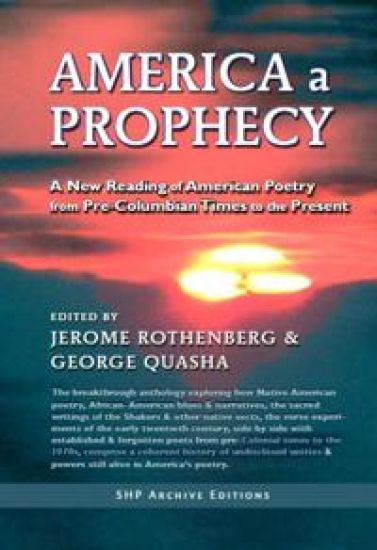
America a Prophecy

America a Prophecy

George Quasha; Jerome Rothenberg

Station Hill Press
2012
nidottu
When Thoreau wrote in his Journal in 1841, Good poetry seems so simple and natural a thing that when we meet it we wonder that all men are not always poets, and when Whitman describes Leaves of Grass as a language experiment, they are expressing an approach to poetry that never ceased and has grown continuously during recent decades. This ground-breaking anthology of the early 1970s takes such an approach in presenting the poetry of the North American continent. It includes many recognized poets of the period, though appearing here in often unexpected contexts, and others who have been overlooked but whose contributions to the development of poetry are revolutionary. Starting from their own moment, the editors have read back into the more distant past and selected from broad American traditions works that had thitherto been considered outside the realm of poetry proper: the native poetry of the American continent, African-American sermons, blues and gospels, and the sacred, often innovative poetry of such radical religious groups as the Shakers. The book takes its title from William Blake's poem presenting the American Revolution as not only a powerful, promising and problematic historical event but the birth of a new development in man's consciousness-one that finds complex expression in the poetry of a continent. Selections mostly appear non-chronologically in juxtapositions suggesting what T. S. Eliot called the simultaneous order of all poetries of all times.
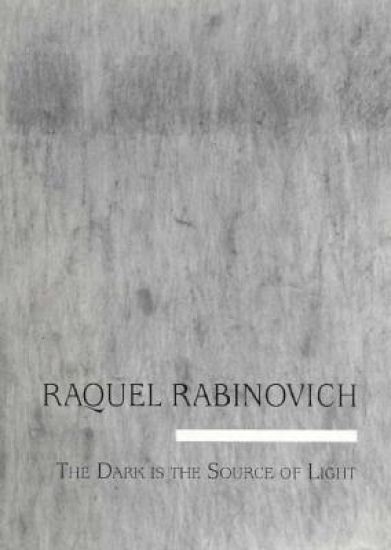
RAQUEL RABINOVICH

RAQUEL RABINOVICH

George Quasha

STATION HILL PRESS
2010
nidottu
Art. Literary Nonfiction. Latino/Latina Studies. Poetry. This artist-approved publication features the work of celebrated Argentinean-born artist Raquel Rabinovich, and includes photographs of her rock sculpture, watercolors, urban installations, and works using pencil on specially selected papers. Exquisitely designed by Susan Quasha with essays by art critic and curator Linda Weintraub and poet/artist George Quasha, and a poem by Charles Stein selected by the artist. The texts discuss the artist's work from 1963, when she began her lifelong investigations into the nature of existence through an exploration of what she calls the dark, that which is concealed beneath the surface of objects, of words, of thoughts, of the world. In her work Rabinovich speaks a language where the fine line between inner and outer turns transparent.
AINU DREAMS

AINU DREAMS

George Quasha; Chic Hasegawa

Barrytown Ltd ,U.S.
1999
nidottu
In Ainu Dreams, poet George Quasha and buun, a Japanese artist living in America, collaborate in poetically manifesting the artist's richly articulated dream-life. These eighty-odd poems embody an ever-opening cosmos of curious image, surprising narrative, and enigmatic teaching in a language no one could have dreamed up alone. Structurally intriguing poems reveal the innards of the dreams themselves, yet always speak directly and readably, sometimes addressed to a second person (the poet? the reader?). The poems and even reading itself seem to be dreaming. Poet and dreamer both live in New York's Hudson Valley.