
Kirjailija
George Smith
Kirjat ja teokset yhdessä paikassa: 276 kirjaa, julkaisuja vuosilta 1997–2026, suosituimpiin kuuluu A Compleat Body of Distilling, Explaining the Mysteries of That Science, in a Most Easy and Familiar Manner, ... in Two Parts. by George Smith, ... the Second Edition.. Vertaile teosten hintoja ja tarkista saatavuus suomalaisista kirjakaupoista.
276 kirjaa
Kirjojen julkaisuvuodet: 1997–2026.
The Life of William Carey, Shoemaker & Missionary
George Smith
Createspace Independent Publishing Platform
2016
nidottu
The Cornhill Magazine - Vol. IV
George Smith
Createspace Independent Publishing Platform
2016
nidottu
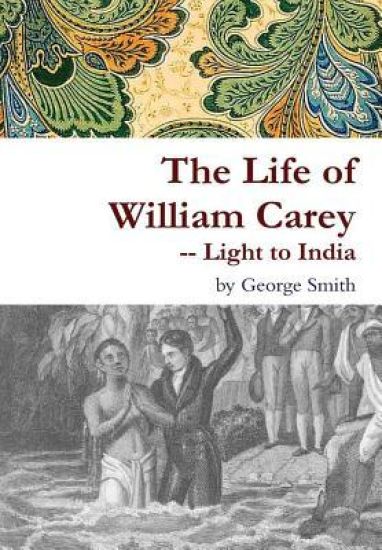
"Had he been born in the sixteenth century he might have been a Luther, to give Protestantism to Europe; had he turned his thought and observations merely to natural philosophy he might have been a Newton; but his faculties, consecrated by the Holy Spirit to a still higher end, have gained for him the sublime distinction of having been the Translator of the Scriptures and the Benefactor of India." "William Carey -- a man who unites with the most profound and varied attainments the fervour of an evangelist, the piety of a saint, and the simplicity of a child."
![Gypsy Children; Or, a Stroll in Gypsydom. with Songs and Stories [and Musical Notes], Etc. New Edition - Scholar's Choice Edition](/covers/9781296022044.jpg)
Gypsy Children; Or, a Stroll in Gypsydom. with Songs and Stories [and Musical Notes], Etc. New Edition - Scholar's Choice Edition
George Smith
Scholar's Choice
2015
pokkari
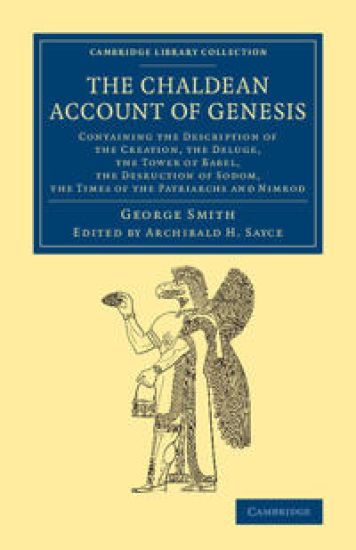
The Chaldean Account of Genesis
George Smith
Cambridge University Press
2015
pokkari
Halvin toimitettuna 47,20 €
The Assyriologist George Smith (1840–76) was trained originally as an engraver, but was enthralled by the discoveries of Layard and Rawlinson. He taught himself cuneiform script, and joined the British Museum as a 'repairer' or matcher of broken cuneiform tablets. Promotion followed, and after one of Smith's most significant discoveries among the material sent to the Museum - a Babylonian story of a great flood - he was sent to the Middle East, where he found more inscriptions which contained other parts of the epic tale of Gilgamesh. In 1876, shortly before his early death, Smith published this work, which drew extraordinary parallels between much earlier cuneiform documents and the biblical book of Genesis. The book was both controversial and very successful. The second edition, reissued here, was published in 1880, with corrections and additional material provided by Archibald Sayce (1846–1933), which reflected recent advances in Middle Eastern studies.
Gipsy Life Being an Account of Our Gipsies and Their Children with Suggestions for Their Improvement
George Smith
Createspace Independent Publishing Platform
2014
nidottu
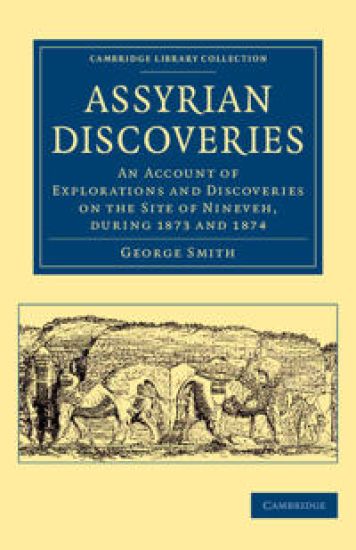
The Assyriologist George Smith (1840–76) was trained originally as an engraver, but was enthralled by the discoveries of Layard and Rawlinson. He taught himself cuneiform script, and joined the British Museum as a 'repairer' or matcher of broken cuneiform tablets. Promotion followed, and after one of Smith's most significant discoveries among the material sent to the Museum - a Babylonian story of a great flood - he was sent to the Middle East, where he found more inscriptions which contained other parts of the epic tale of Gilgamesh. In this 1875 work, a bestseller in its day, Smith describes his expedition, the difficulties encountered, and the discoveries, including hundreds of inscriptions which increased knowledge of the Babylonian and Assyrian civilisations but also had a profound effect on traditional biblical studies. Smith died in Aleppo in 1876, having revolutionised understanding of the ancient Near East.
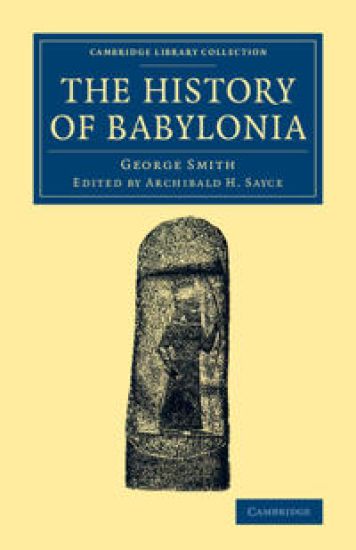
The Assyriologist George Smith (1840–76) was trained originally as an engraver, but was enthralled by the discoveries of Layard and Rawlinson. He taught himself cuneiform script, and joined the British Museum as a 'repairer' of broken cuneiform tablets. Promotion followed, and after one of Smith's most significant discoveries among the material sent to the Museum - a Babylonian story of a great flood - he was sent to the Middle East, where he found more inscriptions which contained other parts of the epic tale of Gilgamesh. Before his early death in 1876, he was writing a history of Babylonia for the 'Ancient History from the Monuments' series. Prepared for press by A. H. Sayce, it was published in 1877. Smith traces the story of the Babylonian empire from mythical times ('before the deluge') to its conquest by Persia in the sixth century BCE. Several other books by Smith are also reissued in this series.
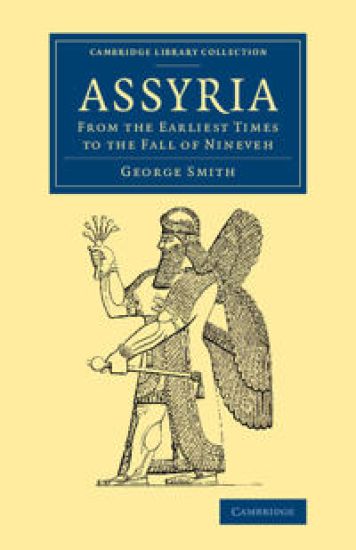
The Assyriologist George Smith (1840–76) was trained originally as an engraver, but was enthralled by the discoveries of Layard and Rawlinson. He taught himself cuneiform script, and joined the British Museum as a 'repairer' of broken cuneiform tablets. Promotion followed, and after one of Smith's most significant discoveries among the material sent to the Museum - a Babylonian story of a great flood - he was sent to the Middle East, where he found more inscriptions which contained other parts of the epic tale of Gilgamesh. In 1875, he published a history of Assyria for the 'Ancient History from the Monuments' series. Using biblical accounts as well as the Akkadian documents in clay and stone then being excavated in the area, Smith traces the history of the Assyrian empire from its origins until the fall of Nineveh in 612 BCE. Several other books by Smith are also reissued in this series.
Henry Martyn: Saint and Scholar First Modern Missionary to the Mohammadens 1781-
George Smith
Createspace Independent Publishing Platform
2014
nidottu
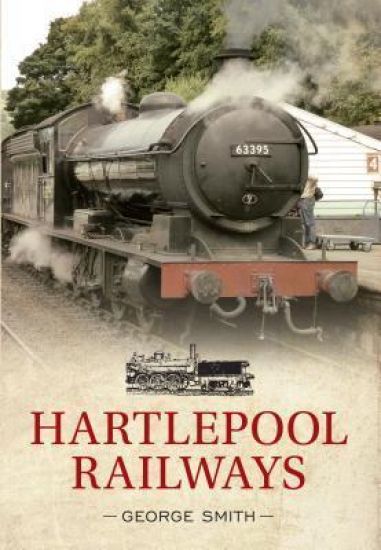
This book explores the origins of the railways in Hartlepool.
Gipsy Life being an account of our Gipsies and their children, with suggestions for their improvement
George Smith
Tredition Classics
2012
pokkari
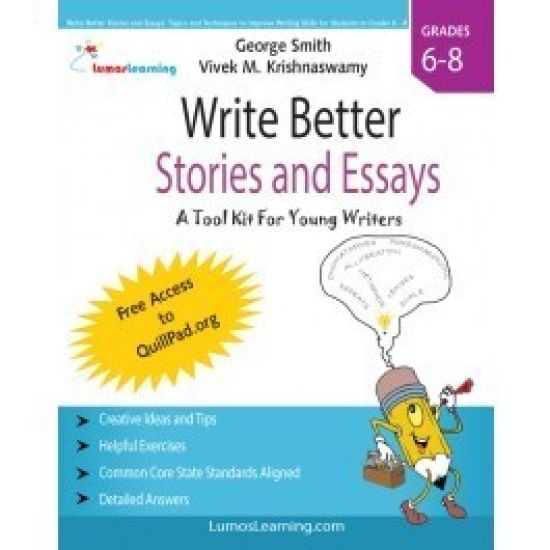
Write Better Stories and Essays: Topics and Techniques to Improve Writing Skills for Students in Grades 6 - 8: Common Core State Standards Aligned
Vivek M. Krishnaswamy; George Smith
Createspace Independent Publishing Platform
2012
nidottu
Mr. George Smith, a children's book author, has been conductingwriting workshops at schools since 2004. Write Better Stories and Essays is his writing workshop published in the form of a workbook. It is designed to help students in middle school improve their writing skills. Key Benefits Explore different writing techniques Recognize common mistakes in writing Master creative techniques to improve writing Expand ideas into full length stories or essaysKey Topics CoveredFour Ways to Expand a Story Idea into a Story Creative Techniques for Using Words and Paragraphs Identifying Illogical or Incomplete Content, Inconsistent Voice (active or passive), Inconsistent Verb Tense (present and past) and Incorrect grammar Expressing the Emotions of a Character: Show, Don't Tell Using the Personification Technique Using the Flashback and Story Within a Story Techniques Using the Circular d104 Technique Using the Five Senses Using the Persuasion Technique The Role of the Setting in a Story Presenting and Supporting Theories Techniques in Action: Stories and Essays Written by Middle School Students Detailed Answers Common Core State Standards Correlation Grading Rubrics Online Resources (QuillPad.org)ObjectivesThe workbook has three objectives: The first objective of these workbook exercises is to give student authors practice in writing techniques that meet the standards for writing and language included in the Common Core State Standards Initiative (CCSSI). The second objective of these workbook exercises is to provide tools in the form of techniques that middle school student authors in grades 6 through 8 can use to improve the content of their narrative, persuasive, expository and descriptive writing. The third objective of this program is to create a platform for students to easily publish their writing online and get feedback from peers and educators. Writing is a skill that requires practice and mentoring. Children can become good writers through guided practice and constructive feedback. Please visit QuillPad.org to create an account and start publishing your stories and essays More than 11,000+ Schools, 21,000+ Teachers, and 160,000+ Students use Lumos Learning Study Programs to improve student achievement.
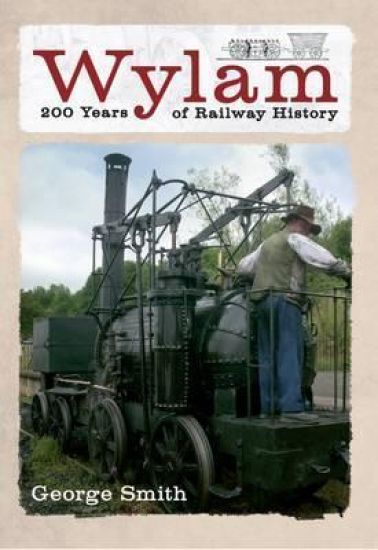
The story of Wylam village in Northumberland is a story about the origin of railways. The birthplace of George Stephenson, it was the centre for the first revolutionary pioneering work on railway engineering which laid the foundation for all that followed. At the beginning of the nineteenth century, on the instigation of colliery owner Christopher Blackett, a series of revolutionary experiments in railway technology were conducted. The principal protagonists read like a roll call of great railway engineers: the wayward genius Richard Trevithick, the devout Methodist Timothy Hackworth who wouldn't work on the Sabbath and the portly asthmatic William Hedley who oversaw the work. It was Hedley who, in 1813, would invent the legendary Puffing Billy, the first reliable working steam locomotive.
The Phonetic Values of the Cuneiform Characters: Sounds and logic of many cuneiform characters
George Smith
Createspace Independent Publishing Platform
2012
nidottu
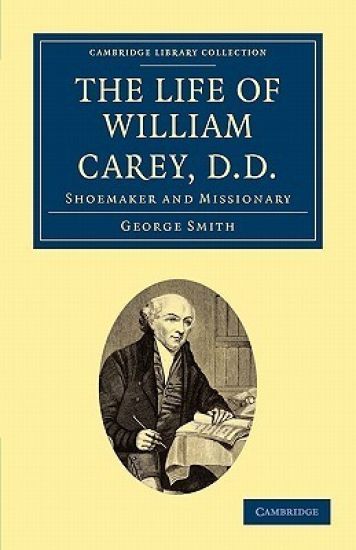
George Smith (1833–1919) published this biography in 1885. Carey (1761–1834), a key figure in the nineteenth-century Protestant missionary movement and founding member of the Baptist Missionary Society, lived and worked as a missionary in India from 1793 till his death 41 years later. The biography is based on Carey's unpublished letters, personal papers, missionary records and the recollections of Carey's friends and colleagues in India. It focuses on Carey's educational work; his involvement in India's agriculture; the mission centres he established throughout India; and his translations of the Bible into Sanskrit, Bengali and many other Indian languages. Smith, a popular Victorian biographer and an expert on India and missionary activity there, paints a vibrant picture of Carey and his extraordinary life. The biography remains a key source for the nineteenth-century Protestant mission movement and for the work of one of its key figures.
History of Delaware County, Pennsylvania, from the discovery of the territory included within its limits, to the present time. With a notice of the geology of the county, and catalogues of its minerals, plants, quadrupeds, and birds.
George Smith
British Library, Historical Print Editions
2011
pokkari