Kirjojen hintavertailu – 12 903 725 kirjaa ja 27 kauppaa

Kirjailija

George Soros

Kirjat ja teokset yhdessä paikassa: 22 kirjaa, julkaisuja vuosilta 1994–2024, suosituimpiin kuuluu In Defense of Open Society. Vertaile teosten hintoja ja tarkista saatavuus suomalaisista kirjakaupoista.

22 kirjaa

Kirjojen julkaisuvuodet: 1994–2024.

Rahanduse alkeemia

Rahanduse alkeemia

George Soros

Äripäev
2024
sidottu
George Soros, üks tänapäeva maailma mõjukamaid investoreid ja filantroope ning ühtlasi Maarjamaa Risti I klassi ordeni kavaler, avaldab "Rahanduse alkeemias" investeerimisstrateegiad, mis on teinud temast rahanduse superstaari. Esmakordselt 1987. aastal ilmunud revolutsiooniline teos on teie ees uue sissejuhatuse ja kommentaaridega, kuivõrd Sorose pakutud refleksiivsuse teooria on ajas üha rakendatavaks ja vastuvõetavamaks muutunud. George Soros vastandub ideele sellest, et finantsturud on ratsionaalsed ja tõhusad, tuues välja, kui palju mõjutab turgude toimimist inimpsühholoogia ja kõikvõimalikud tõlgendused. Abstraktse filosoofilise mõtisklusena alguse saanud refleksiivsuse teooria idee on lihtne: mõtlevaid osalejaid hõlmavates olukordades toimub kahesuunaline suhtlus osalejate mõtete ja olukorra vahel, milles nad osalevad. Ühest küljest püüavad osalejad reaalsusest aru saada, teisest küljest püüavad nad kutsuda esile soovitud tulemust. Need funktsioonid on aga üksteisega vastuolus; refleksiivsus on niisiis omamoodi tagasisideahel osalejate arusaamise ja olukorra vahel, milles nad osalevad. Osalejate arusaamine on selle tõttu ebatäiuslik ja nende tegevustel on ettekavatsemata tagajärjed; rahanduses väljendub see lõputu tsüklilise liikumisena, millega kaasneb ebastabiilsus turul. Jaan Kaplinski on seda nimetanud "kriitilise mõtte loodud kaoseks". Refleksiivsus on asjakohane teooria turudünaamika seisukohast ja George Soros tõestab seda teile arvukate näidete toel elust enesest. "Rahanduse alkeemia" pakub ajatuid teadmisi, mis on nüüdisaja pidevalt muutuval majandusmaastikul endiselt adekvaatsed. Raamat pakub kindlasti huvi investoritele, majandusteadlastele ja kõigile, keda huvitab finantsturgude liikumapanev jõud.

In Defence of Open Society

In Defence of Open Society

George Soros

Hachette UK Distribution
2020
pokkari
George Soros---universally known for his philanthropy, progressive politics and investment success, and now under sustained attack from the far right, nationalists, and anti-Semites around the world---gives us an impassioned and much-needed defense of his core belief in open society.
Till försvar för det öppna samhället

Till försvar för det öppna samhället

George Soros

Natur Kultur Allmänlitteratur
2020
sidottu
»Vi befinner oss i en revolutionär tid; allting kan förändras. Besluten vi fattar nu kommer att forma framtiden.«Finansmannen George Soros har de senaste åren dragit på sig mäktiga fiender i USA, Ryssland och Europa på grund av sin långa kamp för öppna samhällen. I fyra decennier har han stöttat demokratifrämjande projekt världen över, från stipendier till svarta studenter i apartheidsystemets Sydafrika till uppbyggnaden av rättssäkra institutioner och fri akademisk forskning i det forna östblocket. I Till försvar för det öppna samhället sammanfattar Soros sin filosofi och sina drivkrafter. Han berättar om uppväxten i naziockuperade Ungern under andra världskriget, studietiden i London och hur han till följd av en livskris bestämde sig för att använda sin förmögenhet för att hjälpa andra. Med stor övertygelse argumenterar han för varför vi i denna kritiska tid behöver stå upp för det öppna samhällets principer och försvara mänskliga rättigheter, yttrandefrihet, rättssäkerhet och social rättvisa.
In Defence of Open Society

In Defence of Open Society

George Soros

John Murray Publishers Ltd
2019
sidottu
'Soros has become a standard bearer for liberal democracy' Financial TimesGeorge Soros - universally known for his philanthropy, progressive politics and investment success, and now under sustained attack from the far right, nationalists, and anti-Semites around the world - gives an impassioned defence of his core belief in open society. George Soros is among the world's most prominent public figures. He is one of the history's most successful investors and his philanthropy, led by the Open Society Foundations, has donated over $14 billion to promote democracy and human rights in more than 120 countries. But in recent years, Soros has become the focus of sustained right-wing attacks in the United States and around the world based on his commitment to open society, progressive politics and his Jewish background. In this brilliant and spirited book, Soros offers a compendium of his philosophy, a clarion call-to-arms for the ideals of an open society: freedom, democracy, rule of law, human rights, social justice, and social responsibility as a universal idea. In this age of nationalism, populism, anti-Semitism, and the spread of authoritarian governments, Soros's mission to support open societies is as urgent as it is important.
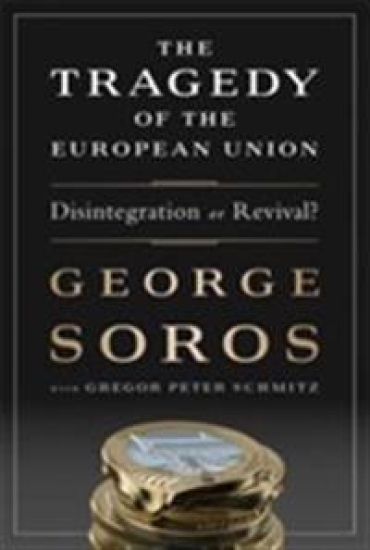
The Tragedy of the European Union

The Tragedy of the European Union

George Soros; Gregor Schmitz

PublicAffairs,U.S.
2014
sidottu
The European Union could soon be a thing of the past. Xenophobia is rampant and commonly reflected in elections across the continent. Great Britain may hold a referendum on whether to abandon the union altogether. Spurred by anti-EU sentiments due to the euro crisis, national interests conflict with a shared vision for the future of Europe. Is it too late to preserve the union that generated unprecedented peace for more than half a century? This is no mere academic question with limited importance for America and the rest of the world. In the past decade, the EU has declined from a unified global power to a fractious confederation of states with staggering unemployment resentfully seeking relief from a reluctant Germany. If the EU collapses and the former member states are transformed again from partners into rivals, the US and the world will confront the serious economic and political consequences that follow. In a series of revealing interviews conducted by Dr. Gregor Peter Schmitz, George Soros -- a man of vast European experience whose personal past informs his present concerns -- offers trenchant commentary and concise, prescriptive advice: The euro crisis was not an inevitable consequence of integration, but a result of avoidable mistakes in politics, economics, and finance; and excessive faith in the self-regulating financial markets that Soros calls market fundamentalism inspired flawed institutional structures that call out for reform. Despite the considerable perils of this period, George Soros maintains his faith in the European Union as a model of open society. This book is a testament to his vision for a peaceful and productive Europe.
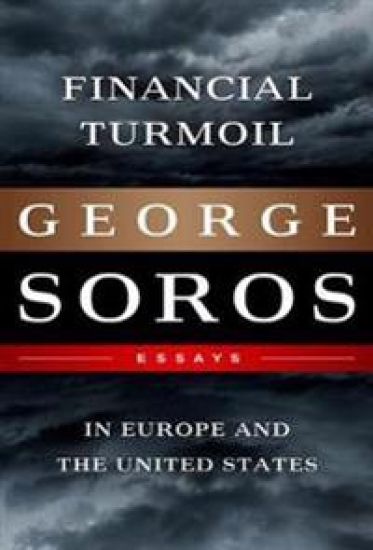
Financial Turmoil in Europe and the United States
The dire economic situation we find ourselves in is not a result of economic forces alone, but of the policies pursued, and not pursued, by world leaders. In this collection of his recent writings on the global financial situation, George Soros presents his views and analysis of key economic policy choices leading up to, during, and following the financial crisis of 2008-2009. Soros explores domestic and international policy choices like how to manage the (then) potential implosion of Fannie Mae & Freddie Mac, deploying measures to stem global contagion from the sub-prime crisis, alternative options on bailing out lesser developed countries and why this was vital, the structural problems of European economic management, and more. Financial Turmoil in Europe and the United States elegantly distills the choices at hand, and takes the reader on a journey of real time economic policy work and experimentation.
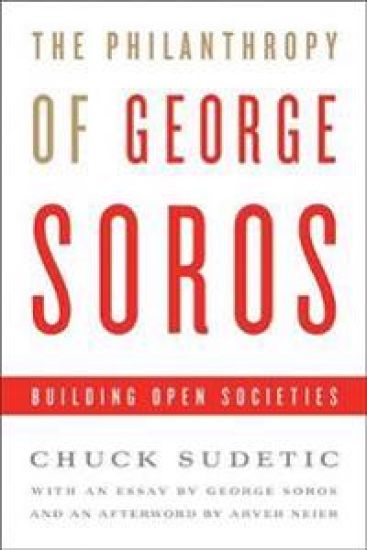
The Philanthropy of George Soros

The Philanthropy of George Soros

Chuck Sudetic; George Soros

PublicAffairs,U.S.
2011
sidottu
p class="MsoNormal" With an Introduction by George Soros and an Afterword by Aryeh Neier p class="MsoNormal" p style="line-height: 14pt" class="MsoNormal"George Soros is one of the world's leading philanthropists. Over the past thirty years, he has provided more than 8 billion to his worldwide network of foundations: the Open Society Foundations, which have applied the concept of the open society, the cornerstone of Soros's thinking on democracy, freedom, and human rights, in the United States and abroad. This book, written by former New York Times journalist Chuck Sudetic, marks the first exploration of George Soros's innovative philanthropic strategies and unmatched commitment to building open societies in places where dictatorship and violent repression have been the rule for too long. p style="line-height: 14pt" class="MsoNormal"Soros is widely lauded for his brilliant financial and economic insights and investment strategies. But his philosophy-driven philanthropy and its impact are unprecedented for a private individual, and have produced remarkable results. Soros's visionary efforts include: helping to topple communism in eastern Europe and the Soviet Union and attempting to foster civil society in China initiating and nurturing global and local organizations fighting to overcome the driver of war, repression, and corruption in oil- and blood-diamond states helping Sarajevo's people endure three years of siege during the Bosnian War fighting resistant strains of TB in Russia's jails and Lesotho's mountains before the disease can devastate the world's great cities undertaking the first attempt in history to help Europe's most downtrodden people lift themselves from poverty and segregation supporting democratic resistance in Burma and building communities in Haiti's roughest slums applying new methods for fighting poverty and drug addiction and reforming dysfunctional justice systems in Baltimore, New Orleans, and other U. S. cities. p style="margin: 0.1pt 0in line-height: 14pt" class="MsoNormal" The Philanthropy of George Soros reveals the thought and practice behind a lesser-known dimension of this remarkable man's life, his goals for society, and his underlying vision for the future.
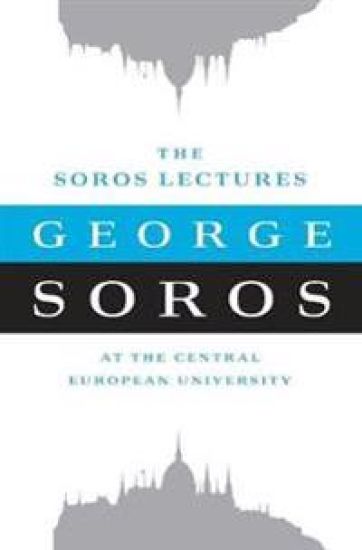
The Soros Lectures

The Soros Lectures

George Soros

PublicAffairs,U.S.
2011
pokkari
In October 2009, George Soros delivered a series of lectures at the Central European University in Budapest, Hungary, which provided a broad overview of his thoughts on economics and politics. Soros has achieved great and consistent success in the world of finance but has also contributed to the broader world of philosophy and human rights through the work of his Open Society Institute, an international network of foundations. These lectures are the culmination of a lifetime of practical and philosophical reflection. This book presents these five seminal talks into one volume, which offers a condensed and highly readable summary of Soros' worldview.
The Crash of 2008 and What it Means

The Crash of 2008 and What it Means

George Soros

PublicAffairs,U.S.
2009
pokkari
In the midst of one of the most serious financial upheavals since the Great Depression, George Soros, the legendary financier and philanthropist, writes about the origins of the crisis and proposes a set of policies that should be adopted to confront it. Soros, whose breadth of experience in financial markets is unrivaled, places the crisis in the context of his decades of study of how individuals and institutions handle the boom and bust cycles that now dominate global economic activity. In a concise essay that combines practical insight with philosophical depth, Soros makes an invaluable contribution to our understanding of the great credit crisis and its implications for our nation and the world.
The New Paradigm for Financial Markets (Large Print Edition)
In the midst of the most serious financial upheaval since the Great Depression, legendary financier George Soros explores the origins of the crisis and its implications for the future. Soros, whose breadth of experience in financial markets is unrivaled, places the current crisis in the context of decades of study of how individuals and institutions handle the boom and bust cycles that now dominate global economic activity. This is the worst financial crisis since the 1930s," writes Soros in characterizing the scale of financial distress spreading across Wall Street and other financial centres around the world. In a concise essay that combines practical insight with philosophical depth, Soros makes an invaluable contribution to our understanding of the great credit crisis and its implications for our nation and the world.
Escaping the Resource Curse

Escaping the Resource Curse

George Soros

Columbia University Press
2007
sidottu
The wealth derived from natural resources can have a tremendous impact on the economics and politics of producing countries. In the last quarter century, we have seen the surprising and sobering consequences of this wealth, producing what is now known as the "resource curse." Countries with large endowments of natural resources, such as oil and gas, often do worse than their poorer neighbors. Their resource wealth frequently leads to lower growth rates, greater volatility, more corruption, and, in extreme cases, devastating civil wars. In this volume, leading economists, lawyers, and political scientists address the fundamental channels generated by this wealth and examine the major decisions a country must make when faced with an abundance of a natural resource. They identify such problems as asymmetric bargaining power, limited access to information, the failure to engage in long-term planning, weak institutional structures, and missing mechanisms of accountability. They also provide a series of solutions, including recommendations for contracting with oil companies and allocating revenue; guidelines for negotiators; models for optimal auctions; and strategies to strengthen state-society linkages and public accountability. The contributors show that solutions to the resource curse do exist; yet, institutional innovations are necessary to align the incentives of key domestic and international actors, and this requires fundamental political changes and much greater levels of transparency than currently exist. It is becoming increasingly clear that past policies have not provided the benefits they promised. Escaping the Resource Curse lays out a path for radically improving the management of the world's natural resources.
George Soros On Globalization

George Soros On Globalization

George Soros

PublicAffairs,U.S.
2005
pokkari
Never before have we stood to gain or lose as much from understanding the international economy. Scandals plague the world's largest corporations, the American trade deficit has soared to historic heights, and international organizations from the World Bank to the WTO are accused of being inefficient and corrupt. Is our global economy as unhealthy, and as unjust, as we think? And what can be done about it? At this critical juncture, George Soros, a major proponent of globalization, takes to task the many institutions that have failed to keep pace with our global economy. At the same time, he offers a compelling new paradigm to bring the institutions and the economy back into necessary alignment. Economics are amoral, he argues - but neither our society nor our economy can afford to function without a distinct system of right and wrong. As we look toward the future and wonder what's ailing our economy, where our jobs are going, and whether the power of economics can be harnessed for positive changes, this thoroughly updated edition of George Soros on Globalization is a report no citizen of the world can do without.
Underwriting Democracy

Underwriting Democracy

George Soros

PublicAffairs,U.S.
2004
pokkari
George Soros has done more for open societies than any other private citizen in the world. In Underwriting Democracy he describes his experiences helping to bring about democratic change in Eastern Europe,experiences that are especially relevant now that our country has begun to intervene (though in an entirely different way than Soros) to create functioning democracies. Throughout the 1980s George Soros worked to identify and fund the growing political movements that caused the downfall of Eastern Europe's Communist governments. He established foundations, first in his native Hungary, and then in eight other countries, and used them to finance everything from the installation of previously forbidden copying machines in public libraries to the creation of experimental schools, clubs, and workshops for the support of dissidents. This unprecedented, and brilliant, financial and logistical support helped to bring down the communist regimes in peaceful revolutions across the continent. These are thrilling stories about facing down,and getting past,the Communist party powers in order to change these nations from the inside out .
The Alchemy of Finance

The Alchemy of Finance

George Soros; Paul A. Volcker

John Wiley Sons Inc
2003
nidottu

Halvin toimitettuna 29,40 €

New chapter by Soros on the secrets to his success along with a new Preface and Introduction. New Foreword by renowned economist Paul Volcker "An extraordinary . . . inside look into the decision-making process of the most successful money manager of our time. Fantastic."—The Wall Street Journal George Soros is unquestionably one of the most powerful and profitable investors in the world today. Dubbed by BusinessWeek as "the Man who Moves Markets," Soros made a fortune competing with the British pound and remains active today in the global financial community. Now, in this special edition of the classic investment book, The Alchemy of Finance, Soros presents a theoretical and practical account of current financial trends and a new paradigm by which to understand the financial market today. This edition's expanded and revised Introduction details Soros's innovative investment practices along with his views of the world and world order. He also describes a new paradigm for the "theory of reflexivity" which underlies his unique investment strategies. Filled with expert advice and valuable business lessons, The Alchemy of Finance reveals the timeless principles of an investing legend. This special edition will feature a new chapter by Soros on the secrets of his success and a new Foreword by the Honorable Paul Volcker, former Chairman of the Federal Reserve. George Soros (New York, NY) is President of Soros Fund Management and Chief Investment Advisor to Quantum Fund N. V., a $12 billion international investment fund. Besides his numerous ventures in finance, Soros is also extremely active in the worlds of education, culture, and economic aid and development through his Open Society Fund and the Soros Foundation.
Open Society Reforming Global Capitalism Reconsidered
George Soros's The Crisis of Global Capitalism became an international bestseller and an instant classic a must read for anyone concerned with the complex market forces that rule our global economy and create both prosperity and instability. Now, in Open Society , Soros takes a new and provocative look at the arguments he made in that book, incorporating the latest global economic and political developments into his analysis. He shows how our economic and political arrangements are out of sync. Recognizing that our existing institutions are under the sway of sovereign states, he proposes an "open society alliance" with the dual purpose of fostering open societies in individual countries and laying the groundwork for a global open society. In leading up to his inspiring vision, Soros presents an iconoclastic view of the world that has guided him both in making money and spending it on his network of Open Society Foundations. This book sums up the life's work of an exceptional individual. George Soros is the best fund manager in history, a stateless statesman, and an original thinker.
The Crisis of Global Capitalism

The Crisis of Global Capitalism

George Soros

PublicAffairs,U.S.
1998
sidottu
The global economy, on which the world now depends more than ever, is in crisis. The Russian economy has collapsed, leading to punishing inflation and economic hardship. Scores of Japanese banks are in ruin while the Japanese government muddles along, the nation falling deeper and deeper into recession. The once-booming economies of Thailand, Malaysia, and Indonesia have imploded. Brazil and the rest of Latin America has begun to edge toward the precipice, and even in Europe and America the markets lurch violently, wiping out gains with each passing week. No one is better positioned to explain the current global financial crisis than George Soros, the man Morgan Stanley head Barton Biggs calls "the finest analyst of the world in our time." In The Crisis of Global Capitalism, Soros, chairman of Soros Fund Management (whose Quantum Fund is considered to have been the best performing investment fund in the world over the past thirty years), dissects the current crisis and economic theory in general, revealing how theoretical assumptions have combined with human behavior to lead to today's mess. He shows how unquestioning faith in market forces blinds us to crucial instabilities, and how those instabilities have chain-reacted to cause the current crisis--a crisis that has the potential to get much, much worse. Offering brilliant solutions to the global meltdown, based on years of Soros's own experience as a financier and philanthropist, this is essential reading for anyone involved with the new economy--that is, all of us.