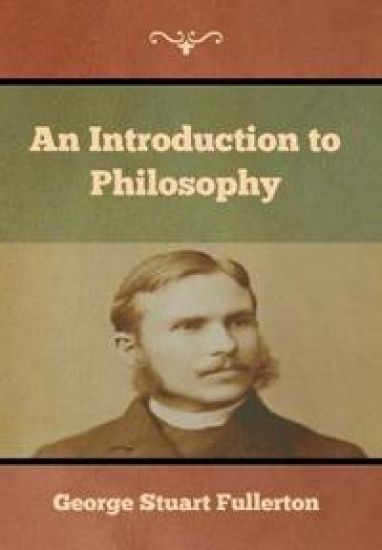
Kirjailija
George Stuart Fullerton
Kirjat ja teokset yhdessä paikassa: 55 kirjaa, julkaisuja vuosilta 1915–2026, suosituimpiin kuuluu A Handbook of Ethical Theory. Vertaile teosten hintoja ja tarkista saatavuus suomalaisista kirjakaupoista.
55 kirjaa
Kirjojen julkaisuvuodet: 1915–2026.

A Handbook of Ethical Theory
George Stuart Fullerton
Createspace Independent Publishing Platform
2018
nidottu
George Stuart Fullerton (1859-1925) was an American philosopher and psychologist. Fullerton was born at Fatehgarh, India, the son of the Rev. Robert Stuart Fullerton. He came to this country as a youth. He graduated in 1879 from the University of Pennsylvania and in 1884 from Yale Divinity School; and returned to Pennsylvania to be an instructor, adjunct professor, and dean of the department of philosophy, dean of the college, and vice provost of the university. In 1904 he was appointed professor of philosophy at Columbia University, and served as head of the department. He was the host of the first annual meeting of the American Psychological Association in 1892 at the University of Pennsylvania, and the APA's fifth president, in 1896. In 1884 he married Miss Rebekah Daingerfield Smith of Alexandria, Va., who died in 1892. Five years later he married Julia Winslow Dickerson of Philadelphia, his widow. There were no children. In 1914, while he was exchange professor at the University of Vienna, World War I broke out. He was Lecturing at Munich (Germany) when Interned. Fullerton was imprisoned as a civilian enemy national. He remained imprisoned for four years, until the end of the war, and conditions were so harsh that he returned to the U. S. with his health permanently damaged. (Scottish psychologist Henry J. Watt suffered a similar fate.) Nearly an invalid for the last decade of his life, Fullerton committed suicide at the age of 66.
An Introduction to Philosophy
George Stuart Fullerton
Createspace Independent Publishing Platform
2018
nidottu
An Introduction to Philosophy by George Stuart Fullerton. George Stuart Fullerton (1859-1925) was an American philosopher and psychologist. Fullerton was born at Fatehgarh, India, the son of the Rev. Robert Stuart Fullerton. He came to this country as a youth. I must warn the reader at the outset that the title of this chapter seems to promise a great deal more than he will find carried out in the chapter itself. To tell all that philosophy has meant in the past, and all that it means to various classes of men in the present, would be a task of no small magnitude, and one quite beyond the scope of such a volume as this. But it is not impossible to give within small compass a brief indication, at least, of what the word once signified, to show how its signification has undergone changes, and to point out to what sort of a discipline or group of disciplines educated men are apt to apply the word, notwithstanding their differences of opinion as to the truth or falsity of this or that particular doctrine. Why certain subjects of investigation have come to be grouped together and to be regarded as falling within the province of the philosopher, rather than certain other subjects, will, I hope, be made clear in the body of the work. Only an indication can be given in this chapter.
The book aims to tell what philosophy is. It is not its chief object to advocate a particular type of doctrine. At the same time, as it is impossible to treat of the problems of philosophy except from some point of view, it will be found that, in Chapters III to XI, a doctrine is presented. It is the same as that presented much more in detail, and with a greater wealth of reference, in my "System of Metaphysics," which was published a short time ago. In the Notes in the back of this volume, the reader will find references to those parts of the larger work which treat of the subjects more briefly discussed here. It will be helpful to the teacher to keep the larger work on hand, and to use more or less of the material there presented as his undergraduate classes discuss the chapters of this one. Other references are also given in the Notes, and it may be profitable to direct the attention of students to them. The present book has been made as clear and simple as possible, that no unnecessary difficulties may be placed in the path of those who enter upon the thorny road of philosophical reflection. The subjects treated are deep enough to demand the serious attention of any one; and they are subjects of fascinating interest. That they are treated simply and clearly does not mean that they are treated superficially. Indeed, when a doctrine is presented in outline and in a brief and simple statement, its meaning may be more readily apparent than when it is treated more exhaustively. For this reason, I especially recommend, even to those who are well acquainted with philosophy, the account of the external world contained in Chapter IV. For the doctrine I advocate I am inclined to ask especial consideration on the ground that it is, on the whole, a justification of the attitude taken by the plain man toward the world in which he finds himself. The experience of the race is not a thing that we may treat lightly. Thus, it is maintained that there is a real external world presented in our experience--not a world which we have a right to regard as the sensations or ideas of any mind. It is maintained that we have evidence that there are minds in certain relations to that world, and that we can, within certain limits, determine these relations. It is pointed out that the plain man's belief in the activity of his mind and his notion of the significance of purposes and ends are not without justification. It is indicated that theism is a reasonable doctrine, and it is held that the human will is free in the only proper sense of the word "freedom." Throughout it is taken for granted that the philosopher has no private system of weights and measures, but must reason as other men reason, and must prove his conclusions in the same sober way. I have written in hopes that the book may be of use to undergraduate students. They are often repelled by philosophy, and I cannot but think that this is in part due to the dry and abstract form in which philosophers have too often seen fit to express their thoughts. The same thoughts can be set forth in plain language, and their significance illustrated by a constant reference to experiences which we all have--experiences which must serve as the foundation to every theory of the mind and the world worthy of serious consideration. But there are many persons who cannot attend formal courses of instruction, and who, nevertheless, are interested in philosophy. These, also, I have had in mind; and I have tried to be so clear that they could read the work with profit in the absence of a teacher. Lastly, I invite the more learned, if they have found my "System of Metaphysics" difficult to understand in any part, to follow the simple statement contained in the chapters above alluded to, and then to return, if they will, to the more bulky volume. GEORGE STUART FULLERTON. New York, 1906.

An Introduction to Philosophy
George Stuart Fullerton
Createspace Independent Publishing Platform
2017
nidottu
Are We Automata?
George Stuart Fullerton; William James
Createspace Independent Publishing Platform
2017
nidottu
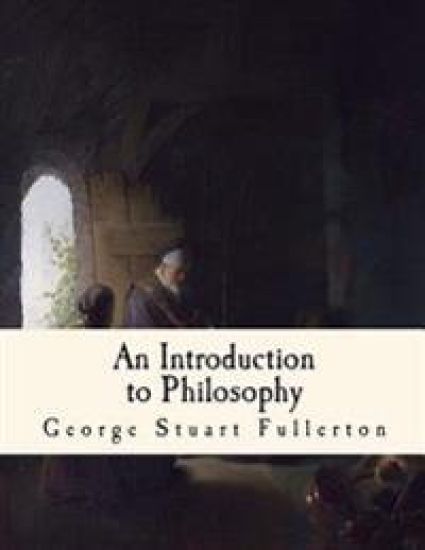
An Introduction to Philosophy
George Stuart Fullerton
Createspace Independent Publishing Platform
2016
nidottu
An Introduction to Philosophy by George Stuart Fullerton. George Stuart Fullerton (1859
An Introduction to Philosophy
George Stuart Fullerton
Createspace Independent Publishing Platform
2016
nidottu
George Stuart Fullerton (1859-1925) was an American philosopher and psychologist. Fullerton was born at Fatehgarh, India, the son of the Rev. Robert Stuart Fullerton. He came to this country as a youth. Fullerton's philosophy was realist. His writings include: The Conception of the Infinite (1887)A Plain Argument for God (1889)On Sameness and Identity (1890)On the Perception of Small Differences, with Cattell (1892)The Philosophy of Spinoza (1894)On Spinozistic Immortality (1899)A System of Metaphysics (1904)An Introduction to Philosophy (1906)The World We Live in, or Philosophy and Life in the Light of Modern Thought (1912)Germany of to-dayA Handbook of Ethical Theory (1922
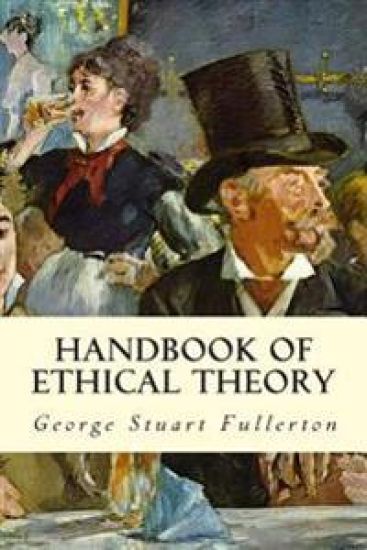
Handbook of Ethical Theory
George Stuart Fullerton
Createspace Independent Publishing Platform
2015
nidottu

A Handbook of Ethical Theory
George Stuart Fullerton
Createspace Independent Publishing Platform
2015
nidottu

A Handbook of Ethical Theory
George Stuart Fullerton
Createspace Independent Publishing Platform
2014
nidottu

An Introduction to Philosophy
George Stuart Fullerton
Createspace Independent Publishing Platform
2014
nidottu
An Introduction to Philosophy
George Stuart Fullerton
Createspace Independent Publishing Platform
2014
nidottu