Kirjojen hintavertailu – 12 903 735 kirjaa ja 27 kauppaa
Kirjailija
George W Cable
Kirjat ja teokset yhdessä paikassa: 118 kirjaa, julkaisuja vuosilta 2004–2026, suosituimpiin kuuluu The flower of the Chapdelaines, with frontispiece by F.C. Yohn. By: George W. Cable: Frederick Coffay Yohn (February 8, 1875 - June 6, 1933), often re. Vertaile teosten hintoja ja tarkista saatavuus suomalaisista kirjakaupoista.
The Grandissimes is an unchanged, high-quality reprint of the original edition of 1899. Hansebooks is editor of the literature on different topic areas such as research and science, travel and expeditions, cooking and nutrition, medicine, and other genres. As a publisher we focus on the preservation of historical literature. Many works of historical writers and scientists are available today as antiques only. Hansebooks newly publishes these books and contributes to the preservation of literature which has become rare and historical knowledge for the future.
George Washington Cable (October 12, 1844 - January 31, 1925) was an American novelist notable for the realism of his portrayals of Creole life in his native New Orleans, Louisiana. He has been called "the most important southern artist working in the late 19th century, as well as the first modern southern writer." In his treatment of racism, mixed-race families and miscegenation, his fiction has been thought to anticipate that of William Faulkner. He also wrote articles critical of contemporary society. Due to hostility against him after two 1885 essays encouraging racial equality and opposing Jim Crow, Cable moved with his family to Northampton, Massachusetts. He lived there for the next thirty years, then moved to Florida. Cable was born in 1844 in New Orleans, Louisiana, the son of George W. Cable, Sr., and Rebecca Boardman Cable. They were wealthy slaveholders who were members of the Presbyterian Church and New Orleans society, whose families had moved there after the Louisiana Purchase. First educated in private schools, the younger Cable had to get work after his father died young. The elder Cable had lost investments, and the family struggled financially. Cable later learned French on his own. He served in the Confederate Army during the American Civil War, in which he took part in support of the Southern cause.
eorge Washington Cable (October 12, 1844 - January 31, 1925) was an American novelist notable for the realism of his portrayals of Creole life in his native New Orleans, Louisiana. He has been called "the most important southern artist working in the late 19th century, as well as the first modern southern writer." In his treatment of racism, mixed-race families and miscegenation, his fiction has been thought to anticipate that of William Faulkner. He also wrote articles critical of contemporary society. Due to hostility against him after two 1885 essays encouraging racial equality and opposing Jim Crow, Cable moved with his family to Northampton, Massachusetts. He lived there for the next thirty years, then moved to Florida. Cable was born in 1844 in New Orleans, Louisiana, the son of George W. Cable
George Washington Cable (October 12, 1844 - January 31, 1925) was an American novelist notable for the realism of his portrayals of Creole life in his native New Orleans, Louisiana. He has been called "the most important southern artist working in the late 19th century, as well as the first modern southern writer." In his treatment of racism, mixed-race families and miscegenation, his fiction has been thought to anticipate that of William Faulkner. He also wrote articles critical of contemporary society. Due to hostility against him after two 1885 essays encouraging racial equality and opposing Jim Crow, Cable moved with his family to Northampton, Massachusetts. He lived there for the next thirty years, then moved to Florida. Cable was born in 1844 in New Orleans, Louisiana, the son of George W. Cable, Sr., and Rebecca Boardman Cable. They were wealthy slaveholders who were members of the Presbyterian Church and New Orleans society, whose families had moved there after the Louisiana Purchase. First educated in private schools, the younger Cable had to get work after his father died young. The elder Cable had lost investments, and the family struggled financially. Cable later learned French on his own. He served in the Confederate Army during the American Civil War, in which he took part in support of the Southern cause. His experiences changed his ideas about Southern and Louisiana society, and he began writing during a two-year bout with malaria. In 1870 Cable went into journalism, writing for the New Orleans Picayune. He worked for them from 1865 to 1879, by which time he had become an established writer. In 1869, George Cable married Louisa Stewart Bartlett, with whom he had several children.
George Washington Cable (October 12, 1844 - January 31, 1925) was an American novelist notable for the realism of his portrayals of Creole life in his native New Orleans, Louisiana. He has been called "the most important southern artist working in the late 19th century, as well as the first modern southern writer. In his treatment of racism, mixed-race families and miscegenation, his fiction has been thought to anticipate that of William Faulkner. He also wrote articles critical of contemporary society. Due to hostility against him after two 1885 essays encouraging racial equality and opposing Jim Crow, Cable moved with his family to Northampton, Massachusetts. He lived there for the next thirty years, then moved to Florida.
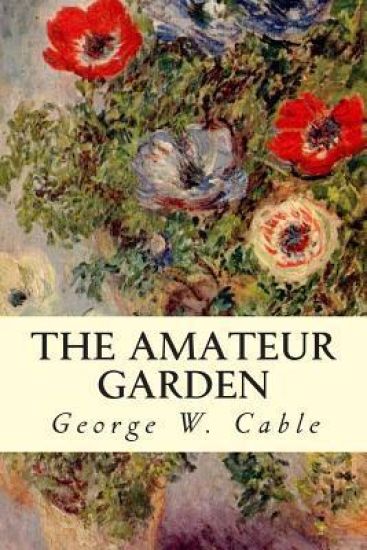
The Amateur Garden is a classic landscape gardening text by George W. Cable. A flower garden trying to be beautiful is a charming instance of something which a storyteller can otherwise only dream of. For such a garden is itself a story, one which actually and naturally occurs, yet occurs under its master's guidance and control and with artistic effect.