Kirjojen hintavertailu – 12 859 827 kirjaa ja 27 kauppaa

Kirjailija

George Washington

Kirjat ja teokset yhdessä paikassa: 337 kirjaa, julkaisuja vuosilta 1800–2026, suosituimpiin kuuluu History of the Voyage and Shipwreck of the U.S. Steamer Jeannette, in the Polar Seas, Together with a Full Account of the Death of Lieutenant de Long, and the Rescue of Danenhower, Melville, and Their Heroic Companions. [By H. L. Williams].. Vertaile teosten hintoja ja tarkista saatavuus suomalaisista kirjakaupoista.

337 kirjaa

Kirjojen julkaisuvuodet: 1800–2026.

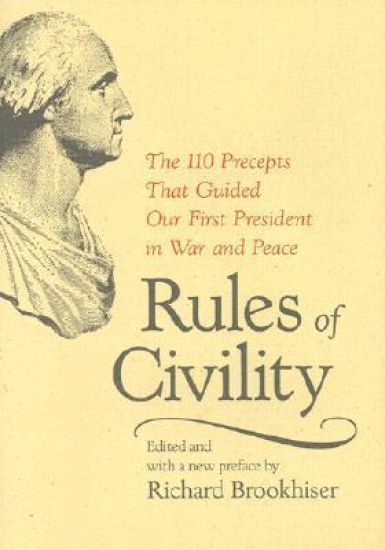
Rules of Civility

Rules of Civility

George Washington; Richard Brookhiser

University of Virginia Press
2003
sidottu
As a young man, George Washington admired and copied into a little notebook 110 rules for civil behavior that originated from a Jesuit textbook. Washington took these rules very much to heart, and that handwritten list remained with him throughout his life, serving as inspiring guidance from his military days at Valley Forge and Yorktown to his two terms as president. Guidance that at first sounds archaic, it is in fact just as relevant as--indeed, possibly more necessary than--it was nearly three hundred years ago. Richard Brookhiser makes clear the pertinence of these rules for modern readers and proposes that now more than ever we will be wise to follow the modest example of such a great man. Witty and insightful, Brookhiser's commentary offers real-world instruction in the lost art of self-discipline, and his new preface provides a compelling and timely context in which to employ these guidelines today.
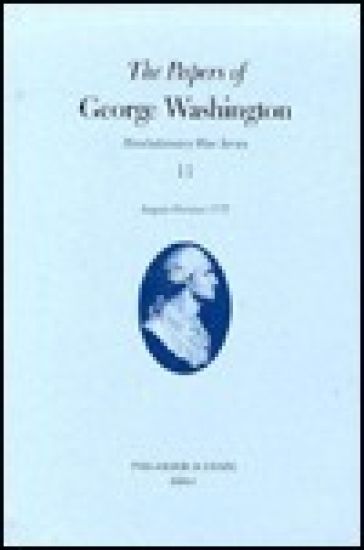
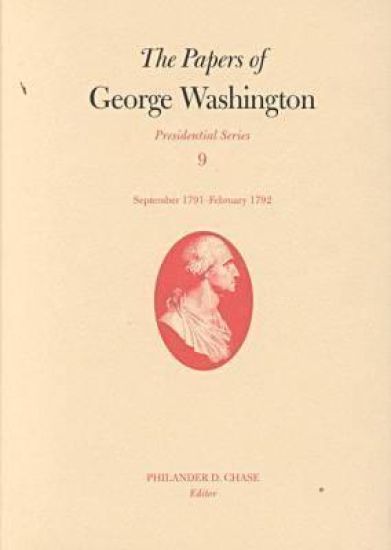
The Papers of George Washington v. 11; Presidential Series;August 1792-January 1793
Volume 11, which covers the closing months of Washington's first presidential term, opens with Washington at Mount Vernon, tending to both public and private affairs. The implementation of a federal excise tax on domestically produced whiskey provoked opposition that became violent in western Pennsylvania, eliciting Washington's proclamation of 15 September 1792 that called for U. S. citizens to comply peacefully with the law. Returning to Philadelphia in October 1792 for the second session of the Second Congress, Washington encountered a continuing variety of challenges during the fall and early winter. Preparations for war with several of the Indian nations in the Northwest Territory intensified under the leadership of General Anthony Wayne. At the same time, the federal government sponsored a number of peace initiatives to the hostile Indians and attempted to enlist the Iroquois and other Indians as intermediaries in the peace process. Washington also faced problems with Indians in the Southwest Territory and on the frontiers of the southern states who were deeply angered by American incursions on their lands, a hostility that Washington and other American officials believed was encouraged by Spanish agents among the Indians. Washington deplored the growing political factionalism within the United States. He attempted to assuage the increasingly bitter political differences between Alexander Hamilton and Thomas Jefferson, and he also urged Jefferson to delay his resignation as secretary of state. Although Washington continued to long for retirement and a permanent return to Mount Vernon, he reluctantly agreed to serve a second term as president after assuring himself that the public mood of the country favored his staying in office and that his leadership was essential to the success of the new government. The continuing revolution in France and the abolition of the French monarchy provoked a reevaluation of U. S.-French relations by Washington and his cabinet. The current war in Europe, moreover, mandated careful monitoring as Washington sought to maintain the neutral position of the United States. Finally, Washington continued to direct the development of the Federal City and to oversee the management of his estate at Mount Vernon.
The Papers of George Washington v.10; Presidential Series;March-August 1792
Volume 10 of the Presidential Series continues the fourth chronological series of The Papers of George Washington. The Presidential Series, when complete, will cover the eight precedent-setting years of Washington's presidency. These volumes present the public papers written by or sent to Washington during his two administrations. Among the documents are Washington's messages to Congress, addresses from public and private bodies, applications for office and letters of recommendation, and documents concerning diplomatic and Indian affairs. Also included are Washington's private papers, consisting of family correspondence, letters to and from friends and acquaintances, and documents relating to the administration of his Mount Vernon plantation and the management of the presidential household. In the period covered by volume 10, the spring and summer of 1792, Washington was busy dealing with a host of foreign and domestic issues. In response to General Arthur St. Clair's disastrous defeat on 4 November 1791, Washington ordered both the preparation of a renewed offensive against the hostile Indian tribes in the Northwest Territory and an attempt to secure peace without further recourse to arms. The first initiative necessitated the selection of a new commanding general and the appointment or promotion of a large number of junior officers. The second induced Washington to invite delegations from several nonhostile Indian nations to Philadelphia in the hopes that they either would support the American military effort or would convince their brethren to make peace with the United States. In addition, both the promulgation of a new French constitution and the recent arrival of the British plenipotentiary George Hammond - who had instructions to settle the outstanding difficulties arising from the Treaty of Paris of 1783 and lay the groundwork for improved Anglo-American commercial relations - required careful handling. Domestically, Washington's veto of the congressional Apportionment Act in April 1792 on the grounds that it was unconstitutional marked the first use of the presidential veto in American history. In the wake of Pierre L'Enfant's dismissal as superintendent of the Federal City, Washington attempted to keep on schedule the construction of the new capital on the Potomac River. Throughout this period Washington wistfully longed to retire to Mount Vernon at the close of his term in office. Although informed by all of his closest advisers that his retirement would have calamitous consequences, Washington instructed James Madison to draft a farewell address for his use if he decided not to stand for reelection.
The Papers of George Washington v.12; Revolutionary War Series;October-December 1777
Volume 12 of the Revolutionary War Series documents Washington's unsuccessful efforts to capitalize on the American victory at Saratoga and his decision to encamp the Continental army for the winter at Valley Forge. The volume opens with the British forces at Philadelphia, where they had returned following the Battle of Germantown, and the Continental army, in Washington's words, ""hovering round them, to distress and retard their operations as much as possible."" Recognizing the importance of restricting communication between General William Howe and the British fleet, Washington dispatched a brigade to New Jersey to assist in the defense of Forts Mifflin and Mercer, key components in the American effort to obstruct the Delaware River. Upon receiving news of the surrender of British general John Burgoyne's army to Major General Horatio Gates at Saratoga, Washington called a council of war to consider his army's options. Although his generals advised against an immediate assault on Philadelphia, Washington perceived an opportunity to defeat Howe and dispatched his aide-de-camp Alexander Hamilton to the northern department to urge upon General Gates the ""absolute necessity"" of sending a ""very considerable"" reinforcement to the main army. If those troops arrived before the British could open a supply route on the Delaware or be reinforced from New York, then the American forces could ""in all probability reduce Genl Howe to the same situation in which Genl Burgoine now is."" There was little further that Washington could do to strengthen the Delaware River defenses, however, and despite the determined efforts of Fort Mifflin's defenders, the Americans were forced to evacuate the fort in mid-November following a sustained bombardment from British land and naval artillery. Moreover, British and Hessian troops from New York arrived before Washington's reinforcement and joined in the British occupation of Fort Mercer a few days later. After the fall of the Delaware River forts, Washington and his generals began extensive deliberations about the related questions of a possible winter campaign and where to quarter the troops for the winter. The generals were nearly unanimous that a winter campaign was not feasible, but they were divided between quartering the troops at Wilmington, Delaware, or in Pennsylvania along a line from Bethlehem to Lancaster. Washington settled on the third option discussed: hutting in the Great Valley of Pennsylvania. Consequently, the volume closes in December with Washington establishing his headquarters at Valley Forge, about twenty miles northwest of Philadelphia.

George Washington's Farewell Address

George Washington's Farewell Address

George Washington

Applewood Books
1999
sidottu
Washington's Iconic Final Message to America in an Elegant Gift Edition On September 17, 1796, George Washington announced that he would leave the presidency. His famous farewell address encapsulates a view of the Union, the Constitution, and good citizenship that remains an important part of American political thought today.
The Papers of George Washington

The Papers of George Washington

George Washington

University of Virginia Press
1999
sidottu
This volume covers March-September of 1791, when Washington completed a tour of the southern states. On tour and when he returned to the capital, the heads of executive departments regularly reported to him about affairs of state, whilst friends and foreign correspondents sent news from Europe.
The Papers of George Washington

The Papers of George Washington

George Washington

University of Virginia Press
1998
sidottu
Covering the first ten months of George Washington's retirement from presidency, this book shows Washington to have been kept very busy. Apart from tending to his domestic arrangements and personal correspondence, Washington was still regularly informed of political developments.