Kirjojen hintavertailu – 12 903 725 kirjaa ja 27 kauppaa

Kirjailija

George Williams

Kirjat ja teokset yhdessä paikassa: 51 kirjaa, julkaisuja vuosilta 1988–2026, suosituimpiin kuuluu Alcoa. Vertaile teosten hintoja ja tarkista saatavuus suomalaisista kirjakaupoista.

51 kirjaa

Kirjojen julkaisuvuodet: 1988–2026.

People Power

People Power

George Williams; David Hume

NewSouth Publishing
2010
nidottu
From the failed attempt to ban communism in 1951 to the unsuccessful republican referendum of 1999, Australians have been cautious about constitutional change, approving only eight out of 44 referendum proposals in just over 100 years - a success rate of about 18%. People Power is the only full history of constitutional change in Australia. It closely examines Australia's referendum record, and explains why success has been so rare. It includes interviews with leading proponents for constitutional change, alongside political cartoons, advertising and brochures from key referendum campaigns. Following their sustained analysis of each referendum campaign, the public response and the forces that shaped the outcome, the authors argue that the key to a successful referendum is truly engaging the people in the political process.
The Complete Bible Commentary

The Complete Bible Commentary

George Williams

Kregel Publications,U.S.
2008
pokkari
"Williams's Complete Bible Commentary is a valued volume in my library."-Billy Graham This insightful, biblically faithful commentary is one of the most informative single-volume commentaries available. It includes an introduction to each book of the Bible as well as helpful comments on the book's history and themes. Individual words and phrases throughout the text are explained with the aid of Williams's extensive knowledge of Hebrew and Greek. For decades pastors, teachers, and Bible students have consistently found it a reliable and concise guide to biblical interpretation, making this a great resource for personal or pastoral study.
A Charter of Rights for Australia

A Charter of Rights for Australia

George Williams

UNSW Press
2007
nidottu
Australia is the only democratic country in the world that does not have a national charter or bill that protects basic human rights. Many countries have a constitutional bill of rights; many others have legislated to create charters of rights. Australia is the odd country out. In this fully updated edition of his influential book, ""The Case for an Australian Bill of Rights"", lawyer and commentator George Williams argues that the Australian parliament should create a charter of rights drawing on the successful examples of New Zealand and the United Kingdom. He shows how the case for reform has grown stronger in recent years, and how the momentum for change has accelerated with the creation of charters of rights in the Australian Capital Territory and Victoria. Professor Williams played a key role in the development of the Victorian charter, and describes how the process that led to the innovative ACT and Victorian legislation can be used to create a federal charter.
What Price Security?

What Price Security?

Andrew Lynch; George Williams

UNSW Press
2006
nidottu
In this timely and important book, Andrew Lynch and George Williams provide a clear and accessible guide to the major components of Australias anti-terrorism laws and their effects. They show readers: what constitutes a crime of terrorism in Australia what powers our main intelligence agency has to question and detain members of the community what happens when the authorities seek a control order or an order of preventative detention over an individual what speech risks making a person liable for the crime of sedition how judicial processes have been modified for the trial of people charged with terrorism offences Lynch and Williams have contributed vigorously to the public debate since September 11. In What Price Security? they argue that Australia has gone too far in limiting civil rights in the name of anti-terrorism. In fighting the war on terror, they write, it is vital that we do not allow ourselves to become the victim of our own fears.
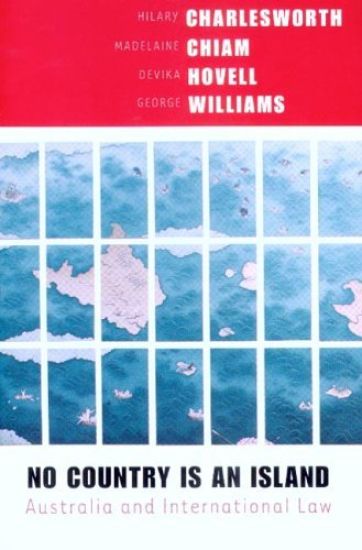
No Country Is an Island

No Country Is an Island

Hilary Charlesworth; Madelaine Chiam; Devika Hovell; George Williams

UNSW Press
2006
nidottu
International law does not seem immediately relevant to domestic Australian politics and law, let alone to our everyday lives. Yet, as this essential book shows, international law has a growing significance for trade, human rights, crime, terrorism and climate change. This is a highly readable, timely and important book that shows that while international law can seem remote, there is an urgent need to understand it and for its processes to be as transparent as possible.
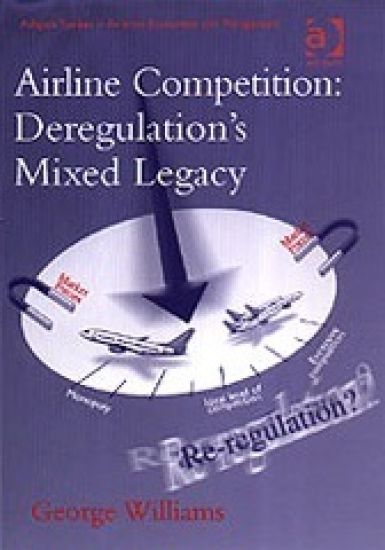
Airline Competition: Deregulation's Mixed Legacy

Airline Competition: Deregulation's Mixed Legacy

George Williams

Ashgate Publishing Limited
2002
sidottu
The advantages of airline competition to consumers are clearly apparent. Lower fares, greater choice, more frequent flights and a wider range of available services have all been evident when the entry of a new competitor has occurred. In many instances however, after an initial, relatively short-lived, period of aggressive competition the new entrant has either gone bankrupt or found a less stressful existence co-operating in some manner with the incumbent. In this wide-ranging book, the author looks at the competitive arena in the post-regulation era and especially focusses on deregulation’s legacy; globalization in a bilateral world breaking the link between nationality and airlines. The book is of special interest to those members engaged in the Airline Industry, Regulatory Authorities and Government Departments of Transport and Industry. It will be of value to academic specialists in transport economics and public policy; MSc students and Institutes of Transport; pressure groups and the Travel and Tourism Industry.
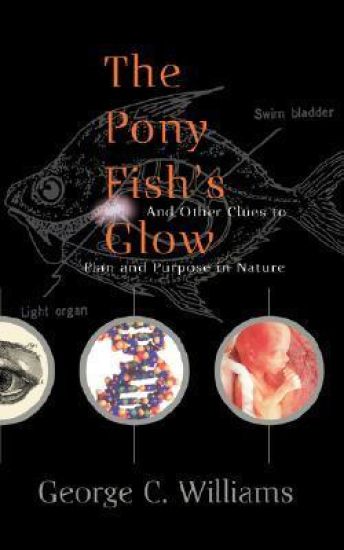
The Pony Fish's Glow

The Pony Fish's Glow

George Williams

Basic Books
1998
pokkari
We may regard ourselves as the most advanced species on the planet, but have we really reached our optimum design? Isn't there always room for improvements? Before you answer, let noted evolutionary biologist George C. Williams remind you of both the exquisite adaptations and absurd maladaptations nature has bestowed upon us, the self-proclaimed "pinnacle of evolution." Picking up where Darwin left off, Williams combines philosophical perspective and scientific method to provide a foundation for the answers to some fascinating questions. He explains why our bodies have to deteriorate so disastrously with old age. He gives us logical reasons to explain why we crave foods like sugar and fat that have been proven time and again to be detrimental to our health. And Williams single-handedly deflates our Homo sapiens sapiens ego with such insights as: Our eyesight,it may seem superior, but not when compared to that of the invertebrate squid, whose eye has developed over time to prove more efficient than ours. And wouldn't it make more sense to have a third eye, located on the back of the head? We could have stereoscopic vision in front and rear-vision warning us of danger sneaking up behind. Rear-view mirrors would become a thing of the past. And why stop at three eyes? This fascinating new book is markedly different from all previous work on evolutionary biology. Using the pony fish and its luminescent abdomen as the perfect evolutionary mystery, Williams explores the intricacies of nature's designs. Rather than telling us how or why the pony fish got its light, Williams explains the functional reasons why the pony fish keeps its light. He also explains why our species keeps arbitrary or malfunctioned features like the reproductive and excretory systems'sharing of parts. George C. Williams, one of today's most qualified evolutionary biologists, has written an important, entertaining, and thought-provoking addition to a science that has captivated the world for almost 150 years.
The Airline Industry and the Impact of Deregulation
In the fast-changing theatre of air transportation, the strategic development of airlines and the operating economics of scheduled airline services have been transformed, following the profound impact of US deregulation. The lessons gleaned from the US experience, including effective ways of constraining rivals, have quickly been adopted by carriers facing the opening up to competition of their own local markets. In addition, in response to the hunt by the successful US survivors for further international traffic, carriers have been forced to emulate certain tactics adopted by these megacarriers, virtually irrespective of their own government’s regulatory stance. The economics of the sector, particularly with regard to revenue generation, has resulted in increased market concentration. In the longer term, prospects for competition remain unclear, given the likely existence of only a small number of similarly endowed, globally alligned megacarriers. This book explores the impact of deregulation policies on key areas of the airline industry, analyzes the response of incumbent carriers to economic freedom and examines whether or not it is possible to devise a pro-competitive regulatory strategy for this sector. The author provides the reader with a clear explanation as to: ¢ why airline deregulation policies have produced a number of unanticipated outcomes; ¢ why low-cost new entrants have been unable to survive under deregulation; ¢ why the impact of airline deregulation has differed between the USA and Western Europe. Using this analysis as a basis, he explores the future development of the sector, indicating the likely future trends towards globalization. He also argues that a competitive marketplace is not a guaranteed outcome of full deregulation and suggests an alternative approach. The book is of special interest to those members engaged in the airline industry, regulatory authorities and government departments of transport and industry. It wil