Kirjojen hintavertailu – 12 903 725 kirjaa ja 27 kauppaa

Kirjailija

Georgios Varouxakis

Kirjat ja teokset yhdessä paikassa: 8 kirjaa, julkaisuja vuosilta 2002–2025, suosituimpiin kuuluu Mill on Nationality. Vertaile teosten hintoja ja tarkista saatavuus suomalaisista kirjakaupoista.

8 kirjaa

Kirjojen julkaisuvuodet: 2002–2025.

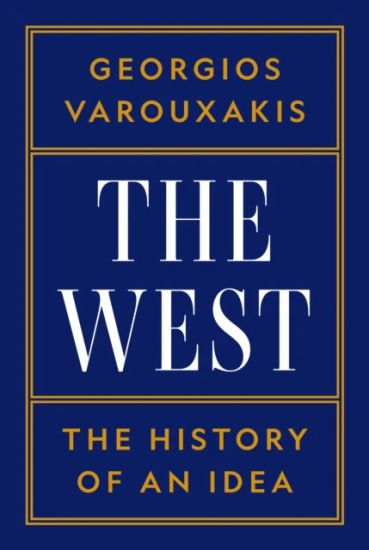
The West

The West

Georgios Varouxakis

PRINCETON UNIVERSITY PRESS
2025
sidottu

Halvin toimitettuna 30,40 €

A comprehensive intellectual history of the idea of the WestHow did “the West” come to be used as a collective self-designation signaling political and cultural commonality? When did “Westerners” begin to refer to themselves in this way? Was the idea handed down from the ancient Greeks, or coined by nineteenth-century imperialists? Neither, writes Georgios Varouxakis in The West, his ambitious and fascinating genealogy of the idea. “The West” was not used by Plato, Cicero, Locke, Mill, or other canonized figures of what we today call the Western tradition. It was not first wielded by empire-builders. It gradually emerged as of the 1820s and was then, Varouxakis shows, decisively promoted in the 1840s by the French philosopher Auguste Comte (whose political project, incidentally, was passionately anti-imperialist). The need for the use of the term “the West” emerged to avoid the confusing or unwanted consequences of the use of “Europe.” The two overlapped, but were not identical, with the West used to differentiate from certain “others” within Europe as well as to include the Americas. After examining the origins, Varouxakis traces the many and often astonishingly surprising changes in the ways in which the West has been understood, and the different intentions and consequences related to a series of these contested definitions. While other theories of the West consider only particular aspects of the concept and its history (if only in order to take aim at its reputation), Varouxakis’s analysis offers a comprehensive account that reaches to the present day, exploring the multiplicity of current, and not least, prospective future meanings. He concludes with an examination of how, since 2022, definitions and membership of the West have been reworked to consider Ukraine, as the evolution and redefinitions continue.
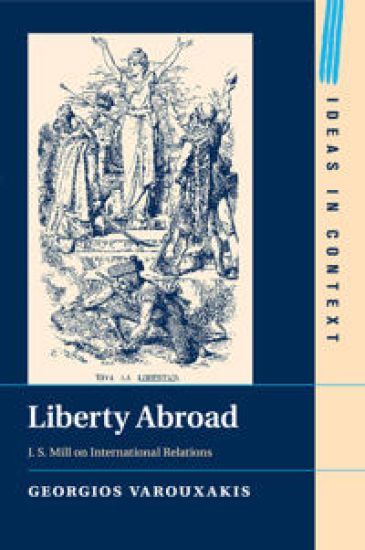
Liberty Abroad

Liberty Abroad

Georgios Varouxakis

Cambridge University Press
2017
pokkari
John Stuart Mill (1806–73) is widely regarded as the pre-eminent thinker of the liberal tradition; and yet because his views on international relations cannot be traced in any particular book or essay, his political thought remains largely misunderstood. Liberty Abroad is the first comprehensive, critical study which brings together all of John Stuart Mill's extensive contributions with particular attention to the historical contexts in which they were produced, as well as the political and philosophical preoccupations that prompted them, and how they were received among his contemporaries. A leading Mill scholar, Dr Georgios Varouxakis combines an extraordinary command of Mill's varied and extensive writings with a meticulous mastery of a range of Victorian controversies and thinkers to give a full, subtle evaluation of a major aspect of Mill's thought. This definitive study offers a major contribution to an area of increasing scholarly interest: the history of international political thought.
Mill on Nationality

Mill on Nationality

Georgios Varouxakis

Routledge
2013
nidottu
John Stuart Mill's thought has been central in recent (as well as older) works of political theory discussing the relationship between liberal democratic politics and nationality or nationalism -- which is far from surprising, given his undisputed influence on liberal attitudes towards nationality from the 1860s to the present. This book provides the first thorough critical study of the attitude of this pillar of the liberal tradition towards nationality, nationhood, patriotism, cosmopolitanism, intervention/non-intervention, and international politics more generally. Based on exhaustive research in a great range or writings by Mill, as well as by his contemporaries and later students, it establishes for the first time clearly and subtly where exactly Mill stood with regard to nationhood, nationalism, patriotism, cosmopolitanism, national self-determination, intervention/non-intervention and other important issues in international ethics. It thus exposes and challenges all sorts of misconceptions, half-truths, or myths surrounding Mill's views on, and attitude towards, nationality and related issues in a vast literature from the mid-nineteenth to the beginning of the twenty-first century. At the same time, it offers a timely contribution to contemporary debates among political theorists on the relationship between liberal democratic values and nationalism, patriotism and cosmopolitanism, not least through its articulation of a distinct sense in which patriotism and cosmopolitanism can be compatible and mutually reinforcing (based on Varouxakis's interpretation of Mill's thought on this question). The reader will find critical discussions of the pronouncements on some of the issues examined (or on Mill's contributions to them) of some of the most important late-twentieth-century political theorists as well as of contemporaries or near-contemporaries of Mill.
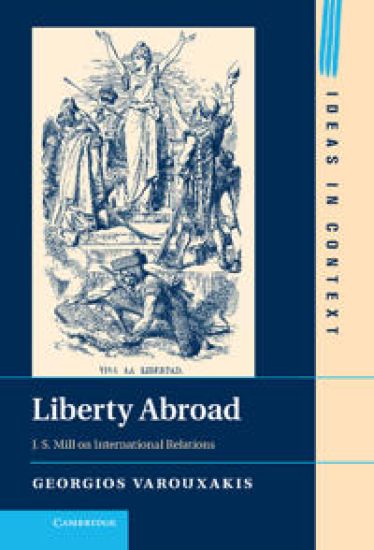
Liberty Abroad

Liberty Abroad

Georgios Varouxakis

Cambridge University Press
2013
sidottu
John Stuart Mill (1806–73) is widely regarded as the pre-eminent thinker of the liberal tradition; and yet because his views on international relations cannot be traced in any particular book or essay, his political thought remains largely misunderstood. Liberty Abroad is the first comprehensive, critical study which brings together all of John Stuart Mill's extensive contributions with particular attention to the historical contexts in which they were produced, as well as the political and philosophical preoccupations that prompted them, and how they were received among his contemporaries. A leading Mill scholar, Dr Georgios Varouxakis combines an extraordinary command of Mill's varied and extensive writings with a meticulous mastery of a range of Victorian controversies and thinkers to give a full, subtle evaluation of a major aspect of Mill's thought. This definitive study offers a major contribution to an area of increasing scholarly interest: the history of international political thought.
Contemporary France

Contemporary France

David Howarth; Georgios Varouxakis

Hodder Education
2003
nidottu
At least since the French Revolution, France has the peculair distinction of simultaneously fascinating, charming and exasperating its neighbours and foreign observers. Contemporary France provides an essential introduction for students of French politics and society, exploring contemporary developments while placing them in a deeper historical, intellectual, cultural and social context that makes for insightful analysis. Thus, chapters on France's economic policy and welfare state, its foreign and European policies and its political movements and recent institutional developments are informed by an analysis of the country's unique political and institutional traditions, distinct forms of nationalism and citizenship, dynamic intellectual life and recent social trends. Summaries of key political, economic and social movements and events are displayed as exhibits.
Mill on Nationality

Mill on Nationality

Georgios Varouxakis

Routledge
2002
sidottu
John Stuart Mill's thought has been central in recent (as well as older) works of political theory discussing the relationship between liberal democratic politics and nationality or nationalism -- which is far from surprising, given his undisputed influence on liberal attitudes towards nationality from the 1860s to the present. This book provides the first thorough critical study of the attitude of this pillar of the liberal tradition towards nationality, nationhood, patriotism, cosmopolitanism, intervention/non-intervention, and international politics more generally. Based on exhaustive research in a great range or writings by Mill, as well as by his contemporaries and later students, it establishes for the first time clearly and subtly where exactly Mill stood with regard to nationhood, nationalism, patriotism, cosmopolitanism, national self-determination, intervention/non-intervention and other important issues in international ethics. It thus exposes and challenges all sorts of misconceptions, half-truths, or myths surrounding Mill's views on, and attitude towards, nationality and related issues in a vast literature from the mid-nineteenth to the beginning of the twenty-first century. At the same time, it offers a timely contribution to contemporary debates among political theorists on the relationship between liberal democratic values and nationalism, patriotism and cosmopolitanism, not least through its articulation of a distinct sense in which patriotism and cosmopolitanism can be compatible and mutually reinforcing (based on Varouxakis's interpretation of Mill's thought on this question). The reader will find critical discussions of the pronouncements on some of the issues examined (or on Mill's contributions to them) of some of the most important late-twentieth-century political theorists as well as of contemporaries or near-contemporaries of Mill.