Kirjojen hintavertailu – 12 903 724 kirjaa ja 27 kauppaa
Kirjailija
Gerald A. John Kelly
Kirjat ja teokset yhdessä paikassa: 8 kirjaa, julkaisuja vuosilta 2011–2016, suosituimpiin kuuluu The Copula in Classification Sentences: Modern Irish Paradigms for Learners. Vertaile teosten hintoja ja tarkista saatavuus suomalaisista kirjakaupoista.
With comprehensive indexing and 20 black & white illustrations, this revised standard paperback edition explores the genealogical traditions of the MacMahon family of Thomond (North Munster, especially Co. Clare) for centuries BEFORE they took the surname Mac Mathghamhna Thuadhmhumhan ('Son of Mathghamhain of Thomond'). This name is also spelled McMahon and Mahon in English. Once considered lost, these are the genealogical secrets of the Celtic Iron Age and Migration Period. To tell this story, the author has accessed the mass of information preserved in the Irish Language since the 7th century in Ireland's most important genealogical manuscripts. These precious documents had been hidden away in a handful of collections since the physical and cultural genocide of the Gaeil in the 17th century, and were therefore inaccessible until recently to almost all Irish, their diaspora, and their genealogists. Happily, these Irish Language manuscripts have finally been set in type and published after waiting between 350 and 850 years. Because this book uses and translates into English this ancient but newly-available genealogical tradition as it relates to the MacMahon family of Thomond, it is the first of its kind about this family in the modern era. Caveat - Mac Mathghamhna ('MacMahon') is the surname of two, distinct, unrelated sloinnte (extended, surnamed families): MacMahon of Thomond and MacMahon of Monaghan. This book examines the pre-surname genealogies, history, myth and Brehon Law of the MacMahons of Thomond. Physical description - This is the revised standard paperback edition of 218 pages, 7 X 10 inch format, including 20 black & white illustrations and comprehensive indexing.
With comprehensive indexing and 22 black & white illustrations, this revised standard paperback edition explores the genealogical traditions of the O'Brien family of Thomond for centuries BEFORE they took the surname Briain. Once considered lost, these are the genealogical secrets of the Celtic Iron Age and Migration Period. To tell this story, the author accessed the mass of information preserved in the Irish Language since the 7th century in Ireland's most important genealogical manuscripts. These manuscripts had been hidden away in a handful of collections since the physical and cultural genocide of the Gaeil in the 17th century, and were therefore inaccessible until recently to almost all Irish, their diaspora, and their genealogists. Happily, these Irish Language manuscripts have finally been set in type and published after waiting between 350 and 850 years. Because this book uses and translates into English this ancient but newly-available genealogical tradition, it is the first of its kind in the modern era about this kinship group. Physical description: the Standard Paperback Edition of 222 pages, 7 X 10 inch format, including 22 black & white illustrations and comprehensive indexing.
With comprehensive indexing and 20 black & white illustrations, this revised standard paperback edition explores the genealogical traditions of the MacDonnell family of Thomond (North Munster, especially Co. Clare) for centuries BEFORE they took the surname Mac Domhnaill na Darach ('Son of Domhnall of The Oak'). Once considered lost, these are the genealogical secrets of the Celtic Iron Age and Migration Period. To tell this story, the author has accessed the mass of information preserved in the Irish Language since the 7th century in Ireland's most important genealogical manuscripts. These precious documents had been hidden away in a handful of collections since the physical and cultural genocide of the Gaeil in the 17th century, and were therefore inaccessible until recently to almost all Irish, their diaspora, and their genealogists. Happily, these Irish Language manuscripts have finally been set in type and published after waiting between 350 and 850 years. Because this book uses and translates into English this ancient but newly-available genealogical tradition as it relates to the MacDonnell family of Thomond, it is the first of its kind about this family in the modern era. Caveat - Mac Domhnaill ('MacDonnell') is the surname of three, distinct, unrelated sloinnte (extended, surnamed families): Mac Domhnaill na Darach of Thomond, Mac Domhnaill of Fermanagh, and MacDomhnaill of the Glens of Antrim. This book examines the pre-surname genealogies, history, myth and Brehon Law of the MacDonnells of Thomond. Physical description - This is the revised standard paperback edition of 218 pages, 7 X 10 inch format, including 20 black & white illustrations and comprehensive indexing.
This is a dual-language book with Irish and English on facing pages. It is also a detailed examination and explanation of how to use the Irish copula for construction of classification sentences. Sections include a glossary of grammatical terms, plus chapters on the use of the noun and copula for classification, the adjective and copula for classification, the preposition and copula for classification, classification questions, and much more. Each section begins with related rules and analysis of Irish classification sentences - their ainmn (subject), faisn is (information), and briathar (the copula, which is often left implicit). But this is only the starting point. Recognizing that humans more easily learn language by example, each section includes a full complement of paradigms. Most sections also include a volume of additional examples drawn from Irish folklore, seanfhocail (proverbs), and literature.
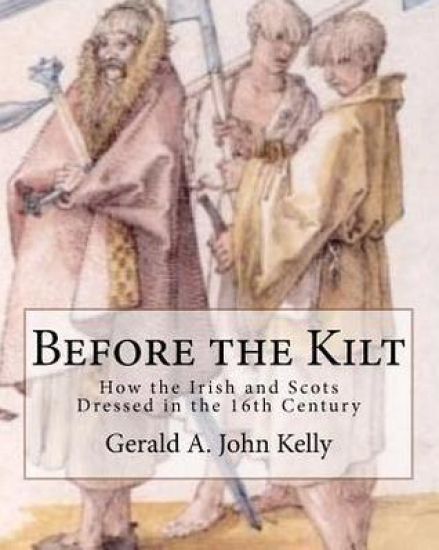
With 22 full-color illustrations and 25 black & white illustrations, all from the 16th century, the purpose of this book is to use 16th century sources to provide in a single volume the most comprehensive and accurate description so far available of 16th century Irish Gaelic and Scottish Gaelic clothing. Accordingly, this book presents and examines the watercolors, woodcuts, and manuscript illuminations of Lucas de Heere, Albrecht D rer, the Ashmoleum Museum, Raphael Holinshed, John Derrick, and more. It also presents and examines the reports on Gaelic dress written in the 16th century by Nicolay d'Arfeville, John Lesley, Robert Lindsay of Pitscottie, John Major, Jean de Beaugu , George Buchanan, Lughaidh Cl irigh, and William Camden. As a result of this extensive process of compilation and analysis, the author specifically identifies the most accurate 16th century illustrations of Irish Gaelic and Scottish Gaelic clothing. He also presents damning evidence that the most widespread images (and long considered the most important images) of 16th century Irish men and women are, to a large degree, a fraud perpetrated by a single 16th century propagandist - John Derrick. As an added bonus, the author includes a full chapter devoted to the law, custom, tradition, and worldview of the Irish Gaeil and Scottish Gaeil who wore these clothes. Physical description: the Deluxe Paperback Edition of 124 pages, 8 X 10 inch format, including 47 illustrations of which 22 are in full color. Original Title and Date of Publication: How the Irish and Scots Dressed in the 16th Century, October 2010