
Kirjailija
Gerard Chaliand
Kirjat ja teokset yhdessä paikassa: 9 kirjaa, julkaisuja vuosilta 2005–2025, suosituimpiin kuuluu Miroirs De L'amour. Vertaile teosten hintoja ja tarkista saatavuus suomalaisista kirjakaupoista.
Nimi esiintyy myös muodoissa: Gérard Chaliand
9 kirjaa
Kirjojen julkaisuvuodet: 2005–2025.


Une Anthologie Universelle
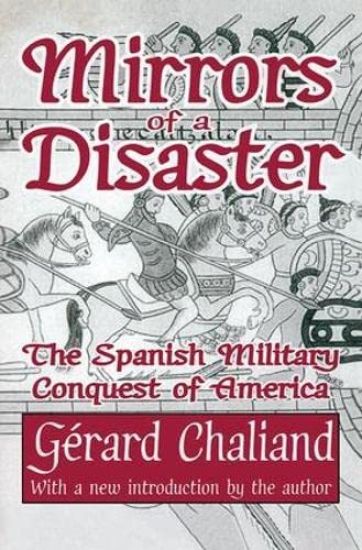
In Mirrors of a Disaster, Gérard Chaliand narrates the major events that followed the Spanish conquest of Mexico and Peru with the scope and rhythm of an epic poem. He seeks to make meaningful the strict chronicle of a conquest through those who lived it. Human details and the broader political background bring to life one of history's great tragedies. A new introduction by the author is included in this paperback edition. The comprehensive work is organized into three parts: "The Conquest of Mexico," "The Conquest of Guatemala and Yucatan," and "The Conquest of Peru." In each section, the author provides a summary prior to, in many cases, a day-by-day account of the events as they unfolded. Enriched by significant contemporary documents Mirrors of a Disaster relates the many facets of the conquest, presenting the Indians' perception of their defeat by the Spaniards, the conquerors' narratives of the same events, and the author's own retelling of a tragedy in which, he says, "the vanquished could not, ultimately, but be vanquished."

In 1930, the great Spanish philosopher Jose Ortega y Gasset set forth a program for reforming the modern Spanish university. Aware that the missions of the university are many and often competing, Ortega built his program around a conception of a "general culture" that knows no national boundaries or time limits and could fit into any national system of higher education. His ideas are especially pertinent to contemporary debate in America over curriculum development and the purpose of education. In this volume Ortega sought to answer two essential questions: what is the knowledge most worth knowing by all students and what is the function of the university in a modern democracy? Basing his answers on his own deep personal culture and an extensive knowledge of the various European university systems, Ortega defined four primary missions: the teaching of the learned professions, the fostering of scientific research, training for political leadership, and finally the creation of cultured persons with the ability to make intellectual interpretations of the world. Ortega's understanding of "general culture" is set out in great detail here. He meant an active engagement in ideas and issues that were both historical and contemporary. His concern is with the classical problems of justice, the good society, who should rule, and the responsibilities of citizenship. In his informative and brilliant introduction to this new edition, Clark Kerr, a lifetime student of Ortega's work, analyzes Ortega's ideas in their historical context and speculates on how the great issues he dealt with here can be made contemporary for modern students facing the challenges and uncertainties of the twenty-first century. Mission of the University and its new opening essay will be of interest to educationists, social scientists, and above all the students of this era.
A Global History of War
Gérard Chaliand; R. Bin Wong
University of California Press
2014
pokkari
Halvin toimitettuna 38,40 €
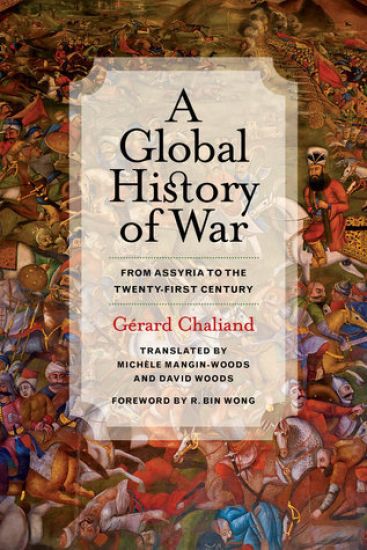
While many books examine specific wars, few study the history of war worldwide and from an evolutionary perspective. A Global History of War is one of the first works to focus not on the impact of war on civilizations, but rather on how civilizations impact the art and execution of war. World-renowned scholar Gerard Chaliand concentrates on the peoples and cultures who have determined how war is conducted and reveals the lasting historical consequences of combat, offering a unique picture of the major geopolitical and civilizational clashes that have rocked our common history and made us who we are today. Chaliand's questions provoke a new understanding of the development of armed conflict. How did the foremost non-European empires rise and fall? What critical role did the nomads of the Eurasian steppes and their descendants play? Chaliand illuminates the military cultures and martial traditions of the great Eurasian empires, including Turkey, China, Iran, and Mongolia. Based on fifteen years of research, this book provides a novel military and strategic perspective on the crises and conflicts that have shaped the current world order.

While many books examine specific wars, few study the history of war worldwide and from an evolutionary perspective. A Global History of War is one of the first works to focus not on the impact of war on civilizations, but rather on how civilizations impact the art and execution of war. World-renowned scholar Gerard Chaliand concentrates on the peoples and cultures who have determined how war is conducted and reveals the lasting historical consequences of combat, offering a unique picture of the major geopolitical and civilizational clashes that have rocked our common history and made us who we are today. Chaliand's questions provoke a new understanding of the development of armed conflict. How did the foremost non-European empires rise and fall? What critical role did the nomads of the Eurasian steppes and their descendants play? Chaliand illuminates the military cultures and martial traditions of the great Eurasian empires, including Turkey, China, Iran, and Mongolia. Based on fifteen years of research, this book provides a novel military and strategic perspective on the crises and conflicts that have shaped the current world order.
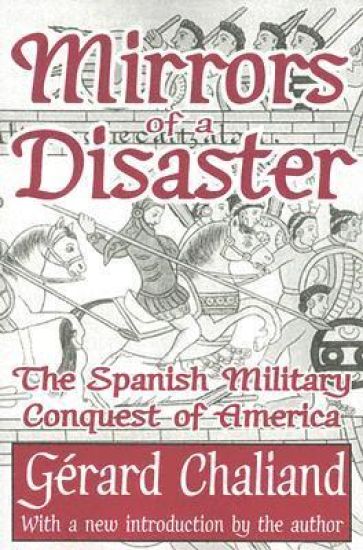
In Mirrors of a Disaster, Gérard Chaliand narrates the major events that followed the Spanish conquest of Mexico and Peru with the scope and rhythm of an epic poem. He seeks to make meaningful the strict chronicle of a conquest through those who lived it. Human details and the broader political background bring to life one of history's great tragedies. A new introduction by the author is included in this paperback edition. The comprehensive work is organized into three parts: "The Conquest of Mexico," "The Conquest of Guatemala and Yucatan," and "The Conquest of Peru." In each section, the author provides a summary prior to, in many cases, a day-by-day account of the events as they unfolded. Enriched by significant contemporary documents Mirrors of a Disaster relates the many facets of the conquest, presenting the Indians' perception of their defeat by the Spaniards, the conquerors' narratives of the same events, and the author's own retelling of a tragedy in which, he says, "the vanquished could not, ultimately, but be vanquished."