

Kirjailija
Gerd De Bruyn
Kirjat ja teokset yhdessä paikassa: 12 kirjaa, julkaisuja vuosilta 2000–2020, suosituimpiin kuuluu Bremens letzte Jahre. Vertaile teosten hintoja ja tarkista saatavuus suomalaisista kirjakaupoista.
12 kirjaa
Kirjojen julkaisuvuodet: 2000–2020.

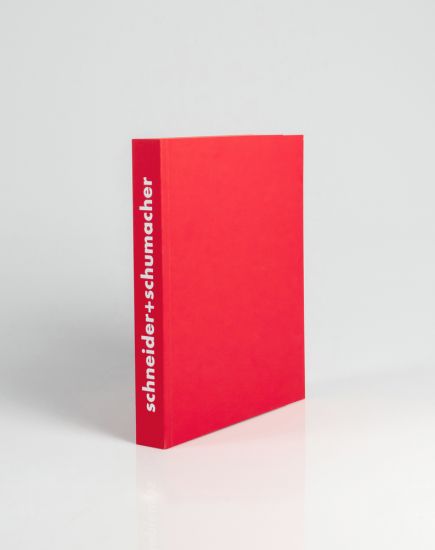
schneider + schumacher
Peter Cook; Gerd De Bruyn; Ulf Erdmann Ziegler; Klaus Klemp; Arno Lederer; Franziska Nori; Matthias Wagner K; Hans Zippert; Christian Holl
DCV
2019
sidottu
A review and prospect of the work of the Frankfurt-based architectural office on the occasion of its thirtieth anniversary. schneider + schumacher covers issues and values which have determined their work over the course of the thirty years since the founding of the architectural office and will continue to do so. Renowned authors shed light on the respective concepts and their significance for the history of schneider + schumacher, while the office's works are presented in large-format illustrations--including the extension to the St del Museum in Frankfurt, the Siegerland motorway church, and the new pavilion of the Frankfurt Book Fair. In architectural practice, it becomes clear how Till Schneider, Michael Schumacher, and their team implement their thematic and theoretical orientation into their working methods, design approach, and understanding of architecture.






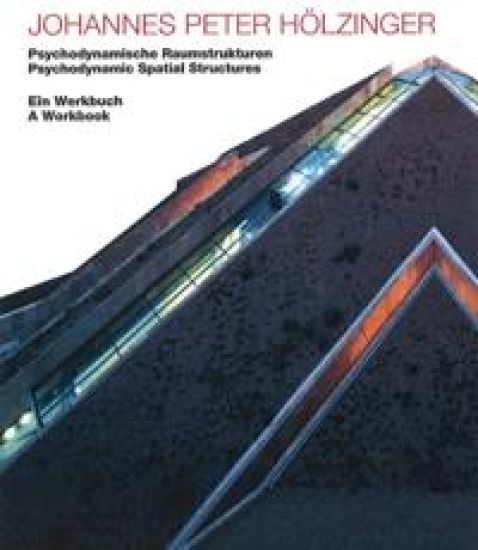
Johannes Peter Holzinger
Gerd De Bruyn; Peter Cachola Schmal; Andreas Denk; Yorck Forster; Johannes Peter Holzinger; Gerd Weiss
Edition Axel Menges
2012
sidottu
Text in English & German. Johannes Peter Hölzinger studied architecture at the Städelschule in Frankfurt am Main from 1954 to 1957. After a residency fellowship at the Deutsche Akademie Villa Massimo in Rome he founded a "planning association for new forms of the environment" in 1965 together with Zero artist Hermann Goepfert, who has since died. One of the most successful results of his work with Goepfert was a new design for the Schloßpark in Karlsruhe on the occasion of the Bundesgartenschau in 1967, which won a major German architectural prize, the Hugo-Häring-Preis. From 1991 until his retirement in 2002 Hölzinger directed the art and public-space course at the Akademie der bildenden Künste in Nuremberg. Individualistic and oppositional in comparison to other post-World War II architectural achievements, the design of Hölzinger's buildings is very distinctive. The playful elements of Postmodernism are as alien to his work as the functionalism of New Building. Because of his association with Hermann Goepfert, Hölzinger is much more closely connected with the art scene of his time. The integration of art and architecture is a unique feature of his buildings. If we try to assign a category to this "object architecture" (a term he coined himself), we will find less overlap with architecture than with fine art. From the very beginning Hölzinger saw architecture as an artistic discipline. Light kinetics offered him important new perspectives. Lighting design and the resulting colour changes of white walls play a vital role in his work.
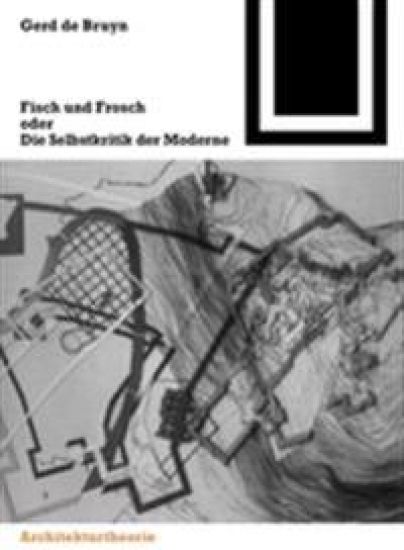
Fisch und Frosch oder die Selbstkritik der Moderne
Gerd de Bruyn
Birkhauser
2001
isokokoinen pokkari
Gerd de Bruyn widerspricht der ermüdenden Rede von der zweiten und dritten Moderne. Die Jagd nach stets neuen Etikettierungen, so lautet seine These, verdanke sich allein der Tatsache, dass der in den dreißiger Jahren bei Hugo Häring, Hans Scharoun und Bruno Taut einsetzende Prozess der Selbstkritik niemals aus dem Schatten der »weißen Götter« - der Propagandisten des International Style, ihrer Nachfolger und ihrer postmodernen Widersacher - zu treten vermochte. Es gehört zu den genuinen Aufgaben zeitgenössischer Architekturtheorie, die Denkbewegungen und die philosophische Neugier, mit denen sich die moderne Selbstkritik »zwischen die Stühle« manövrierte, zu rekonstruieren und auf ihre Aktualität hin zu befragen. Anhand prägnanter Beispiele versucht dieses Buch die Genese der modernen Selbstkritik zu skizzieren.
2016 New editorship Elisabeth Blum, Jesko Fezer, Günther Fischer, Angelika Schnell Not unjustly referred to as legendary, this series of books on the history and theory of architecture and urban development was founded in 1963 by Ulrich Conrads, who was joined by Peter Neitzke as a co-editor of the series in the early 1980s. Now numbering over 150 titles, it is the most comprehensive German-language book series covering these fields. Following the deaths of the two longtime editors Ulrich Conrads (2013) and Peter Neitzke (2015), a new editorial committee was formed to continue their work: Elisabeth Blum, Jesko Fezer, Günther Fischer and Angelika Schnell. As the future editors of this series, it is our aim to maintain the course set by our forerunners. The series has fulfilled its original aim of taking stock of the constructional and urban planning ideas and realizations formulated and achieved over the twentieth century in exemplary fashion. The Bauwelt Fundament series actually represents a history of ideas in the fields of planning and building that extends from the beginning of the twentieth century into the present. The second objective of the series, one that is anchored in its very name, will also continue to guide the development of the series, namely the publication of foundational thought – authoritative and fundamental – rather than passing opinion, of theses and polemics relating to the burning architectural and urban planning themes of the time. Penetrating complex interrelationships and probing them with systematic analysis provides the prerequisite for fruitful discourse and ongoing debate. As a forum for such discourses and contributions, the Bauwelt Fundamente series is maintaining its focus on the areas of architecture and urbanism, supplementing it with the always necessary historical investigation of important questions and texts and its extension into other cultural and social fields. A strong international orientation and the desire for more female authors are self-evident in such a context. The original graphic design approach taken by Helmut Lortz to the series is being maintained. As is fitting for a working library, Bauwelt Fundamente titles remain simply designed, using black and white for the logo, the images on the front and back, and the eleven-line summary of the volume’s contents. This is indicative of the broad orientation of Bauwelt Fundamente to all those interested in the cultural and social development that provides the context for the creation of cities, houses and other objects, which in turn create contexts for the world. "Architects, it is said – or hoped – have always been interested in the world beyond the boundaries of their profession." (1) (1) Peter Neitzke, manuscript of his address Nicht mit dem Rücken zur Gesellschaft (Not with one’s back to society) given to mark the fiftieth anniversary of Bauwelt Fundamente in Berlin, 2013.