

Kirjailija
Gerhard Wagner
Kirjat ja teokset yhdessä paikassa: 20 kirjaa, julkaisuja vuosilta 1990–2024, suosituimpiin kuuluu Kommentar Zur Zivilprozessordnung. Vertaile teosten hintoja ja tarkista saatavuus suomalaisista kirjakaupoista.
20 kirjaa
Kirjojen julkaisuvuodet: 1990–2024.



Digitization, blockchain technology and Artificial Intelligence (AI) are fundamentally changing the fabric of societies, influencing lawmaking, legal scholarship and legal practice. The authors of this volume investigate the real-world developments that can be observed in this process, how established legal doctrines are being challenged, the regulatory issues societies face as a result, and how AI can be used in lawmaking and adjudication. By analyzing these four interrelated areas, the authors discuss conceptual issues of regulating AI, examine the impact of new technologies on commercial transactions and corporate governance, investigate civil liability rules for AI applications and explore key features and problems of digital dispute resolution. A recurring theme is that although "Law by Algorithm" might massively increase overall societal welfare, it runs the significant risk of benefitting only a few. To make it work for the good of all is a mammoth task - and one this volume hopes to contribute to. "AI's capabilities have made enormous recent leaps; many expect it to transform how the economy operates. In particular, activities relying on human knowledge to create value, insulated until now from mechanisation, are facing dramatic change. This is impacting the legal system in two directions simultaneously: the automation of processes, and the development of legal governance for automation. Eidenmueller and Wagner here present a thought-provoking and insightful treatment of a number of key issues that are engaged. It will be essential reading for lawyers, scholars, and policymakers wishing to understand and participate in these developments." (John Armour) „AI has the potential for ground-breaking changes to our economy and society, but also to its private law framework. This book provides an extremely thought-provoking contribution to the thinking towards the private law for the digital economy.“ (Dirk Staudenmayer)
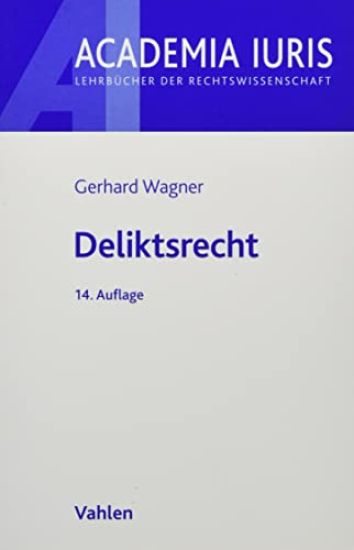


Im Zivilprozessrecht wird die Vertragsfreiheit in Frage gestellt, obwohl sich verfahrensbezogene Vereinbarungen in der Praxis großer Beliebtheit erfreuen. Tatsächlich erweist sich die Frage nach der Zulässigkeit von Prozessverträgen als ein Problem der Vertragsgerechtigkeit, das im Rahmen der allgemeinen Rechtsgeschäftslehre zu lösen ist. Das öffentliche Interesse an einer gut funktionierenden Ziviljustiz setzt der verfahrensrechtlichen Privatautonomie zwar Grenzen, lässt jedoch einen breiten Spielraum. Prozessverträge stärken die Effektivität des Zivilprozesses und damit die Wettbewerbsfähigkeit der staatlichen Gerichte. Die Arbeit ist erstmals im Jahr 1998 und damit vor dem Boom um Mediation und Alternative Streitbeilegung erschienen und legt die Grundlagen für Schiedsverträge, Mediations-, Schlichtungs- und sonstige ADR-Vereinbarungen. Sie will dem Prozessvertragsrecht zu dem Maß an normativer Konsistenz und dogmatischer Geschlossenheit verhelfen, das seiner praktischen Bedeutung entspricht.


Introduction to German Law provides an introduction to the most important areas of German law for foreign readers, be they practitioners, scholars or students. It is thirteen years since the appearance of the successful second edition of this convenient English-language introduction to the law of Germany. This new edition covers the substantial changes and innovations that have occurred during that period, encompassing the pervasive impacts of European Union law and globalization, significantly increased activity of the German legislature in every area addressed in this volume, and numerous decisions which added important changes to the legal landscape in Germany. What's in this book: With fifteen lucid chapters written by academic experts in their respective fields of law, as well as detailed bibliographies, this is the ideal starting point for research whenever a question of German law must be answered. The authors clearly explain the legal concepts, customs and rules arising from such basic elements as the following: characteristic problems of German legal unity; principles and practices of constitutional law; administrative law and procedure; the German Commercial Code; formation and conduct of corporations and partnerships; contracts; tort liability; property rights; family law; succession and inheritance; labor and employment; issues of private international law; courts and civil procedure; and the penal code and criminal procedure. This edition provides an authoritative description of all issues likely to emerge in the course of normal application of German law in any context and presents an overview of the basic concepts and rules shaping German law. How this will help you: With no other competing book on the market, this edition will be welcomed by practitioners and academics with an interest in the legal system of Germany. This will be a unique publication as a starting point for more in-depth research on the German law covering all major legal disciplines.
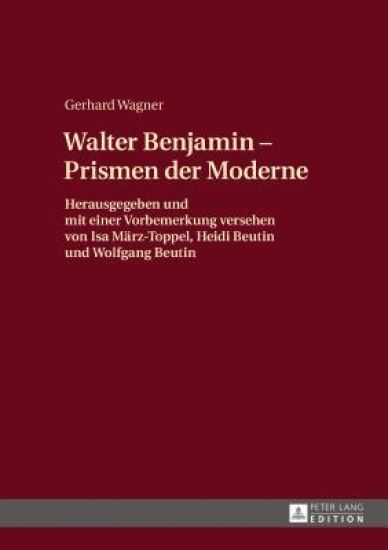
Der Autor widmet diese Studie dem komplexen literarischen Werk Walter Benjamins. Die einzelnen Kapitel des Bandes zeichnen den Einfluss der Epochen nach. Ausgehend von alteren avantgardistischen Traditionen der Aufklarung, der Franzoesischen Revolution und des Vormarz bezieht Benjamin jungere Epochen des Nachmarz und der Jahrhundertwende um 1900 in seine Betrachtung ein, um sich mit den kunstlerischen Revolutionen seiner Epoche, der Weimarzeit, auseinanderzusetzen. Diese Revolutionen bedienen sich wiederum technischer Neuerungen, vor allem des Films. Die Vorstellung, dass literaturwissenschaftliche wie auch philosophische Forschungen die Einbeziehung des historischen und zeitgeschichtlichen Kontexts erfordern, erklart, warum der Verfasser bedeutende Autoren und Kunstler des 20. Jahrhunderts, wie etwa Siegfried Kracauer, Adolf Loos und Paul Klee wurdigt, deren Leistung sie in die Nahe Walter Benjamins ruckt. Als der Kulturphilosoph Gerhard Wagner im Herbst 2013 funfundsechzigjahrig verstarb, hinterliess er als sein Hauptwerk diese Monographie uber Walter Benjamin, an der er bis zuletzt gearbeitet hatte und die sich in seinem Nachlass fast vollendet vorfand.

Die Soziologie mit ihren vielen widerspr chlichen Positionen vermittelt den Eindruck der inneren Zerrissenheit, weil es ihr an einer facheinheitlichen wissenschaftstheoretischen Fundierung fehlt. Diese Studie legt den Grundriss einer konsensf higen Wissenschaftstheorie der Soziologie, die im Einklang steht mit den Erkenntnisfortschritten der Philosophie und anderer Wissenschaften, von der Physik bis hin zur Social Cognitive Neuroscience. In einer klaren Sprache formuliert, ist sie auch als systematische Einf hrung lesbar.

Revision des Verbraucher-acquis
Horst Eidenmüller; Florian Faust; Hans Christoph Grigoleit; Nils Jansen; Gerhard Wagner; Reinhard Zimmermann
Mohr Siebeck
2011
nidottu
Als die Europäische Kommission den CFR-Prozess initiierte, zielte sie damit insbesondere auf eine Revision des acquis communautaire im Bereich des Verbrauchervertragsrechts. Eine solche Revision hat jedoch bis heute nicht stattgefunden, weder in den Acquis Principles und dem DCFR noch im Vorschlag einer Verbraucherrechte-Richtlinie. Die Autoren des vorliegenden Bandes bemühen sich darum, dieses Defizit durch eine Analyse der Kernfragen zu beheben, die sich in diesem Zusammenhang stellen: Reichweite und Wirkung von zwingendem Recht, Kontrolle von Allgemeinen Geschäftsbedingungen, Widerrufsrechte, Rückabwicklung nach Widerruf, Informationspflichten. Dabei ist ihr Anliegen ein genuin rechtswissenschaftliches. Es geht um nachvollziehbare Begründungen, funktionale Adäquanz und Wertungskohärenz und um die Frage, wie Regeln formuliert sein sollten, um bestimmte rechtspolitische Ziele zu erreichen.

I seemingly had it all; The cars, the bikes, the boats, the houses. A beautiful wife who loved me and my own successful business. What could possibly be wrong.? Maybe the fact that I didn't take interest in any of it. I was lost in depression and didn't know why. So I drank and drank and drank. Sleep and alcohol seems my only refuge. Come with me through the looking glass and back again and see what I have found. It could possibly save your life. In this memoir, Wagner explores his substance abuse, shares his experiences, discusses what he's learned, examines the twelve-step program, and imparts the principles he believes in that help him to lead a joyful and productive life. From his birth in Germany, immigrating to the United States at age five, and surviving a volatile upbringing, Wagner highlights key events in his life and examines his descent into substance abuse and his journey back to sobriety. In "Tears of the Son, " Wagner relives some of his darkest days, but he shows how those experiences shaped him as a person and are helping him transform from just a human doing to a true human being.

I seemingly had it all; The cars, the bikes, the boats, the houses. A beautiful wife who loved me and my own successful business. What could possibly be wrong.? Maybe the fact that I didn't take interest in any of it. I was lost in depression and didn't know why. So I drank and drank and drank. Sleep and alcohol seems my only refuge. Come with me through the looking glass and back again and see what I have found. It could possibly save your life. In this memoir, Wagner explores his substance abuse, shares his experiences, discusses what he's learned, examines the twelve-step program, and imparts the principles he believes in that help him to lead a joyful and productive life. From his birth in Germany, immigrating to the United States at age five, and surviving a volatile upbringing, Wagner highlights key events in his life and examines his descent into substance abuse and his journey back to sobriety. In "Tears of the Son, " Wagner relives some of his darkest days, but he shows how those experiences shaped him as a person and are helping him transform from just a human doing to a true human being.

Die Zwischenprüfung im Bürgerlichen Recht
Uwe Diederichsen; Gerhard Wagner; Christoph Thole
C.H. BECK
2011
nidottu


Kommentar Zur Zivilprozessordnung
Martin Jonas; Paul Oberhammer; Herbert Roth; Friedrich Stein; Gerhard Wagner
Mohr Siebrek Ek
2003
Sidottu
Einleitung 1-40
Kollektives Umwelthaftungsrecht Auf Genossenschaftlicher Grundlage
Gerhard Wagner
Duncker Humblot
1990
nidottu