

Kirjailija
Germaine de Staël
Kirjat ja teokset yhdessä paikassa: 25 kirjaa, julkaisuja vuosilta 1987–2026, suosituimpiin kuuluu Delphine: Parties 1 à 3. Vertaile teosten hintoja ja tarkista saatavuus suomalaisista kirjakaupoista.
Nimi esiintyy myös muodoissa: Germaine De Stael
25 kirjaa
Kirjojen julkaisuvuodet: 1987–2026.
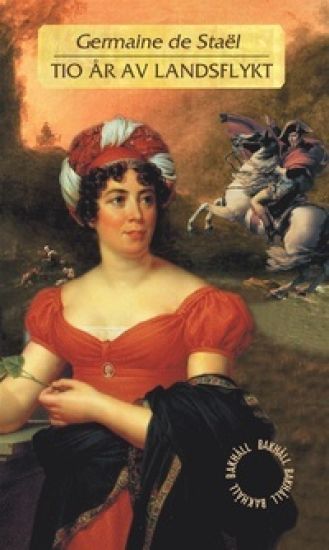
Germaine de Staël - eller madame de Staël som hon oftast kallas - var en starkt lysande centralgestalt i det kulturella och politiska livet i Napoleontidens Europa. Först fascinerades Napoleon av denna eldiga och osedvanligt verbala kvinna och försökte värva henne till sin stora stab av sammansvurna proselyter, sina lojala medarbetare, sina infiltratörer, sina politruker, men märkte snart att det var lönlöst att ens försöka. Det dröjde inte länge förrän deras inledande nyfikenhet på varandra hade förvänts i öppen fiendskap. Madame de Staël tvingades ut i den landsflykt som denna hennes självbiografiska bok handlar om. I översättning och med efterord av Anna Cabak Rédei.
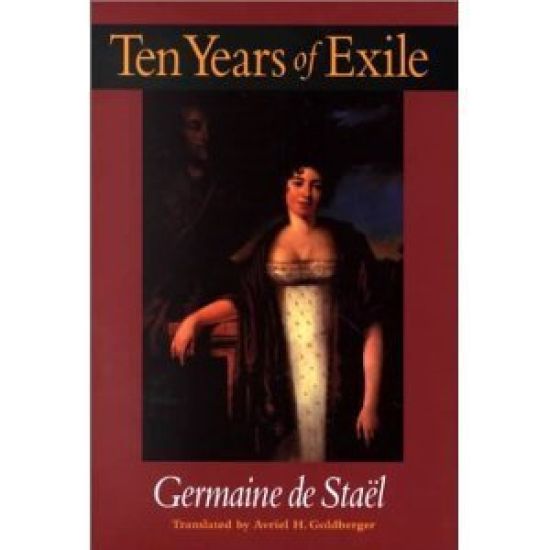
Capturing eloquent observations of the Napoleonic period's most politically outspoken woman, this edition of Dix Ann\u00e9es d\u00b4Exil is the powerful memoir of Germaine de Sta\u00ebl\u00b4s tumultuous years fleeing Napoleon. Translated by an award-winning scholar, Ten Years of Exile is the only unabridged English edition of this strong-minded and passionate woman\u00b4s personal and political journal. During the French Revolution, Mme. de Sta\u00ebl\u00b4s salon became a brilliant center of political and intellectual life. Sta\u00ebl herself helped to introduce Napoleon to French society, yet like other liberals in the Constitutional Club, she soon came to oppose the increasingly powerful general. He in turn banished her from Paris in 1803 for her liberal ideas. In exile, Sta\u00ebl continued to agitate against the new master of France. When Napoleon began his great Russian campaign, she fled across Austria and Poland to avoid his advancing armies. She arrived in Moscow only weeks ahead of Napoleon and then barely escaped to England. After Napoleon\u00b4s defeat, Sta\u00ebl returned to Paris and again received ministers, generals, and sovereigns in her revived salon. As the author of beloved novels and widely read works on literature, history, and politics, Sta\u00ebl knew and corresponded with many of the leading intellectuals and politicians of her day, including Talleyrand, Schiller, and Goethe. Her memoir provides penetrating insights into the society of Napoleonic Europe and vivid portraits of the leading figures of the age, including the emperor himself. Based upon the definitive 1996 French text edited by Simone Balay\u00e9 and Mariella Bonifacio, this edition includes a new introduction by Simone Balay\u00e9 and Avriel Goldberger. Supplemented with notes, a chronology, and a map of de Sta\u00ebl\u00b4s dramatic flight across Europe, Ten Years of Exile will intrigue readers interested in biography, French history, women\u00b4s studies, political and intellectual history, literature, and the Age of Napoleon.
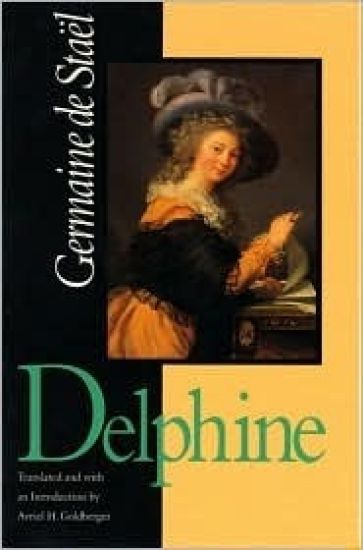
Germaine de Sta\u00ebl's first major novel, Delphine, published in 1802, is a profound commentary on the status of women during a critical period of French political history. Delphine's eighteenth-century conventional form as an epistolary novel masks its unconventional questioning of accepted values and norms. From the start, the Napoleonic government understood that Delphine was more than just a tale of tragic love. Though Sta\u00ebl disclaimed any intention of writing a political novel, the subversive aspects of a book dedicated to "The France of Silence" were not lost on Bonaparte, who prompty exiled the author from Paris. Perhaps most unacceptable to Napoleon was Sta\u00ebl's assertion of the rights of the individual, particularly those of women. The novel is especially important for its presentation of the plight of women at the end of the eighteenth century. This translation of Delphine is based on the authoritative critical French edition prepared by Simone Balay\u00e9. Goldberger's introduction places the novel in the context of Sta\u00ebl's work and the thought of the times.
Collects letters, novellas, essays, criticism, and a play by a leading intellectual of the Romantic period.