Kirjailija
Germaine Greer
Kirjat ja teokset yhdessä paikassa: 16 kirjaa, julkaisuja vuosilta 1991–2026, suosituimpiin kuuluu Female Eunuch. Vertaile teosten hintoja ja tarkista saatavuus suomalaisista kirjakaupoista.
16 kirjaa
Kirjojen julkaisuvuodet: 1991–2026.

The 50th Anniversary edition of the ground-breaking, worldwide bestselling feminist tract. ââ?¬Ë? The Female Eunuch retains that power of transformation; it asserts the possibility of creativity within female experienceââ?¬â?¢ Guardian
Poems For Gardeners
Germaine Greer
Little, Brown Book Group
2024
sidottu
Halvin toimitettuna 29,90 €
Marianne Moore said that the poet's job was to depict 'imaginary gardens with real toads in them'. In truth, gardens are always imaginary because they are always the garden that you are aiming for rather than the garden you have, but the toads are real and immediate.' So says Germaine Greer in this wonderful anthology. This collection of poems, culled from classical antiquity to the twenty-first century, includes perennial favourites such as Marvell's 'The Garden' and Frost's 'After Apple-picking' and Roethke's famous greenhouse lyrics, as well as surprises like Tennyson's anti-botanical 'Amphion' and Fleur Adcock's 'Emblem' on the mating of slugs, not to mention small masterpieces like Philip Larkin's 'Cut Grass' and Phoebe Hesketh's 'Death of a Gardener'. Poems for Gardeners can be read along with the seed catalogues in the dead of winter, or in the gaps between tasks on a busy day in spring, or between snoozes in the hammock in the deep midsummer.
'A brilliant, gutsy, exhilarating, exasperating fury of a book' New York Times'Germaine Greer has given women just the book they need for this time of their lives. Read it, pass it on, talk about it, disagree with it, keep the circle going' Washington PostThe seminal, ground-breaking and controversial feminist text on the menopause, revised and updatedWhen The Change was published in 1991, ‘menopause’ was a word of fear. Then, as now, expensive magazines advertised even more expensive anti-ageing preparations, none of which worked. Big pharma was pushing replacement hormones, but doctors were dragging their feet. Some women told horror stories of their experiences with replacement hormones; others called them lifesavers. Nobody knew why some women went through this change of life without difficulty. What was working for them, when other women were tormented almost to madness? It seemed that we were close to an answer to that question, but that was before large-scale studies revealed that the protective effects of hormone replacement had been vastly exaggerated; given the perceived increase in the risk of life-threatening disease, the studies had to be called off. Now more than ever, amid the clamour of online chatrooms and promotions for a vast array of alternative therapies, the individual woman has to manage her passage through menopause for herself. In The Change, Germaine Greer provides a common-sense guide to a very interesting and important stage of women’s lives.
It’s time to rethink rape. Centuries of different approaches to rape – as inflicted by men on women – have got us nowhere. Rape statistics remain intractable: one woman in five will experience sexual violence. Very few rapes find their way into court. The crucial issue is consent, thought by some to be easy to establish and by others impossible. Sexual assault does not diminish; relations between the sexes do not improve; litigation balloons. In On Rape Germaine Greer argues there has to be a better way.
A memoir of a love affair with the forest and her native Australia, White Beech is Germaine Greer's most personal book yet 'A powerful account of Greer’s attempt to reverse the calamitous environmental impact of Australian history on one patch of land ... Greer remains a winning, funny, indomitable figure throughout, and it is fascinating to follow her as she works through so much of her messy, complicated relationship with Australia' Financial Times One bright day in December 2001, sixty-two-year-old Germaine Greer found herself confronted by an irresistible challenge in the shape of sixty hectares of dairy farm, one of many in south-east Queensland that, after a century of logging, clearing and downright devastation, had been abandoned to their fate. She didn't think for a minute that by restoring the land she was saving the world. She was in search of heart’s ease. Beyond the acres of exotic pasture grass and soft weed and the impenetrable curtains of tangled Lantana canes there were Macadamias dangling their strings of unripe nuts, and Black Beans with red and yellow pea flowers growing on their branches … and the few remaining White Beeches, stupendous trees up to forty metres in height, logged out within forty years of the arrival of the first white settlers. To have turned down even a faint chance of bringing them back to their old haunts would have been to succumb to despair. Once the process of rehabilitation had begun, the chance proved to be a dead certainty. When the first replanting shot up to make a forest and rare caterpillars turned up to feed on the leaves of the new young trees, she knew beyond doubt that at least here biodepletion could be reversed. Greer describes herself as an old dog who succeeded in learning a load of new tricks, inspired and rejuvenated by her passionate love of Australia and of Earth, most exuberant of small planets.
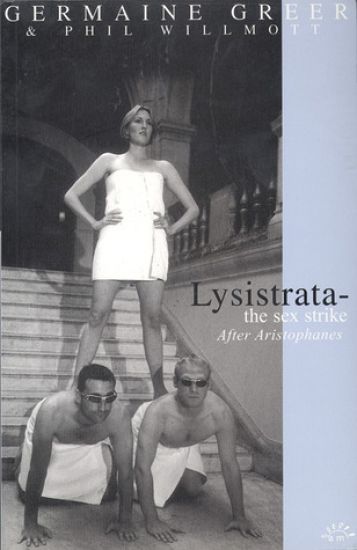
M8 F11. A bathhouse steam room. Period Ancient Greek Athens is in the grip of a futile, destructive war with Sparta and its men are fighting abroad, taken away from their wives and families for long periods at a time. The women of Athens have had enough. At dawn, in a men's bathhouse, leading society woman Lysistrata gathers an assembly of Athenian and Spartan women to discuss negotiating a peace treaty. Their tactics are simple: they will refuse their men sex until peace is declared. Germaine Greer and Phil Willmott's wonderful adaptation of Aristophanes' play "treads expertly between the tremendous and the tacky" ("Observer"). With Carry On characters, a cartoon-style set, raunchy dialogue and bawdy action performed to a soundtrack of Marilyn Monroe and Julie London, the serious subject of war remains prominent amid the humour in this battle of the sexes. "Fast, broad, silly and profound." ("Independent on Sunday").
Little is known about Ann Hathaway, the wife of England's greatest playwright; a great deal has been assumed, none of it complimentary. In Shakespeare's Wife, Germaine Greer boldly breaks new ground, reclaiming this much maligned figure from generations of scholarly neglect and misogyny. With deep insight and intelligence, she offers daring and thoughtful new theories about the farmer's daughter who married Britain's immortal Bard, painting a vivid portrait of a truly remarkable woman.
"Like a woman, this book gets better with age. Greer's punchy prose and all-too-true observations motivate you to go out and do something to liberate yourself-and other women." -- Leora Tanenbaum, author of Slut Growing Up Female with a Bad ReputationA ground-breaking, worldwide bestselling study of women's oppression that is at once an important social commentary, a passionately argued masterpiece of polemic, and a feminist classic. The publication of Germaine Greer's The Female Eunuch in 1970 was a landmark event, raising eyebrows and ire while creating a shock wave of recognition in women around the world with its steadfast assertion that sexual liberation is the key to women's liberation. Today, Greer's searing examination of the oppression of women in contemporary society is both an important historical record of where we've been and a shockingly relevant treatise on what still remains to be achieved.
Shakespeare's Wife
Germaine Greer
Bloomsbury Publishing PLC
2008
nidottu
Halvin toimitettuna 22,00 €
______________ ‘Excellent ... a marvellous imagining of the life of Shakespeare's wife and a devastating exposure of the misogyny of the male biographers who have disparaged her’ - Sunday Telegraph ‘Greer dares to think the unthinkable ... this is a bold and imaginative book’ – Independent 'A spirited, voluble, scholarly book which gives some depth and some dignity to the marginalised Mrs Shakespeare' - Guardian ______________ AS READ ON BBC RADIO 4’S BOOK OF THE WEEK Little is known of the wife of England's greatest playwright. In play after play Shakespeare presents the finding of a worthy wife as a triumphant denouement, yet scholars persist in believing that his own wife was resented and even hated by him. Here Germaine Greer strives to re-embed the story of their marriage in its social context and presents new hypotheses about the life of the farmer's daughter who married our greatest poet. This is a daring, insightful book that asks new questions, opens new fields of investigation and research, and rights the wrongs done to Ann Shakespeare. 'A refreshing corrective to the usual portrait ... Greer is impressive when it comes to detailing their Stratford life and times ... It's robust, lively stuff' - The Times
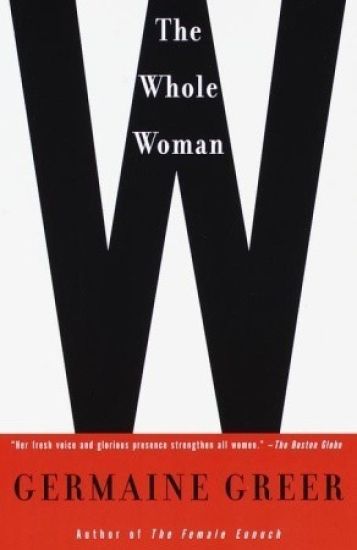
THIRTY YEARS AFTER THE FEMALE EUNUCH, GERMAINE GREER RETURNS TO THE SUBJECT OF FEMINISM, WITH THE BOOK SHE VOWED SHE WOULD NEVER WRITE. Germaine Greer proclaims that the time has come to get angry again! Modern feminism has become the victim of unenlightened complacency, and what started out in the Sixties as a movement for liberation has become one that has sought and settled for equality. With fiery rhetoric, authoritative insight, outrageous humour and broad-ranging debate, Greer shows that, although women have indeed come a very long way in the last thirty years, the notion of our 'having it all' has disguised the persistent discrimination and exploitation that continues to exist for women in the basic areas of health, sex, politics, economics and marketing. Erudite, eccentric, provocative and invigorating, Germaine Greer once again sets the agenda for the future of feminism. Here is all the polemical power that sold over a million copies of The Female Eunuch and kept its author at the heart of controversy ever since. The Whole Woman was a No. 1 Sunday Times bestseller for five weeks and was hailed by the critics as a 'polemical bomb' (Guardian) and as required reading for thinking adults everywhere.
Whitefella Jump Up: The Shortest Way to Nationhood: Quarterly Essay 11
Germaine Greer
Black Inc.
2003
pokkari
Thirty years after the publication of The Female Eunuch, Germaine Greer is back with the sequel she vowed never to write. "A marvelous performance--. No feminist writer can match her for eloquence or energy; none makes us] laugh the way she does."--The Washington Post In this thoroughly engaging new book, the fervent, rollicking, straight-shooting Greer, is, as ever, "the ultimate agent provocateur" (Mirabella). With passionate rhetoric, outrageous humor, and the authority of a lifetime of thought and observation, she trains a sharp eye on the issues women face at the turn of the century. From the workplace to the kitchen, from the supermarket to the bedroom, Greer exposes the innumerable forms of insidious discrimination and exploitation that continue to plague women around the globe. She mordantly attacks "lifestyle feminists" who blithely believe they can have it all, and argues for a fuller, more organic idea of womanhood. Whether it's liposuction or abortion, Barbie or Lady Diana, housework or sex work, Greer always has an opinion, and as one of the most brilliant, glamorous, and dynamic feminists of all time, her opinions matter. For anyone interested in the future of womanhood, The Whole Woman is a must-read."
Written by a renowned scholar and broadcaster, this account of Wilmot's work strives to place it in its socio-political context and describe the way the poet and his work were co-opted after his premature death to serve contrasting political agendas.
Original by Aristophanes Adapted by Germaine Greer With additional dialogue from Phil Willmott. Aristophanes' classic play retold in a bang up to the minute way. The world's leading feminist raconteur, polemicist and wit plunders the archetypal story of female resistance... This new version of the ancient tale gives the battle of the sexes an outing full of fun, farce and innuendo.
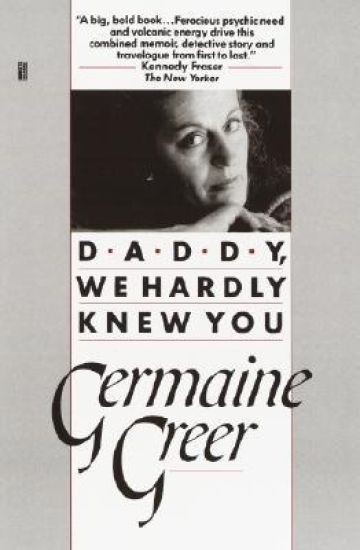
The most personal book from the renowned author of the landmark feminist treatise The Female Eunuch When her father died in 1983, Germaine Greer realized how little she knew about him. What had happened during World War II to make this charming but distant man draw a "curtain of silence" around himself? Why had he never spoken of his family? Why had he never shown her the love she craved? In this deeply moving book, Greer tells of the impassioned search she made for the truth about her father--a search that led her to a new understanding of herself as well. Her quest lasted three years and took her from England to Australia to Tasmania, India, and Malta; through scores of genealogical, civil, and military archives; and into the memories of the men and women who may--or may not--have known Reg Greer. Yet the heart of Greer's narrative is her own emotional journey, as the startling facts behind the fa ade her father had constructed force her painfully to examine her own notions of truth and loyalty, family and obligation. Praise for Daddy, We Hardly Knew You "A big, bold book . . . Ferocious psychic need and volcanic energy drive this combined memoir, detective story and travelogue from first to last."--The New Yorker "Riveting."--Time