
Kirjojen hintavertailu – 12 903 724 kirjaa ja 27 kauppaa

Kirjailija

Gerry Thacker

Kirjat ja teokset yhdessä paikassa: 2 kirjaa, julkaisuja vuodelta 2024, suosituimpiin kuuluu Guildford F ire Station. Vertaile teosten hintoja ja tarkista saatavuus suomalaisista kirjakaupoista.

2 kirjaa

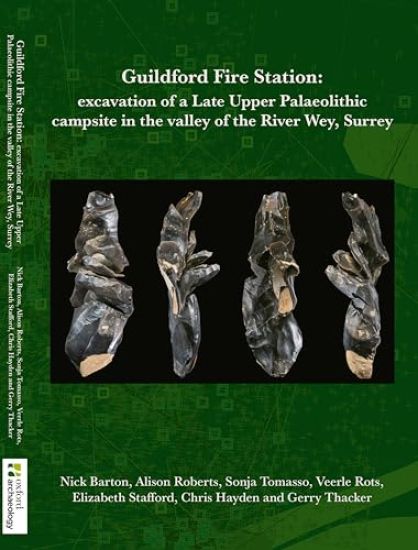
Guildford F ire Station

Guildford F ire Station

Nick Barton; Alison Roberts; Sonja Tomasso; Veerle Rots; Elizabeth Stafford; Christopher Hayden; Gerry Thacker

OXFORD ARCHAEOLOGY
2024
nidottu
Excavations carried out prior to the construction of a new fire station in Guildford, Surrey, revealed a well preserved, in situ Late Upper Palaeolithic flint scatter. The site lay on cold climate fluvial sandy gravels deposited in braided stream systems prior to the onset of the Late Glacial (Windermere) interstadial. Typological analysis of the flint and OSL dates suggest that the scatter itself dates from the first half of the Late Glacial (Windermere) interstadial (c 1415KBP). The lithic assemblage is homogeneous and, apart from initial extraction and nodule testing, all stages of flint manufacture are represented. Two main concentrations of knapping are represented, the main focus of which were the production of blade blanks some of which were removed from the site. Functional analysis of the tools suggests relatively short occupation during which hunting, smallscale craft activities linked with the retooling of hunting weapons and the manufacture of hide items, and limited processing of animal and plant materials took place. The assemblage is comparable to that from Wey Manor Farm, Surrey, 17km further downstream, and raises the question of the relationship between the two sites. Both share technological and typological features in common with the Creswellian, though Wey Manor Farm has a greater diversity in lithic point types. Comparison with Continental assemblages suggests that the Surrey sites share affinities with the Older Azilian or equivalents in northwest France and Germany and implies strong postMagdalenian influences in the Late Upper Palaeolithic of Britain.
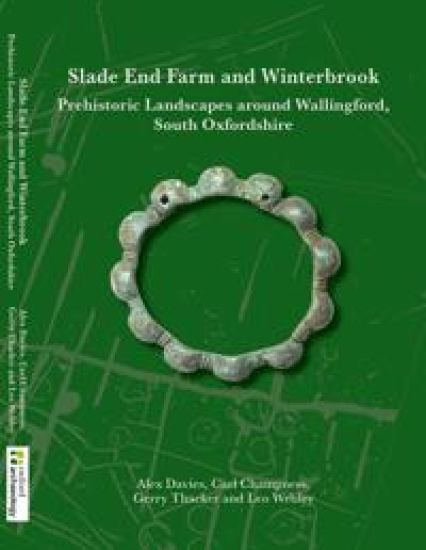
Slade End Farm and Winterbrook

Slade End Farm and Winterbrook

Alex Davies; Carl Champness; Gerry Thacker; Leo Webley

OXFORD UNIVERSITY SCHOOL OF ARCHAEOLOGY
2024
nidottu
This volume reports on two excavations carried out by Oxford Archaeology on the outskirts of Wallingford, at Slade End Farm and Winterbrook. The two sites provide windows into the same gravel terrace landscape and together shed significant new light on the prehistory of the south Oxfordshire Thames Valley. Slade End Farm was repeatedly visited for settlement in the early Neolithic. Numerous clusters of pits were found that contained pottery, flintwork and other finds. A pair of inhumation burials was also discovered. Sparser settlement subsequently occurred at the two sites during the middle and late Neolithic and the Beaker period. Landscape organisation dramatically changed in the middle Bronze Age, when ditched field systems or enclosure complexes were laid out at both sites. A waterhole containing a log ladder was also found. Environmental evidence suggests a landscape of largely open grassland used for grazing. While no buildings were found, concentrations of finds in some enclosures suggest that they were foci for domestic activity. Several burials were also found at each site. Both sites were reoccupied for settlement during the early and middle Iron Age. Roundhouses were built, and a series of boundaries and enclosures laid out. A double pit alignment dug in the early Iron Age at Slade End Farm separated the occupied area from the lower, wetter ground to the south. One of the pits from this alignment contained an inhumation burial. A complete, decorated copper alloy bracelet that had been placed in a posthole is a rare survival. At Winterbrook, part of a settlement dating to the 11th to 12th centuries was also uncovered, providing the first good archaeological evidence for a rural community in the immediate hinterland of the medieval town of Wallingford.