
Kirjailija
Gershom Scholem
Kirjat ja teokset yhdessä paikassa: 32 kirjaa, julkaisuja vuosilta 1970–2026, suosituimpiin kuuluu Tagebücher nebst Aufsätzen und Entwürfen bis 1923. Vertaile teosten hintoja ja tarkista saatavuus suomalaisista kirjakaupoista.
32 kirjaa
Kirjojen julkaisuvuodet: 1970–2026.
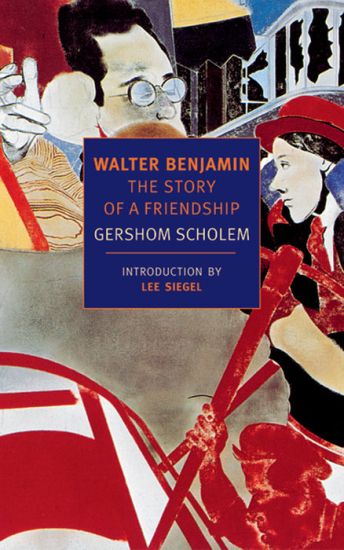
Gershom Scholem is celebrated as the twentieth century's most profound student of the Jewish mystical tradition; Walter Benjamin, as a master thinker whose extraordinary essays mix the revolutionary, the revelatory, and the esoteric. Scholem was a precocious teenager when he met Benjamin, who became his close friend and intellectual mentor. His account of that relationship--which was to remain crucial for both men--is both a celebration of his friend's spellbinding genius and a lament for the personal and intellectual self-destructiveness that culminated in Benjamin's suicide in 1940. At once prickly and heartbroken, argumentative and loving, "Walter Benjamin: The Story of a Friendship "is an absorbing memoir with the complication of character and motive of a novel. As Scholem revisits the passionate engagements over Marxism and Kabbala, Europe and Palestine that he shared with Benjamin, it is as if he sought to summon up his lost friend's spirit again, to have the last word in the argument that might have saved his life.
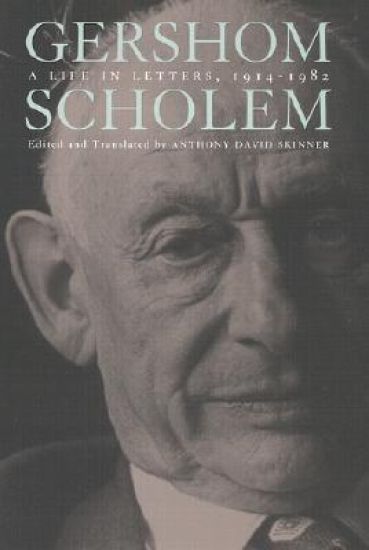
Perhaps the greatest scholar of Jewish mysticism in the twentieth century, Gershom Scholem (1897–1982) once said of himself, “I have no biography, only a bibliography.” Yet, in thousands of letters written over his lifetime, his biography does unfold, inscribing a life that epitomized the intellectual ferment and political drama of an era. This selection of the best and most representative letters—drawn from the 3000 page German edition—gives readers an intimate view of this remarkable man, from his troubled family life in Germany to his emergence as one of the leading lights of Israel during its founding and formative years. In the letters, we witness the travails and vicissitudes of the Scholem family, a drama in which Gershom is banished by his father for his anti-kaiser Zionist sentiments; his antiwar, socialist brother is hounded and murdered; and his mother and remaining brothers are forced to emigrate. We see Scholem’s friendships with some of the most intriguing intellectuals of the twentieth century—such as Hannah Arendt, Walter Benjamin, and Theodor Adorno—blossom and, on occasion, wither. And we learn firsthand about his Zionist commitment and his scholarly career, from his move to Palestine in the 1920s to his work as Professor of Jewish Mysticism at the Hebrew University. Over the course of seven decades that comprised the most significant events of the twentieth century, these letters reveal how Scholem’s scholarship is informed by the experiences he so eloquently described.
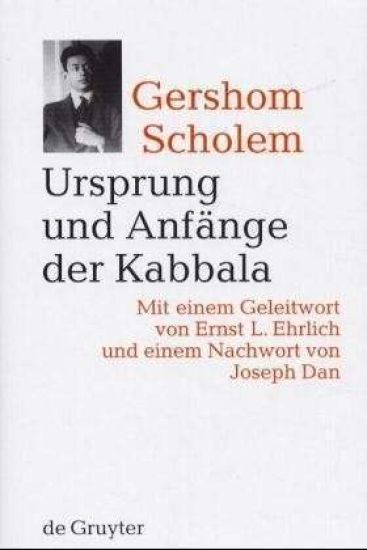
Ursprung Und Anfänge Der Kabbala
Gershom Scholem; Ernst Ludwig Ehrlich; Joseph Dan
de Gruyter
2001
sidottu
Der geburtige Berliner Gershom Scholem (1897 - 1982), der 1923 nach Jerusalem emigrierte, wurde einer breiteren Offentlichkeit zunachst hauptsachlich als der Freund und Nachlassverwalter Walter Benjamins, als Schuler, Verehrer und Antipode Martin Bubers und als Kritiker Franz Rosenzweigs bekannt. Erst in den letzten Jahrzehnten wurde die ungewohnliche Breite und Tiefe seines Denkens zunehmend als herausragender Beitrag zur europaischen Geistesgeschichte erkannt. Heute gilt Scholem als einer der fuhrenden Intellektuellen Westeuropas und Amerikas und einer der wichtigsten Juden des 20. Jahrhunderts uberhaupt. Im Zentrum von Scholems schier unuberschaubaren Veroffentlichungen stand die Erforschung der als Kabbala bezeichneten judischen Mystik und mittelalterlichen Esoterik. Erst durch seine kritische Erfassung und Untersuchung der Quellen wurde es moglich, diese reichen, geheimnisvollen und versunkenen Traditionen judischer Geschichte zu entschlusseln. Aus der Fulle seiner Publikationen ragt das Buch uber "Ursprung und Anfange der Kabbala" (1948 auf Hebraisch erschienen) heraus, das Scholem im personlichen Gesprach als sein Hauptwerk bezeichnete. Die Neuauflage dieses Klassikers wird durch ein Geleitwort von Ernst Ludwig Ehrlich eroffnet, dessen personlicher Verbindung zu Scholem und unermudlichem Einsatz es zu verdanken ist, dass Scholems Werk 1962 uberhaupt in einer deutschen Ausgabe erscheinen konnte. In einem ausfuhrlichen Nachwort wurdigt Joseph Dan, Schuler und Nachfolger Scholems auf dem Lehrstuhl fur judische Mystik an der Hebraischen Universitat von Jerusalem, Scholems epochalen Beitrag zur kritischen Erforschung der judischen Mystik."
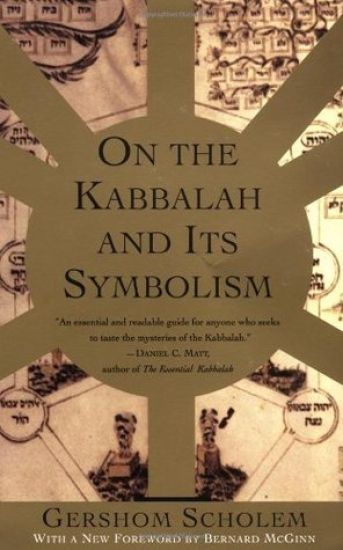
Scholem guides readers through the central themes in the intricate history of the Kabbalah, clarifying the relations between mysticism and established religious authority, the mystics' interpretation of the Torah and their attempts to discover the hidden meaning underlying Scripture, the tension between the philosophical and mystical concepts of God, and the symbolism employed in mystical religion.
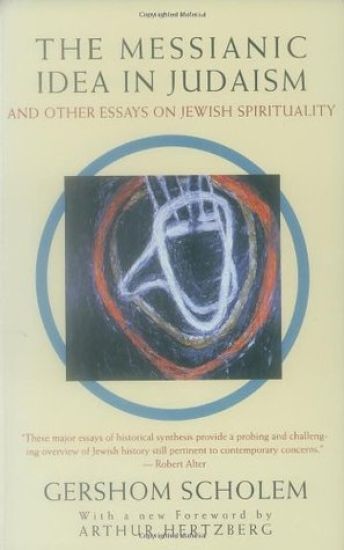
Gershom Scholem was the master builder of historical studies of the Kabbalah. When he began to work on this neglected field, the few who studied these texts were either amateurs who were looking for occult wisdom, or old-style Kabbalists who were seeking guidance on their spiritual journeys. His work broke with the outlook of the scholars of the previous century in Judaica--die Wissenschaft des Judentums, the Science of Judaism--whose orientation he rejected, calling their "disregard for the most vital aspects of the Jewish people as a collective entity: a form of "censorship of the Jewish past." The major founders of modern Jewish historical studies in the nineteenth century, Leopold Zunz and Abraham Geiger, had ignored the Kabbalah; it did not fit into their account of the Jewish religion as rational and worthy of respect by "enlightened" minds. The only exception was the historian Heinrich Graetz. He had paid substantial attention to its texts and to their most explosive exponent, the false Messiah Sabbatai Zevi, but Graetz had depicted the Kabbalah and all that flowed from it as an unworthy revolt from the underground of Jewish life against its reasonable, law-abiding, and learned mainstream. Scholem conducted a continuing polemic with Zunz, Geiger, and Graetz by bringing into view a Jewish past more varied, more vital, and more interesting than any idealized portrait could reveal.--"from the Foreword by Arthur Hertzberg, 1995"
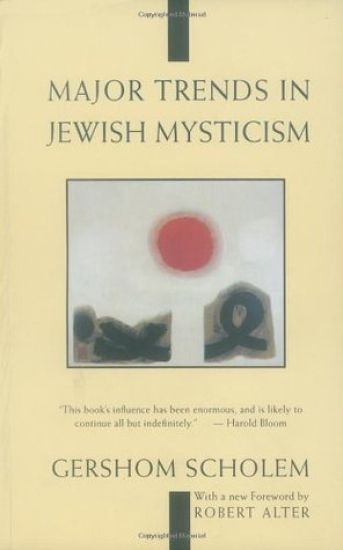
Major Trends in Jewish Mysticism
Gershom Scholem
Schocken Books
1995
pokkari
Halvin toimitettuna 22,90 €
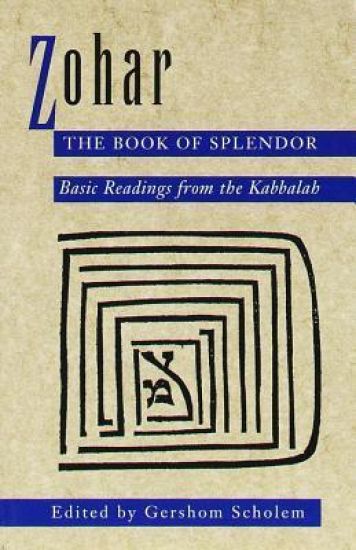
Zohar: The Book of Splendor
Gershom Scholem
Random House USA Inc
1995
pokkari
Halvin toimitettuna 18,00 €
One of the great masterpieces of Western religious thought, the Zohar represents an attempt to uncover hidden meanings behind the world of appearances. It is the central work in the literature of the Kabbalah, the Jewish mystical tradition. This volume of selected passages from the Zohar, culled by the greatest authority on Jewish mysticism, offers a sampling of its unique vision of the esoteric wonders of creation; the life and destiny of the soul; the confluence of physical and divine love; suffering and death; exile and redemption.
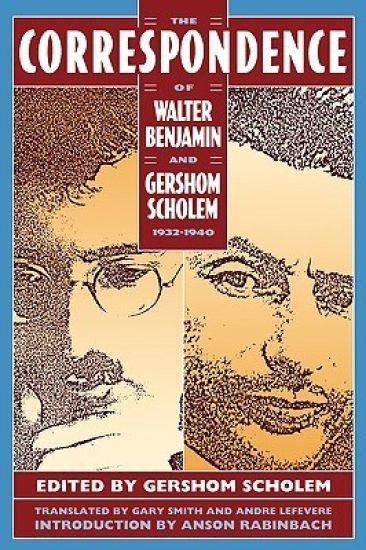
The Correspondence of Walter Benjamin and Gershom Scholem 1932-1940
Walter Benjamin; Gershom Scholem; Gary (TRN) Smith
Harvard University Press
1992
pokkari
Halvin toimitettuna 43,50 €
The legendary correspondence between the critic Walter Benjamin and the historian Gershom Scholem bears witness to the inner lives of two remarkable and enigmatic personalities. Benjamin, acknowledged as one of the leading literary and social critics of his day, was known during his lifetime by only a small circle of friends and intellectual confreres. Scholem recognized the genius of his friend and mentor during their student days in Berlin, and the two began to correspond after Scholem's emigration to Palestine. Their impassioned exchange draws the reader into the very heart of their complex relationship during the anguished years from 1932 until Benjamin's death in 1940.
Zur Kabbala und ihrer Symbolik
Gershom Scholem
SUHRKAMP VERLAG
1973
pokkari
Halvin toimitettuna 30,70 €
Über einige Grundbegriffe des Judentums
Gershom Scholem
SUHRKAMP VERLAG
1970
pokkari
Halvin toimitettuna 23,40 €