Kirjojen hintavertailu – 12 903 724 kirjaa ja 27 kauppaa

Kirjailija

Gershon Greenberg

Kirjat ja teokset yhdessä paikassa: 7 kirjaa, julkaisuja vuosilta 1993–2026, suosituimpiin kuuluu To Redeem History: Real-Time Orthodox Responses to the Holocaust. Vertaile teosten hintoja ja tarkista saatavuus suomalaisista kirjakaupoista.

7 kirjaa

Kirjojen julkaisuvuodet: 1993–2026.

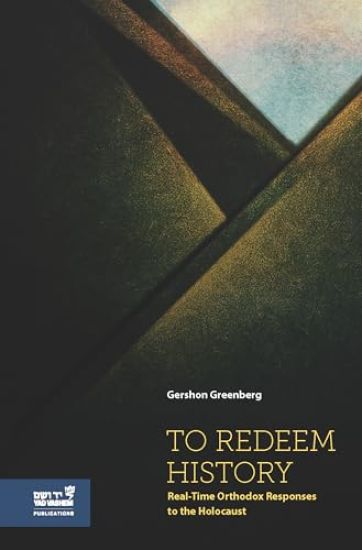
To Redeem History: Real-Time Orthodox Responses to the Holocaust
How did orthodox Jews during the Holocaust give meaning to their tragic fate and continue to believe in God? "Why? What was our sin that the punishment is so severe? We debated this question more than once in Belsen. Philosophizing Jews attempted to delve deeply into the truth and grasp the course of events. All the debates ended with an ancient conclusion: God's ways in running the world are inestimably beyond anything a mortal can understand." Ephraim Londner, postwar. The harrowing events of the Holocaust were a stark confrontation between Nazi perpetrators and their Jewish victims. As the catastrophe unfolded, thinkers from different streams of Orthodox Judaism grappled with its meaning, offering profound theological interpretations to unimaginable suffering. To Redeem History gives voice to these Orthodox rabbinic authorities, tracing how they responded as events progressed. How did Orthodox thinkers react to the unprecedented persecution witnessed before the war? Did their views shift as conditions worsened? And how did they interpret the Holocaust in its painful aftermath? Drawing from each Orthodox stream's distinct beliefs and traditions, their interpretations were shaped by key recurring themes: the ancient enemy Amalek, ideas of self-sacrifice and martyrdom, hopes of redemption, and the roles of silence, blame, and divine judgment. Opening a window into the spiritual world of the past, To Redeem History reveals the depth and resilience of faith that sustained Orthodox Jews during this dark chapter. In doing so, it not only preserves and commemorates these powerful religious responses but also offers the possibility of reawakening this spiritual legacy for generations to come.
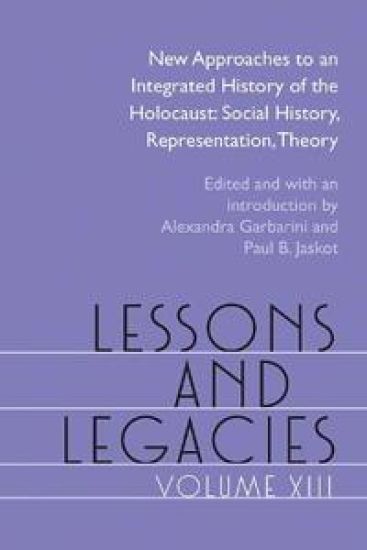
Lessons and Legacies XIII

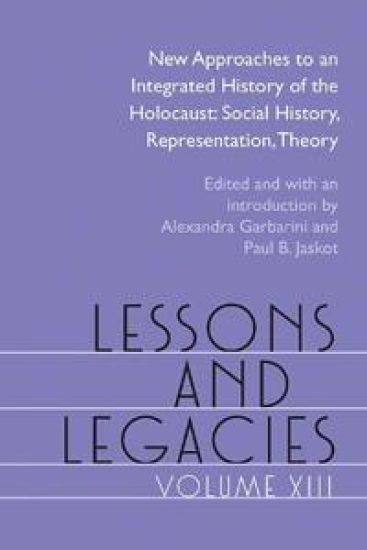
Lessons and Legacies XIII

Alexandra Garbarini; Paul Jaskot; Brad Prager; Dana Smith; Marion Kaplan; Kaelber Lutz; Kubátová Hana; Martin Dean; Jan Grabowski; Simone Gigliotti; Pedro Correa Martín-Arroyo; Jonathan Druker; Gershon Greenberg; Lissa Skitolsky; Dorota Glowacka

Northwestern University Press
2018
sidottu
The social history of the genocide, its representation in postwar culture, and new theoretical approaches stand at the forefront of current research in a range of disciplines. Analyses at the most intimate scale—of the individual or of a particular locale— are juxtaposed with those that turn to broader studies of the war or postwar order. Complementing these different scales are theoretical investigations that address individual agency, moral judgment, and the construction of meaning and memory in the study of the victims of the Holocaust and in our understanding of society as a whole. Together they mark the contemporary scholarly landscape of Holocaust studies, which includes history as well as film and literary studies, philosophy, and religious studies (among other disciplines). Each of the volume's three sections contributes to understanding the Holocaust and postwar ramifications of the genocide by focusing on: 1) the history of specific communities of both victims and perpetrators; 2) postwar cultural representations; and 3) new theoretical understandings of each. The essays in this volume thus represent new interests in the field that contribute to building integrated histories of the Holocaust.
Lessons and Legacies XIII

Lessons and Legacies XIII

Alexandra Garbarini; Paul Jaskot; Brad Prager; Dana Smith; Marion Kaplan; Kaelber Lutz; Kubátová Hana; Martin Dean; Jan Grabowski; Simone Gigliotti; Pedro Correa Martín-Arroyo; Jonathan Druker; Gershon Greenberg; Lissa Skitolsky; Dorota Glowacka

Northwestern University Press
2018
nidottu
The social history of the genocide, its representation in postwar culture, and new theoretical approaches stand at the forefront of current research in a range of disciplines. Analyses at the most intimate scale—of the individual or of a particular locale— are juxtaposed with those that turn to broader studies of the war or postwar order. Complementing these different scales are theoretical investigations that address individual agency, moral judgment, and the construction of meaning and memory in the study of the victims of the Holocaust and in our understanding of society as a whole. Together they mark the contemporary scholarly landscape of Holocaust studies, which includes history as well as film and literary studies, philosophy, and religious studies (among other disciplines). Each of the volume's three sections contributes to understanding the Holocaust and postwar ramifications of the genocide by focusing on: 1) the history of specific communities of both victims and perpetrators; 2) postwar cultural representations; and 3) new theoretical understandings of each. The essays in this volume thus represent new interests in the field that contribute to building integrated histories of the Holocaust.
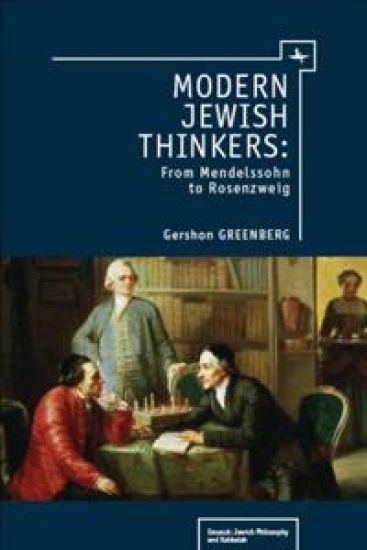
Modern Jewish Thinkers

Modern Jewish Thinkers

Gershon Greenberg

Academic Studies Press
2011
nidottu
Historical conditions at the end of the eighteenth century opened an arena between the formerly autonomous Jewish community and the Christian world, which yielded new departure points for philosophy, including revelation and philosophical reason, dialectically considered; rationalism as intellection and advancing consciousness; heteronomous revelation; historicity; and universal morality. In Modern Jewish Thinkers, Greenberg restructures the history of modern Jewish thought comprehensively, providing English translations of Reggio, Krokhmal, Maimon, Samuel Hirsch, Formstecher, Steinheim, Ascher, Einhorn, Samuel David Luzzatto, and Hermann Cohen, published here for the first time. The availability of these sources fills a gap in the field and stimulates new directions for teaching and scholarly research in modern Jewish thought, going beyond Spinoza and Mendelssohn at one end, and to popular twentieth-century figures on the other.
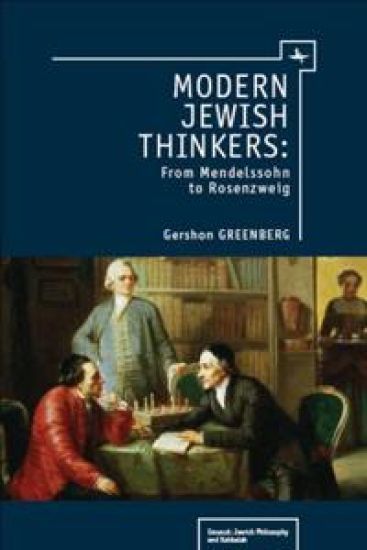
Modern Jewish Thinkers

Modern Jewish Thinkers

Gershon Greenberg

Academic Studies Press
2011
sidottu
Historical conditions at the end of the eighteenth century opened an arena between the formerly autonomous Jewish community and the Christian world, which yielded new departure points for philosophy, including revelation and philosophical reason, dialectically considered; rationalism as intellection and advancing consciousness; heteronomous revelation; historicity; and universal morality. In Modern Jewish Thinkers, Greenberg restructures the history of modern Jewish thought comprehensively, providing English translations of Reggio, Krokhmal, Maimon, Samuel Hirsch, Formstecher, Steinheim, Ascher, Einhorn, Samuel David Luzzatto, and Hermann Cohen, published here for the first time. The availability of these sources fills a gap in the field and stimulates new directions for teaching and scholarly research in modern Jewish thought, going beyond Spinoza and Mendelssohn at one end, and to popular twentieth-century figures on the other.
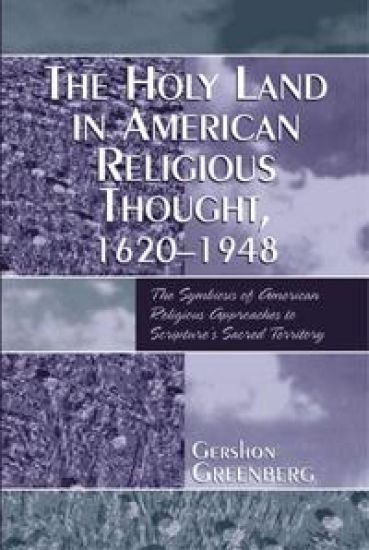
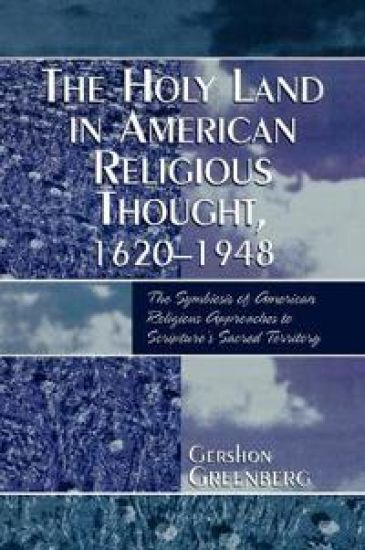
The Holy Land in American Religious Thought, 1620-1948

The Holy Land in American Religious Thought, 1620-1948

Gershon Greenberg

University Press of America
1993
sidottu
This book is the first to investigate the effect of the biblical Holy Land on American religious institutions, from early Puritanism in 1620 to Judaism in 1948. It explores the attachment between religious America and the Land of Israel from a pluralistic perspective, tracing the history of religion in America as it relates to the spiritual and geographical identity of the Holy Land.
The Holy Land in American Religious Thought, 1620-1948

The Holy Land in American Religious Thought, 1620-1948

Gershon Greenberg

University Press of America
1993
nidottu
This book is the first to investigate the effect of the biblical Holy Land on American religious institutions, from early Puritanism in 1620 to Judaism in 1948. It explores the attachment between religious America and the Land of Israel from a pluralistic perspective, tracing the history of religion in America as it relates to the spiritual and geographical identity of the Holy Land. Contents: Preface; Introduction: The Holy Land in American Religious Thought. PART I: THE HOLY LAND COMES TO AMERICA; Puritans and Congregationalists: The Americanization of Zion; Sephardic Jewry: Present and Future Zion; American Indians: Ten Lost Tribes and Christian Eschatology. PART II: NINETEENTH CENTURY INDIVIDUAL TIES TO THE HOLY LAND; Protestant Pilgrims: Disjunction between Expectation and Reality; Protestant Missionaries: Jewish Conversion and Christ's Return; Consuls: Jews and Holy Land History. PART III: RELIGIOUS GROUPS OF THE NINETEENTH CENTURY; Christianity among Blacks: The Spiritual Holy Land; Protestant Liberalists: Jewish Return and Christian Kingdom; Mormons: Dialectical Holy Lands; Judaism: American Impact and Internal Divisions. PART IV: THE TWENTIETH CENTURY; Protestant Liberalism: Universal Ideas; Catholicism: Holy Land of Christ's Crucifixion; Judaism: Centrality of the Land; Conclusion.