Kirjojen hintavertailu – 12 903 735 kirjaa ja 27 kauppaa

Kirjailija

Gibson Burrell

Kirjat ja teokset yhdessä paikassa: 8 kirjaa, julkaisuja vuosilta 1985–2024, suosituimpiin kuuluu Styles of Organizing. Vertaile teosten hintoja ja tarkista saatavuus suomalaisista kirjakaupoista.

8 kirjaa

Kirjojen julkaisuvuodet: 1985–2024.

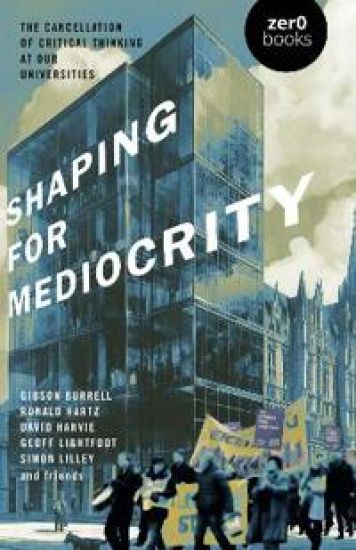
Shaping for Mediocrity

Shaping for Mediocrity

David Harvie; Gibson Burrell; Ronald Hartz; Geoff Lightfoot; Simon Lilley

Collective Ink
2024
nidottu

Halvin toimitettuna 17,60 €

In 2021, as part of a programme called Shaping for Excellence, bosses at the University of Leicester made redundant numerous scholars in what was simultaneously an attack on academic freedom and trade union organisation. The authors of Shaping for Mediocrity not only had front-row seats in the campaign against these mass redundancies, they were in the ring - both as targeted employees and as trade union officers and negotiators. Shaping for Mediocrity tells the inside story of these attacks and the campaign against them. It situates this story within a longer history of struggle to make the university a place where critical thinking is possible, showing how events in Leicester are both reflective of higher education in the UK following four decades of neoliberal 'reform' and a particularly egregious instance of the increasingly authoritarian management of public institutions such as universities.

Organization Theory

Organization Theory

Gibson Burrell

TAYLOR FRANCIS LTD
2024
nidottu

Halvin toimitettuna 29,70 €

This shortform book presents an overview of theoretical and empirical work in the field of organization theory. In doing so, it both provides a critical analysis of the state of knowledge in the field and offers recommendations for future directions. It is about both thinking differently, and considering what is already known within Organization Theory. With coverage of the foundations of organisation studies, the importance of bureaucracy, and insights into institutional approaches, the book also makes space to consider the key role of alternatives in the development of the field. A panoply of modes of organizing the modern economy and civil society have arisen wherein it is often said that the platform has replaced the pyramid. Yet, in 2022, the pandemic underscores the state’s responsibility to maintain public health through centralized and coherent organization rather than outsourcing, subcontracting and the gig economy. The book offers a new direction for research focusing upon ‘organizational camouflage’, where the unmasking of the large hierarchical corporation’s enduring role in governing our everyday lives would become Organization Theory’s revelatory task. Organization Theory: A Research Overview will be of value to researchers, scholars and students in the fields of business and management, especially those interested in the intersection of politics and organizations.
Organization Theory

Organization Theory

Gibson Burrell

TAYLOR FRANCIS LTD
2022
sidottu
This shortform book presents an overview of theoretical and empirical work in the field of organization theory. In doing so, it both provides a critical analysis of the state of knowledge in the field and offers recommendations for future directions. It is about both thinking differently, and considering what is already known within Organization Theory. With coverage of the foundations of organisation studies, the importance of bureaucracy, and insights into institutional approaches, the book also makes space to consider the key role of alternatives in the development of the field. A panoply of modes of organizing the modern economy and civil society have arisen wherein it is often said that the platform has replaced the pyramid. Yet, in 2022, the pandemic underscores the state’s responsibility to maintain public health through centralized and coherent organization rather than outsourcing, subcontracting and the gig economy. The book offers a new direction for research focusing upon ‘organizational camouflage’, where the unmasking of the large hierarchical corporation’s enduring role in governing our everyday lives would become Organization Theory’s revelatory task. Organization Theory: A Research Overview will be of value to researchers, scholars and students in the fields of business and management, especially those interested in the intersection of politics and organizations.
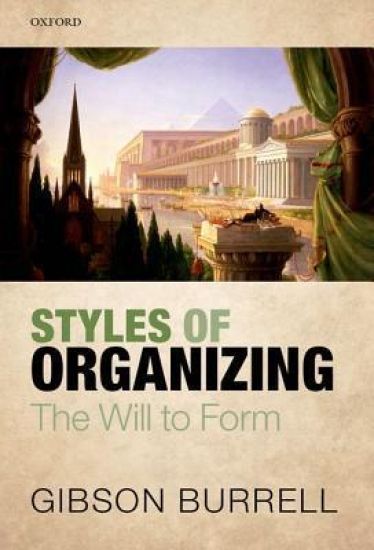
Styles of Organizing

Styles of Organizing

Gibson Burrell

Oxford University Press
2013
sidottu
In this book, leading organization theorist Gibson Burrell presents a provocative and challenging approach to the study of organizations, aiming to move beyond the two-dimensionality of much organizational thinking and present more complex 3-D models, which allow for the 'intractions' of apparently disparate perspectives. The book aims to illuminate organization theory by discussing its interrelationship with key features of economics, architecture, aesthetics, design of the built environment, and associated artwork. He argues that by their shared 'definitions', these areas of social science and the humanities are struggling with the same issue - 'the will to form'. The author suggests that, whilst there are a huge number of possibilities for the process of organizing, the constraints of the human body, our cognitive limitations in space and time, and our relationship to nature, mean that these are necessarily limited to an 'envelope' of possibilities. He then outlines the basic parameters of the 'design envelope', analysing it through discussion of 'styles', and examines the hidden assumptions of these styles with regards the origins and potentialities of human knowledge. Burrell argues that the envelope of organizational, politico-economic, and architectural design possibilities may be seen as a cube, thus taking forward the geometrical notions of 'lines' of fight, 'points' of difference, and 'planes' of agreement to discuss the huge range of, and massive constraints upon, human organizing that are reflected in the 'will to form'. Key differences in assumptions demarcate distinct 'styles of organizing' which every reader possesses - whether they are aware of them or not.
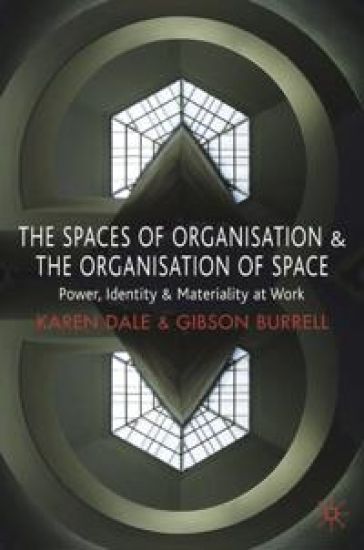
The Spaces of Organisation and the Organisation of Space

The Spaces of Organisation and the Organisation of Space

Karen Dale; Gibson Burrell

Red Globe Press
2007
nidottu

Halvin toimitettuna 125,40 €

Examines the role and utilization of workplace 'space': how it is organized; how it can reflect organizational values; how it can affect employee identities; and the many ways in which the physical environment can influence and affect organizational goals, especially in areas such as commitment, creativity and innovation.
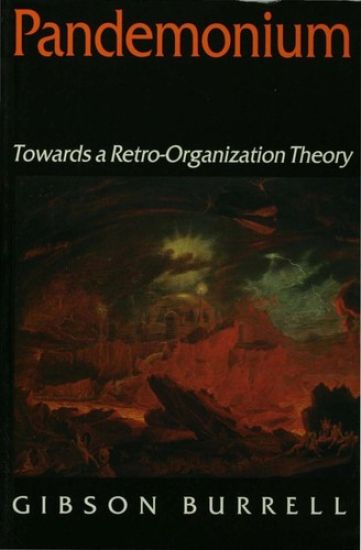
Pandemonium

Pandemonium

Gibson Burrell

SAGE Publications Ltd
1997
sidottu
`A truly bizarre and sometimes filthy historical canter through abatoirs, satyriasis and Noel Edmonds' House Party, among other things, towards a theory of organisation' - The Times 'The author pursues a vigorous polemic on organisational development' - Financial Times In this irreverent and inventive book, Gibson Burrell seeks to circumvent the established frameworks which have defined our understanding of organization and organizations. He brings us tales from under the edge which enmire us in the nether side of modernist organization. By looking backwards deep into the history of Western societies, and sideways across the broad domain of social and cultural theory, Pandemonium disconcerts and invigorates the domain of the study of organizations. Through his experimental device of the two-directional text, Burrell offers multi-layered meanings and a metaphor for the rejection of linearity. This is not an organizational behaviour textbook but an exploration that will take organization theory into a new era.
Pandemonium

Pandemonium

Gibson Burrell

SAGE Publications Ltd
1997
nidottu
`A truly bizarre and sometimes filthy historical canter through abatoirs, satyriasis and Noel Edmonds' House Party, among other things, towards a theory of organisation' - The Times 'The author pursues a vigorous polemic on organisational development' - Financial Times In this irreverent and inventive book, Gibson Burrell seeks to circumvent the established frameworks which have defined our understanding of organization and organizations. He brings us tales from under the edge which enmire us in the nether side of modernist organization. By looking backwards deep into the history of Western societies, and sideways across the broad domain of social and cultural theory, Pandemonium disconcerts and invigorates the domain of the study of organizations. Through his experimental device of the two-directional text, Burrell offers multi-layered meanings and a metaphor for the rejection of linearity. This is not an organizational behaviour textbook but an exploration that will take organization theory into a new era.
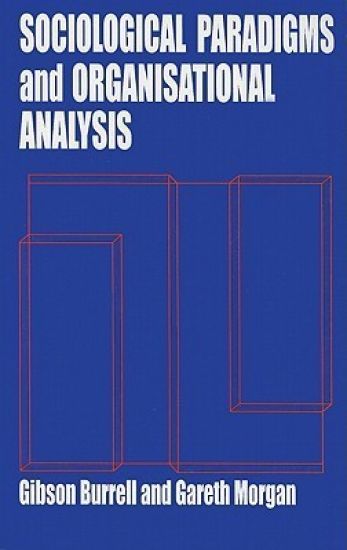
Sociological Paradigms and Organisational Analysis

Sociological Paradigms and Organisational Analysis

Gibson Burrell; Gareth Morgan

Ashgate Publishing Limited
1985
nidottu

Halvin toimitettuna 85,80 €

The authors argue in this book that social theory can usefully be conceived in terms of four broad paradigms, based upon different sets of meta-theoretical assumptions with regard to the nature of social science and the nature of society. The four paradigms - Functionalist, Interpretive, Radical Humanist and Radical Structuralist - derive from quite distinct intellectual traditions, and present four mutually exclusive views of the social work. Each stands in its own right, and generates its own distinctive approach to the analysis of social life. The authors provide extensive reviews of the four paradigms, tracing the evolution and inter-relationships between the various sociological schools of thought within each. They then proceed to relate theories of organisation to this wider background. This book covers a great range of intellectual territory. It makes a number of important contributions to our understanding of sociology and organisational analysis, and will prove an invaluable guide to theorists, researchers and students in a variety of social science disciplines. It stands as a discourse in social theory, drawing upon the general area of organisation studies - industrial sociology, organisation theory, organisational psychology, and industrial relations - as a means of illustrating more general sociological themes. In addition to reviewing and evaluating existing work, it provides a framework for appraising future developments in the area of organisational analysis, and suggests the form which some of these developments are likely to take.