Kirjojen hintavertailu – 12 903 735 kirjaa ja 27 kauppaa

Kirjailija

Gilbert Geis

Kirjat ja teokset yhdessä paikassa: 13 kirjaa, julkaisuja vuosilta 1993–2024, suosituimpiin kuuluu White-Collar and Corporate Crime. Vertaile teosten hintoja ja tarkista saatavuus suomalaisista kirjakaupoista.

13 kirjaa

Kirjojen julkaisuvuodet: 1993–2024.

Criminology

Criminology

Stephen E. Brown; Finn-Aage Esbensen; Gilbert Geis

TAYLOR FRANCIS LTD
2024
sidottu
Criminology: Explaining Crime and Its Context, Eleventh Edition, offers a broad perspective on criminological theory. It provides students of criminology, criminal justice, and sociology with a thorough exposure to a range of theories about crime, contrasting their logic and assumptions, but also highlighting efforts to integrate and blend these frameworks. In this new edition, the authors have incorporated new directions that have gained traction in the field, while remaining faithful to their criminological heritage. Among the themes in this work are the relativity of crime (its changing definition) with abundant examples, historical roots of criminology and the lessons they have provided, and the strength and challenges of applying the scientific method. This revision offers new chapters on critical theory and on life-course criminology. It is updated throughout to reflect current trends in criminological theory and data. With chapters both updated to reflect recent developments in the field and made easier to digest, this text is essential reading for students of criminology, criminal justice, sociology, and related fields.

Criminology

Criminology

Stephen E. Brown; Finn-Aage Esbensen; Gilbert Geis

TAYLOR FRANCIS LTD
2024
nidottu
Criminology: Explaining Crime and Its Context, Eleventh Edition, offers a broad perspective on criminological theory. It provides students of criminology, criminal justice, and sociology with a thorough exposure to a range of theories about crime, contrasting their logic and assumptions, but also highlighting efforts to integrate and blend these frameworks. In this new edition, the authors have incorporated new directions that have gained traction in the field, while remaining faithful to their criminological heritage. Among the themes in this work are the relativity of crime (its changing definition) with abundant examples, historical roots of criminology and the lessons they have provided, and the strength and challenges of applying the scientific method. This revision offers new chapters on critical theory and on life-course criminology. It is updated throughout to reflect current trends in criminological theory and data. With chapters both updated to reflect recent developments in the field and made easier to digest, this text is essential reading for students of criminology, criminal justice, sociology, and related fields.
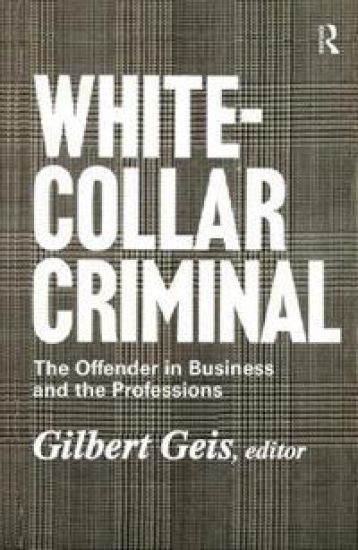
White-collar Criminal

White-collar Criminal

Renssalaer Lee; Gilbert Geis

Routledge
2017
sidottu
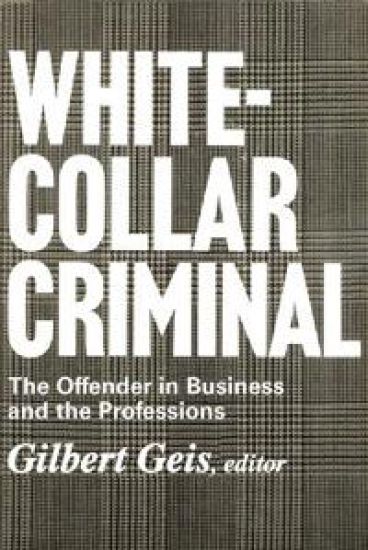
In his presidential address to the American Sociological Society more than a quarter of a century ago, Edwin H. Sutherland advanced the idea that crime was being perpetrated by members of society that were considered "normal," "affluent," and "well-adjusted". This notion of a new criminal class played havoc with the traditional theories of crime causation and directed considerable research away from the criminal at war with society to the criminal nestled snugly in society's lap. Since then the concept of "white-collar crime" has become even more important for the understanding not only of criminal behavior but of the total social and moral structure of American society as well. White-Collar Criminal brings together, for the first time since the concept was enunciated, the major classic and contemporary writings in this rapidly expanding area of investigation. The book provides a provocative array of studies of the crimes committed on the upper echelons of American life-embezzlement, business theft, consumer fraud, antitrust violations, and many others-as well as the most significant theoretical writings on the subject. The book is both absorbing and intellectually challenging. Teachers seeking to give their students an understanding of this basic segment of criminological thought and research will find this volume a unique combination of empirical data and theoretical analysis in highly readable form. Gilbert Geis is currently professor emeritus in the department of Criminology, Law, and Society at the University of California, Irvine. He has been project director on grants from the National Institute of Mental Health and the Walter E. Meyer Research Institute of Law, and research director of an Office of Economic Opportunity program employing former narcotic addicts in street work with addicts and as classroom assistants in junior high schools. Geis has served as chairman of the section on Crime and Delinquency of the Society for the Study of Social Problems and as secretary-treasurer of the criminology section of the American Sociological Association. He has been a consultant to the President's Commission on Law Enforcement and Administration of Justice; in this capacity he was responsible for draft statements on white-collar crime and on compensation to victims of violent crime.
White-Collar and Corporate Crime

White-Collar and Corporate Crime

Gilbert Geis

Oxford University Press Inc
2015
nidottu
In this brief, accessible text, Gilbert Geis provides a thorough overview of white-collar crime. Geis opens with a summary of the field's development and the recognition of white-collar crime as an area worthy of study. He then discusses the fascinating history of white-collar crime, examines the phenomenon of corporate crime, and explores the definitions of these crimes and the theories used to explain them. About the Series Keynotes in Criminology and Criminal Justice, edited by Henry N. Pontell, provides essential knowledge on important contemporary matters of crime, law, and justice to a broad audience of readers. Each volume is written by a leading scholar in that area. Concise, accessible, and affordable, these texts are designed to serve either as primers around which courses can be built or as supplemental books for a variety of courses.
White-Collar and Corporate Crime

White-Collar and Corporate Crime

Gilbert Geis

Greenwood Press
2011
sidottu
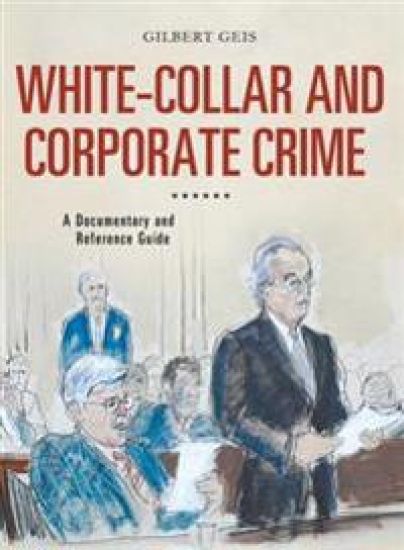
This reference guide documents white-collar crimes by individuals and businesses over the past 150 years, offering the most comprehensive array of documents and interpretations available. From Gilded Age railroad scandals to the muckraking period and from the Savings and Loan debacle to corporate fallout during the recent economic meltdown, some individuals and companies have chosen to take the low road to achieve "the American dream." While these offenders throughout modern history may have lacked ethics, morals, or good judgment, they certainly were not wanting in terms of creativity. White-Collar and Corporate Crime: A Documentary and Reference Guide traces the fascinating history of white-collar and corporate criminal behavior from the 1800s through the 2010 passage of the Dodd-Frank financial reform measure. Author Gilbert Geis scrutinizes more than a century of episodes involving corporate corruption and other self-serving behaviors that violate antitrust laws, bribery statutes, and fraud laws. The various attempts made by authorities to rein in greed and the methods employed by wrongdoers to evade these controls are also discussed and evaluated.
Criminal Justice and Moral Issues

Criminal Justice and Moral Issues

Robert F. Meier; Gilbert Geis

Oxford University Press Inc
2008
nidottu
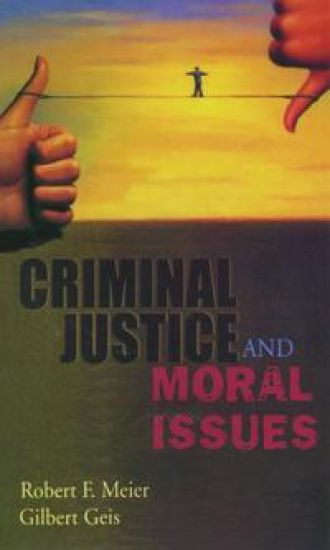
This text addresses the following two questions: "What kinds of problems can the law solve?" and "What kinds of problems does the law create?" Using these questions as starting points, Meier and Geis evenhandedly explore the role and function of law relating to six major issues that often divide Americans today: prostitution, drug use, homosexuality, abortion, pornography, and gambling. Statutes and public opinion have shifted dramatically over recent decades in regard to these behaviors. The book details these developments and offers explanations of why they have occurred. Some people view all or some of these behaviors as acts that ought to be permitted, as part of individual freedom. Others find one, some, or all of them to be genuine threats to the country's social and moral fiber and believe that they ought to be criminalized. Still others maintain that action ought to be taken to limit some of the behaviors, but that using the criminal justice system is not the best way to proceed. Meier and Geis' provocative book offers sophisticated, in-depth discussions of these issues, then reviews the conflicting opinions about the proper role of criminal law in dealing with them. It is written in straightforward, jargon-free language, providing an ideal background for exploring the facts and views regarding what are often contentious concerns. Criminal Justice and Moral Issues increases student understanding through the abundant use of relevant illustrations, examples, and case studies.
White-collar Criminal

White-collar Criminal

Renssalaer Lee; Gilbert Geis

AldineTransaction
2006
nidottu
In his presidential address to the American Sociological Society more than a quarter of a century ago, Edwin H. Sutherland advanced the idea that crime was being perpetrated by members of society that were considered "normal," "affluent," and "well-adjusted". This notion of a new criminal class played havoc with the traditional theories of crime causation and directed considerable research away from the criminal at war with society to the criminal nestled snugly in society's lap. Since then the concept of "white-collar crime" has become even more important for the understanding not only of criminal behavior but of the total social and moral structure of American society as well. White-Collar Criminal brings together, for the first time since the concept was enunciated, the major classic and contemporary writings in this rapidly expanding area of investigation. The book provides a provocative array of studies of the crimes committed on the upper echelons of American life-embezzlement, business theft, consumer fraud, antitrust violations, and many others-as well as the most significant theoretical writings on the subject. The book is both absorbing and intellectually challenging. Teachers seeking to give their students an understanding of this basic segment of criminological thought and research will find this volume a unique combination of empirical data and theoretical analysis in highly readable form. Gilbert Geis is currently professor emeritus in the department of Criminology, Law, and Society at the University of California, Irvine. He has been project director on grants from the National Institute of Mental Health and the Walter E. Meyer Research Institute of Law, and research director of an Office of Economic Opportunity program employing former narcotic addicts in street work with addicts and as classroom assistants in junior high schools. Geis has served as chairman of the section on Crime and Delinquency of the Society for the Study of Social Problems and as secretary-treasurer of the criminology section of the American Sociological Association. He has been a consultant to the President's Commission on Law Enforcement and Administration of Justice; in this capacity he was responsible for draft statements on white-collar crime and on compensation to victims of violent crime.
Lessons of Criminology

Lessons of Criminology

Gilbert Geis; Mary Dodge

Anderson Publishing
2002
sidottu
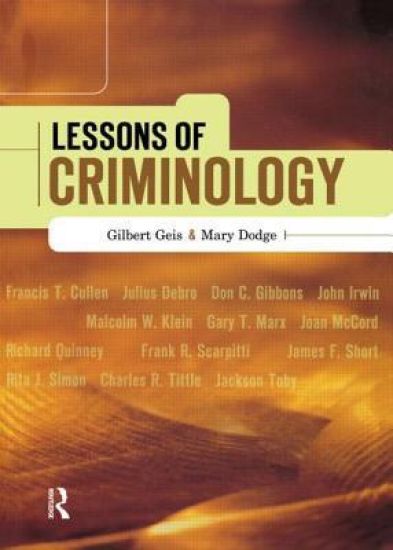
Presents the stories, musings, advice and conclusions of well-known criminologists about their research and their careers. Provides readers with suggestions about how to manage their professional lives. Contributors include Frank Cullen, Julius Debro, Don Gibbons, John Irwin, Mac Klein, Gary Marx, Joan McCord, Richard Quinney, Frank Scarpitti, Jim Short, Rita Simon, Charles Tuttle and Jackson Toby.
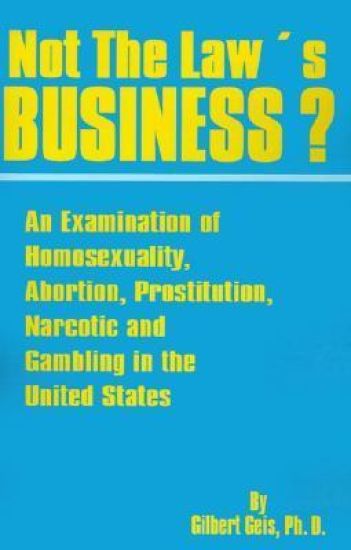
Not the Law's Business?

Not the Law's Business?

Gilbert Geis; Saleem a Shah

University Press of the Pacific
2001
pokkari
This book examines acts of homosexuality, abortion, prostitution, narcotics and gambling in the United States. There is a certain congruence among the acts mentioned above. That congruence inheres in the fact that the marihuana smokers, the homosexuals, the abortionist and his client, and the "runner" and the persons wagering - though all are violating criminal statues - are in each instance committing acts which, in terms of the common understanding of the term, do not have victims. All parties directly concerned have chosen to do what they are doing voluntarily, presumable because they perceive that the benefits to them are apt to outweigh any disadvantages or inconveniences, including the possibility of penalties they might suffer at the hands of the law.
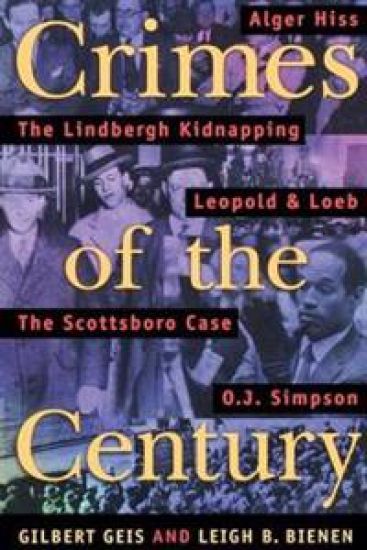
Crimes Of The Century

Crimes Of The Century

Gilbert Geis; Leigh B. Bienen

Northeastern University Press
2000
nidottu
In compelling narrative, the authors probe the sensational cases of Nathan F. Leopold, Jr., and Richard A. Loeb, the Scottsboro "boys," Bruno Richard Hauptmann, Alger Hiss, and O. J. Simpson, highlighting significant lessons about criminal behavior and the administration of criminal justice. Each case study details the crime, the police investigation, and the court proceedings, profiles the major players, and examines the outcome and aftermath of the trial. The authors untangle the perplexities surrounding the cases and illuminate the many mysteries that remain unsolved today. These celebrated trials reveal issues of overzealous prosecution, sloppy police work, judicial bias, race, class, and ethnic struggles, and the role of wealth in securing a competent defense. They also show how the temper of the times and frenzied media coverage heightened the intensity of drama in the cases.
A Trial of Witches

A Trial of Witches

Ivan Bunn; Gilbert Geis

Routledge
1997
nidottu
In 1662, Amy Denny and Rose Cullender were accused of witchcraft, and, in one of the most important of such cases in England, stood trial and were hanged in Bury St Edmunds. A Trial of Witches is a complete account of this sensational trial and an analysis of the court procedures, and the larger social, cultural and political concerns of the period. In a critique of the official process, the book details how the erroneous conclusions of the trial were achieved. The authors consider the key participants in the case, including the judge and medical witness, their institutional importance, their part in the fate of the women and their future careers. Through detailed research of primary sources, the authors explore the important implications of this case for the understanding of hysteria, group mentality, social forces and the witchcraft phenomenon as a whole.
White-Collar Crime

White-Collar Crime

Gilbert Geis

The Free Press
1994
pokkari
In the nearly twenty years since the first edition of White-Collar Crime, the fields of criminal justice and criminology have changed dramatically. Nonetheless, the revised edition, published in 1977, still holds a place on many bookshelves, a testament to the editors' ability to identify works of the highest quality. At long last, with the assistance of new co-editor Lawrence M. Salinger, White-Collar Crime has been fully revised, including the most extensive bibliography on white-collar crime that has ever been compiled.
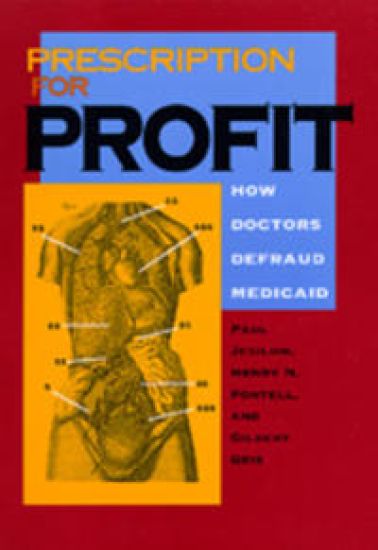
Prescription for Profit

Prescription for Profit

Paul Jesilow; Henry N. Pontell; Gilbert Geis

University of California Press
1993
sidottu
In this explosive expose of our health care system, Paul Jesilow, Henry N. Pontell, and Gilbert Geis uncover the dark side of physician practice. Using interviews with doctors and federal, state, and private officials and extensive investigation of case files, they tell the stories of doctors who profit from abortions on women who aren't pregnant, of needless surgery, overcharging for services, and excessive testing. How can doctors, recipients of a sacred trust and sworn to the Hippocratic Oath, violate Medicaid so egregiously? The authors trace patterns of abuse to the program's inauguration in the mid 1960s, when government authorities, not individual patients, were entrusted with responsibility for payments. Determining fees and regulating treatment also became the job of government agencies, thus limiting the doctors' traditional role. Physicians continue to disagree with Medicare and Medicaid policies that infringe on their autonomy and judgment. The medical profession has not accepted the gravity or extent of some members' illegal behavior, and individual doctors continue to blame violations on subordinates and patients. In the meantime, program guidelines have grown more confusing, hamstringing efforts to detect, apprehend, and prosecute Medicaid defrauders. Failure to institute a coherent policy for fraud control in the medical benefit program has allowed self-serving and greedy practitioners to violate the law with impunity. Prescription for Profit is a shocking revelation of abuse within a once-hallowed profession. It is a book that every doctor, and every patient, needs to read this year.