
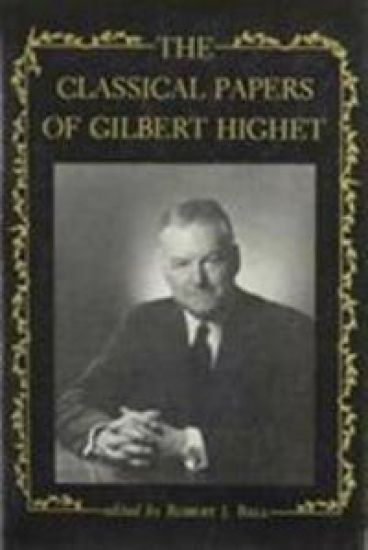
Kirjailija
Gilbert Highet
Kirjat ja teokset yhdessä paikassa: 10 kirjaa, julkaisuja vuosilta 1960–2020, suosituimpiin kuuluu The Classical Papers of Gilbert Highet. Vertaile teosten hintoja ja tarkista saatavuus suomalaisista kirjakaupoista.
10 kirjaa
Kirjojen julkaisuvuodet: 1960–2020.
Literary satire assumes three main forms: monologue, parody, and narrative (some fictional, some dramatic). This book by Gilbert Highet is a study of these forms, their meaning, their variation, their powers. Its scope is the range of satirical literature--from ancient Greece to modern America, from Aristophanes to Ionesco, from the parodists of Homer to the parodists of Eisenhower. It shows how satire originated in Greece and Rome, what its initial purposes and methods were, and how it revived in the Renaissance, to continue into our own era. Contents: Preface. I. Introduction. II. Diatribe. III. Parody. IV. The Distorting Mirror. V. Conclusion. Notes. Brief Bibliography. Index. Originally published in 1962. The Princeton Legacy Library uses the latest print-on-demand technology to again make available previously out-of-print books from the distinguished backlist of Princeton University Press. These editions preserve the original texts of these important books while presenting them in durable paperback and hardcover editions. The goal of the Princeton Legacy Library is to vastly increase access to the rich scholarly heritage found in the thousands of books published by Princeton University Press since its founding in 1905.
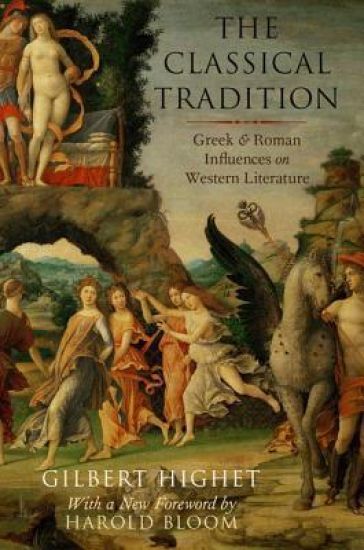
The Classical Tradition
Gilbert Highet; Harold Bloom
Oxford University Press Inc
2015
nidottu
Halvin toimitettuna 50,00 €
Originally published in 1949, Gilbert Highet's seminal The Classical Tradition is a herculean feat of comparative literature and a landmark publication in the history of classical reception. As Highet states in the opening lines of his Preface, this book outlines "the chief ways in which Greek and Latin influence has moulded the literatures of western Europe and America. " With that simple statement, Highet takes his reader on a sweeping exploration of the history of western literature. To summarize what he covers is a near-impossible task. Discussions of Ovid and French literature of the Middle Ages and Chaucer's engagement with Virgil and Cicero lead, swiftly, into arguments of Christian versus "pagan " works in the Renaissance, Baroque imitations of Seneca, and the (re)birth of satire. Building momentum through Byron, Tennyson, and the rise of "art of art's sake, " Highet, at last, arrives at his conclusion: the birth and establishment of modernism. Though his humanist style may appear out-of-date in today's postmodernist world, there is a value to ensuring this influential work reaches a new generation, and Highet's light touch and persuasive, engaging voice guarantee the book's usefulness for a contemporary audience. Indeed, the book is free of the jargon-filled style of literary criticism that plagues much of current scholarship. Accompanied by a new foreword by renown critic Harold Bloom, this reissue will enable new readers to appreciate the enormous legacy of classical literature in the canonical works of medieval, Renaissance, and modern Europe and America.
Literary satire assumes three main forms: monologue, parody, and narrative (some fictional, some dramatic). This book by Gilbert Highet is a study of these forms, their meaning, their variation, their powers. Its scope is the range of satirical literature--from ancient Greece to modern America, from Aristophanes to Ionesco, from the parodists of Homer to the parodists of Eisenhower. It shows how satire originated in Greece and Rome, what its initial purposes and methods were, and how it revived in the Renaissance, to continue into our own era. Contents: Preface. I. Introduction. II. Diatribe. III. Parody. IV. The Distorting Mirror. V. Conclusion. Notes. Brief Bibliography. Index. Originally published in 1962. The Princeton Legacy Library uses the latest print-on-demand technology to again make available previously out-of-print books from the distinguished backlist of Princeton University Press. These editions preserve the original texts of these important books while presenting them in durable paperback and hardcover editions. The goal of the Princeton Legacy Library is to vastly increase access to the rich scholarly heritage found in the thousands of books published by Princeton University Press since its founding in 1905.


In the Aeneid men, women, gods, and goddesses are characterized by the speeches assigned to them far more than by descriptions of their appearance or behavior. Most of the speeches are highly emotional and individualized, reminding us of the most powerful utterances of Greek tragedy. Gilbert Highet has analyzed all the speeches in the Aeneid, using statistical techniques as well as more traditional methods of scholarship. He has classified the speeches; identified their models in earlier Greek and Latin literature; analyzed their structure; and discussed their importance in the portrayal of character. He finds that Vergil used standard rhetorical devices with discretion, and that his models were poets rather than orators. Nevertheless, this study shows Vergil to have been a master dramatist as well as a great epic poet. Originally published in 1972. The Princeton Legacy Library uses the latest print-on-demand technology to again make available previously out-of-print books from the distinguished backlist of Princeton University Press. These editions preserve the original texts of these important books while presenting them in durable paperback and hardcover editions. The goal of the Princeton Legacy Library is to vastly increase access to the rich scholarly heritage found in the thousands of books published by Princeton University Press since its founding in 1905.
In the Aeneid men, women, gods, and goddesses are characterized by the speeches assigned to them far more than by descriptions of their appearance or behavior. Most of the speeches are highly emotional and individualized, reminding us of the most powerful utterances of Greek tragedy. Gilbert Highet has analyzed all the speeches in the Aeneid, using statistical techniques as well as more traditional methods of scholarship. He has classified the speeches; identified their models in earlier Greek and Latin literature; analyzed their structure; and discussed their importance in the portrayal of character. He finds that Vergil used standard rhetorical devices with discretion, and that his models were poets rather than orators. Nevertheless, this study shows Vergil to have been a master dramatist as well as a great epic poet. Originally published in 1972. The Princeton Legacy Library uses the latest print-on-demand technology to again make available previously out-of-print books from the distinguished backlist of Princeton University Press. These editions preserve the original texts of these important books while presenting them in durable paperback and hardcover editions. The goal of the Princeton Legacy Library is to vastly increase access to the rich scholarly heritage found in the thousands of books published by Princeton University Press since its founding in 1905.
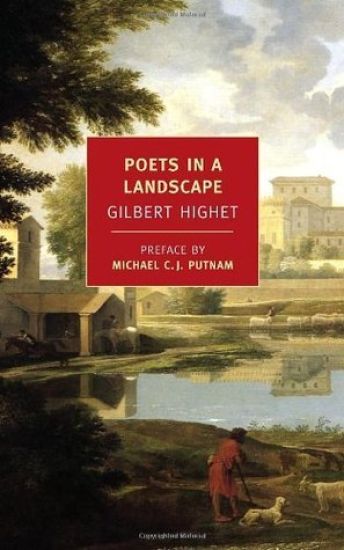
Gilbert Highet was a legendary teacher at Columbia University, admired both for his scholarship and his charisma as a lecturer. Poets in a Landscape is his delightful exploration of Latin literature and the Italian landscape. As Highet writes in his introduction, "I have endeavored to recall some of the greatest Roman poets by describing the places were they lived, recreating their characters and evoking the essence of their work." The poets are Catullus, Vergil, Propertius, Horace, Tibullus, Ovid, and Juvenal. Highet brings them life, setting them in their historical context and locating them in the physical world, while also offering crisp modern translations of the poets' finest work. The result is an entirely sui generis amalgam of travel writing, biography, criticism, and pure poetry--altogether an unexcelled introduction to the world of the classics.


Explores the power, capabilities, and limitations of the human mind from ancient times.