Kirjojen hintavertailu – 12 903 724 kirjaa ja 27 kauppaa

Kirjailija

Giles Radice

Kirjat ja teokset yhdessä paikassa: 4 kirjaa, julkaisuja vuosilta 2010–2022, suosituimpiin kuuluu Trio. Vertaile teosten hintoja ja tarkista saatavuus suomalaisista kirjakaupoista.

4 kirjaa

Kirjojen julkaisuvuodet: 2010–2022.

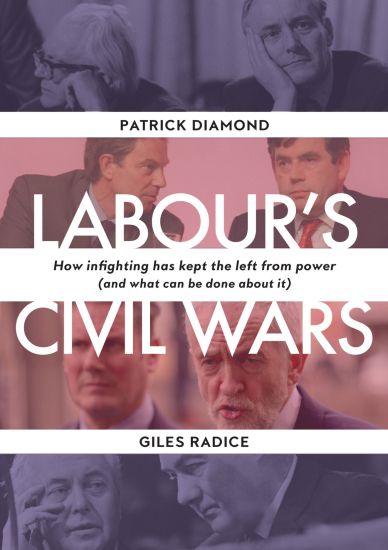
Labour`s Civil Wars - How Infighting Keeps the Left from Power (and What Can Be Done about It)
The biblical adage that 'if a house be divided against itself, that house cannot stand' remains sound theological advice. It also essential counsel for any political party that aspires to win elections. Though both major parties have been subject to internal conflict over the years, it is the Labour Party which has been more given to damaging splits. The divide exposed by the Corbyn insurgency is only the most recent example in a century of destructive infighting. Indeed, it has often seemed as though Labour has been more adept at fighting itself than in defeating the Tory party. This book examines the history of Labour's civil wars and the underlying causes of the party's schisms, from the first split of 1931, engineered by Ramsay MacDonald, to the ongoing battle for the future between the incumbent, Keir Starmer, and those who fundamentally altered the party's course under his predecessor, Jeremy Corbyn.

A Love Affair with Europe

A Love Affair with Europe

Giles Radice

Haus Publishing
2019
pokkari
From his earliest childhood, Europe has been close to Giles Radice's heart. His paternal great-great grandfather, an Italian nationalist, was fortunate enough to come to Britain in 1821 as a political refugee. Ten years after the end of Second World War, at the age of 18, he set off to cycle across Europe. At the same time the Foreign Ministers of the Six were preparing for the momentous Messina Conference which saw the establishment of the European Common Market. Meeting his continental contemporaries, Radice discussed the prospects of building a new and better Europe in which war might be ended forever and in which prosperity could be assured for all. It was clear to him that Europe should unite and that Britain could not stay on the margins. Elected to Parliament in 1973, Radice voted `yes' in the 1975 referendum and hoped that Britain's vote to remain in the EC heralded the beginning of a deeper relationship with Europe. In Parliament, Europe became his preoccupation as he worked tirelessly to keep the Labour Party on a pro European footing. In this pamphlet he looks at the years since 1975, asking why the British remained reluctant Europeans, always sceptical about the benefits of greater union. Why had the underlying forces of the EU not pulled Britain closer to the continent? How much should we blame the negative influence of the media that worked wholeheartedly against Britain's deeper commitment to the EU? Through all of this, Radice maintains that the most important failure was that of political class. From Thatcher's Euroscepticism to Tony Blair's soundbites and the half-hearted campaign from both main parties in the referendum of 2016, he lays the blame at the door of the political expediency practised by our governing class.
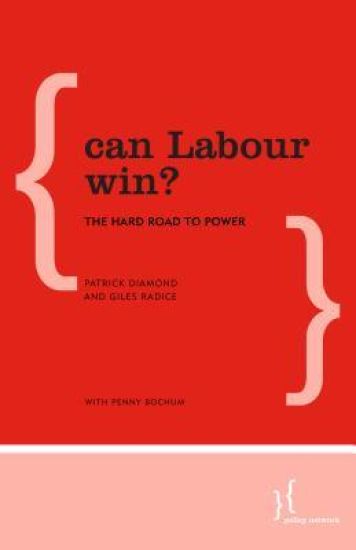
Can Labour Win?

Can Labour Win?

Patrick Diamond; Giles Radice

Policy Network, London
2015
nidottu
After its disastrous defeat in 2015, Labour is at grave risk of throwing away the 2020 general election. The party has to understand why it suffered such a devastating defeat and learn crucial lessons if it is to recover. The reasons appear obvious enough: the British public did not believe that Ed Miliband was a credible prime minister; people feared that a Labour government would plunge the British economy back into chaos; and they perceived that the party was out of touch on issues like immigration and welfare. Labour was not just narrowly defeated in 2015, it was overwhelmingly rejected by an electorate who no longer trust the party. Underlying all of this is a sense that Labour is a party that does not understand the modern world, wedded to an outdated ‘cloth cap’ image of heavy industry and the monolithic public sector. The risk for the Labour party, like social democratic parties across Europe, is further electoral defeat and then inevitably, permanent irrelevance. As of today, there are few signs that the party grasps why it lost and, in particular, why swing voters in marginal seats were not prepared to vote Labour. A party that does not understand why it was defeated scarcely deserves to be taken seriously by the electorate. This book examines why Labour so overwhelmingly lost the trust of voters, and crucially how the party under a new leader can win them back by 2020 – charting Labour’s path to power.
Trio

Trio

Giles Radice

I.B. Tauris
2010
sidottu
Blair: charming, charismatic and a great communicator but undermined by an unshakeable conviction that he was right. Brown: in private, warm and witty; in public, an authoritative Chancellor but a wooden and curiously un-self-confident Prime Minister. Mandelson: for Blair, supreme courtier and chief adviser; for Brown, from arch-enemy to polished political life-saver. Among the most controversial figures in Britain's recent history, these three architects of New Labour together shaped Britain - and into the first decade of the 21st century. "Trio" charts their rise to power and their undoubted achievements, both individually and collectively, alongside their quarrels, failings and failures. It offers remarkably clear-sighted portraits of three powerful men who created a new politics in Britain, making Labour electable - and then back again - in 12 turbulent years.