Kirjojen hintavertailu – 12 903 725 kirjaa ja 27 kauppaa

Kirjailija

Gillian Russell

Kirjat ja teokset yhdessä paikassa: 12 kirjaa, julkaisuja vuosilta 1995–2027, suosituimpiin kuuluu Data Fluencies. Vertaile teosten hintoja ja tarkista saatavuus suomalaisista kirjakaupoista.

12 kirjaa

Kirjojen julkaisuvuodet: 1995–2027.

Data Fluencies

Data Fluencies

Philippa R. Adams; Roopa Vasudevan; Gillian Russell; Kishonna Gray; Wendy Hui Kyong Chun; Tara McPherson

UNIVERSITY OF MINNESOTA PRESS
2027
nidottu
Creating communities of care in the digital world Data Fluencies offers a model for enacting theories of data justice, methods of community engagement, and practical approaches to disrupting institutions and infrastructures that have diminished the capacities of everyday digital technology users. Combining humanities-based critical thinking, computational data analyses, arts-based research cocreation, and media making, data fluencies offer creative and imaginative approaches to investigating and countering algorithmic discrimination, digital surveillance, mis- and disinformation, and deep fake versions of reality. Not fixed or static, data fluencies move with, through, and against data streams to build the worlds we want, not the ones algorithms push on us. Presenting real-world examples, the authors demonstrate how data fluencies transcend difference and counter the proliferation of hate and toxicity online. As they outline visions for disrupting the past to reimagine the future, the authors guide the way in devising new ways to think, act, and imagine – to influence and reshape the currents that flow through our data-driven world. Distributed for meson press. Retail e-book files for this title are screen-reader friendly with images accompanied by short alt text and/or extended descriptions.
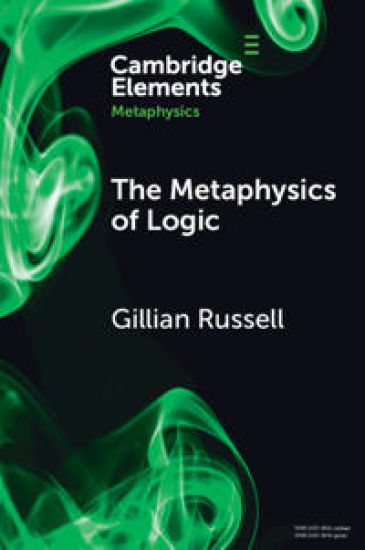
The Metaphysics of Logic

The Metaphysics of Logic

Gillian Russell

Cambridge University Press
2026
sidottu
An investigation into the metaphysics of the logical properties. Textbooks define logical truth and logical consequence in terms of models. But what are models, and why is invoking them a good way to define these properties? The answers take us through questions about the bearers of logical truth, the distinction between logical and non-logical expressions, and, ultimately, to an account of what logic is.
The Metaphysics of Logic

The Metaphysics of Logic

Gillian Russell

Cambridge University Press
2026
pokkari
An investigation into the metaphysics of the logical properties. Textbooks define logical truth and logical consequence in terms of models. But what are models, and why is invoking them a good way to define these properties? The answers take us through questions about the bearers of logical truth, the distinction between logical and non-logical expressions, and, ultimately, to an account of what logic is.
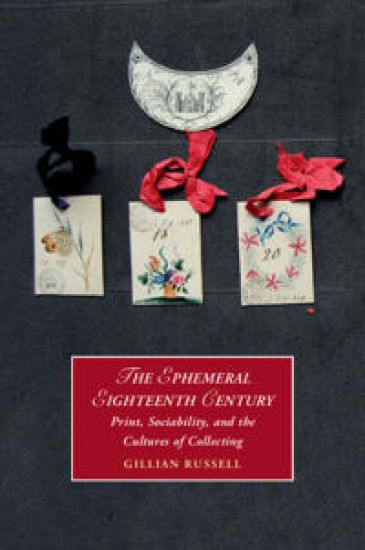
The Ephemeral Eighteenth Century

The Ephemeral Eighteenth Century

Gillian Russell

Cambridge University Press
2025
nidottu
Often regarded as trivial and disposable, printed ephemera, such as tickets, playbills and handbills, was essential in the development of eighteenth-century culture. In this original study, richly illustrated with examples from across the period, Gillian Russell examines the emergence of the cultural category of printed ephemera, its relationship with forms of sociability, the history of the book, and ideas of what constituted the boundaries of literature and literary value. Russell explores the role of contemporary collectors such as Sarah Sophia Banks in preserving such material, arguing for 'ephemerology' as a distinctive strand of popular antiquarianism. Multi-disciplinary in scope, The Ephemeral Eighteenth Century reveals new perspectives on the history of theatre, the fiction of Maria Edgeworth and Jane Austen, and on the history of bibliography, as well as highlighting the continuing relevance of the concept of ephemerality to how we connect through social media today.
The Ephemeral Eighteenth Century

The Ephemeral Eighteenth Century

Gillian Russell

Cambridge University Press
2020
sidottu
Often regarded as trivial and disposable, printed ephemera, such as tickets, playbills and handbills, was essential in the development of eighteenth-century culture. In this original study, richly illustrated with examples from across the period, Gillian Russell examines the emergence of the cultural category of printed ephemera, its relationship with forms of sociability, the history of the book, and ideas of what constituted the boundaries of literature and literary value. Russell explores the role of contemporary collectors such as Sarah Sophia Banks in preserving such material, arguing for 'ephemerology' as a distinctive strand of popular antiquarianism. Multi-disciplinary in scope, The Ephemeral Eighteenth Century reveals new perspectives on the history of theatre, the fiction of Maria Edgeworth and Jane Austen, and on the history of bibliography, as well as highlighting the continuing relevance of the concept of ephemerality to how we connect through social media today.
Iceland Travel Guide: Sightseeing, Hotel, Restaurant & Shopping Highlights

Iceland Travel Guide: Sightseeing, Hotel, Restaurant & Shopping Highlights

Gillian Russell

Createspace Independent Publishing Platform
2018
nidottu
Make the most of your trip with the Iceland Travel Guide: Sightseeing, Hotel, Restaurant & Shopping Highlights. The Iceland Travel Guide provides useful information about the best sights and experiences in the exciting destination of Iceland. Featuring the best and most famous sightseeing attractions & fun activities including Blue Lagoon Spa, Keflavik & Reykjanes Peninsula, Vikingaheimar/Viking World, Icelandic Museum of Rock 'n' Roll, Giantess in the Mountain, Selfoss, Geysir Geothermal Field, Dwarf Crags/Dverghamrar, Reykjavik, Reykjavik Cathedral, Reykjavik Zoo, Mount Esja, Old Harbor, Imagine Peace Tower, Icelandic Parliament (Al_ingi), Vi_ey Island, Nauth lsv k Geothermal Beach, National Gallery of Iceland, City Museum, Culture House, Museum of Photography, National Museum of Iceland, S nautasel, Vatnaj kull National Park, Eir kssta_ir Long House, V k- -M_rdal, Sk gar & Sk gafoss, R tshellir Cave, Akureyri, Hrisey Island, Grimsey Island, Westfjords, Vestmannaeyjar/Westman Islands, where to experience the local culture, great local restaurant choices and accommodation for the budget-minded. Where to shop until you drop and where to party the night away The Iceland Travel Guide: Sightseeing, Hotel, Restaurant & Shopping Highlights is available in print and ebook formats.
Sorrento Travel Guide: What to Do & Where to Go

Sorrento Travel Guide: What to Do & Where to Go

Gillian Russell

Createspace Independent Publishing Platform
2018
nidottu
Make the most of your trip with the Sorrento Travel Guide: What to Do & Where to Go. The Sorrento Travel Guide provides useful information about the best sights and experiences in the exciting destination of Sorrento. Featuring the best and most famous sightseeing attractions & fun activities including Historical Centre of Sorrento, Piazza Tasso, Cathedral of Sorrento, Convent of San Francesco, Marina Grande, Vico Equense, Meta di Sorrento, Piano di Sorrento, Sant Agnello, Massa Lubrense, Sorrento Farm Experience, Amalfi Drive, Ravello, Positano, Herculaneum, Paestum, Other Day Trips, where to experience the local culture, great local restaurant choices and accommodation for the budget-minded. Where to shop until you drop and where to party the night away The Sorrento Travel Guide: What to Do & Where to Go is available in print and ebook formats.
Truth in Virtue of Meaning

Truth in Virtue of Meaning

Gillian Russell

Oxford University Press
2011
nidottu
The analytic/synthetic distinction looks simple. It is a distinction between two different kinds of sentence. Synthetic sentences are true in part because of the way the world is, and in part because of what they mean. Analytic sentences--like all bachelors are unmarried and triangles have three sides--are different. They are true in virtue of meaning, so no matter what the world is like, as long as the sentence means what it does, it will be true. This distinction seems powerful because analytic sentences seem to be knowable in a special way. One can know that all bachelors are unmarried, for example, just by thinking about what it means. But many twentieth-century philosophers, with Quine in the lead, argued that there were no analytic sentences, that the idea of analyticity didn't even make sense, and that the analytic/synthetic distinction was therefore an illusion. Others couldn't see how there could fail to be a distinction, however ingenious the arguments of Quine and his supporters. But since the heyday of the debate, things have changed in the philosophy of language. Tools have been refined, confusions cleared up, and most significantly, many philosophers now accept a view of language--semantic externalism--on which it is possible to see how the distinction could fail. One might be tempted to think that ultimately the distinction has fallen for reasons other than those proposed in the original debate. In Truth in Virtue of Meaning, Gillian Russell argues that it hasn't. Using the tools of contemporary philosophy of language, she outlines a view of analytic sentences which is compatible with semantic externalism and defends that view against the old Quinean arguments. She then goes on to draw out the surprising epistemological consequences of her approach.
Women, Sociability and Theatre in Georgian London

Women, Sociability and Theatre in Georgian London

Gillian Russell

Cambridge University Press
2010
pokkari
Mid-eighteenth-century London witnessed a major expansion in public culture as a result of a rapidly commercialising society. Of the many sites of entertainment, the most celebrated (and often notorious) were the Carlisle House club, the Pantheon, and the Ladies Club or Coterie. In this major study of these institutions and the fashionable sociability they epitomised, Gillian Russell examines how they transformed metropolitan cultural life. Associated with lavish masquerades, excesses of fashion, such as elaborate hairstyles, and scandalous intrigues, these venues suggested a feminisation of public life which was profoundly threatening, not least to the theatre of the period. In this highly illustrated and original contribution to the cultural history of the eighteenth century, Russell reveals fresh perspectives on the theatre and on canonical plays such as The School for Scandal, as well as suggesting a prehistory for British Romanticism.
Truth in Virtue of Meaning

Truth in Virtue of Meaning

Gillian Russell

Oxford University Press
2008
sidottu
The analytic/synthetic distinction looks simple. It is a distinction between two different kinds of sentence. Synthetic sentences are true in part because of the way the world is, and in part because of what they mean. Analytic sentences - like all bachelors are unmarried and triangles have three sides - are different. They are true in virtue of meaning, so no matter what the world is like, as long as the sentence means what it does, it will be true. This distinction seems powerful because analytic sentences seem to be knowable in a special way. One can know that all bachelors are unmarried, for example, just by thinking about what it means. But many twentieth-century philosophers, with Quine in the lead, argued that there were no analytic sentences, that the idea of analyticity didn't even make sense, and that the analytic/synthetic distinction was therefore an illusion. Others couldn't see how there could fail to be a distinction, however ingenious the arguments of Quine and his supporters. But since the heyday of the debate, things have changed in the philosophy of language. Tools have been refined, confusions cleared up, and most significantly, many philosophers now accept a view of language - semantic externalism - on which it is possible to see how the distinction could fail. One might be tempted to think that ultimately the distinction has fallen for reasons other than those proposed in the original debate. In Truth in Virtue of Meaning, Gillian Russell argues that it hasn't. Using the tools of contemporary philosophy of language, she outlines a view of analytic sentences which is compatible with semantic externalism and defends that view against the old Quinean arguments. She then goes on to draw out the surprising epistemological consequences of her approach.
Women, Sociability and Theatre in Georgian London

Women, Sociability and Theatre in Georgian London

Gillian Russell

Cambridge University Press
2007
sidottu
Mid-eighteenth-century London witnessed a major expansion in public culture as a result of a rapidly commercialising society. Of the many sites of entertainment, the most celebrated (and often notorious) were the Carlisle House club, the Pantheon, and the Ladies Club or Coterie. In this major study of these institutions and the fashionable sociability they epitomised, Gillian Russell examines how they transformed metropolitan cultural life. Associated with lavish masquerades, excesses of fashion, such as elaborate hairstyles, and scandalous intrigues, these venues suggested a feminisation of public life which was profoundly threatening, not least to the theatre of the period. In this highly illustrated and original contribution to the cultural history of the eighteenth century, Russell reveals fresh perspectives on the theatre and on canonical plays such as The School for Scandal, as well as suggesting a prehistory for British Romanticism.
The Theatres of War

The Theatres of War

Gillian Russell

Clarendon Press
1995
sidottu
Based on new research, and informed by recent developments in literary and historical studies, The Theatres of War reveals the importance of the theatre in the shaping of response to the Revolutionary and Napoleonic wars (1793-1815). Gillian Russell explores the roles of the military and navy as both actors and audiences, and shows their performances to be crucial to their self-perception as actors fighting on behalf of an often distant domestic audience. The Revolutionary and Napoleonic Wars of 1793-1815 had profound consequences for British society, politics, and culture. In this, the first in-depth study of the cultural dimension of the Revolutionary and Napoleonic Wars, Gillian Russell examines an important dimension of the experience of these wars - theatricality. Through this study, the theatre emerges as a place where battles were celebrated in the form of spectacular reenactments, and where the tensions of mobilization on an hitherto unprecedented scale were played out in the form of riots and disturbances. Members of the military and the navy were actively engaged in such shows, taking to the stage as actors in the theatres of Britain, in ships off Portsmouth, and in the garrisons and battlefields of continental Europe and the empire. A lively and original book, The Theatres of War is major contribution to the cultural history of late Georgian Britain.