Kirjojen hintavertailu – 12 903 725 kirjaa ja 27 kauppaa

Kirjailija

Giorgos Kallis

Kirjat ja teokset yhdessä paikassa: 6 kirjaa, julkaisuja vuosilta 2018–2020, suosituimpiin kuuluu The Case for Degrowth. Vertaile teosten hintoja ja tarkista saatavuus suomalaisista kirjakaupoista.

6 kirjaa

Kirjojen julkaisuvuodet: 2018–2020.

The Case for Degrowth

The Case for Degrowth

Giorgos Kallis; Susan Paulson; Giacomo D'Alisa; Federico Demaria

Polity Press
2020
nidottu

Halvin toimitettuna 22,40 €

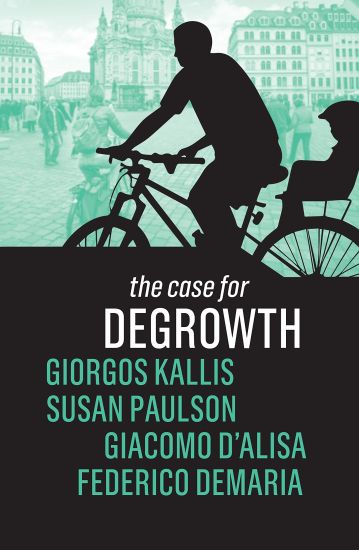
The relentless pursuit of economic growth is the defining characteristic of contemporary societies. Yet it benefits few and demands monstrous social and ecological sacrifice. Is there a viable alternative? How can we halt the endless quest to grow global production and consumption and instead secure socio-ecological conditions that support lives worth living for all? In this compelling book, leading experts Giorgos Kallis, Susan Paulson, Giacomo D’Alisa and Federico Demaria make the case for degrowth - living well with less, by living differently, prioritizing wellbeing, equity and sustainability. Drawing on emerging initiatives and enduring traditions around the world, they advance a radical degrowth vision and outline policies to shape work and care, income and investment that avoid exploitative and unsustainable practices. Degrowth, they argue, can be achieved through transformative strategies that allow societies to slow down by design, not disaster. Essential reading for all concerned citizens, policy-makers, and students, this book will be an important contribution to one of the thorniest and most pressing debates of our era.
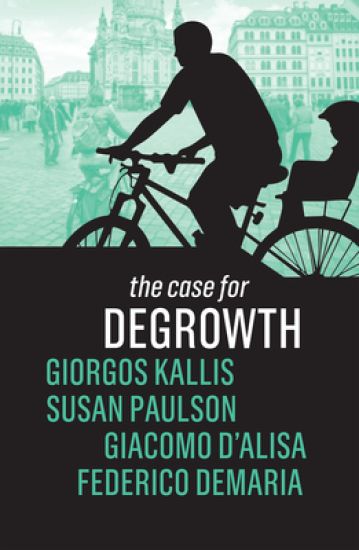
The Case for Degrowth

The Case for Degrowth

Giorgos Kallis; Susan Paulson; Giacomo D'Alisa; Federico Demaria

Polity Press
2020
sidottu
The relentless pursuit of economic growth is the defining characteristic of contemporary societies. Yet it benefits few and demands monstrous social and ecological sacrifice. Is there a viable alternative? How can we halt the endless quest to grow global production and consumption and instead secure socio-ecological conditions that support lives worth living for all? In this compelling book, leading experts Giorgos Kallis, Susan Paulson, Giacomo D’Alisa and Federico Demaria make the case for degrowth - living well with less, by living differently, prioritizing wellbeing, equity and sustainability. Drawing on emerging initiatives and enduring traditions around the world, they advance a radical degrowth vision and outline policies to shape work and care, income and investment that avoid exploitative and unsustainable practices. Degrowth, they argue, can be achieved through transformative strategies that allow societies to slow down by design, not disaster. Essential reading for all concerned citizens, policy-makers, and students, this book will be an important contribution to one of the thorniest and most pressing debates of our era.

Nerväxt

Nerväxt

Giorgos Kallis

Bokförlaget Daidalos
2020
nidottu
Ordet ”tillväxt” fungerar närmast som en besvärjelse i vårt samhälle – tillväxt betraktas ju som en ovillkorlig förutsättning för välfärd och samhällsutveckling. Decennier av forskarvarningar om global uppvärmning, ohållbar resursanvändning och degraderade ekosystem har visserligen lett till omfattande diskussioner om ”grön” eller ”hållbar” tillväxt, men ännu inte, i ett större politiskt och ekonomiskt sammanhang, till något egentligt ifråga­sättande av tillväxten som sådan. Hur skulle ett samhälle som övergav tillväxten kunna utformas? Vad skulle ”nerväxt” innebära i praktiken och vilka långsiktiga politiska och ekonomiska konsekvenser kan den tänkas få? Vad krävs för att människor frivilligt ska minska sin konsumtion och sin energianvändning? Och går nerväxt att förena med liberal demokrati, med tanke på att kapitalismen, nationalstaten och den liberala demokratin utvecklades i ett tätt samspel? Det är sådana frågor som miljöekonomen Giorgos Kallis försöker svara på i denna brett upplagda bok om en av vår tids verkliga ödesfrågor. Han diskuterar också den tillväxtkritik som har artikulerats av forskare och tänkare från Rachel Carson och Herman Daley till Nicholas Georgescu-Roegen och Serge Latouche. Problemens allvar till trots är Kallis perspektiv i grunden hoppfullt. ”Det finns ingenting ofrånkomligt eller permanent i historien eftersom samhällen alltid förändras och alltid kan förändra sina institutioner, värderingar och relationer.” Giorgos Kallis har en doktorsexamen i miljöpolitik och har dessutom studerat kemi, miljöteknik och ekonomi. Sedan 2010 är han professor vid ICREA i Barcelona och forskar om miljörättvisa och tillväxtgränser.
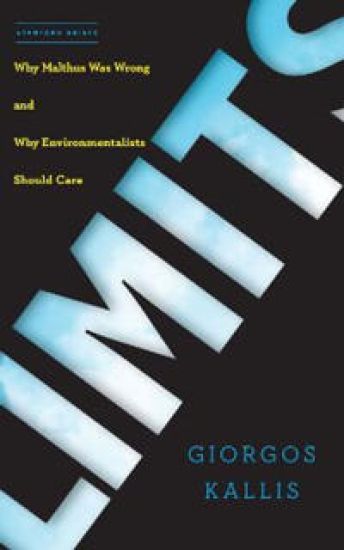
Limits

Limits

Giorgos Kallis

Stanford University Press
2019
pokkari

Halvin toimitettuna 23,00 €

Western culture is infatuated with the dream of going beyond, even as it is increasingly haunted by the specter of apocalypse: drought, famine, nuclear winter. How did we come to think of the planet and its limits as we do? This book reclaims, redefines, and makes an impassioned plea for limits—a notion central to environmentalism—clearing them from their association with Malthusianism and the ideology and politics that go along with it. Giorgos Kallis rereads reverend-economist Thomas Robert Malthus and his legacy, separating limits and scarcity, two notions that have long been conflated in both environmental and economic thought. Limits are not something out there, a property of nature to be deciphered by scientists, but a choice that confronts us, one that, paradoxically, is part and parcel of the pursuit of freedom. Taking us from ancient Greece to Malthus, from hunter-gatherers to the Romantics, from anarchist feminists to 1970s radical environmentalists, Limits shows us how an institutionalized culture of sharing can make possible the collective self-limitation we so urgently need.
Degrowth

Degrowth

Giorgos Kallis

Agenda Publishing
2018
sidottu
The term “degrowth” has emerged within ecological and other heterodox schools of economics as a critique of the idea (and ideology) of economic growth. Degrowth argues that economic growth is no longer desirable – its costs exceed its benefits – and advocates a transformation of economies so that they produce and consume less, differently and better. Giorgos Kallis provides a clear and succinct guide to the central ideas of degrowth theory and explores what it would take for an economy to transition to a position that enables it to prosper without growth. The book examines how mainstream conceptualizations of the economy are challenged by degrowth theory and how degrowth draws on a multifaceted network of ideas across disciplines to shed new light on the economic process. The central claims of the degrowth literature are discussed alongside some key criticisms of them. Whether one agrees or disagrees with degrowth’s critique of economic growth, Kallis shows how it raises fundamental questions about the workings of capitalism that we can no longer afford to ignore.
Degrowth

Degrowth

Giorgos Kallis

Agenda Publishing
2018
nidottu

Halvin toimitettuna 36,50 €

The term “degrowth” has emerged within ecological and other heterodox schools of economics as a critique of the idea (and ideology) of economic growth. Degrowth argues that economic growth is no longer desirable – its costs exceed its benefits – and advocates a transformation of economies so that they produce and consume less, differently and better. Giorgos Kallis provides a clear and succinct guide to the central ideas of degrowth theory and explores what it would take for an economy to transition to a position that enables it to prosper without growth. The book examines how mainstream conceptualizations of the economy are challenged by degrowth theory and how degrowth draws on a multifaceted network of ideas across disciplines to shed new light on the economic process. The central claims of the degrowth literature are discussed alongside some key criticisms of them. Whether one agrees or disagrees with degrowth’s critique of economic growth, Kallis shows how it raises fundamental questions about the workings of capitalism that we can no longer afford to ignore.