Kirjojen hintavertailu – 12 859 818 kirjaa ja 27 kauppaa

Kirjailija

Giovanni Boccaccio

Kirjat ja teokset yhdessä paikassa: 361 kirjaa, julkaisuja vuosilta 1988–2026, suosituimpiin kuuluu Decamerone. Vertaile teosten hintoja ja tarkista saatavuus suomalaisista kirjakaupoista.

361 kirjaa

Kirjojen julkaisuvuodet: 1988–2026.

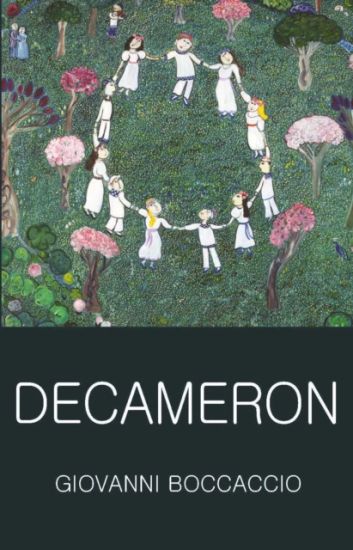
Decameron

Decameron

Giovanni Boccaccio

Wordsworth Editions Ltd
2004
nidottu

Halvin toimitettuna 13,90 €

A new version of John Payne's Victorian translation, with an Introduction by Cormac O Cuilleanain. 1348. The Black Death is sweeping through Europe. In Florence, plague has carried off one hundred thousand people. In their Tuscan villas, seven young women and three young men tell tales to recreate the world they have lost, weaving a rich tapestry of comedy, tragedy, ribaldry and farce. Boccaccio's Decameron recasts the storytelling heritage of the ancient and medieval worlds into perennial forms that inspired writers from Chaucer and Shakespeare down to our own day. Boccaccio makes the incredible believable, with detail so sharp we can look straight into the lives of people who lived six hundred years ago. His Decameron hovers between the fading glories of an aristocratic past - the Crusades, the Angevins, the courts of France, the legendary East - and the colourful squalor of contemporary life, where wives deceive husbands, friars and monks pursue fleshly ends, and natural instincts fight for satisfaction. Here are love and jealousy, passion and pride - and a shrewd calculation of profit and loss which heralds the rise of a dynamic merchant class. These stories show us early capitalism during a moment of crisis and revelation.
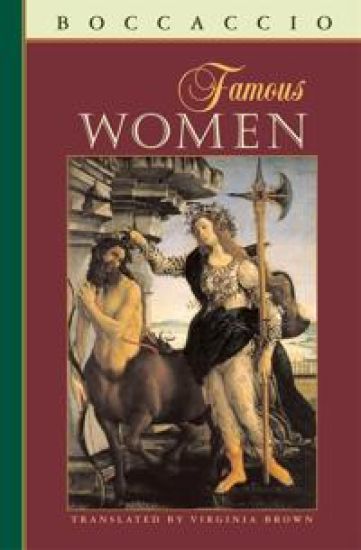
Famous Women

Famous Women

Giovanni Boccaccio

Harvard University Press
2003
nidottu
The first collection of biographies in Western literature devoted exclusively to women, Famous Women affords a fascinating glimpse of a moment in history when medieval attitudes toward women were beginning to give way to more modern views of their potential. Virginia Brown's acclaimed translation, commissioned for The I Tatti Renaissance Library, is the first English edition based on the autograph manuscript of the Latin.
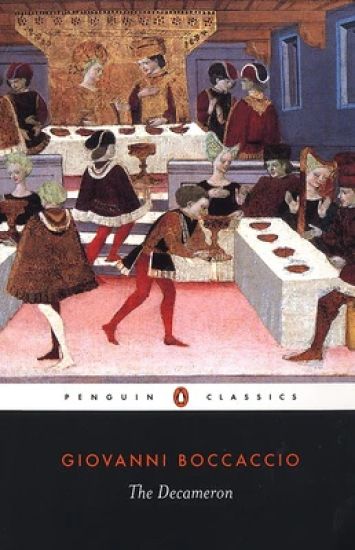
The Decameron

The Decameron

Giovanni Boccaccio

Penguin Classics
2003
pokkari

Halvin toimitettuna 21,80 €

In the summer of 1348, as the Black Death ravages their city, ten young Florentines take refuge in the countryside... Taken from the Greek, meaning 'ten-day event', Boccaccio's Decameron sees his characters amuse themselves by each telling a story a day, for the ten days of their confinement - a hundred stories of love and adventure, life and death, and surprising twists of fate. Less preoccupied with abstract concepts of morality or religion than earthly values, the tales range from the bawdy Peronella, hiding her lover in a tub, to Ser Cepperallo, who, despite his unholy effrontery, becomes a Saint. The result is a towering monument of European literature and a masterpiece of imaginative narrative that has inspired writers from Chaucer to Shakespeare . Translated with an introduction by G. H. McWilliam'McWilliam's finest work, his translation of Boccaccio's Decameron remains one of the most successful and lauded books in the series'The Times
Theseid of the Nuptials of Emilia Teseida Delle Nozze Di Emilia

Theseid of the Nuptials of Emilia Teseida Delle Nozze Di Emilia

Giovanni Boccaccio

Peter Lang Publishing Inc
2002
sidottu
The first epic poem written in Italian is the Teseida delle nozze di Emilia (Theseid of the Nuptials of Emilia) by Giovanni Boccaccio, the well-known author of the Decameron. Conceived and composed during the Florentine author's stay in Naples, it combines masterfully both epic and lyric themes in a genre that may be defined as an epic of love. Besides its intrinsic literary value, the poem reflects the author's youthful emotions and nostalgia for the happiest times of his life.
Famous Women

Famous Women

Giovanni Boccaccio

Harvard University Press
2001
sidottu
After the composition of the Decameron, and under the influence of Petrarch’s humanism, Giovanni Boccaccio (1313–1375) devoted the last decades of his life to compiling encyclopedic works in Latin. Among them is Famous Women, the first collection of biographies in Western literature devoted exclusively to women. The 106 women whose life stories make up this volume range from the exemplary to the notorious, from historical and mythological figures to Renaissance contemporaries. In the hands of a master storyteller, these brief biographies afford a fascinating glimpse of a moment in history when medieval attitudes toward women were beginning to give way to more modern views of their potential. Famous Women, which Boccaccio continued to revise and expand until the end of his life, became one of the most popular works in the last age of the manuscript book, and had a signal influence on many literary works, including Chaucer’s Canterbury Tales and Castiglione’s Courtier. This edition presents the first English translation based on the autograph manuscript of the Latin.
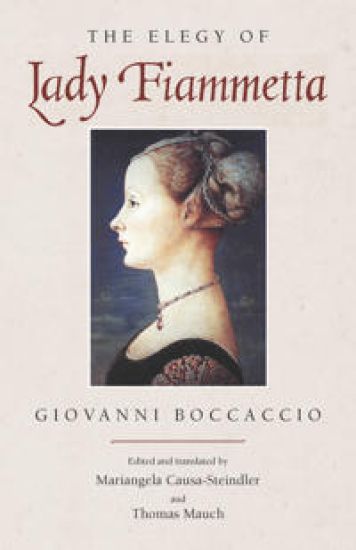
The Elegy of Lady Fiammetta

The Elegy of Lady Fiammetta

Giovanni Boccaccio

University of Chicago Press
1990
nidottu
A milestone in feminist literature, this marvelous European romance, narrated by a woman, is considered the first psychological novel in a modern language and a precursor of stream-of-consciousness fiction. Written by Giovanni Boccaccio between 1343 and 1345, The Elegy has never before been available in a complete or accurate English translation. Lady Fiammetta, the first-person narrator and protagonist, recounts how, although a married woman, she falls in love with a handsome young foreigner named Panfilo and, driven by irresistible passion, becomes his lover. Panfilo subsequently abandons Fiammetta and returns to his native land, where his elderly father is said to be dying. When he fails to keep his promise to return, Fiammetta, in what is the heart of the narrative, describes her longings, her anguish, and her despair. A host of contradictory sentiments drive her to desperation and to an unsuccessful suicide attempt. After a time, Fiammetta resumes her futile wait for Panfilo. She finally resolves to seek him out in his native land. Disguising her true intent from her husband, she secures his promise to help her in this undertaking. Addressing an exclusively female audience, Fiammetta warns them about the vicious ways of men. Her whole narrative, in fact, adds up to an indictment of men as both readers and lovers. Eliciting a remarkably wide range of responses from readers and critics, Fiammetta has been variously described as a pathetic victim of male cruelty; an irresponsible fool of a girl; a sophisticated, cunning, and wholly disingenuous female; and, finally, a genuinely modern woman. Whatever judgment we make of her, Fiammetta stands out among medieval women as an ardent and outspoken feminist.