Kirjojen hintavertailu – 12 903 725 kirjaa ja 27 kauppaa

Kirjailija

Giovanni Federico

Kirjat ja teokset yhdessä paikassa: 5 kirjaa, julkaisuja vuosilta 1997–2009, suosituimpiin kuuluu Feeding the World. Vertaile teosten hintoja ja tarkista saatavuus suomalaisista kirjakaupoista.

5 kirjaa

Kirjojen julkaisuvuodet: 1997–2009.

An Economic History of the Silk Industry, 1830–1930

An Economic History of the Silk Industry, 1830–1930

Giovanni Federico

Cambridge University Press
2009
pokkari
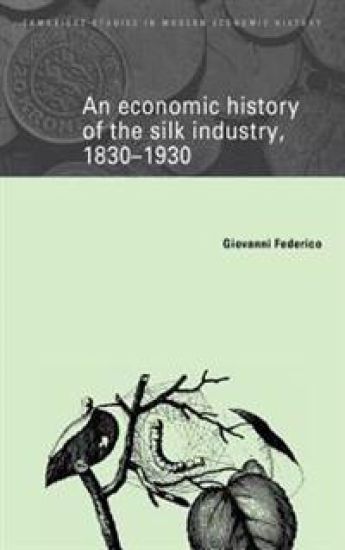
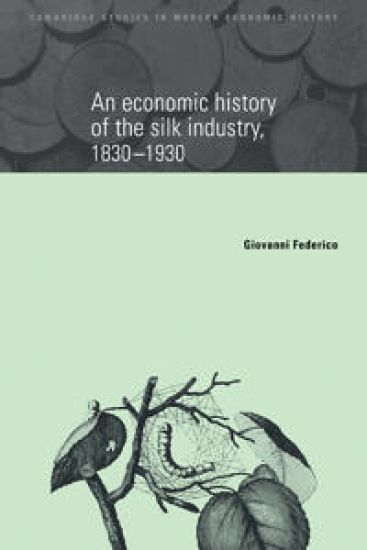
An Economic History of the Silk Industry, 1830–1930, first published in 1997, is an ambitious historical analysis of the development of a major commodity. Dr Federico examines the rapid growth of the world silk industry from the early nineteenth century to the eve of the Great Depression of the 1930s. Silk production grew as a result of Western industrialisation, which in turn brought about increased incomes and thus increased demand for silk products. The author documents the changes in methods of production and the technical progress that enabled the silk industry to cope with this new influx in demand. Dr Federico then discusses the significant changes in the geographical distribution of world output that accompanied this growth. In conclusion, Federico points out that silk did indeed becomes the first example of a Japanese success story on the world market, Italy and China both losing their markets due to Japan's large agricultural supply of raw material (cocoons) and its adroitness in importing and adopting Western technology.
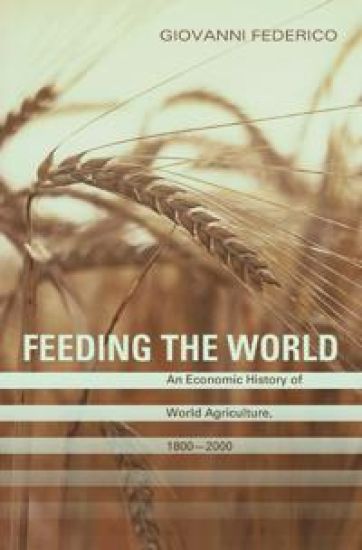
Feeding the World

Feeding the World

Giovanni Federico

Princeton University Press
2008
pokkari
In the last two centuries, agriculture has been an outstanding, if somewhat neglected, success story. Agriculture has fed an ever-growing population with an increasing variety of products at falling prices, even as it has released a growing number of workers to the rest of the economy. This book, a comprehensive history of world agriculture during this period, explains how these feats were accomplished. Feeding the World synthesizes two hundred years of agricultural development throughout the world, providing all essential data and extensive references to the literature. It covers, systematically, all the factors that have affected agricultural performance: environment, accumulation of inputs, technical progress, institutional change, commercialization, agricultural policies, and more. The last chapter discusses the contribution of agriculture to modern economic growth. The book is global in its reach and analysis, and represents a grand synthesis of an enormous topic.
The Growth of the Italian Economy, 1820–1960

The Growth of the Italian Economy, 1820–1960

Jon Cohen; Giovanni Federico

Cambridge University Press
2001
pokkari
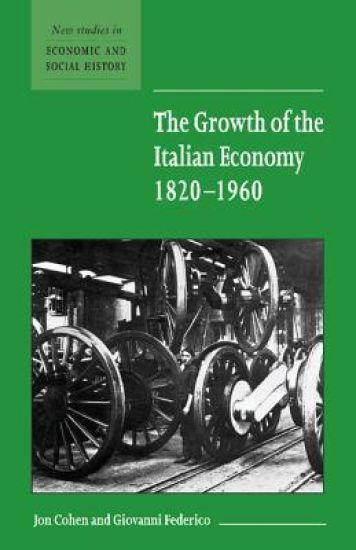
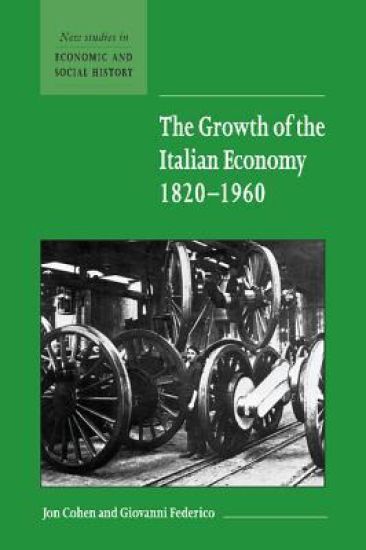
This volume in the New Studies in Economic and Social History series examines Italy’s transformation from a largely rural state in the nineteenth century to today’s industrial powerhouse. At the time of unification in 1861, much of the country was backward, poor, and agrarian: few would have believed that a hundred years later Italy would become one of the seven largest industrial countries, its people among the wealthiest in the world. This process of development and structural change has generated an enormous and evolving literature, alive with controversies and compelling insights. New research and reinterpretation of existing data have led to a reevaluation of the nature of Italian Dualism, while revisions to national income accounts are modifying the traditional picture of economic growth. Jon Cohen and Giovanni Federico provide a concise, up-to-date account of this literature, highlighting new views on old issues, and signalling areas in need of further research.
The Growth of the Italian Economy, 1820–1960

The Growth of the Italian Economy, 1820–1960

Jon Cohen; Giovanni Federico

Cambridge University Press
2001
sidottu
This volume in the New Studies in Economic and Social History series examines Italy's transformation from a largely rural state in the nineteenth century to today's industrial powerhouse. At the time of unification in 1861, much of the country was backward, poor, and agrarian: few would have believed that a hundred years later Italy would become one of the seven largest industrial countries, its people among the wealthiest in the world. This process of development and structural change has generated an enormous and evolving literature, alive with controversies and compelling insights. New research and reinterpretation of existing data have led to a reevaluation of the nature of Italian Dualism, while revisions to national income accounts are modifying the traditional picture of economic growth. Jon Cohen and Giovanni Federico provide a concise, up-to-date account of this literature, highlighting new views on old issues, and signalling areas in need of further research.
An Economic History of the Silk Industry, 1830–1930

An Economic History of the Silk Industry, 1830–1930

Giovanni Federico

Cambridge University Press
1997
sidottu
An Economic History of the Silk Industry, 1830–1930, first published in 1997, is an ambitious historical analysis of the development of a major commodity. Dr Federico examines the rapid growth of the world silk industry from the early nineteenth century to the eve of the Great Depression of the 1930s. Silk production grew as a result of Western industrialisation, which in turn brought about increased incomes and thus increased demand for silk products. The author documents the changes in methods of production and the technical progress that enabled the silk industry to cope with this new influx in demand. Dr Federico then discusses the significant changes in the geographical distribution of world output that accompanied this growth. In conclusion, Federico points out that silk did indeed becomes the first example of a Japanese success story on the world market, Italy and China both losing their markets due to Japan's large agricultural supply of raw material (cocoons) and its adroitness in importing and adopting Western technology.