Kirjojen hintavertailu – 12 859 819 kirjaa ja 27 kauppaa

Kirjailija

Giovanni Gallavotti

Kirjat ja teokset yhdessä paikassa: 13 kirjaa, julkaisuja vuosilta 1995–2025, suosituimpiin kuuluu Foundations of Fluid Dynamics. Vertaile teosten hintoja ja tarkista saatavuus suomalaisista kirjakaupoista.

13 kirjaa

Kirjojen julkaisuvuodet: 1995–2025.

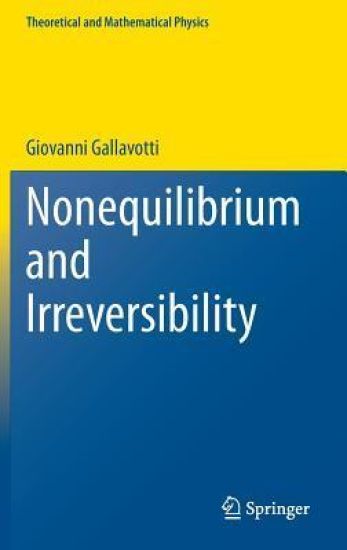
Nonequilibrium and Irreversibility

Nonequilibrium and Irreversibility

Giovanni Gallavotti

Springer International Publishing AG
2025
nidottu
This 2nd edition of the book focuses on the properties of stationary states in chaotic systems of particles or fluids, setting aside the theory of how these states are achieved. The second edition has been thoroughly revised and includes numerous corrections. It incorporates recent findings, with particular emphasis on the equivalence between irreversible and reversible equations. The ongoing debate over reversibility and irreversible behavior is frequently discussed. The book seeks to unify the study of stationary nonequilibrium states with that of equilibrium states, using the paradigm offered by the simplest chaotic systems, specifically Anosov systems. The book begins by exploring the time-invariant distributions relevant to physics. A distinctive feature of this work is its historical approach. To clarify foundational issues, the author analyzes the works of pioneering figures like Boltzmann, Clausius, and Maxwell, including translated excerpts of key historical documents. Additionally, the author establishes a close connection between the treatment of irreversible phenomena in statistical mechanics and the theory of chaotic systems, particularly at and beyond the onset of turbulence, as developed by Sinai, Ruelle, and Bowen (SRB) and others. Arguments are presented to strongly support the perspective that stationary states, whether in equilibrium or not, can be described in a unified framework. The book offers extensive coverage of contemporary research, presented in sufficient detail to give advanced students a sense of the ongoing research directions in this dynamic field. Proofs of theorems are generally limited to heuristic outlines, favoring the presentation of concepts and providing references for further study, thereby avoiding an overload of technical detail in the main text.
Nonequilibrium and Irreversibility

Nonequilibrium and Irreversibility

Giovanni Gallavotti

Springer International Publishing AG
2016
nidottu
This book concentrates on the properties of the stationary states in chaotic systems of particles or fluids, leaving aside the theory of the way they can be reached. The stationary states of particles or of fluids (understood as probability distributions on microscopic configurations or on the fields describing continua) have received important new ideas and data from numerical simulations and reviews are needed. The starting point is to find out which time invariant distributions come into play in physics. A special feature of this book is the historical approach. To identify the problems the author analyzes the papers of the founding fathers Boltzmann, Clausius and Maxwell including translations of the relevant (parts of) historical documents. He also establishes a close link between treatment of irreversible phenomena in statistical mechanics and the theory of chaotic systems at and beyond the onset of turbulence as developed by Sinai, Ruelle, Bowen (SRB) and others: the author gives arguments intending to support strongly the viewpoint that stationary states in or out of equilibrium can be described in a unified way. In this book it is the "chaotic hypothesis", which can be seen as an extension of the classical ergodic hypothesis to non equilibrium phenomena, that plays the central role. It is shown that SRB - often considered as a kind of mathematical playground with no impact on physical reality - has indeed a sound physical interpretation; an observation which to many might be new and a very welcome insight. Following this, many consequences of the chaotic hypothesis are analyzed in chapter 3 - 4 and in chapter 5 a few applications are proposed. Chapter 6 is historical: carefully analyzing the old literature on the subject, especially ergodic theory and its relevance for statistical mechanics; an approach which gives the book a very personal touch. The book contains an extensive coverage of current research (partly from the authors and his coauthorspublications) presented in enough detail so that advanced students may get the flavor of a direction of research in a field which is still very much alive and progressing. Proofs of theorems are usually limited to heuristic sketches privileging the presentation of the ideas and providing references that the reader can follow, so that in this way an overload of this text with technical details could be avoided.
Nonequilibrium and Irreversibility

Nonequilibrium and Irreversibility

Giovanni Gallavotti

Springer International Publishing AG
2014
sidottu
This book concentrates on the properties of the stationary states in chaotic systems of particles or fluids, leaving aside the theory of the way they can be reached. The stationary states of particles or of fluids (understood as probability distributions on microscopic configurations or on the fields describing continua) have received important new ideas and data from numerical simulations and reviews are needed. The starting point is to find out which time invariant distributions come into play in physics. A special feature of this book is the historical approach. To identify the problems the author analyzes the papers of the founding fathers Boltzmann, Clausius and Maxwell including translations of the relevant (parts of) historical documents. He also establishes a close link between treatment of irreversible phenomena in statistical mechanics and the theory of chaotic systems at and beyond the onset of turbulence as developed by Sinai, Ruelle, Bowen (SRB) and others: the author gives arguments intending to support strongly the viewpoint that stationary states in or out of equilibrium can be described in a unified way. In this book it is the "chaotic hypothesis", which can be seen as an extension of the classical ergodic hypothesis to non equilibrium phenomena, that plays the central role. It is shown that SRB - often considered as a kind of mathematical playground with no impact on physical reality - has indeed a sound physical interpretation; an observation which to many might be new and a very welcome insight. Following this, many consequences of the chaotic hypothesis are analyzed in chapter 3 - 4 and in chapter 5 a few applications are proposed. Chapter 6 is historical: carefully analyzing the old literature on the subject, especially ergodic theory and its relevance for statistical mechanics; an approach which gives the book a very personal touch. The book contains an extensive coverage of current research (partly from the authors and his coauthorspublications) presented in enough detail so that advanced students may get the flavor of a direction of research in a field which is still very much alive and progressing. Proofs of theorems are usually limited to heuristic sketches privileging the presentation of the ideas and providing references that the reader can follow, so that in this way an overload of this text with technical details could be avoided.
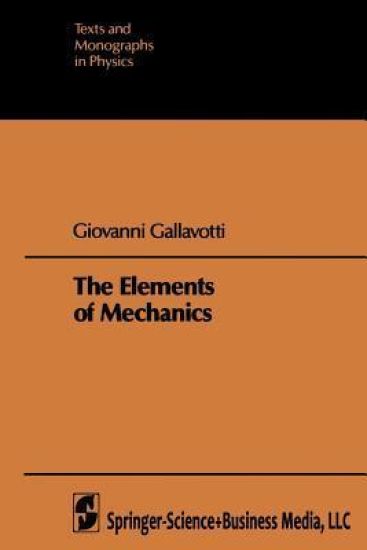
The Elements of Mechanics

The Elements of Mechanics

Giovanni Gallavotti

Springer-Verlag Berlin and Heidelberg GmbH Co. K
2013
nidottu
The word "elements" in the title of this book does not convey the implica­ tion that its contents are "elementary" in the sense of "easy": it mainly means that no prerequisites are required, with the exception of some basic background in classical physics and calculus. It also signifies "devoted to the foundations". In fact, the arguments chosen are all very classical, and the formal or technical developments of this century are absent, as well as a detailed treatment of such problems as the theory of the planetary motions and other very concrete mechanical problems. This second meaning, however, is the result of the necessity of finishing this work in a reasonable amount of time rather than an a priori choice. Therefore a detailed review of the "few" results of ergodic theory, of the "many" results of statistical mechanics, of the classical theory of fields (elasticity and waves), and of quantum mechanics are also totally absent; they could constitute the subject of two additional volumes on mechanics. This book grew out of several courses on meccanica razionaie, i.e., essentially, theoretical mechanics, which I gave at the University of Rome during the years 1975-1978.
Nonlinear Evolution and Chaotic Phenomena

Nonlinear Evolution and Chaotic Phenomena

Giovanni Gallavotti; Paul F. Zweifel

Springer-Verlag New York Inc.
2011
nidottu
This volume represents the proceedings of a NATO Advanced Study Institute held at Noto, Sicily June 8-19, 1987. The director was Giovanni Gallavotti, Roma, with co-directors Marcello Anile, Catania and P. F. Zweifel, Virginia Tech. Other members of the scientific organizing committee included Mitchell Feigenbaum, Rockefeller University and David Ruelle, IHES. The attendance at the school consisted of 23 invited speakers and approximately 80 "students", the term student being in quotation marks because many of them were of post-doctoral or even professorial status, although there were also a goodly number of actual graduate students in attendance also. Because of the disparate background of these "students", it was felt advisable to include at the conference special tutorials each afternoon, in which the contents of the morning's lectures were reviewed and clarified as necessary. These tutorials, organized by Gallavotti, involved various of the speakers, organizers, and other senior members of the school, and contributed in no little way to the overall success of the school. The organizers of the school would like to take this opportunity to thank all of those who assisted in these sessions, and to assure them that the results were definitely worth the effort. Also contributing to the success of the school were a number of contributed papers, presented during the course of the afternoon tutorials. Three of those papers are included in these proceedings; they are the papers of DiFrancesco; Gallimbeni, Miari and Sertorio (presented by Sertorio); and Vittot.
Foundations of Fluid Dynamics

Foundations of Fluid Dynamics

Giovanni Gallavotti

Springer-Verlag Berlin and Heidelberg GmbH Co. K
2010
nidottu
The imagination is struck by the substantial conceptual identity between the problems met in the theoretical study of physical phenomena. It is absolutely unexpected and surprising, whether one studies equilibrium statistical me­ chanics, or quantum field theory, or solid state physics, or celestial mechanics, harmonic analysis, elasticity, general relativity or fluid mechanics and chaos in turbulence. So when in 1988 I was made chair of Fluid Mechanics at the Universita La Sapienza, not out of recognition of work I did on the subject (there was none) but, rather, to avoid my teaching mechanics, from which I could have a strong cultural influence on mathematical physics in Rome, I was not excessively worried, although I was clearly in the wrong place. The subject is wide, hence in the last decade I could do nothing else but go through books and libraries looking for something that was within the range of the methods and experiences of my past work. The first great surprise was to realize that the mathematical theory of fluids is in an even more primitive state than I was aware of. Nevertheless it still seems to me that a detailed analysis of the mathematical problems is essential for anyone who wishes to do research into fluids. Therefore, I dedicated (Chap. 3) all the space necessary to a complete exposition of the theories of Leray, of Scheffer and of Caffarelli, Kohn and Nirenberg, taken directly from the original works.
Statistical Mechanics

Statistical Mechanics

Giovanni Gallavotti

Springer-Verlag Berlin and Heidelberg GmbH Co. K
2010
nidottu
This clear book presents a critical and modern analysis of the conceptual foundations of statistical mechanics as laid down in Boltzmann's works. The author emphasises the relation between microscopic reversibility and macroscopic irreversibility, explaining fundamental concepts in detail.
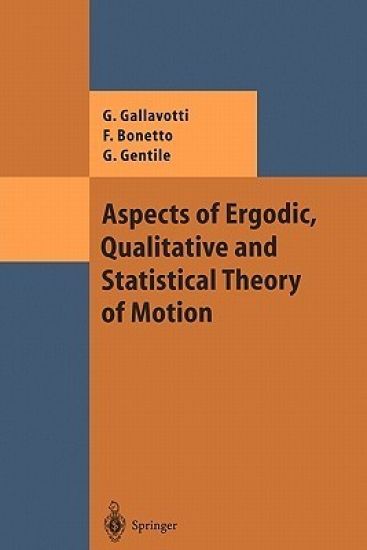
Aspects of Ergodic, Qualitative and Statistical Theory of Motion

Aspects of Ergodic, Qualitative and Statistical Theory of Motion

Giovanni Gallavotti; Federico Bonetto; Guido Gentile

Springer-Verlag Berlin and Heidelberg GmbH Co. K
2010
nidottu
Intended for beginners in ergodic theory, this book addresses students as well as researchers in mathematical physics. The main novelty is the systematic treatment of characteristic problems in ergodic theory by a unified method in terms of convergent power series and renormalization group methods, in particular. Basic concepts of ergodicity, like Gibbs states, are developed and applied to, e.g., Asonov systems or KAM Theory. Many examples illustrate the ideas and, in addition, a substantial number of interesting topics are treated in the form of guided problems.
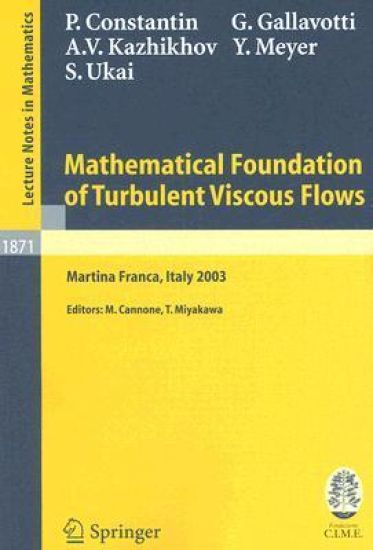
Mathematical Foundation of Turbulent Viscous Flows

Mathematical Foundation of Turbulent Viscous Flows

Peter Constantin; Giovanni Gallavotti; Alexandre V. Kazhikhov; Yves Meyer; Seiji Ukai

Springer-Verlag Berlin and Heidelberg GmbH Co. K
2006
nidottu
Constantin presents the Euler equations of ideal incompressible fluids and the blow-up problem for the Navier-Stokes equations of viscous fluids, describing major mathematical questions of turbulence theory. These are connected to the Caffarelli-Kohn-Nirenberg theory of singularities for the incompressible Navier-Stokes equations, explained in Gallavotti's lectures. Kazhikhov introduces the theory of strong approximation of weak limits via the method of averaging, applied to Navier-Stokes equations. Y. Meyer focuses on nonlinear evolution equations and related unexpected cancellation properties, either imposed on the initial condition, or satisfied by the solution itself, localized in space or in time variable. Ukai discusses the asymptotic analysis theory of fluid equations, the Cauchy-Kovalevskaya technique for the Boltzmann-Grad limit of the Newtonian equation, the multi-scale analysis, giving compressible and incompressible limits of the Boltzmann equation, and the analysis of their initial layers.
Aspects of Ergodic, Qualitative and Statistical Theory of Motion

Aspects of Ergodic, Qualitative and Statistical Theory of Motion

Giovanni Gallavotti; Federico Bonetto; Guido Gentile

Springer-Verlag Berlin and Heidelberg GmbH Co. K
2004
sidottu
Intended for beginners in ergodic theory, this book addresses students as well as researchers in mathematical physics. The main novelty is the systematic treatment of characteristic problems in ergodic theory by a unified method in terms of convergent power series and renormalization group methods, in particular. Basic concepts of ergodicity, like Gibbs states, are developed and applied to, e.g., Asonov systems or KAM Theory. Many examples illustrate the ideas and, in addition, a substantial number of interesting topics are treated in the form of guided problems.
Foundations of Fluid Dynamics

Foundations of Fluid Dynamics

Giovanni Gallavotti

Springer-Verlag Berlin and Heidelberg GmbH Co. K
2001
sidottu
The imagination is struck by the substantial conceptual identity between the problems met in the theoretical study of physical phenomena. It is absolutely unexpected and surprising, whether one studies equilibrium statistical me­ chanics, or quantum field theory, or solid state physics, or celestial mechanics, harmonic analysis, elasticity, general relativity or fluid mechanics and chaos in turbulence. So when in 1988 I was made chair of Fluid Mechanics at the Universita La Sapienza, not out of recognition of work I did on the subject (there was none) but, rather, to avoid my teaching mechanics, from which I could have a strong cultural influence on mathematical physics in Rome, I was not excessively worried, although I was clearly in the wrong place. The subject is wide, hence in the last decade I could do nothing else but go through books and libraries looking for something that was within the range of the methods and experiences of my past work. The first great surprise was to realize that the mathematical theory of fluids is in an even more primitive state than I was aware of. Nevertheless it still seems to me that a detailed analysis of the mathematical problems is essential for anyone who wishes to do research into fluids. Therefore, I dedicated (Chap. 3) all the space necessary to a complete exposition of the theories of Leray, of Scheffer and of Caffarelli, Kohn and Nirenberg, taken directly from the original works.
Statistical Mechanics

Statistical Mechanics

Giovanni Gallavotti

Springer-Verlag Berlin and Heidelberg GmbH Co. K
1999
sidottu
This clear book presents a critical and modern analysis of the conceptual foundations of statistical mechanics as laid down in Boltzmann's works. The author emphasises the relation between microscopic reversibility and macroscopic irreversibility, explaining fundamental concepts in detail.
Renormalization Group

Renormalization Group

Giuseppe Benfatto; Giovanni Gallavotti

Princeton University Press
1995
pokkari
Scaling and self-similarity ideas and methods in theoretical physics have, in the last twenty-five years, coalesced into renormalization-group methods. This book analyzes, from a single perspective, some of the most important applications: the critical-point theory in classical statistical mechanics, the scalar quantum field theories in two and three space-time dimensions, and Tomonaga's theory of the ground state of one-dimensional Fermi systems. The dimension dependence is discussed together with the related existence of anomalies (in Tomonaga's theory and in 4 -e dimensions for the critical point). The theory of Bose condensation at zero temperature in three space dimensions is also considered. Attention is focused on results that can in principle be formally established from a mathematical point of view. The 4 -e dimensions theory, Bose condensation, as well as a few other statements are exceptions to this rule, because no complete treatment is yet available. However, the truly mathematical details are intentionally omitted and only referred to. This is done with the purpose of stressing the unifying conceptual structure rather than the technical differences or subtleties.