Kirjojen hintavertailu – 12 859 829 kirjaa ja 27 kauppaa

Kirjailija

Gisli Palsson

Kirjat ja teokset yhdessä paikassa: 18 kirjaa, julkaisuja vuosilta 1995–2026, suosituimpiin kuuluu Klassiske og moderne antropologiske tænkere. Vertaile teosten hintoja ja tarkista saatavuus suomalaisista kirjakaupoista.

Nimi esiintyy myös muodoissa: Gísli Pálsson, Gisli Pálsson

18 kirjaa

Kirjojen julkaisuvuodet: 1995–2026.

Klassiske og moderne antropologiske tænkere

Klassiske og moderne antropologiske tænkere

Kirsten Hastrup; Hanne Overgaard Mogensen; Lisanne Wilken; Lotte Meinert; Sally Anderson; Susan Reynolds Whyte; Tine Gammeltoft; Christopher Gad; Helene Risør; Heiko Henkel; Mikkel Bille; Nete Schwennesen; Janne Flora; Siri Schwabe; Kasper Tang Vangkilde; Edvard Hviding; Inger Sjørslev; Theodorus Hendrikus Otto; Thomas Hylland Eriksen; Steffen Dalsgaard; Lotte Buch Segal; Gisli Pálsson; Frida Hastrup; Marianne Elisabeth Lien; Ayo Wahlberg

Gyldendal
2020
nidottu
Klassiske og moderne antropologiske tænkere er en indføring i den særlige tænkning, som antropologien har fostret. Antropologien voksede ud af en stigende interesse for at forstå den globale mangfoldighed i slutningen af det 19. århundrede, hvor hele verden var kendt og opmålt. Samtidig vidste man stadig meget lidt om, hvordan enkeltsamfund hang sammen. Det blev der rådet bod på gennem det etnografiske feltarbejde, der opstod som en ny videnskabelig metode. Det direkte møde med andre former for samfundsliv og måder at ræsonnere på lagde grunden til en særegen antropologisk tænkestil, der udfolder sig mellem konkrete detaljer og generelle begreber. I bogen præsenteres centrale antropologers arbejder gennem intellektuelle portrætter af Franz Boas, Marcel Mauss, Knud Rasmussen, Margaret Mead, Claude Lévi-Strauss, Gregory Bateson, Mary Douglas, Talal Asad, Marilyn Strathern, Bruno Latour, Anna Tsing og mange flere. Klassiske og moderne antropologiske tænkere er skrevet af antropologer fra danske, norske og islandske universiteter og er redigeret af professor emeritus Kirsten Hastrup. Bogens opbygning er enkel: Tænkerne er kronologisk ordnet efter deres fødselsår. Fødselsåret forklarer naturligvis ikke tænkningen, men det er tydeligt, at hver enkelt tænker afspejler sin tid; lige så tydeligt er det, at afspejlingen hverken er mekanisk eller uniform, og at begreber kan trække lange spor i historien. Det, der forbinder kapitlerne med hinanden, er afsættet i konkrete samfund. Bogen viser således at “klassisk” og “moderne” ikke er entydigt tidslige kategorier. Specifikke feltarbejder finder sted på bestemte tider, men de kan omsættes i mangfoldige senere læsninger. Bogen er relevant for læsere inden for alle samfundsvidenskabelige studier såvel som inden for humanistiske studier, som ønsker at forstå og udfordres på begreber som kultur, natur, globalisering, slægtskab, udveksling og meget mere. Et kortfattet overblik, der introducerer hvert kapitel, en fyldig litteraturliste og et omfattende navne- og emneregister gør bogen anvendelig som opslagsværk og som redskab for litteratursøgning.
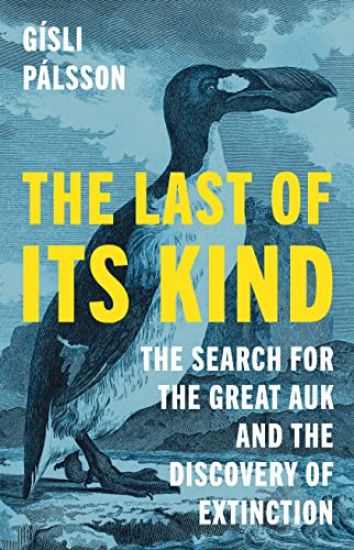
The Last of Its Kind

The Last of Its Kind

Gísli Pálsson

PRINCETON UNIVERSITY PRESS
2026
pokkari

Halvin toimitettuna 22,90 €

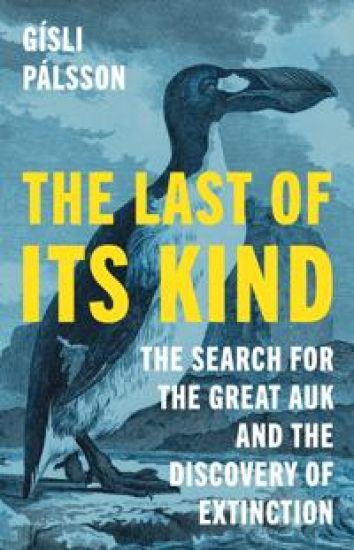
Shortlisted for the Royal Society Trivedi Science Book Prize How an iconic bird’s final days exposed the reality of human-caused extinction The great auk is one of the most tragic and documented examples of extinction. A flightless bird that bred primarily on the remote islands of the North Atlantic, the last of its kind were killed in Iceland in 1844. Gísli Pálsson draws on firsthand accounts from the Icelanders who hunted the last great auks to bring to life a bygone age of Victorian scientific exploration while offering vital insights into the extinction of species. Pálsson vividly recounts how British ornithologists John Wolley and Alfred Newton set out for Iceland to collect specimens only to discover that the great auks were already gone. At the time, the Victorian world viewed extinction as an impossibility or trivialized it as a natural phenomenon. Pálsson chronicles how Wolley and Newton documented the fate of the last birds through interviews with the men who killed them, and how the naturalists’ Icelandic journey opened their eyes to the disappearance of species as a subject of scientific concern—and as something that could be caused by humans. Blending a richly evocative narrative with rare, unpublished material as well as insights from ornithology, anthropology, and Pálsson’s own North Atlantic travels, The Last of Its Kind reveals how the saga of the great auk opens a window onto the human causes of mass extinction.
The Man Who Stole Himself

The Man Who Stole Himself

Gisli Palsson

THE UNIVERSITY OF CHICAGO PRESS
2025
nidottu

Halvin toimitettuna 28,30 €

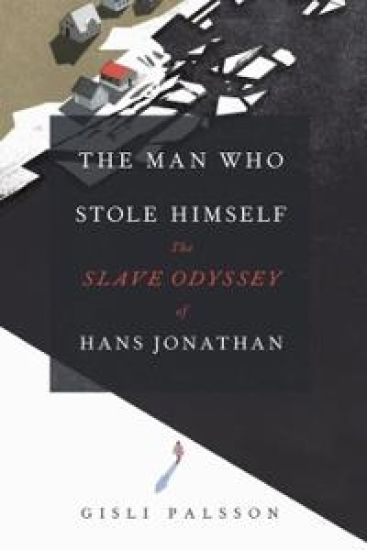
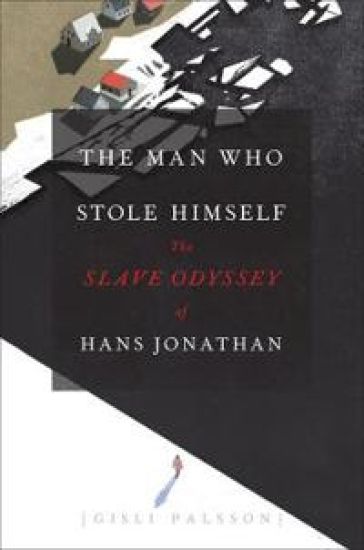
The life story of Hans Jonathan, Iceland's first Black citizen. The island nation of Iceland is known for many things—majestic landscapes, volcanic eruptions, distinctive seafood—but racial diversity is not one of them. So the little-known story of Hans Jonathan, a free Black man who lived and raised a family in early nineteenth-century Iceland, is improbable and compelling, the stuff of novels. In The Man Who Stole Himself, Gisli Palsson lays out the story of Hans Jonathan (also known as Hans Jónatan) in stunning detail. Born into slavery in St. Croix in 1784, Hans was taken as a slave to Denmark, where he eventually enlisted in the navy and fought on behalf of the country in the 1801 Battle of Copenhagen. After the war, he declared himself a free man, believing that he was due freedom not only because of his patriotic service, but because while slavery remained legal in the colonies, it was outlawed in Denmark itself. He thus became the subject of one of the most notorious slavery cases in European history, which he lost. Then Hans ran away—never to be heard from in Denmark again, his fate unknown for more than two hundred years. It’s now known that Hans fled to Iceland, where he became a merchant and peasant farmer, married, and raised two children. Today, he has become something of an Icelandic icon, claimed as a proud and daring ancestor both there and among his descendants in America. The Man Who Stole Himself brilliantly intertwines Hans Jonathan’s adventurous travels with a portrait of the Danish slave trade, legal arguments over slavery, and the state of nineteenth-century race relations in the Northern Atlantic world. Throughout the book, Palsson traces themes of imperial dreams, colonialism, human rights, and globalization, which all come together in the life of a single, remarkable man. Hans literally led a life like no other. His is the story of a man who had the temerity—the courage—to steal himself.
The Last of Its Kind

The Last of Its Kind

Gísli Pálsson

PRINCETON UNIVERSITY PRESS
2024
sidottu

Halvin toimitettuna 26,30 €

Shortlisted for the Royal Society Trivedi Science Book PrizeHow an iconic bird’s final days exposed the reality of human-caused extinctionThe great auk is one of the most tragic and documented examples of extinction. A flightless bird that bred primarily on the remote islands of the North Atlantic, the last of its kind were killed in Iceland in 1844. Gísli Pálsson draws on firsthand accounts from the Icelanders who hunted the last great auks to bring to life a bygone age of Victorian scientific exploration while offering vital insights into the extinction of species. Pálsson vividly recounts how British ornithologists John Wolley and Alfred Newton set out for Iceland to collect specimens only to discover that the great auks were already gone. At the time, the Victorian world viewed extinction as an impossibility or trivialized it as a natural phenomenon. Pálsson chronicles how Wolley and Newton documented the fate of the last birds through interviews with the men who killed them, and how the naturalists’ Icelandic journey opened their eyes to the disappearance of species as a subject of scientific concern—and as something that could be caused by humans. Blending a richly evocative narrative with rare, unpublished material as well as insights from ornithology, anthropology, and Pálsson’s own North Atlantic travels, The Last of Its Kind reveals how the saga of the great auk opens a window onto the human causes of mass extinction.
Down to Earth

Down to Earth

Gísli Pálsson

Punctum Books
2020
pokkari
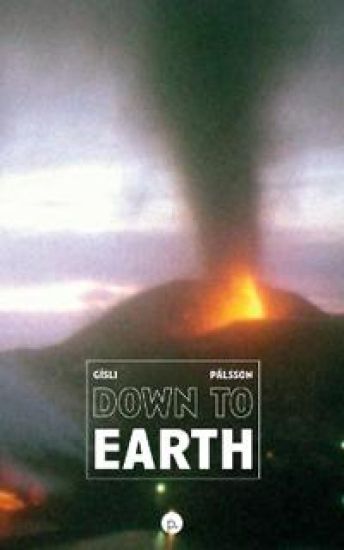
Can one have something in common with a lava field? Can one identify with a mountain, or connect with a contemporary event in the history of the earth, in the way that some people feel connected together by birthday, genetic fingerprint, or zodiac sign? In the terms of the Christian burial ceremony, what is this earth from which we come and to which we return? In Down to Earth, G sli P lsson explores such questions through both personal reflection on the microcosm of his childhood home, an Icelandic island disrupted by volcanic eruption, and a critical discussion of the current age of the Anthropocene, characterized by the growing environmental impact of humans. While environmental hazards caused by humans often inform public discussion of the Anthropocene, human impact on the planet is not always detrimental. This book discusses in detail the pioneering effort on Heimaey island to cool molten lava and to divert its flow, in order to save a fishing harbor and the community it has allowed to thrive. Mingling the personal and the geological, the local and the global, Down to Earth should appeal to many readers in diverse contexts throughout the English-speaking world. The author appears to the reader when it suits him, naturally enough, and on occasion near the center of the narrative, in the vicinity of earthquakes, eruptions, and other natural hazards. G sli P lsson is Professor of Anthropology at the University of Iceland. He has written extensively on a variety of issues, including human-environmental relations, slavery, biomedicine, and the social context of genomics. He has done fieldwork in Iceland, the Republic of Cape Verde, the Canadian Arctic, and the Virgin Islands. He has written over 130 articles in scientific journals and edited books. His most recent books are The Man Who Stole Himself (2016); Nature, Culture, and Society: Anthropological Perspectives on Life (2015), Can Science Resolve the Nature/Nurture Debate? (with Margaret Lock, 2016), and Biosocial Becomings: Integrating Social and Biological Anthropology (co-edited with Timothy Ingold, 2013). P lsson has received a number of Icelandic and international honours for his academic work, including the Icelandic Asa Wright Medal for excellence in research, Honorary Fellowship of the Royal Anthropological Institute of Great Britain and Ireland, the Rosenstiel Award for research from the University of Miami, and from the College of William & Mary, annaward for the best book on historical anthropology (2018). He has served on various international boards and committees, including the European Science Foundation.
The Human Age

The Human Age

Gísli Pálsson

Welbeck Publishing Group
2020
sidottu
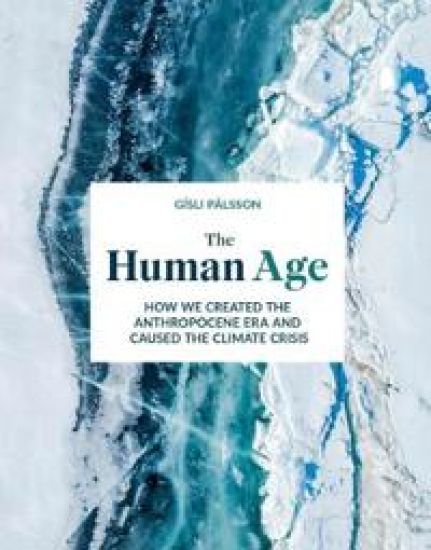
The Human Age is an intrepid exploration of the new geological epoch in which we now find ourselves: the Anthropocene. Defined as the Age of Man, this is the epoch in which human beings have become the driving forces that mould, transform and destroy Earth. Where natural occurrences once controlled climate, geology and the genesis and demise of species, humankind now holds the reins. Bringing together scientific theory, political argument, philosophical questioning and our deepest fears and hopes for the future, The Human Age explores this new age through informative and compelling text, and astounding photographs of the impact of human life on Earth. Powerful graphics depict the changing nature of the landscape and the very bedrock of our planet, and the destruction of ancient systems and environments that is resulting in global upheaval and climate breakdown. Creating a visual and written timeline of the age of human domination, The Human Age reveals how this era was born, the ways in which it is impacting us and our planet now, and the outlook for the future.
Hans Jonathan

Hans Jonathan

Gisli Palsson

Rebel With a Cause
2017
pokkari
Historien om Hans Jonathan er både den forunderlige fortælling om en ung mand fra den caribiske ø St. Croix, der i 1784 fødes ind i slaveri og blot 43 år senere ender sine dage i Island som en fri mand, og en fortælling om historiens betydning i nutiden. Hans Jonathans korte liv er omdrejningspunkt for en fortælling om imperialisme, slaveri, ejendomsret, race og kulturel identitet, der strækker sig over 200 år og tager læseren med fra Caribien over Danmark til Island og USA. Som barn blev Hans Jonathan sejlet fra St. Croix til København, hvor han voksede op hos familien Schimmelmann i Amaliegade 23. I 1801, i en alder af bare 17 år, fulgte han den danske konges opfordring og lod sig hverve til flåden for at forsvare kongen og det styre, der profiterede på slavegørelsen af både ham selv og hans mor. Hans indsats i Slaget på Reden var heroisk, og efterfølgende slog han sig ned i København i overbevisningen om, at han nu var en fri mand. Men han tog fejl. Henrietta Schimmelmann anlagde et civilt søgsmål mod Hans Jonathan og gjorde krav på ejerskabet over ham – og hun vandt. Det lykkedes dog Hans Jonathan at flygte, inden hun kunne sende ham tilbage til St. Croix, og derved forsvandt han også ud af Danmarks historien. Indtil ca. 200 år senere. Bogen er en reflekterende og velovervejet fortælling om verden; på én gang en sympatisk historie om én mands forsøg på at finde sin plads som farvet i 1800-tallets Skandinavien og samtidig et forsøg på at beskrive det uhyrlige på et genkendeligt, menneskeligt plan. Som var det en historisk detektivroman lykkes det Gisli Palsson at væve denne fortællings mange og detaljerige tråde sammen til en multifacetteret historie om ét menneskes eksistens, der samtidig formår at skabe kraftig genlyd i nutidens globaliserede virkelighed. Historiens tråde trækkes hele vejen op til nutiden, ikke mindst i kraft af Hans Jonathans mange efterkommere, og herved belyses historiens fortsatte relevans for levede liv i en verden, hvor hudfarve, nationalitet og religion (igen) spiller en stadig større rolle.
The Textual Life of Savants

The Textual Life of Savants

Gisli Pálsson

Routledge
2017
sidottu
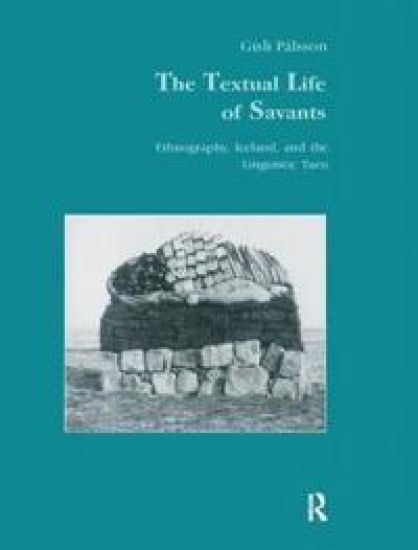
First Published in 1995. This book focuses on the role and significance of texts and textualism for anthropology and ethnography and, more specifically, the understanding of particular aspects of Icelandic society and history. The discussion is centred on a range of issues; moving between general social theory and ethnographic details, the immediate present and the distant past, language and production, fieldwork and the act of writing, texts (sagas, novels, and ethnographies) and real life. In each case, however, it draws attention to what may be called a pragmatist approach, a concern with action and agency as they constitute, and are constituted by, social life. Such an approach, I hold, is an important and timely remedy to current textualism, the trendy theoretical tradition often described as the linguistic turn.
The Man Who Stole Himself

The Man Who Stole Himself

Gisli Palsson

University of Chicago Press
2016
sidottu
The island nation of Iceland is known for many things majestic landscapes, volcanic eruptions, distinctive seafood but racial diversity is not one of them. So the little-known story of Hans Jonathan, a free black man who lived and raised a family in early nineteenth-century Iceland, is improbable and compelling, the stuff of novels. In The Man Who Stole Himself, Gisli Palsson lays out Jonathan's story in stunning detail. Born into slavery in St. Croix in 1784, Jonathan was brought as a slave to Denmark, where he eventually enlisted in the navy and fought on behalf of the country in the 1801 Battle of Copenhagen. After the war, he declared himself a free man, believing that not only was he due freedom because of his patriotic service, but because while slavery remained legal in the colonies, it was outlawed in Denmark itself. Jonathan was the subject of one of the most notorious slavery cases in European history, which he lost. Then, he ran away never to be heard from in Denmark again, his fate unknown for more than two hundred years. It's now known that Jonathan fled to Iceland, where he became a merchant and peasant farmer, married, and raised two children. Today, he has become something of an Icelandic icon, claimed as a proud and daring ancestor both there and among his descendants in America. The Man Who Stole Himself brilliantly intertwines Jonathan's adventurous travels with a portrait of the Danish slave trade, legal arguments over slavery, and the state of nineteenth-century race relations in the Northern Atlantic world. Throughout the book, Palsson traces themes of imperial dreams, colonialism, human rights, and globalization, which all come together in the life of a single, remarkable man. Jonathan literally led a life like no other. His is the story of a man who had the temerity the courage to steal himself.
Can Science Resolve the Nature / Nurture Debate?

Can Science Resolve the Nature / Nurture Debate?

Margaret M. Lock; Gisli Palsson

Polity Press
2016
nidottu
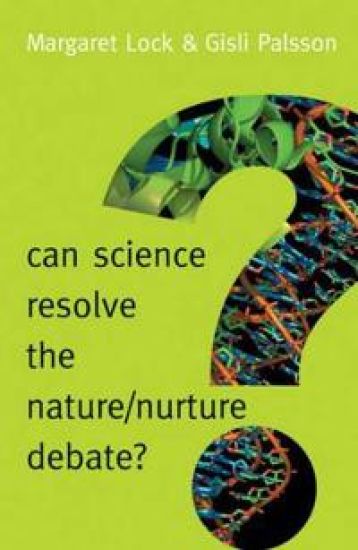
Following centuries of debate about "nature and nurture" the discovery of DNA established the idea that nature (genes) determines who we are, relegating nurture (environment) to icing on the cake. Since the 1950s, the new science of epigenetics has demonstrated how cellular environments and certain experiences and behaviors influence gene expression at the molecular level, with significant implications for health and wellbeing. To the amazement of scientists, mapping the human genome indirectly supported these insights. Anthropologists Margaret Lock and Gisli Palsson outline vituperative arguments from Classical times about the relationship between nature and nurture, furthered today by epigenetic findings and the demonstration of a "reactive genome." The nature/nurture debate, they show, can never be put to rest, because these concepts are in constant flux in response to the new insights science continually offers.
Can Science Resolve the Nature / Nurture Debate?

Can Science Resolve the Nature / Nurture Debate?

Margaret M. Lock; Gisli Palsson

Polity Press
2016
sidottu
Following centuries of debate about "nature and nurture" the discovery of DNA established the idea that nature (genes) determines who we are, relegating nurture (environment) to icing on the cake. Since the 1950s, the new science of epigenetics has demonstrated how cellular environments and certain experiences and behaviors influence gene expression at the molecular level, with significant implications for health and wellbeing. To the amazement of scientists, mapping the human genome indirectly supported these insights. Anthropologists Margaret Lock and Gisli Palsson outline vituperative arguments from Classical times about the relationship between nature and nurture, furthered today by epigenetic findings and the demonstration of a "reactive genome." The nature/nurture debate, they show, can never be put to rest, because these concepts are in constant flux in response to the new insights science continually offers.
Nature, Culture, and Society

Nature, Culture, and Society

Gisli Palsson

Cambridge University Press
2015
sidottu
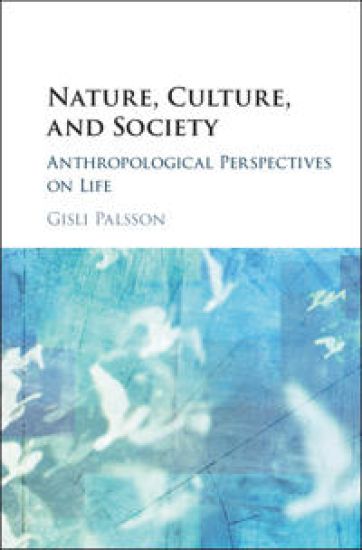
Life is currently one of the most active zones of politics and economic production, as biological material is increasingly the subject of engineering, banking, reproduction, and exchange. These developments represent some of the most challenging issues facing humanity in the twenty-first century and call for new forms of engagement - and new anthropologies of life. Reflecting upon the changing human condition, Palsson addresses various conflated zones of life at particular times and scales, from the genome to the human body and the global environment. Using a 'biosocial' perspective, he argues, will help us to capture the hybrid nature of life, enhancing our sensitivity to differences and similarities in hierarchies, the reproduction of bio-objects and the exchange between humans, other species, and the environment. Engaging with topical issues on the public agenda, from personal genomics to human-animal relations to the global environment, the book sets out a compelling case for meaningful change.
Anthropology and the New Genetics

Anthropology and the New Genetics

Gísli Pálsson

Cambridge University Press
2007
pokkari

Halvin toimitettuna 37,40 €

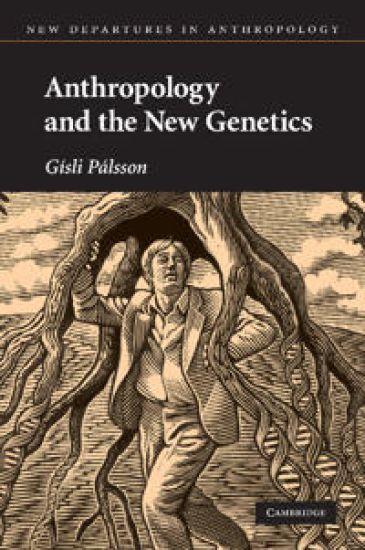
The growth of 'new genetics' has dramatically increased our understanding of health, diseases and the body. Anthropologists argue that these scientific advances have had far-reaching social and cultural implications, radically changing our self-understanding and perception of what it means to be human; that we have become 'biomedicalized', fragmented and commodified - redefining our notions of citizenship, social relations, family and identity. This book shows how anthropology can contribute to and challenge the ways we have come to understand genetic issues. Exploring a range of issues and case studies in genetic research, it provides an ethnographic 'reality-check', arguing that we must look beyond the 'gene-centrism' of genetic codes, family trees and insular populations, to explore their wider cultural, ethical and philosophical implications. Including coverage of the controversial and widely discussed Icelandic Health Sector Database, this accessible survey will be welcomed by graduate students and researchers in social anthropology, human genetics and biotechnology.
Anthropology and the New Genetics

Anthropology and the New Genetics

Gísli Pálsson

Cambridge University Press
2007
sidottu

Halvin toimitettuna 80,90 €

The growth of 'new genetics' has dramatically increased our understanding of health, diseases and the body. Anthropologists argue that these scientific advances have had far-reaching social and cultural implications, radically changing our self-understanding and perception of what it means to be human; that we have become 'biomedicalized', fragmented and commodified - redefining our notions of citizenship, social relations, family and identity. This book shows how anthropology can contribute to and challenge the ways we have come to understand genetic issues. Exploring a range of issues and case studies in genetic research, it provides an ethnographic 'reality-check', arguing that we must look beyond the 'gene-centrism' of genetic codes, family trees and insular populations, to explore their wider cultural, ethical and philosophical implications. Including coverage of the controversial and widely discussed Icelandic Health Sector Database, this accessible survey will be welcomed by graduate students and researchers in social anthropology, human genetics and biotechnology.
Travelling Passions

Travelling Passions

Gisli Palsson; Keneva Kunz

University of Manitoba Press
2005
sidottu
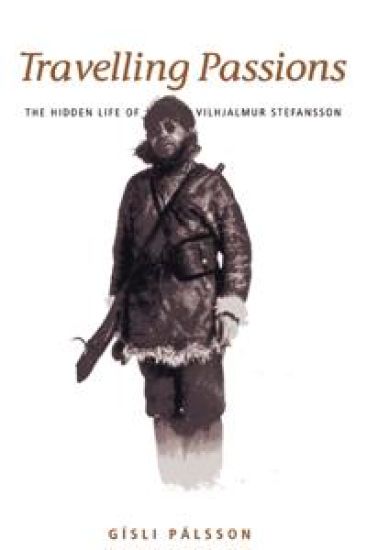
Vilhjalmur Stefansson has long been known for his groundbreaking work as an anthropologist and expert on Arctic peoples. His three expeditions to the Canadian Arctic in the early 1900s, as well as his expertise in northern anthropology, helped create his public image as an heroic, Hemingway-esque figure in the annals of twentieth-century exploration. But the emotional and private life of Stefansson the man have remained hidden, until now. New evidence of this other life has recently been discovered: a collection of love letters between Stefansson and his fiance Orpha Cecil Smith were found in a New Hampshire flea market; Stefansson's field diaries have revealed elegant essays and insightful commentary on Inupiat society; baptismal records have revealed that Stefansson had a son, Alex, with his informant and guide, Fanny Pannigabluk; and through Web searches and a private detective, Palsson found and conducted interviews with the descendents of both Cecil Smith and Alex Stefansson. Travelling Passions sheds new light on Stefansson’s life and work, focussing on the tension between his private life and the theories that brought his name to the halls of fame. Palsson draws a clear, vivid, and in many ways unexpected picture of the mythical figure of Stefansson.
The Textual Life of Savants

The Textual Life of Savants

Gisli Palsson

Harwood-Academic Publishers
1995
nidottu
First Published in 1995. This book focuses on the role and significance of texts and textualism for anthropology and ethnography and, more specifically, the understanding of particular aspects of Icelandic society and history. The discussion is centred on a range of issues; moving between general social theory and ethnographic details, the immediate present and the distant past, language and production, fieldwork and the act of writing, texts (sagas, novels, and ethnographies) and real life. In each case, however, it draws attention to what may be called a pragmatist approach, a concern with action and agency as they constitute, and are constituted by, social life. Such an approach, I hold, is an important and timely remedy to current textualism, the trendy theoretical tradition often described as the linguistic turn.