Kirjojen hintavertailu – 12 903 725 kirjaa ja 27 kauppaa

Kirjailija

Giulio Tononi

Kirjat ja teokset yhdessä paikassa: 5 kirjaa, julkaisuja vuosilta 2001–2018, suosituimpiin kuuluu Consciousness. Vertaile teosten hintoja ja tarkista saatavuus suomalaisista kirjakaupoista.

5 kirjaa

Kirjojen julkaisuvuodet: 2001–2018.

Sizing up Consciousness

Sizing up Consciousness

Marcello Massimini; Giulio Tononi

Oxford University Press
2018
sidottu

Halvin toimitettuna 66,50 €

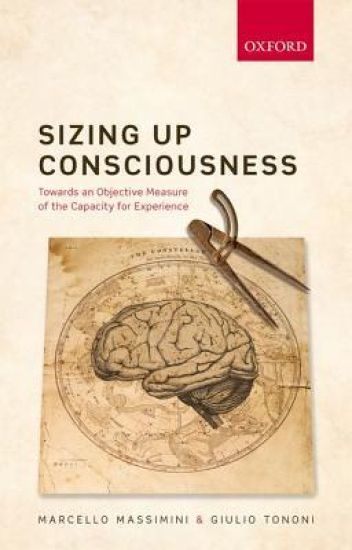
Everyone knows what consciousness is: it is what vanishes when we fall into dreamless sleep and reappears when we wake up or when we dream. However, we become less and less confident when we are called to answer fundamental questions about the relationships between consciousness and the physical world. Why is the cerebral cortex associated with consciousness, but not the liver, the heart, the cerebellum or other neural structures? Why does consciousness fade during deep sleep, while cortical neurons remain active? Can unresponsive patients with an island of active cortex surrounded by widespread damage be conscious? Is an artificial system that outperforms people at driving, recognizing faces and objects, and answering difficult questions conscious? Using the Integrated Information Theory (IIT) as a guiding principle, Sizing up Consciousness explores these questions, taking the reader along a fascinating journey from the cerebral cortex to the cerebellum, from wakefulness to sleep, anesthesia, and coma, supercomputers, octopuses, dolphins, and much more besides. By translating theoretical principles into practical measurements, the book outlines a preliminary attempt to identify a general rule to size up the capacity for consciousness within the human skull and beyond. Sizing up Consciousness is a short, accessible book, spanning neuronal activity to existential considerations and is essential reading for anyone interested in awareness and cognition.
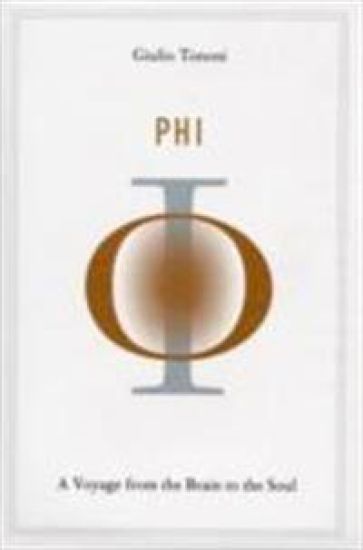
Phi

Phi

Giulio Tononi

Pantheon
2012
sidottu

Halvin toimitettuna 36,50 €

This title is printed in full color throughout. From one of the most original and influential neuroscientists at work today, here is an exploration of consciousness unlike any other--as told by Galileo, who opened the way for the objectivity of science and is now intent on making subjective experience a part of science as well. Galileo's journey has three parts, each with a different guide. In the first, accompanied by a scientist who resembles Francis Crick, he learns why certain parts of the brain are important and not others, and why consciousness fades with sleep. In the second part, when his companion seems to be named Alturi (Galileo is hard of hearing; his companion's name is actually Alan Turing), he sees how the facts assembled in the first part can be unified and understood through a scientific theory--a theory that links consciousness to the notion of integrated information (also known as phi). In the third part, accompanied by a bearded man who can only be Charles Darwin, he meditates on how consciousness is an evolving, developing, ever-deepening awareness of ourselves in history and culture--that it is everything we have and everything we are. Not since G del, Escher, Bach has there been a book that interweaves science, art, and the imagination with such originality. This beautiful and arresting narrative will transform the way we think of ourselves and the world.
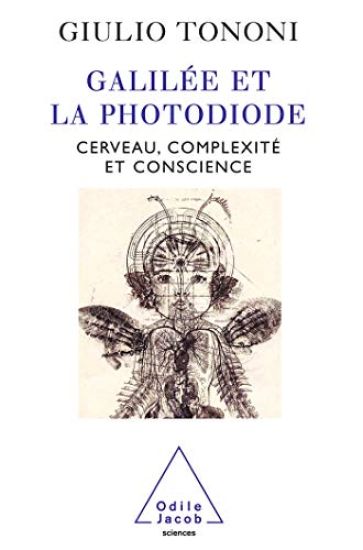
Galileo and the Photodiode / Galilée et la Photodiode: Cerveau, complexité et conscience
Let us imagine Galileo locked up with a photodiode in a room that alternately lights up and darkens. Both can indicate whether it is lit or not. If Galileo is aware of it, why not say that the photodiode is too? Through a series of thought experiments, which Galileo invented, this book seeks to solve the enigma of consciousness. How is consciousness produced by the brain? Is it always? Is a dreamless sleep a state of consciousness? Do the right brain and the left brain give two different consciousnesses when they are separated? Why does the removal of the cerebellum have no effect on consciousness when it has more nerve cells than the brain? By following Galileo step by step, from thought experiment to thought experiment, Giulio Tononi proposes here a scientific theory of consciousness. Giulio Tononi is a professor of psychiatry at the University of Wisconsin in Madison (USA). He published, with Gerald M. Edelman, How Matter Becomes Consciousness.
Consciousness

Consciousness

Gerald M Edelman; Giulio Tononi

Penguin Books Ltd
2001
pokkari
What goes on in our heads when we have a thought? With this book, Edelman and Tononi present an empirically-supported full-scale theory of consciousness. They apply all of the resources and insights of modern neuroscience, from the largest computermodels ever constructed to new experiments that detect the changes in brain activity. This pioneering work represents a landmark in our growing understanding of consciousness. Praise for Gerald Edelman: "The new Darwin... His theory is an enrichment of life itself" - Oliver Sacks, The Times
A Universe Of Consciousness How Matter Becomes Imagination

A Universe Of Consciousness How Matter Becomes Imagination

Gerald M. Edelman; Giulio Tononi

Basic Books
2001
pokkari

Halvin toimitettuna 29,00 €

In A Universe of Consciousness, Gerald Edelman builds on the radical ideas he introduced in his monumental trilogy-Neural Darwinism, Topobiology, and The Remembered Present-to present for the first time an empirically supported full-scale theory of consciousness. He and the neurobiolgist Giulio Tononi show how they use ingenious technology to detect the most minute brain currents and to identify the specific brain waves that correlate with particular conscious experiences. The results of this pioneering work challenge the conventional wisdom about consciousness.