
Kirjailija
Giuseppe Mazzotta
Kirjat ja teokset yhdessä paikassa: 13 kirjaa, julkaisuja vuosilta 1993–2024, suosituimpiin kuuluu Io sono sovversivo. Vertaile teosten hintoja ja tarkista saatavuus suomalaisista kirjakaupoista.
13 kirjaa
Kirjojen julkaisuvuodet: 1993–2024.
For today's readers, the great Italian philosopher of history Giambattista Vico (1668-1744) can be startlingly relevant to the social and educational divisiveness we confront at century's end: here Giuseppe Mazzotta, one of the leading Italianists in the United States, shows how much Vico, properly read, can bring to an understanding of contemporary social problems. To explore Vico's body of thought in all its monumental complexity, Mazzotta highlights the place of poetry, or "writerliness," in Vico's educational project, which links literature, history, religion, philosophy, and politics. The New Map of the World is the first book since Benedetto Croce's The Philosophy of G. B. Vico (1911) to interpret the immense range of Vico's creativity. Beginning with Vico's autobiography, Mazzotta explains that Vico's heroic attempt to unite the arts and sciences was meant to offer a desperately needed political unity to modern society. In contrast to past thematic studies of Vico that focus on a single one of his ideas, The New Map of the World explores the vital interaction of the issues that fascinated him: his educational and political project, his sense of the necessity for a new way of conceiving authority, and his belief in the power of poetry. Mazzotta ends by examining Vico's awareness of the tragic limits of politics itself. Originally published in 1999. The Princeton Legacy Library uses the latest print-on-demand technology to again make available previously out-of-print books from the distinguished backlist of Princeton University Press. These editions preserve the original texts of these important books while presenting them in durable paperback and hardcover editions. The goal of the Princeton Legacy Library is to vastly increase access to the rich scholarly heritage found in the thousands of books published by Princeton University Press since its founding in 1905.
The World at Play in Boccaccio's Decameron
Giuseppe Mazzotta
PRINCETON UNIVERSITY PRESS
2016
sidottu
Giuseppe Mazzotta provides both a powerful framework for reading the Decameron and an important contribution to medieval and contemporary debates in esthetics Originally published in 1986. The Princeton Legacy Library uses the latest print-on-demand technology to again make available previously out-of-print books from the distinguished backlist of Princeton University Press. These editions preserve the original texts of these important books while presenting them in durable paperback and hardcover editions. The goal of the Princeton Legacy Library is to vastly increase access to the rich scholarly heritage found in the thousands of books published by Princeton University Press since its founding in 1905.
Dante's Vision and the Circle of Knowledge
Giuseppe Mazzotta
Princeton University Press
2016
sidottu
In a masterly synthesis of historical and literary analysis, Giuseppe Mazzotta shows how medieval knowledge systems--the cycle of the liberal arts, ethics, politics, and theology--interacted with poetry and elevated the Divine Comedy to a central position in shaping all other forms of discursive knowledge. To trace the circle of Dante's intellectual concerns, Mazzotta examines the structure and aims of medieval encyclopedias, especially in the twelfth and thirteenth centuries; the medieval classification of knowledge; the battle of the arts; the role of the imagination; the tension between knowledge and vision; and Dante's theological speculations in his constitution of what Mazzotta calls aesthetic, ludic theology. As a poet, Dante puts himself at the center of intellectual debates of his time and radically redefines their configuration. In this book, Mazzotta offers powerful new readings of a poet who stands amid his culture's crisis and fragmentation, one who responds to and counters them in his work. In a critical gesture that enacts Dante's own insight, Mazzotta's practice is also a fresh contribution to the theoretical literary debates of the present. Originally published in 1992. The Princeton Legacy Library uses the latest print-on-demand technology to again make available previously out-of-print books from the distinguished backlist of Princeton University Press. These editions preserve the original texts of these important books while presenting them in durable paperback and hardcover editions. The goal of the Princeton Legacy Library is to vastly increase access to the rich scholarly heritage found in the thousands of books published by Princeton University Press since its founding in 1905.
For today's readers, the great Italian philosopher of history Giambattista Vico (1668-1744) can be startlingly relevant to the social and educational divisiveness we confront at century's end: here Giuseppe Mazzotta, one of the leading Italianists in the United States, shows how much Vico, properly read, can bring to an understanding of contemporary social problems. To explore Vico's body of thought in all its monumental complexity, Mazzotta highlights the place of poetry, or "writerliness," in Vico's educational project, which links literature, history, religion, philosophy, and politics. The New Map of the World is the first book since Benedetto Croce's The Philosophy of G. B. Vico (1911) to interpret the immense range of Vico's creativity. Beginning with Vico's autobiography, Mazzotta explains that Vico's heroic attempt to unite the arts and sciences was meant to offer a desperately needed political unity to modern society. In contrast to past thematic studies of Vico that focus on a single one of his ideas, The New Map of the World explores the vital interaction of the issues that fascinated him: his educational and political project, his sense of the necessity for a new way of conceiving authority, and his belief in the power of poetry. Mazzotta ends by examining Vico's awareness of the tragic limits of politics itself. Originally published in 1999. The Princeton Legacy Library uses the latest print-on-demand technology to again make available previously out-of-print books from the distinguished backlist of Princeton University Press. These editions preserve the original texts of these important books while presenting them in durable paperback and hardcover editions. The goal of the Princeton Legacy Library is to vastly increase access to the rich scholarly heritage found in the thousands of books published by Princeton University Press since its founding in 1905.
Dante's Vision and the Circle of Knowledge
Giuseppe Mazzotta
Princeton University Press
2014
pokkari
In a masterly synthesis of historical and literary analysis, Giuseppe Mazzotta shows how medieval knowledge systems--the cycle of the liberal arts, ethics, politics, and theology--interacted with poetry and elevated the Divine Comedy to a central position in shaping all other forms of discursive knowledge. To trace the circle of Dante's intellectual concerns, Mazzotta examines the structure and aims of medieval encyclopedias, especially in the twelfth and thirteenth centuries; the medieval classification of knowledge; the battle of the arts; the role of the imagination; the tension between knowledge and vision; and Dante's theological speculations in his constitution of what Mazzotta calls aesthetic, ludic theology. As a poet, Dante puts himself at the center of intellectual debates of his time and radically redefines their configuration. In this book, Mazzotta offers powerful new readings of a poet who stands amid his culture's crisis and fragmentation, one who responds to and counters them in his work. In a critical gesture that enacts Dante's own insight, Mazzotta's practice is also a fresh contribution to the theoretical literary debates of the present. Originally published in 1992. The Princeton Legacy Library uses the latest print-on-demand technology to again make available previously out-of-print books from the distinguished backlist of Princeton University Press. These editions preserve the original texts of these important books while presenting them in durable paperback and hardcover editions. The goal of the Princeton Legacy Library is to vastly increase access to the rich scholarly heritage found in the thousands of books published by Princeton University Press since its founding in 1905.
The World at Play in Boccaccio's Decameron
Giuseppe Mazzotta
Princeton University Press
2014
pokkari
Giuseppe Mazzotta provides both a powerful framework for reading the Decameron and an important contribution to medieval and contemporary debates in esthetics Originally published in 1986. The Princeton Legacy Library uses the latest print-on-demand technology to again make available previously out-of-print books from the distinguished backlist of Princeton University Press. These editions preserve the original texts of these important books while presenting them in durable paperback and hardcover editions. The goal of the Princeton Legacy Library is to vastly increase access to the rich scholarly heritage found in the thousands of books published by Princeton University Press since its founding in 1905.
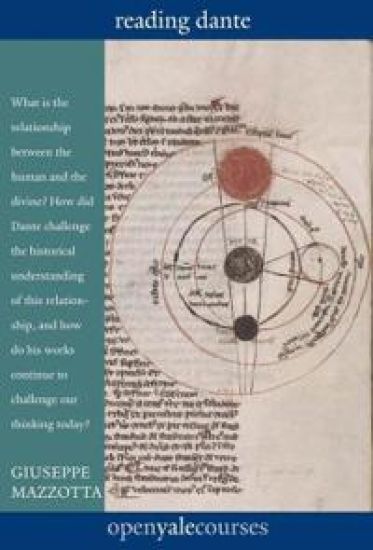
A towering figure in world literature, Dante wrote his great epic poem Commedia in the early fourteenth century. The work gained universal acclaim and came to be known as La Divina Commedia, or The Divine Comedy. Giuseppe Mazzotta brings Dante and his masterpiece to life in this exploration of the man, his cultural milieu, and his endlessly fascinating works. Based on Mazzotta’s highly popular Yale course, this book offers a critical reading of The Divine Comedy and selected other works by Dante. Through an analysis of Dante’s autobiographical Vita nuova, Mazzotta establishes the poetic and political circumstances of The Divine Comedy. He situates the three sections of the poem—Inferno, Purgatory, Paradise—within the intellectual and social context of the late Middle Ages, and he explores the political, philosophical, and theological topics with which Dante was particularly concerned.
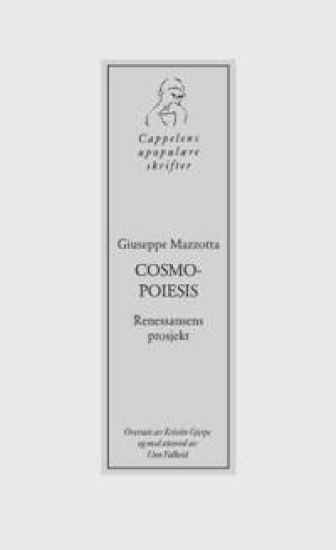
Giuseppe Mazzotta (f. 1942), professor i italiensk ved Yale University, er berømt for sine nylesninger av klassikere som Dante, Petrarca, Boccaccio og Vico. Litteraturen er fundamental for all viten, hevder han. Snarere enn bare å bruke språket reflekterer litteraturen over det og avslører på den måten de retoriske mekanismene vi når kunnskap med. Slik kaster Mazzotta nytt lys på det problematiske forholdet mellom litteratur og filosofi, som gjennom århundrene har engasjert forfattere fra Platon og Vico, til Nietzsche, Benjamin og Rorty. COSMOPOIESIS betyr verdensskapelse. Her undersøker Mazzotta hvordan tenkere i renessansen brøt med middelalderens verdensbilde, samtidig som nye verdensbilder ble skapt gjennom utopier, magi, vitenskap, kunst og teater. Gjennom lesninger av en rekke sentrale tekster viser han hvordan renessanselitteraturen fanget opp og drøftet tidens politiske, vitenskapelige og etiske spørsmål. Tilnærmingen hans demonstrerer hvordan litteraturen knytter delperspektiver sammen til en helhet, samtidig som den opponerer mot og overskrider etablerte verdier og myter. Hos Mazzotta representerer litteraturen med andre ord selve nøkkelen til å forstå historien, oss selv og vår egen verden. Nr. 61 i Cappelens upopulære skrifter.
Selected Writings of Girolamo Savonarola
Girolamo Savonarola; Giuseppe Mazzotta
Yale University Press
2006
sidottu
Five hundred years after his death at the stake, Girolamo Savonarola remains one of the most fascinating figures of the Italian Renaissance. This wide-ranging collection, with an introduction by historian Alison Brown, includes translations of his sermons and treatises on pastoral ministry, prophecy, politics, and moral reform, as well as the correspondence with Alexander VI that led to Savonarola’s silencing and excommunication. Also included are first-hand accounts of religio-civic festivities instigated by Savonarola and of his last moments. This collection demonstrates the remarkable extent of Savonarola’s contributions to the religious, political, and aesthetic debates of the late fifteenth century.
Cosmopoiesis means world-making, and in this erudite, polemical book, Professor Mazzotta traces how major medieval and Renaissance thinkers invented their worlds through utopias, magic, science, art, and theatre. The Renaissance is usually read from a Cartesian or Hegelian (via Burckhardt) perspective. It is viewed as a time of individualities or it is studied in terms of disembodied ideas and abstract forms. Mazzotta calls for a new approach: the necessity to study the Renaissance in terms of the ongoing conversation of the arts and sciences. His is an encyclopedic grasp that takes into consideration literature, philosophy, politics, history, and theology. The book's theoretical premise lies in the thought of the eighteenth-century Italian philosopher, Giambattista Vico. Vico's own reading of the Renaissance, available in his New Science, is obliquely, yet clearly reproposed as the alternate interpretive key for opening up the deeper imaginative concerns of this extraordinary period of Western history. By a series of rigorous textual analyses that range from Poliziano to Ariosto, from Machiavelli to Bacon, to Shakespeare and Cervantes, "Cosmopoiesi"s highlights the ongoing dialogue between literature and philosophy (or literature and science, or, in Vichian terms, philology and philosophy) in some of the central texts of the time. In this dialogue across time and the barriers of space, the esthetic world - the world of the pastoral, romances, epics, utopian fictions, the theatre, and the lyric - far from signalling an evasion from history, is steadily and vitally engaged with the most pressing exigencies of the time. Consistently, the analyses conducted in "Cosmopoiesis" come to grips with these exigencies: the power of science, the relationship between politics and science, and the emergence of a new ethics in the midst of the secretive techniques by new elites in their exercise of political power. Above all, these central texts argue for a necessary reconstitution of the unity of knowledge, for the "encyclopedic" compass of the arts and sciences. The retrieval of this unity is made possible by reclaiming a role for the esthetic or contemplative mode of thought which underlies and shapes the most creative achievements in the world of making.
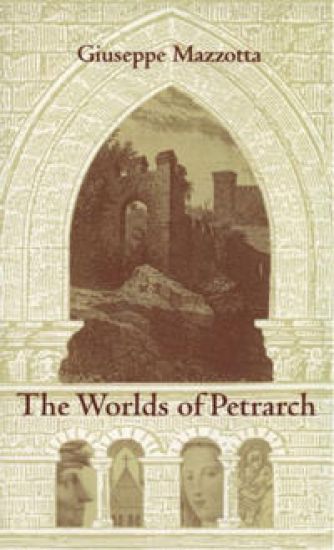
At the center of Petrarch's vision, announcing a new way of seeing the world, was the individual, a sense of the self that would one day become the center of modernity as well. This self, however, seemed to be fragmented in Petrarch's work, divided among the worlds of philosophy, faith, and love of the classics, politics, art, and religion, of Italy, France, Greece, and Rome. In recent decades scholars have explored each of these worlds in depth. In this work, Giuseppe Mazzotta shows for the first time how all these fragmentary explorations relate to each other, how these separate worlds are part of a common vision. Written in a clear and passionate style, The Worlds of Petrarch takes us into the politics of culture, the poetic imagination, into history and ethics, art and music, rhetoric and theology. With this encyclopedic strategy, Mazzotta is able to demonstrate that the self for Petrarch is not a unified whole but a unity of parts, and, at the same time, that culture emerges not from a consensus but from a conflict of ideas produced by opposition and dark passion. These conflicts, intrinsic to Petrarch's style of thought, lead Mazzotta to a powerful rethinking of the concepts of "fragments" and "unity" and, finally, to a new understanding of the relationship between them.
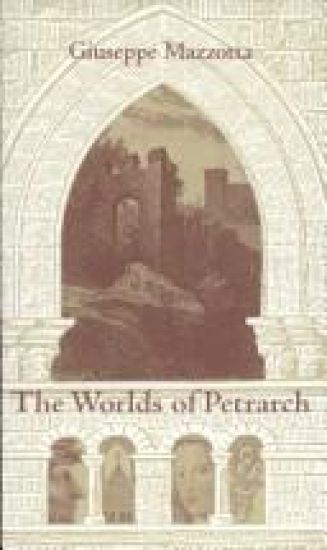
At the center of Petrarch's vision, announcing a new way of seeing the world, was the individual, a sense of the self that would one day become the center of modernity as well. This self, however, seemed to be fragmented in Petrarch's work, divided among the worlds of philosophy, faith, and love of the classics, politics, art, and religion, of Italy, France, Greece, and Rome. In recent decades scholars have explored each of these worlds in depth. In this work, Giuseppe Mazzotta shows for the first time how all these fragmentary explorations relate to each other, how these separate worlds are part of a common vision. Written in a clear and passionate style, The Worlds of Petrarch takes us into the politics of culture, the poetic imagination, into history and ethics, art and music, rhetoric and theology. With this encyclopedic strategy, Mazzotta is able to demonstrate that the self for Petrarch is not a unified whole but a unity of parts, and, at the same time, that culture emerges not from a consensus but from a conflict of ideas produced by opposition and dark passion. These conflicts, intrinsic to Petrarch's style of thought, lead Mazzotta to a powerful rethinking of the concepts of "fragments" and "unity" and, finally, to a new understanding of the relationship between them.