Kirjojen hintavertailu – 12 859 819 kirjaa ja 27 kauppaa
Kirjailija
Glaser Daryl
Kirjat ja teokset yhdessä paikassa: 4 kirjaa, julkaisuja vuosilta 2010–2018, suosituimpiin kuuluu The Unresolved National Question in South Africa. Vertaile teosten hintoja ja tarkista saatavuus suomalaisista kirjakaupoista.
Webster Edward; John Mawbey; Cronin Jeremy; Alex Mohubetswane Mashilo Mohubetswane Mashilo; Robert van Niekerk van Niekerk; Luli Callinicos Callinicos; B G Brown; M P Giyose; H. J. Peterson; C A Thomas; A R Zinn; Zondi Siphamandla; T Dunbar Moodie; Motala Enver; Vally Salim; Gerhard Maré; Mangcu Xolela; Hassim Shireen; Erwin Alec; Sian Byrne; Nicole Ulrich; Walt Lucien; Legassick Martin; Glaser Daryl
The re-emergence of debates on the decolonisation of knowledge has revived interest in the National Question, which began over a century ago and remains unresolved. Tensions that were suppressed and hidden in the past are now being openly debated. Despite this, the goal of one united nation living prosperously under a constitutional democracy remains elusive. This volume examines the way in which various strands of left thought have addressed the National Question, especially during the apartheid years, and goes on to discuss its relevance for South Africa today and in the future. Contributors have defined the question as they believe appropriate, which has resulted in a rich tapestry of interweaving perceptions about the unresolved National Question. The volume is structured in two parts. The first examines four foundational traditions – Marxism-Leninism (the Colonialism of a Special Type thesis); the Congress tradition; the Trotskyist tradition; and Africanism. The second part explores the various shifts in the debate from the 1960s onwards, and includes chapters on Afrikaner nationalism, ethnic issues, Black Consciousness, feminism, workerism and constitutionalism. By revisiting these debates, the volume will become a catalyst for an enriched debate on our identity and our future.
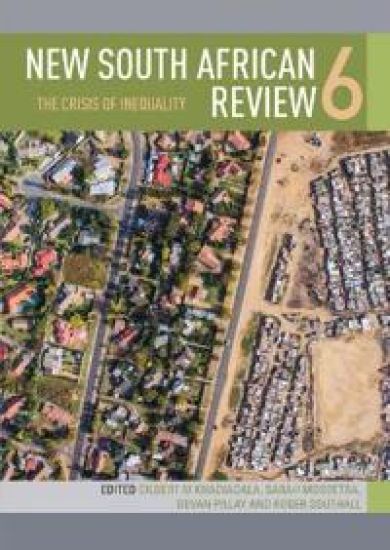
Despite the transition from apartheid to democracy, South Africa is the most unequal country in the world. Its extremes of wealth and poverty undermine intensifying struggles for a better life for all. The wide-ranging essays in this sixth volume of the New South African Review demonstrate how the consequences of inequality extend throughout society and the political economy, crippling the quest for social justice, polarising the politics, skewing economic outcomes and bringing devastating environmental consequences in their wake. Contributors survey the extent and consequences of inequality across fields as diverse as education, disability, agrarian reform, nuclear geography and small towns, and tackle some of the most difficult social, political and economic issues. How has the quest for greater equality affected progressive political discourse? How has inequality reproduced itself, despite best intentions in social policy, to the detriment of the poor and the historically disadvantaged? How have shifts in mining and the financialisation of the economy reshaped the contours of inequality? How does inequality reach into the daily social life of South Africans, and shape the way in which they interact? How does the extent and shape of inequality in South Africa compare with that of other major countries of the global South which themselves are notorious for their extremes of wealth and poverty? South African extremes of inequality reflect increasing inequality globally, and The Crisis of Inequality will speak to all those – general readers, policy makers, researchers and students – who are demanding a more equal world.
This is the first publication in the Democratic Marxism Series, which seeks to elaborate the social theorising and politics of Democratic Marxism. Marx’s writings on and ideas about social transformation have figured prominently in the global Left imagination for more than 150 years. At the end of the twentieth century a number of factors seemed to converge to mark the end of Marxism’s influence on the world and, as a result, by the late twentieth century the relevance of Marxism was under question by both the Left (including Marxists) and Right. The decline was relatively short-lived, however, as the 2008 economic crisis brought into sharp relief the catastrophic effects of financialised capitalism and the need to (re)find alternatives. In the second decade of the twenty-first century, the revival of Marxism is finding new sources of inspiration that revolve around four primary factors: the importance of democracy for an emancipatory project; the ecological limits of capitalism; the crisis of global capitalism; and learning lessons from the failures of Marxist-inspired experiments. This is not simply a return to nineteenth and twentieth century understandings of Marxism. Rather, the twenty-first century has seen enormous creativity from movements that seek to overcome the weaknesses of the past by forging fundamentally new approaches to politics that draw inspiration from Marxism along with many other anti-capitalist traditions such as feminism, ecology, anarchism and indigenous traditions. The Marxism of many of these movements is not dogmatic or prescriptive, but rather open, searching, dialectical, humanist, utopian and inspirational. This edited volume introduces some contemporary approaches to Marxism and explores some of the ways in which Marxism has been used in Africa.
Calland Richard; Jane Duncan; Friedman Steven; Gevisser Mark; Glaser Daryl; Heywood Mark; Peter Hudson; Chris Landsberg; McKaiser Eusebius; Chris Oxtoby; Vale Peter
For nearly ten years - indeed more if we include his period of influence under Mandela's presidency - Thabo Mbeki bestrode South Africa's political stage. Despite attempts by some in the new ANC leadership to airbrush out his role, there can be little doubt that Mbeki was a seminal figure in South Africa's new democracy, one who left a huge mark in many fields, perhaps most controversially in state and party management, economic policy, public health intervention, foreign affairs and race relations. If we wish to understand the character and fate of post-1994 South Africa, we must therefore ask: What kind of political system, economy and society has the former President bequeathed to the government of Jacob Zuma and to the citizens of South Africa generally? This Question is addressed head-on here by a diverse range of analysts, commentators and participants in the political process. Amongst the specific questions they seek to answer: What is Mbeki's legacy for patterns of inclusion and exclusion based on race, class and gender? How, if at all, did his presidency reshape relations within the state, between the state and the ruling party and between the state and society? How did he reposition South Africa on the continent and in the world? This book will be of interest to anyone wishing to understand the current political landscape in South Africa, and Mbeki's role in shaping it.