Kirjojen hintavertailu – 12 859 828 kirjaa ja 27 kauppaa

Kirjailija

Glasgow Neal A.

Kirjat ja teokset yhdessä paikassa: 8 kirjaa, julkaisuja vuosilta 1996–2010, suosituimpiin kuuluu Taking the Classroom Into the Community. Vertaile teosten hintoja ja tarkista saatavuus suomalaisista kirjakaupoista.

8 kirjaa

Kirjojen julkaisuvuodet: 1996–2010.

What Successful Science Teachers Do

What Successful Science Teachers Do

Glasgow Neal A.; Cheyne Michele C.; Yerrick Randy K.

SAGE Publications Inc
2010
nidottu
Using the very successful format of the What Successful Teachers Do series, Neal Glasgow, Michele Cheyne, and Randy Yerrick present 75 research-based strategies for effective science instruction. Each strategy includes a brief description of the research, the classroom applications, possible pitfalls during implementation, and the source citations for those who want to learn more. These strategies allow secondary science teachers to differentiate instruction within an inquiry approach. Readers will learn how to: - Engage students in inquiry-based science - Promote collaborative learning - Incorporate technology into activities and assignments - Use formative assessment to engage students in content and instruction - Develop culturally responsive practices that invite contributions from diverse students - Build students' scientific literacy and reasoning skills - Involve parents in their children's science learning.
What Successful Schools Do to Involve Families

What Successful Schools Do to Involve Families

Glasgow Neal A.; Paula Jameson Whitney

SAGE Publications Inc
2009
nidottu
It's clear that students learn best when they are supported by a community that values education and includes not only teachers but also parents, families, and other mentors. Yet schools often find it difficult to successfully involve parents and families in children's educational lives. Based on solid educational research that reflects culturally diverse communities, this important new book offers teachers and administrators 55 practical strategies for forming effective partnerships with every type of family group. The authors cover a wide range of opportunities for collaborating with families, from homework, parent conferences, and open houses to family literacy and math activities, to hot-button topics like bullying and discipline. Each strategy offers: - a synthesis of the related research - a description of how to use the strategy in a classroom or broader school setting - precautions and pitfalls for consideration to help make implementation reasonably error free - research sources for optional follow-up.
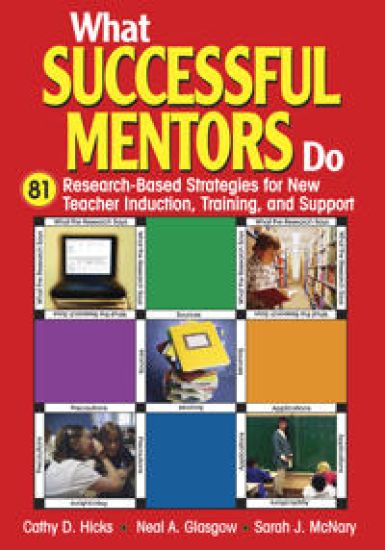
What Successful Mentors Do

What Successful Mentors Do

Hicks Cathy D.; Glasgow Neal A.; McNary Sarah J.

Corwin Press Inc
2005
nidottu
`There is no 'one size fits all' professional development. Teaching is exciting and rewarding, but it is like pro football in that on any given day most anything may work, while on other days nothing seems to work. But you still need to keep on playing your best. Good mentors help keep good teachers playing at their very best. . . . As the authors so aptly suggest, good teaching is more a journey than a destination. This book will help both mentors and teachers to navigate this journey successfully' - Stephen Sroka, Health Education Consultant , Case Western Reserve University Bridging the gap between theory and practice, this book synthesizes current educational research and extends its application to in-service settings. Using a consistent and reader-friendly format, the authors present specific mentoring strategies accompanied by summaries of the research background validating the strategies, mentoring applications for the strategies, precautions and pitfalls helpful for implementation, and source citations for further reference. Strategies are organized into convenient categories that include developing teaching styles; time management strategies; classroom management policies; managing curriculum, instruction, and assessment; working with at-risk, special needs, and diverse populations; working with educational technologies; interacting with students, parents, and community; and more.
Tips for the Science Teacher

Tips for the Science Teacher

Hartman Hope J.; Glasgow Neal A.

Corwin Press Inc
2001
nidottu
`An authoritative, research-based, thoroughly up-to-date and readable review of the best available techniques for science instruction' - Robert J Sternberg, IBM Professor of Psychology and Education Director, Center for the Psychology of Abilities, Competencies and Expertise (PACE Center) Yale University New Haven, Connecticut `Teachers are starved for this kind of presentation of information. The format of the book is very appealing, with a unique blend of research, practical applications and the voices of experience addressing "pitfalls." Its specific tips are targeted, focused and clearly presented'- Karen Charles, Math and Science Program Specialist Eisenhower Consortium at SERVE Greensboro, North Carolina `This book makes effective science teaching strategies readily available, truly at your "fingertips." I really appreciated the organization, especially the "what the research says" component' - Leslie C Gushwa, Science Department Chair 1998 San Diego County Teacher of the Year San Dieguito Academy Encinitas, Calafornia `Principals and lead teachers at all levels will find this valuable information useful as they work with their colleagues in professional development' - Raymond J Dagenais, Ed. D., Science Curriculum and Assessment Leader Illinois Mathematics and Science Academy, Aurora Illinois The aim of this book is to bring some of the useful research findings about teaching science to the classroom teacher. The authors present the information in an authentic and useful context, and show how it can be applied in real classrooms with real students. More than 90 tips are included in seven chapters, each with a theme representing one aspect of the typical instructional programme. Each chapter presents a collection of teachings tips, concisely presented in a `user-friendly' format. Following the tips are sections explaining `What the Research Says' for each, as well as `Classroom' Applications, ` Precautions and Pitfalls, and `The References.' There is a great range of tips, from educational, psychological and sociological research studies and critiques. This diversity provides teachers with many choices that can serve as solutions to individual teaching and learning problems, and also provides inspirational triggers, offering opportunities for teachers' professional growth. This book is designed to provide an easy way for classroom teachers to benefit from the many ideas imbedded in the academic literature.
New Curriculum for New Times

New Curriculum for New Times

Glasgow Neal A.

Corwin Press Inc
1997
nidottu
Recent research on the learning process indicates that learning is facilitated by identifying and solving problems, when finding multiple approaches to problem-solving and when a problem has a 'real-world' significance. This book guides readers step-by-step through designing problem-based learning across the curriculum, and includes advice on managing and assessing student projects.
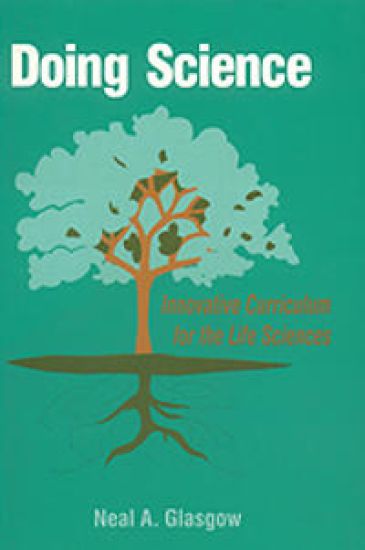
Doing Science

Doing Science

Glasgow Neal A.

Corwin Press Inc
1996
sidottu
Problem-based, student-centred learning is the key to implementation of the national standards for science education in the United States. Students learn science best by `doing' science, by identifying real-world problems and designing projects that lead to possible solutions. Based on extensive experience in an award-winning US high school science programme, this book provides a step-by-step guide for designing problem-based learning in the life sciences.
Doing Science

Doing Science

Glasgow Neal A.

Corwin Press Inc
1996
nidottu
Problem-based, student-centred learning is the key to implementation of the national standards for science education in the United States. Students learn science best by `doing' science, by identifying real-world problems and designing projects that lead to possible solutions. Based on extensive experience in an award-winning US high school science programme, this book provides a step-by-step guide for designing problem-based learning in the life sciences.
Taking the Classroom Into the Community

Taking the Classroom Into the Community

Glasgow Neal A.

Corwin Press Inc
1996
nidottu
The focus of this helpful book is on using the community as a classroom for students to gain `real-world' experience. Neal A Glasgow offers examples of activities that utilize community resources, provides clear instruction for recruiting and using community mentors, and addresses insurance and liability issues for students who are involved in learning activities away from school. He also describes the project portfolio that students will present as part of their final assessment.